
Translated material
Poverty on the threshold
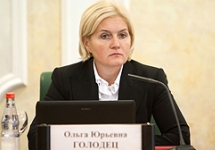
Almost five million people in Russia receive a minimum salary. This was stated by Deputy Prime Minister Olga Golodets, Interfax reports .
"Today, in the Russian market, almost five million people work on a minimum wage. 1.8 million people are state employees," said Golodets.
According to Deputy Prime Minister, this category of people is a source of serious poverty problems. “Poverty struck the people working. This is a special situation. This trend has become serious,” said Golodets. She noted that the issue of increasing the level of minimum wages to the level of living of the subsistence level is being discussed.
Speaking in priorities in social policy, Deputy Prime Minister noted that Russia manages to improve demographic indicators. "Contrary to all forecasts, we manage to achieve the results of demography for the third year in a row. I consider indicators of the growth of life expectancy to the most important conquest of the entire social and demographic policy," said Golodets. She also noted that the program for the protection of orphans is implemented, the number of children in the data bank for adoption over four years has reduced by almost half. "As of July 1 of this year, we have 64 thousand children at the data bank," said Deputy Prime Minister.
In the study on September 7, the Romir Holding Holding was guessed that the daily expenses of residents of Russia for August, taking into account inflation, fell below the values of 2012 . In August, the Russians continued to reduce consumption, although usually during this period, on the contrary, consumer activity was expected after summer lull. "The Russians continue to save, redrawing their budgets in order to maintain everyday expenses at the lowest possible level," the study says.
The average check of Russian households has been at the minimum level for seven months in a row. According to experts of the Romir holding, Russians began to go to stores less often.
"The share of food products in the total basket of the daily costs of Russians after a sharp jump in July up to 67 percent returned again in the middle mark of 50 percent. But this, apparently, does not have the merit of the conscious saving of consumers on products, and the explanation lies in the seasonal reduction in prices, in particular for vegetables and fruits," the study said. According to economic theory, the most of its expenses the population spends on food, the poorer it is.