
Translated material
Waiting for a bulldozer
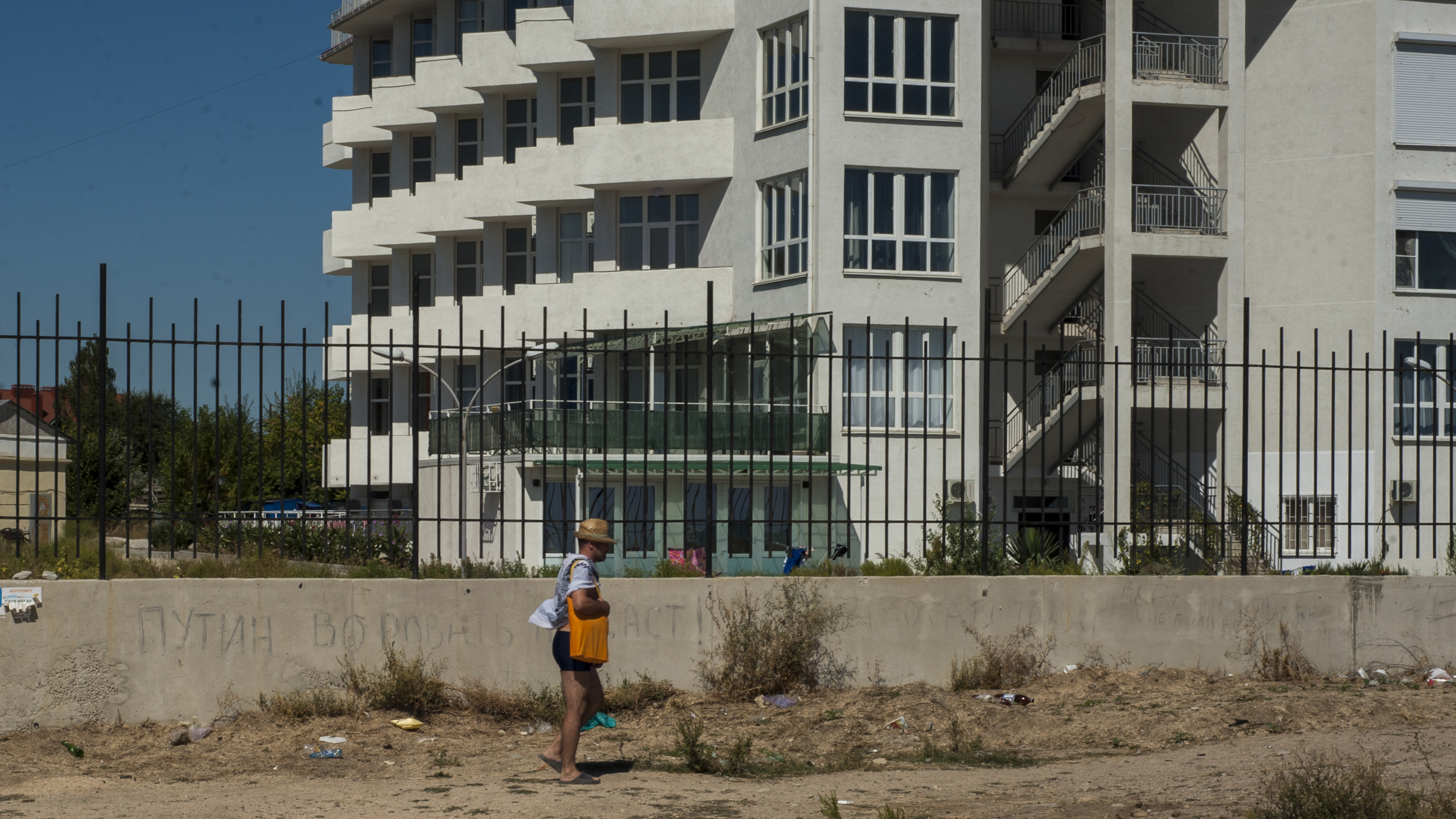
In Crimea, as part of the campaign announced by the authorities to clean the coast from self -building, the local court decided to demolish part of the buildings of the Fort Knox hotel in Feodosia. The owner of the hotel has all the permits. In addition, the elimination of the disputed terrace can lead to the collapse of the entire building.
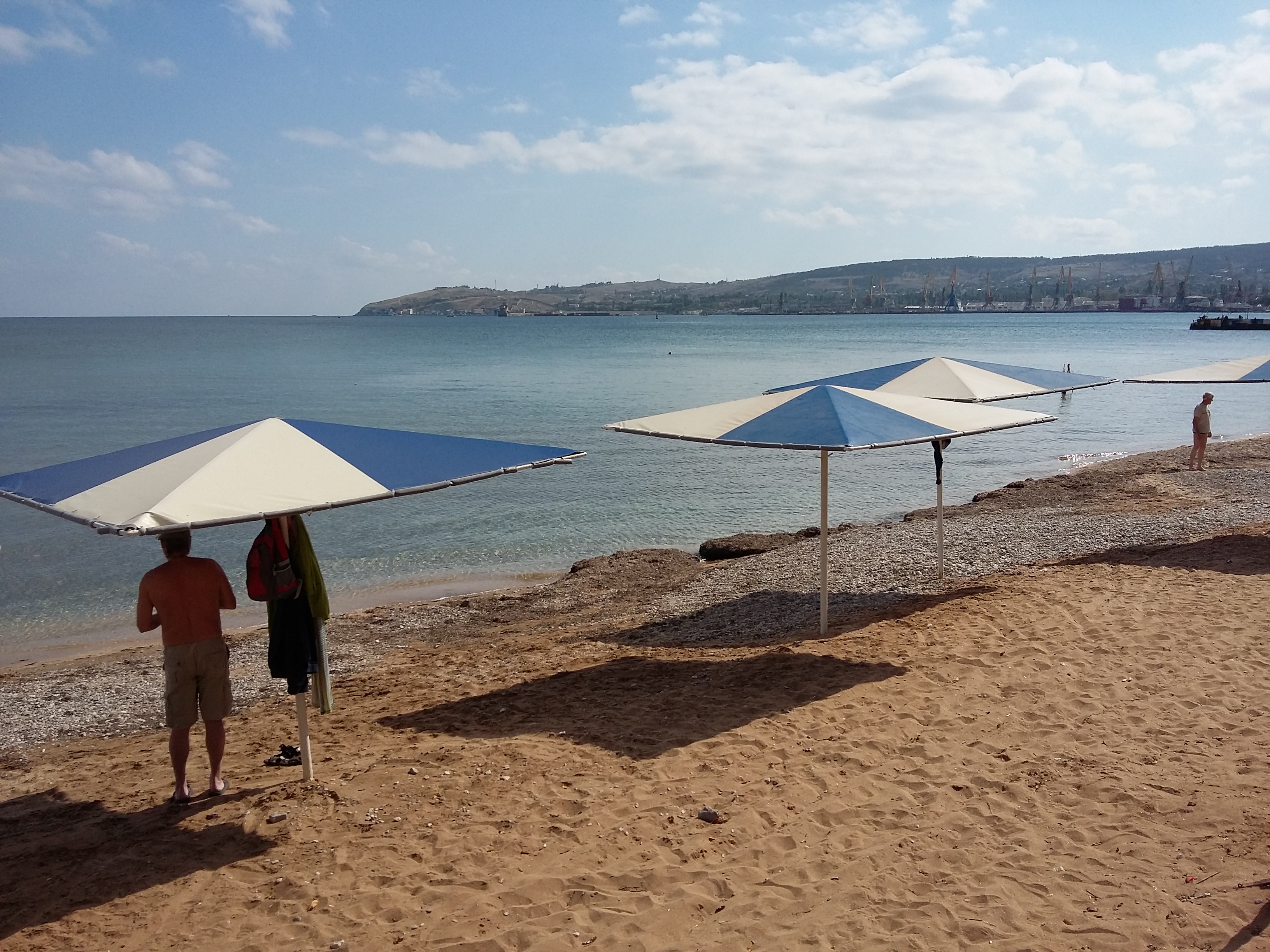
A small hotel "Fort Knox" stands right on the city beach. From the steps of the terrace to the surf line ten meters, no more. September is running out, but on a hot day, people still appear on the beach - local residents and Muscovites and Petersburgers who have gathered for the velvet season. There are also enough guests in the hotel.
“All guests are satisfied, and there were no complaints from the locals that I was bothering someone, taking a place or a view of the sea,” says the owner of the hotel Konstantin Black-Ognev . Indeed, the sea view of the hotel obscures only to the homeless dogs sleeping on the railway embankment, which stretches along the entire Theodosia embankment.
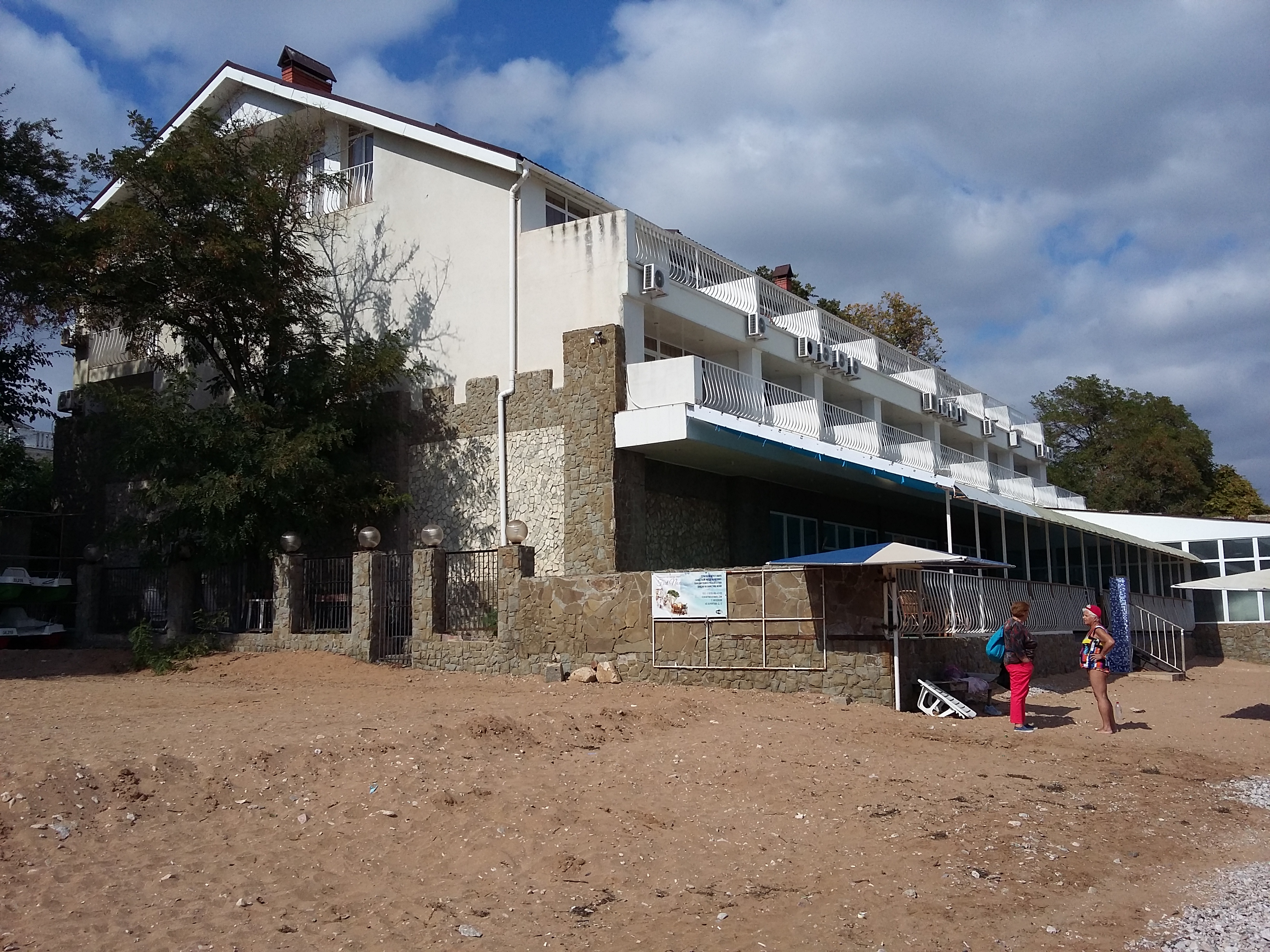
The hotel stands on a commercial land in municipal property. The status of the site is essentially not changing half a century. In 1962, a cafe "Bay" appeared at this place, which survived the Soviet Union. In the mid-2000s, the Donetsk company bought the building and converted it to the hotel. In 2008, the hotel acquired black-oognev. Together with the main building, he got a terrace and a summer platform drawn up according to documents as separate buildings. In the process of the transaction, the businessman received confirmation of the legality of all buildings: "At that time, the executive committee suited everything. There were no complaints that something was rebuilt or somehow did not comply with the documents." Along the way, he leased a section of the coastal territory for 49 years. For six years, business has developed its own. The problems began in the summer of 2014, shortly after the Crimean Spring.
Militias against fences
At the end of July, the first Deputy Prime Minister of Crimea Mikhail Sheremet and activists of the Pure Crown public organization, accompanied by riot police and fighters of the "People’s Militia", came to Feodosia. They walked along the city beach, demolishing all the fences in their path.
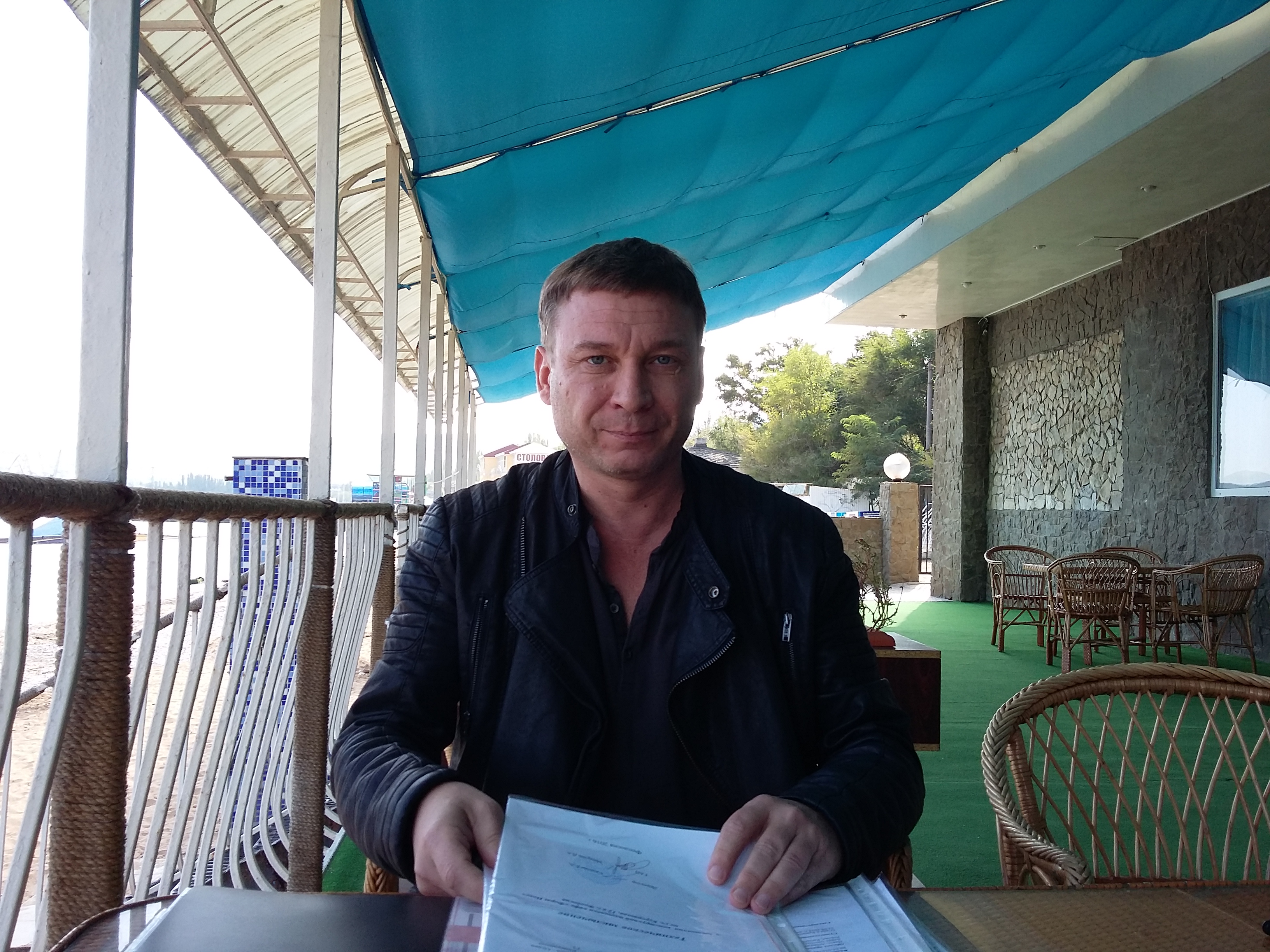
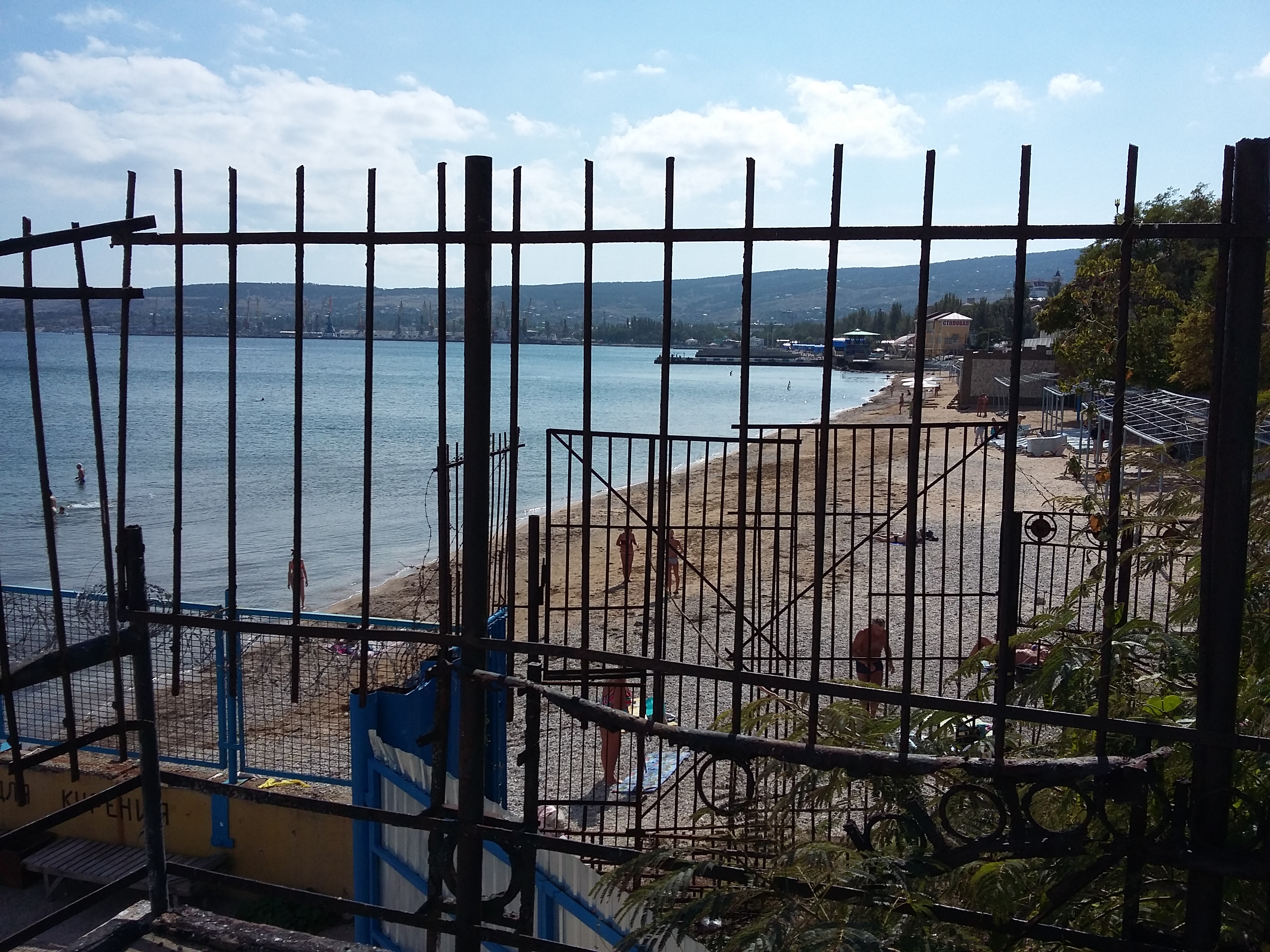
“The campaign for sawing fences has begun,” says Konstantin Black Ognev. - First, the “Clean Coast” came with the prosecutor’s office and asked to remove the fence of the four sections that I had here. We agreed that I would leave one section to hang the rules of behavior on the water on it. No one objected. Then a re -check passed, already with Sheremet. I went out-and here the delegation is eighty people, including the "mask shows" with machine guns. They began to ask why I did not remove the fence from the other side. But it was not my fence, he always stood here and fenced the territory of the Sunrise sanatorium, to which my hotel was adjacent. And the medical sanatorium by law has the right to enclose its beach. I joined the broad debate, presented the documents and proved that everything is legal for me. They sawed one remaining section and left, but they did not shoot the sanatorium fence. "
After that, according to the host of the hotel, a prosecutor’s check was organized against him, “aimed at at least illegally identify”: “In my inventory case in BTI, I later saw copies of prosecutorial requests and copies of answers that everything was fine with me. And yet they continued to dig under me.” Since there were no complaints about the auditing authorities, they clung to an error in the documents.
Due to the fact that in the extract from the BTI the date of issuing approval for reconstruction was indiscriminately affixed, the businessman was accused of forging documents. The misunderstanding cleared up when the certificate available to him was compared with the inventory affair that was stored in the archive. But by that time, in April 2015, the city court had already made a decision to demolish the terraces and platforms adjacent to the hotel - the very ones that were executed by separate documents. Judge Larisa Hibakova considered that permission to build them was obtained illegally. She could have figured out the situation herself if she requested materials from BTI, but for some reason did not do this, the hotel owner says.
Black-Ognev wanted to prove to the court that confusion with the dates arose due to a technical error, and filed a lawsuit to revise the case due to newly discovered circumstances. However, the court refused to take into account his arguments and left a decision without change. Since then, the businessman has been trying to challenge the verdict in higher authorities, but everything is unsuccessfully.
"The building will just collapse"
The businessman calls the accusation of the unauthorized construction of extensions absurd.
- The terrace and the summer platform were built long before me. There is information about them in the inventory case of 1972. During the restructuring of the building, 46 concrete columns were placed inside it, on which the second and third floors are held. But the perimeter of the foundation remained unchanged. The building was reconstructed in the old borders, nothing was attached to it. The only change that I made was changed the plank floor on the terrace to a concrete screed. But the terrace as it was and remained an integral part of the foundation of the building. If you remove it, the carrier wall will be left without support, and then the building will simply collapse. In addition, the site also performs the coastal function, ”says the hotelier.
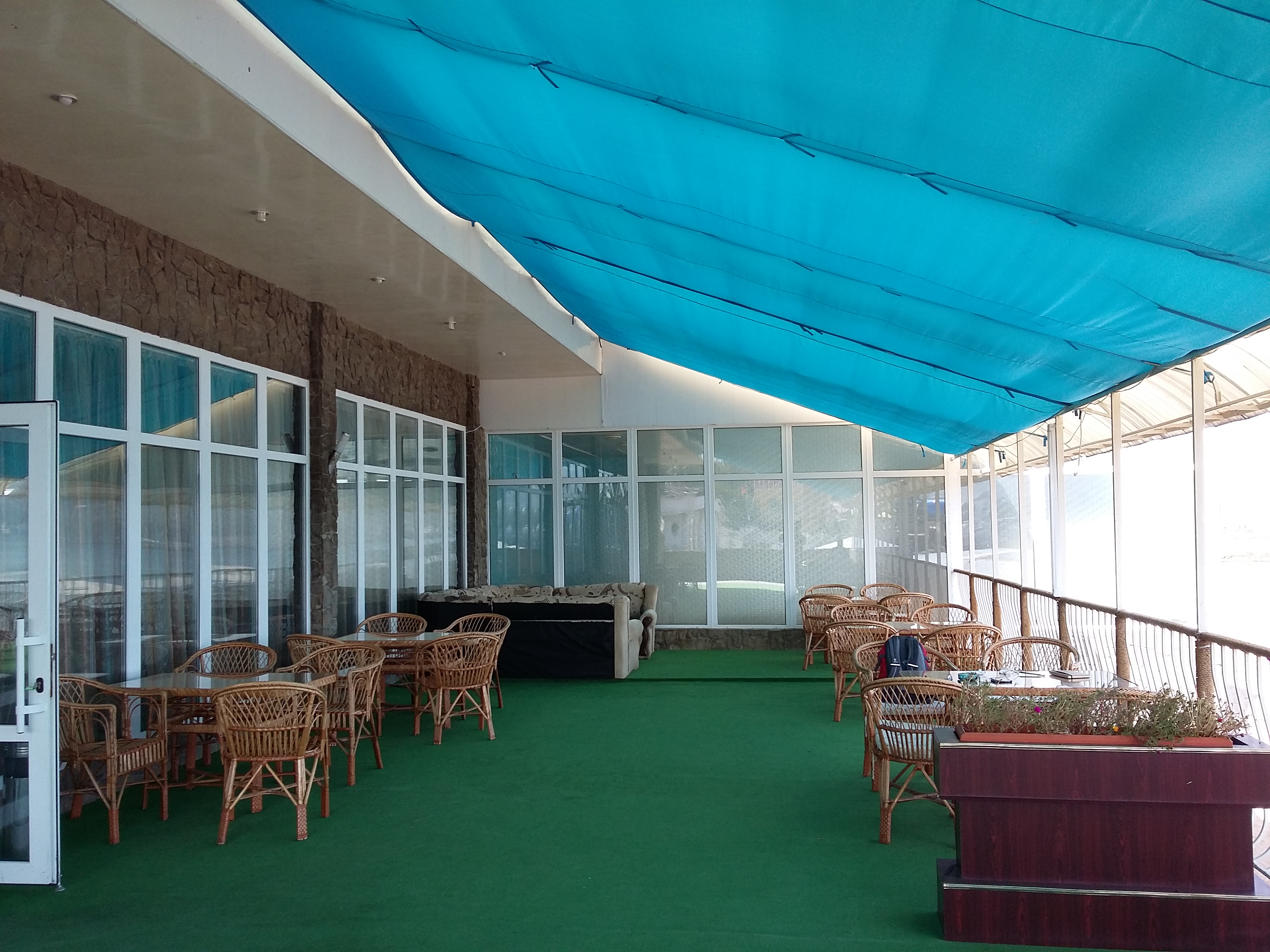
In confirmation of his words, he shows the results of an independent technical examination. "The arrangement of the site in front of the cafe building from the sea helps to prevent washing its foundations during the storm. It is not allowed to carry out unauthorized work on further redevelopment of the building," the document says.
However, officials and judges do not pay attention to such "trifles". The businessman has serious doubts about their competence and professionalism: “When Sheremet was conducting his raid, I showed him all the documents. So he didn’t like that the hotel was executed as a non -residential premises. He considered it a violation! They don’t even know the most elementary laws!”
They even demanded to remove the paving slabs from me, which he himself ordered the executive committee to put me
The Russian certificate of ownership Black-Ognev received the Russian certificate of ownership after the judicial verdict. Judging by the new documents, the registering authority did not have claims to the buildings of the hotel. It turns out that Rosreestr legalized what the court decided to demolish. However, this did not guarantee a calm life of Forto Knox. After making a court decision, bailiffs repeatedly came to the hotel. But due to the fact that the consideration of complaints was still ongoing, they did not demolish the extensions. However, this cannot continue endlessly, and the black-oognev is morally ready for the fact that one fine day a bulldozer will be drunk to his hotel.
- They even demanded to remove the paving slabs, which the executive committee himself ordered to put me so that the disabled can access the beach. Previously, the communications simply went there, and there were dirt and gravel on top, and there was no passage, and I landed the territory. Now all this requires returning to the original appearance, ”complains the businessman.
According to the prevailing tradition, he tried to look for a council for judges in the reception of the President of the Russian Federation, but there they refused to help him, citing the "independence of the judiciary." At the same time, despite the real threat to his business, Black-Ognev says that doing business with Russia has become easier.
-Under Ukraine, residents from the sanitary and epidemiological station, from firefighters, from someone else came almost once a week. All their work came down to collect bribes along the coast. They said that I was violating the coast building or that I have three instead of four sinks in the kitchen, and on this basis they threatened to seal the hotel. They shot down from all ten thousand. I sent them all, because I have everything correctly according to the documents. Now there is no such pressure. For all this time, only electricians came once, they painted that I need to fix it so that I myself would be better, and that’s it. And it became easier with taxes. I pay three percent of gross income, and before there was a very difficult system, and I had to pay more, ”says the entrepreneur.
Selective demolition
Back in 2014, the new Crimean authorities began a crusade against self -buildings and seizure of coastal territories. To begin with, public activists, with the support of officials, took up the demolition of fences, which many beaches were fenced. At the same time, from the authorities, the fight against the fences turned out to be selective: they tried to drag the law on limited access beaches, but the prosecutor's office protested him for the discrepancy between federal legislation. Today, despite the prohibitions, part of the Crimean beaches is closed to ordinary mortals. Officials look at it through their fingers.
The head of the Crimea, Sergei Aksenov, is especially zealous against illegal buildings, the Crimean Tatar Polyans of Protest and the capital development of the hundred-meter coastal zone. The Crimean authorities are trying to achieve amendments to federal legislation prohibiting any construction near the sea. Most of the buildings promised to demolish. At the same time, Aksenov did not rule out the legalization of a number of objects "subject to certain conditions" and promised to individually approach each structure. As in the case of beaches, the determination of officials acts selectively. The implementation of many construction projects on the coast continues.
The case has not yet reached the mass demolition of the coastal institutions: Aksenov’s environment is still preparing. Residents of Feodosia Vniskid can only recall the case on the local gold beach this spring, when, by decision of the prosecutor's office with the ground, a two-story mini-hotel was redfilled , which, according to the documents, took place as a passage point of beach inventory.
In addition, the cafe "Tropicanka", which did not have permits, disappeared from the embankment . Together with him, other non -stationary objects should have been demolished, but so far they are in their place. The administration of the institutions of the Radio Liberty correspondent said that all documents were executed as it should and that the supervisory authorities have no complaints about them. Local residents at the same time note that some of the catering establishments are associated with officials of the city administration, therefore they are not touched.
According to Konstantin Cherny-Ogunev, the uncertainty on the demolition of commercial objects is nervous of local businessmen. This state of affairs will force those who want to open a new institution on the coast twice to think about the advisability of such a step. However, not all owners of hotels and restaurants agree with this opinion.
The authorities are interested in the investment, so on purpose no one will interfere or harm
The Association of restaurateurs and hoteliers of Crimea (Arik) believe that the incident with the Fort Knox and the like will not have much influence on the tourist market of the peninsula. Member of the Association , Maria Solntseva, believes that investors should adhere to the rules of doing business in Crimea, no matter how good or bad they are, and then no surprises will arise. Any misunderstandings, according to her, do not arise because of evil intent.
- Any investor, when he comes in, he looks so that everything is within the framework of the law, and then only makes a decision. If everything is legal, then what is the problem? If there are any violations, I think not a single investor will consider this project or this place to invest his money. Now everything is open and transparent, you can check any site. The authorities are interested in the investment, so no one will deliberately interfere or harm, ”says representative of Arikok.
The authorities of the peninsula do not believe that someone’s commercial object can be demolished without good reason.
- To be demolished completely and irrevocably, there is no such situation in the Crimea. To date, under the Council of Ministers, a working group has been created that conducts an inventory of those objects that are located in a hundred -meter coastal zone, ”explains Svetlana Luzhetskaya, the Commissioner for the Protection of Entrepreneurs in the Republic of Crimea.
If the authorities of cities and towns demolished some non-stationary objects, then an alternative was provided to the victims. Although a certain percentage of entrepreneurs was still dissatisfied.
- It is necessary to deal with each appeal individually and with each entrepreneur. Cases can be different: unauthorized construction, the use of land for other purposes or a situation when there are all title documents on hand. The availability of documents will serve as a business protection tool, but these documents must comply with the actual buildings. No one will make hasty decisions on these issues. If there are problems, then entrepreneurs can contact the Institute of the Commissioner. If the rights are violated, we will reliably protect them, ”the business ombudsman assures.
We are not safe from anything. If in Moscow they are demolished, then they can be demolished
Luzhetskaya considers the situation with the "Fort Knox". She recommended that the entrepreneur "defend his right." Since his documents are in order, “there will be no problems there,” she is sure.
Businessmen, however, are hard to believe in the good intentions of officials. “I understand perfectly what anything can happen. We are not insured. If they demolish it in Moscow, then they can demolish us,” the owner (and he is the only employee) of a tiny snack on the Feodosia embankment tells us. “But I’ll not leave anywhere from here. And everyone who makes money will not close - all these little ones will close these little ones. Hotels, large companies are afraid to go here.