
Translated material
The pigeon from the casino
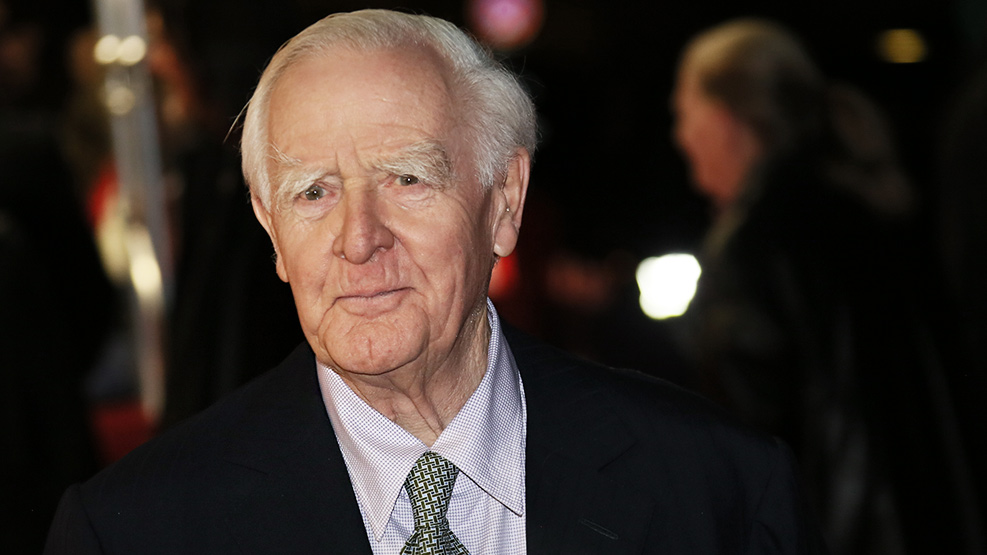
In the UK, the memoir book of the famous author of the espionage thrillers John Le Carre "Blue Tunnel. Stories from my life" instantly became the bestseller.
The true name of John Le Carre - David John Moore Cornwell. He was born on October 19, 1931 in Pula, the county of Dorset, in the family of a businessman. I studied modern languages at universities of Oxford and Bern. He taught French and German in the end. In 1963–64 He served in the Ministry of Foreign Affairs, held the posts of the second secretary of the British embassy in Bonn and the Consul in Hamburg. These positions were the diplomatic cover of his service in British foreign intelligence MI6. John Le Carre is the author of 23 novels, including “A spy that came from the cold” (1963), “In one German town” (1968), “Spy, go out!” (1974), "Little Drummer" (1983), "Panama tailor" (1996), "True Gardener" (2001), "The same traitor as us" (2008), "Delicate Pravda" (2013). In 14 of his novels, film and television films were removed. Lives in London and Cornwall.
Some reviewers call an “pigeon tunnel” an autobiography, but this is not quite accurate. The book breaks up into 38 chapters that are not connected by either chronology or the logical sequence of events. These are not so much an autobiography as stories about meetings and memorable events. The book is deliberately fragmentary, and part of its material (eight chapters) has already been published in the British and American press. Perhaps the genre, who preferred Le Carre, is explained by the fact that a year ago a detailed and voluminous (650 pages) biography of the writer, written by the British literary critic Adam Sisman , was published, and a significant part of its material was based on an interview with the author of the Tunnel. So Le Carre decided not to duplicate the work of Sisman, but to focus on the portraits of politicians and cultural figures that he had to meet: British prime ministers Margaret Thatcher and Harold Macmillna, Yasera Arafat, Joseph Brodsky, Andrei Sakharov, Alek Guinness Actors and Richard Berton, former heads of the KGB and KGB -former and Richard Berton SVR - Vadim Bakatin and Evgenia Primakova. To some extent, the "pigeon tunnel" is a portrait of the artist himself in old age. The book has a lot of philosophical reflections of the 84-year-old writer about his own fate, about literature and service in intelligence, which always weighed him.
A separate plot passing through the leitmotif through many chapters is a story about the parents from whom he was alienated and whom he did not like: his father - playboy, swindler and crook, who visited prison, and his mother, who threw him in early childhood, with whom he met only after 21 years. One of his obsessive ideas is the role of childhood in the formation of his own character and in familiarization with writing. Le Carre refers to the remark of Graham Green, who believed that "childhood is a negative credit balance of the writer" and that the more unhappy childhood, the more significant the positive writer's credit balance. His insightful biographer Adam Sisman is sure that "if David had a happier childhood, he would probably not be such a brilliant writer, and perhaps he would not at all become a writer." From life, writes Le Carre, he most of all wanted to achieve P Rivacy .
The reader of the “tunnel” seems to be the figure of a closed, lonely introvert, even a recluse, who most appreciates a private life and the opportunity to write in the distance from the capital's fuss. The writing has become drug addiction for Le Carre. Every day, in the rural wilderness of Cornwall, he scribbles with a pen, ignoring the computer, the next captivating thriller about the knights of the cloak and dagger who came from the cold or heat. “My desk is in Cornwall,” says Le Carre, “and is built into the attic of a granite barn on the edge of the cliff.”
I am a liar born to lie, brought up in a lie, trained to lie to an industry that makes a life a lie, and as a practitioner lies of a novelist
One of the problems that Le Carre is concerned about, judging by his “tunnel thoughts,” is the memory of memory and the nature of the writer's fiction. In his memoirs, he wants to be completely honest with the reader. “These are genuine stories told from memory,” he writes, referring to his own memoir, “and you have the right to ask what is true and what the fruit of the writer’s creative imagination is that we can delicately call his life in the evening?” He is categorical, answering this question: "I am a liar born to lie, educated in a lie, trained to lie to an industry that makes money on a lies, and as a practitioner a romanticist. As an creator of artistic works, I invent a version of my own life and never use genuine truth, if any exists." In this passage, Le Carre mixes together the atmosphere of lies and the false childhood, which forced him to lie a fraudster, a work in reconnaissance, which required inventive disguise; The creative imagination underlying the writer's craft. In this case, the pseudonym of David Cornwell is another part of this total lies of his life and profession. The legal question: is it possible to trust his memories after that?
Five chapters of the “pigeon tunnel” are to varying extent caused by its longtime, ascending to the era of the Cold War with interest in Russia. In the 22nd chapter of the book, the "Prize of Joseph Brodsky", Le Carre tells how he witnessed Brodsky to receive the news of the award of the Nobel Prize. In the fall of 1987, the disgraced poet flew from America to England to give lectures at local universities. Le Carre writes:
"My wife and I were at the Lanca in the Chinese restaurant in Hampsted. Our only guest was Joseph Brodsky <...> we were familiar with him for several years, but, frankly, they had no idea why they had chosen to entertain him today." Whatever you did, in no case do not let him drink and smoke, the lady warned us from some Despite the relapses of a heart disease, he allowed himself to be both possible, but, knowing Joseph, he was sure that he would do it that he would like to support the conversation with Joseph. My wife’s soft protests were drunk with small sips of chicken with noodles <...> I had to guess that he did not read the line from me, and did not feel the need for this, when the high and elegant first thought appeared in the doorway with a serious look. Bottles and cigarette smoke, she intends to reprimand for the fact that we allowed Joseph to “blossom”, however, he quickly realized that she was trying to restrain excitement.
“Joseph,” she said, holding her breath. - You received a bonus.
Silence reigned while Joseph, dragging on a cigarette, frowned through the smoke.
- What award? He mumbled.
- Joseph, you received the Nobel Prize in literature.
Joseph covered his mouth with his hand, as if he wanted to say something shocking and tried to prevent it. His eyes turned to me as if for help. But neither I nor my wife had the slightest idea that he was nominated for Nobel and that today was the day of the announcement of the laureate. I asked him to be the obvious question:
- How do you know?
- From the Scandinavian journalists who are crowding now with us and who want to congratulate you, Joseph, and take an interview from you.
Joseph still appealed to me. They seemed to say: do something. I again turned to his guardian:
–– Maybe Scandinavian journalists simply take an interview from everyone who is listed in the short list of the award? And not at the laureate? Everyone?
In the corridor there was an automatic phone. The guardian knew that Roger Straus, the American publisher of Joseph, flew to London to be at hand for such a case. A decisive woman, she immediately called his hotel. After graduating from the conversation, she smiled.
“You must immediately go home, Joseph,” she said gently, touching his hand.
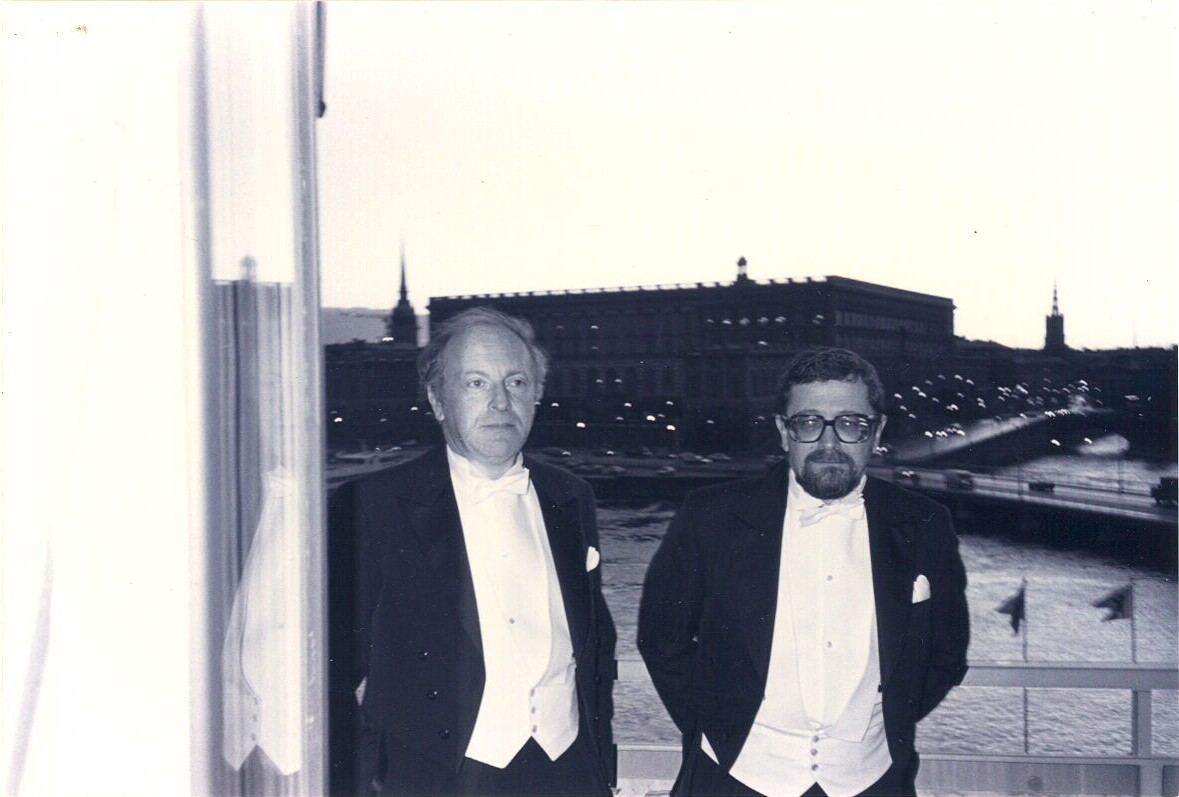
Having swallowed the last portion of his favorite whiskey, Joseph with painful slowness stood on his feet (...)
“Well, now there is enough chatter for a year,” he said, without resistance, allowing himself to deliver himself to the “interrogators” awaiting him.
The heads of the "pigeon tunnel", which Le Carre called "the Soviet knight dies inside his armor" and "Wild East: Moscow 1993", are dedicated to his two trips to Russia: in 1987 and 1993. The biographer of the writer Adam Sisman to the question of the RS "Is Le Carre's interest in Russia preserved?" He answered this: “I would not be surprised if he wrote another book about Russia, like his“ Russian House. ”David generally experiences some instinctive affection for the Russian people, his fate is concerned, which, however, is accompanied by hostiles and evil, committed by the state both in the Soviet-Soviet period ... in the“ Russian house ”he demonstrates sincerely. The sympathy for Russian people and the genuine interest in Russian culture was especially attracted by the fact that in Russia, ordinary people who do not even belong to the intelligentsia read books and are interested in philosophical problems, which you will practically not find either in England or in America. ” In the 17th chapter, Le Carre, in particular, describes a meeting with Andrei Sakharov in Leningrad shortly after his release from a six-year link in Gorky.
“We were sitting at a round table in the only cooperative restaurant in the city,” Le Carre writes. “Next to Sakharov was his wife Elena Bonner, and young gesniki sniffed around, who from time to time illuminated us with outbreaks from antediluvian, the 30s, cameras (...) Sakharov described the evening when, after a six-year exile, a loud knock was heard in his reference. The apartment.
“I told Elena that they couldn’t do anything to us, which they had not done before.”
Nevertheless, he opened the door and saw two people, one in the form of a KGB, the other in a working robe.
“We came to install the phone,” the officer said.
Here Sakharov allowed himself one of his mischievous smiles. He noticed that he did not drink and that in fact a teetotaler, but installing a telephone in Russia in a closed city is something incredible, comparable to the proposal of a glass of chilled vodka in the Sahara desert.
“We don’t need a phone, remove it,” Bonner said to the officer.
And again, Sakharov objected to her: let them install the phone, what are we losing? Despite the discontent of Bonner, they installed the phone.
“Tomorrow in the middle of the day wait for the call,” the officer said, leaving, and slammed the door.
Sakharov spoke examinably and in detail how scientists do it. Truth is in detail. It lasted noon, an hour of the day, then for two hours. They were hungry. They slept badly, did not have breakfast. Sakharov warned the guard that he wanted to go down to the store for bread. But as soon as he headed for the exit, Bonner shouted after:
- You are to the phone!
I had to return to the apartment and approach the phone. After a series of different votes, he was connected with Mikhail Gorbachev, who said that the past is the past, and that “the Central Committee examined your business and you are allowed to return to Moscow. Your old apartment is waiting for you. You will be immediately restored to the Academy of Sciences, there are no obstacles to you to take the appropriate place of the responsible Soviet citizen of the Restructuring era (...)
- I sent you letters with suggestions, but did not receive an answer.
“We received all your letters,” Gorbachev answered softly. - The Central Committee considers them. Return to Moscow. The past is over. Help us with reforms (...)
Sakharov hung up the phone, without even saying “goodbye, Mikhail Sergeyevich”.

“And then it dawned on me,” he said with a flashed with a wide mischievous smile, and even Bonner allowed himself to wink maliciously.
“And then it dawned on me,” he repeated inutably that this was my first telephone conversation in six years. And at the same time, I allowed myself to interrupt the conversation with the Secretary General of the Communist Party of the Soviet Union. "
In my life I met with two former KGB chapters, and I liked both
The twentieth chapter of the “pigeon tunnel”, entitled “The largest bears in the garden” (I think the author had in mind the zoosad), Le Carre begins: “In my life I met with two former heads of the KGB, and I liked both.” He meant Vadim Bakatin and the former at one time the director of the SVR Evgeny Primakov. The author of Tunnel met with Bakatin during a second visit to Russia in 1993, when he was already retired and worked in the Reform Foundation. From a conversation with the ex-chairman of the KGB, whom his former associates do not call the traitor otherwise, Le Carre remembered two things: Bakatin’s replica that people who are professionally engaged in espionage are fanatics who did not contact real life, and that he himself began and left this work, remaining a newcomer. “You know more about it than I am,” the former boss of this ominous department told him. To this, Le Carre replied that he was a beginner in this business and that he does not work in intelligence for 30 years, earning a living with a pen. “So this is a game,” Bakatin remarked gloomily. Then he called himself a socialist and complained that the power in Russia fell into bad hands and that after the fall of communism, people in Russia lost a moral landmark. London met London with Primakov later, when he arrived in England in the rank of Minister of Foreign Affairs for negotiations with British colleague Malcolm Rifkind. Le Carre does not call dates, but obviously, it was between 1996 and 1998. He also spoke with him through the translator. “Call me Eugene,” Primakov told him, “and I will call you David.” Primakov told Le Carre how several years ago he tried to save Saddam Hussein and prevent the war in Iraq. It was at the very beginning of the operation "War in the Gulf" - the troops of Saddam Khussein occupied Kuwait. Primakov called Hussein a friend and said that he called him and asked to convince Bush Sr. to let him painlessly, without losing his face, withdraw the troops from Kuwait and that he did not want a war with America. The head of the Russian Foreign Ministry fell on both Bush and American politics and said that he had arrived for mediation to Margaret Thatcher. “This woman said for an hour,” Primakov said, “gave me a lecture. They wanted war.” It was not possible to save a friend. It seems that insight has changed Le Carre in conversations with the former high -ranking Soviet apparatchors who liked him. What is this: naivety or political sympathy? Adam Sisman considers Le Carre the man of left beliefs: “From the very beginning, he adhered to moderate left beliefs. He always voted for the Labor Party, socialist in essence. On the other hand, he did not have much interest in politics. He always had extensive intellectual interests, which helped him get a job in the MI5 and M6. At the same time, he always showed sharp hostility towards him I would say that David is a typical English liberal, who hate any totalitarian ideology, suppressing the human person, whether Nazism or Communism. He solves the problem of the confrontation between the person and the state of the Cold War, he said: "We have won communism, and now we must end the current order of things in the world, which is dominated by America. Some of his novels. "
In the preface, Le Carre explains why he called the Memoirs "Pigeon Tunnel". “Hardly at least one of my books,” he writes, “at different times I did not wear the working name“ Pigeon Tunnel. ”It was not difficult to explain his origin. I was a teenager when my father decided to take me with him in one of his warriors in the casino in Monte Carlo. Next to the building of the old casino was a sports club, whose lawns and shooting range went to the sea. The tunnel, which ended with the sea, was placed in the casino on the roof of the casino. The place of birth on the roof of the casino, where the previous traps awaited them. And again the next riddle of the master of detective intrigue. Is Le Carre himself one of these pigeons? Or his readers? Or his characters? This parable seems to me a metaphor for human existence.