
Translated material
Freedom to the touch
“Sy-y-y-y-yrrrrrr,” I admired about six-year-old loudly, finding a scarce product in the forecaster of the village neighboring with our city. Parents were embarrassed, but it seems to be bought cheese. So my first memory of the 90s is a type of cheese happiness. The memory, in general, is pleased with the banal: those who survived the 90s will not be surprised by such stories.
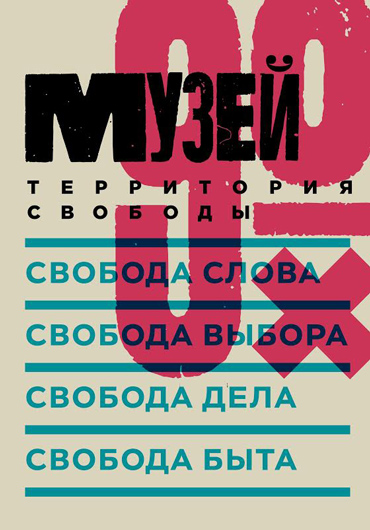
The main advantage of the book “The Museum of the 90s: The Territory of Freedom” has published in the New Literary Review is a variety of memories about the first post-Soviet decade. The authors and compilers of the book Katerina Belenkina, Ilya Venyavkin, Anna Nemzer and Tatyana Trofimova managed to sew out of different voices a complex patchwork blanket of memories of the 90s, not the accelerated economic difficulties of this time, neither what is happening in the country of legal arbitrariness, nor the cavard of people in the heads. On the contrary, in their book, the skeleton of the memory of the “dashing 90s”, partly based on the living memoirs of Russians, and in many respects constructed by state historical policy, is overgrown with flesh, increases volumes, acquires human traits. The nutrient medium that provides this metamorphosis of memory is the memories of freedom that Soviet citizens encountered after the beginning of perestroika. This freedom sometimes discouraged, sometimes killed, but often - gave unlimited possibilities to change her life for the better. The “creature” created thanks to these memoirs is no longer only contrasts with the viscous-febble Putin's stability-it is worthy of serious public discussion.
It is the beginning of the “intelligible conversation” about the 90s that is the main task of the book that continues the online project “The Museum of the 90s” , created in 2014 by the Yegor Gaidar and Colta.ru Foundation, and the series of monologues on Snob, which followed. Since then, interest in comprehension of the 90s has grown significantly: in addition to the above, the space for dialogue about the first post-Soviet decade has been created by a number of other projects. First of all, Yeltsin Center opened, which, in addition to the museum exposition, made the 90s radio transmission cycle. Destruction of myths ” (together with Kommersant FM ), the project “ Island of the 90s ” (together with COLTA.RU) and a multi-part documentary film “ Nineties. From the first person ” (together with the Rain TV channel). Colta.ru held several festivals dedicated to the 90s: two in Moscow and one in Yekaterinburg. In many respects, the project “last 30” is dedicated to the 90th; This is a decade of the Lecture of the Open University Mikhail Khodorkovsky and others. To say that all these projects and the discussion they had begun are probably in the public sphere-in the strictly Khabermas sense, we also have a public sphere, if it exists, then in a very deformed, castrated state. But the fact that the space for the dialogue has been created, the fact that the discussion (even in the protest genre, albeit in the format of counter -reptiles) has begun - an undeniable fact.
 © New Literary Review
In many ways, this is the merit of the project “Museum of the 90s”, for which its creators are separate. Like the site, the book is divided into several “Halls”: “Freedom of speech”, “Freedom of choice”, “freedom of business” and “freedom of life”. Most of the texts available in the book can be found on the site. But in the printed publication, in addition to several new materials, there is one additional “hall”-“Experience of Freedom”, collected from the monologues of Russians recorded by Anna Nemzer, who survived a new reality differently. The stories presented here are one more amazing.
For example, Larisa in the 90s found psychic abilities not only at home, but also in her husband, "and if I-the psychic is quite high-quality and solid, then he is the medium of the highest level." Another Larisa, who worked as a ballerina in one Moscow theater, recalls how in the early 90s they stopped paying a salary: “And it becomes, I apologize, there is a corny nothing to eat. Of course, we are joking that the ballerinas do not need to eat. But still, sometimes very hungry. ” The novel tells how in the 90s he worked with the bandit Grisha as a family doctor and, after two attempts on the employer, suggested staging his funeral. “Well, that's it: funeral, closed coffin, wife in mourning. My wife did not have to play especially, because by that time she was already on the verge of a nervous breakdown. I did not only save my life with this scheme, but also corrected them with my wife, strongly spoiled. He sat quietly for two years, did not lean out. ” Nick shares his story about the change of sex: “From that moment, if you allow, I will already talk about myself in a female gender, as I speak in the last twenty -odd years. I, and so this story in a male gender was not easy to give <...> Still, there is such a thing ... a difficult thing, after all, yes, I was this guy. "
These and other votes give volume not only to the design of the “dashing 90s”, but also to interviews with experts (political scientist Vladimir Gelman, curator and artist Viktor Misiano, publisher Irina Prokhorova, sociologist Alexei Levinson, folklorist Alexandra Arkhipova and others), which forms the basis of the book. These stories allow us to get closer to the experience of the freedom of other people - the experience of an unknown, not replicated mass culture and therefore is not always clear - and thereby finding the opportunity to think more freer than usual.
But even this new “hall” and not other new texts give the book an additional value compared to the online project. First of all, it is quite difficult to read so many texts on the site, never reproaching yourself for the procrastination, and the book can be swallowed in one evening and without any remorse. But even more important is that all these memories and evidence are collected under the same solid cover and thereby compared, correlated with each other. This puzzle carefully collected by the compilers is saturated with impressions and facts that allow you to plunge in the 90s, get away from flat myths and start a serious understanding of this time. It is clear that this puzzle is far from complete, but the available contours and details are enough to imagine where to think next.
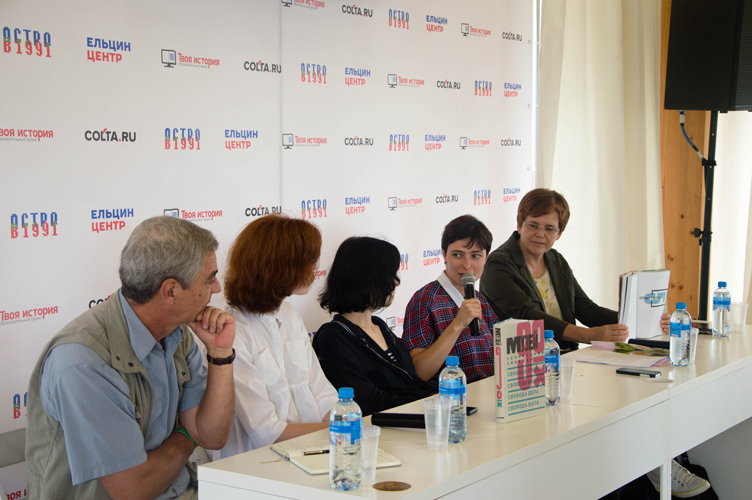
In general, one question remains: why is the book the name "museum"? Undoubtedly, the creators of the online project and the compilers of the book reflected a lot on this subject: the preface was devoted to the justification of such a decision, in particular, it was also discussed at the presentation of the book as part of the Island-1991 festival in August. Calling the book “Museum”, the authors “consciously - partly forcibly, partly playing” - created a “distance without which a conversation based on reflection is impossible”.
In my opinion, such conceptualization works at two levels. On the one hand, the museum is an institution that has traditionally been collecting and storing artifacts. Then the “Museum of the 90s” is a freedom Museum, which can be viewed at something far and outlandish. In this sense, there really is a distance that allows you to evaluate the past from the side, to play with the meanings and shades of meanings. But, on the other hand, today museums of memory are becoming increasingly important-museums that work with the past and audience in a new way. In such a museum, more attention is paid to private memory, it has a lot of interactiveness and parties, as well as a connection with the present is certainly focused.
In the book “The Museum of the 90s: The Territory of Freedom” this connection with the present periodically comes to the surface-as, for example, in the history of Vasily, which in the 90s was engaged in the production and spread of pirate video cassettes, and in recent years he traded disks. In the postal to his monologue, it is reported: “From February 8 to 9, 2016 - on the“ Night of Long Buckets ” - Vasily pavilion, like many other outlets in Moscow, was demolished. - Ed. " (p. 93).
In this sense, the book, like other projects dedicated to the 90th, creates a distance, while actualizing the past. It allows you to reflect on freedom, touching it, trying it “to the touch” (as one of the heroines of the book says). This makes it an important contribution to the transformation of the “Museum of the 90s”-the Museum of Freedom-from the storage of dusty artifacts into a space, which, perhaps, will connect the 90s with today and thereby actualizing the memory of freedom in each of us.
In the end, my memory of cheese is quite relevant today.
Museum of the 90s: the territory of freedom / collection; comp. K. Belenkin, I. Venyavkin, A. Nemzer, T. Trofimova. - M.: New Literary Review, 2016