
Translated material
Pour empathy
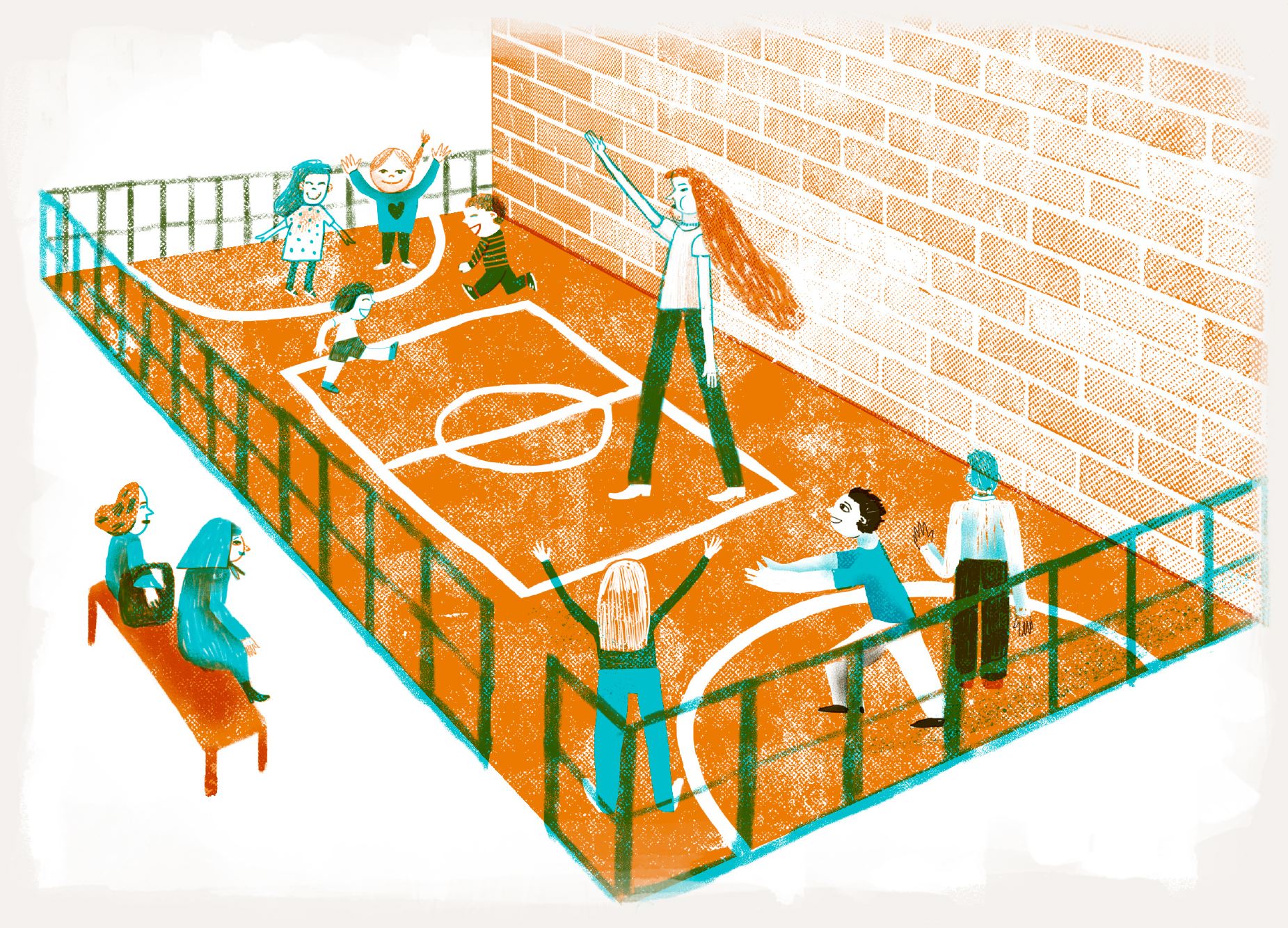
On Wednesdays and Saturdays in the center of Almaty, children with autism and ordinary children play sports games for two hours. Children with autism need this to learn communication. Ordinary children need this to learn sympathy
An orange rope is stretched between the walls of the gym. It is aisulu, a thin seven -year -old girl, cut “under the pot”. You need to step strictly along the line and look at the extended hand and index finger. Previously, Aisulu did not say anything at all - she was afraid of the sound of her own voice. Now he plays with everyone, sometimes he says something, expresses the mood with exclamations. She steps along the line, but she can’t pass. Adil helps her. He goes behind, saying: "And another step and another step." With each of his words, Aisulu, gaining air into the lungs as if with a dive, takes a big step forward.
Children drive
I was late for 10 minutes. At the site, 16 children and five adults are already engaged in might and main. Nearby on the bench are mothers, grandmothers and coordinator of the inclusive sport project Saltanat Murzalinova-Yakovleva.
- Are you to us? Come in, do not be afraid, we have everything positive here.
Adults and children divided into two teams and parted on the opposite sides of the site. They are led by a tall, tight -fitting girl in a white T -shirt - Lily, a social teacher and a psychologist.
- Remove the backpack and join. Now you will guess which of the children who, - tells me the interior Adil.
Together with adults, I get up opposite the children. On the command of Lily, the children squat down and move to us with a goose step, and we meet them. The most important thing is that they should keep eye contact with one of the adults. When the children run up, you need, looking into their eyes, "give five." Then they will jump to their feet and, joyful, run back at the rang. And so several times. Healthy children hold their special friends by the hands of them, so that they do not lag behind.
Then the children are divided into two teams, someone's dad is looking after each team. Training turns into an exciting game where you need to score points. At the end of the training, Lily will calculate the results and name the winner.
Dads graze
One of the dads on the site is called Argyn. His son Nurzhan smiles all the time, giggles, pulls his body and head. When there are too many such movements, the father slowly takes him aside, and Nurzhan performs a “bar” or squats. In two hours I had to do this three times.
- Sorry, what are you doing? - I ask Argyn.
- We remove tension through the muscles.
The second father on the site is the name of Yuri. Two years ago, he, together with his wife and two sons, left his native Semey (former Semipalatinsk - TD) in Almaty, so that one of their two sons - eight -year -old Andrei - could study every day with coaches and other children in the association. At three years old, Andrei stopped looking people in the eye. Yuri says that Andrei even was born in silence, he did not shout at all. But for the time being, he continued to develop normally, went to an ordinary kindergarten.
- My wife and I were engaged in business all the time, and Andrei was mainly with a nanny. Maybe he lacked our attention, ”Yuri lowers his head. - To move here, we had to leave the business. So far, the salary is small, but promise that there will be more. We have only one problem - money. Well, relatives are still supporting.
Yuri became the project coach and with visible pleasure helps other children. But almost all the time he tries to spend next to his son, trying not to remember that this was not always: when Andrei had signs of autism, Yuri left his family, he wanted to start a new life. But a year later he returned.
I am interested in whether Andrei helps classes in the Association of inclusive sports.
- Certainly! You just look, he can do everything!
At this time, Andrei sits between us, sings something under his breath.
- Andrey! Where are we going to go now? - In order to attract the attention of the son, Yura has to almost scream. He calls it "speak impulsive."
- To the woman. To grandfather, - Andrei answers through a pause.
“I do nothing at home, Andryukha does everything for me: he will wash the floors, the garbage will take out,” says Yuri. -Maybe someone will seem strange to someone, but such children need it. They can not remain alone or sit idle - then they again go into their state.
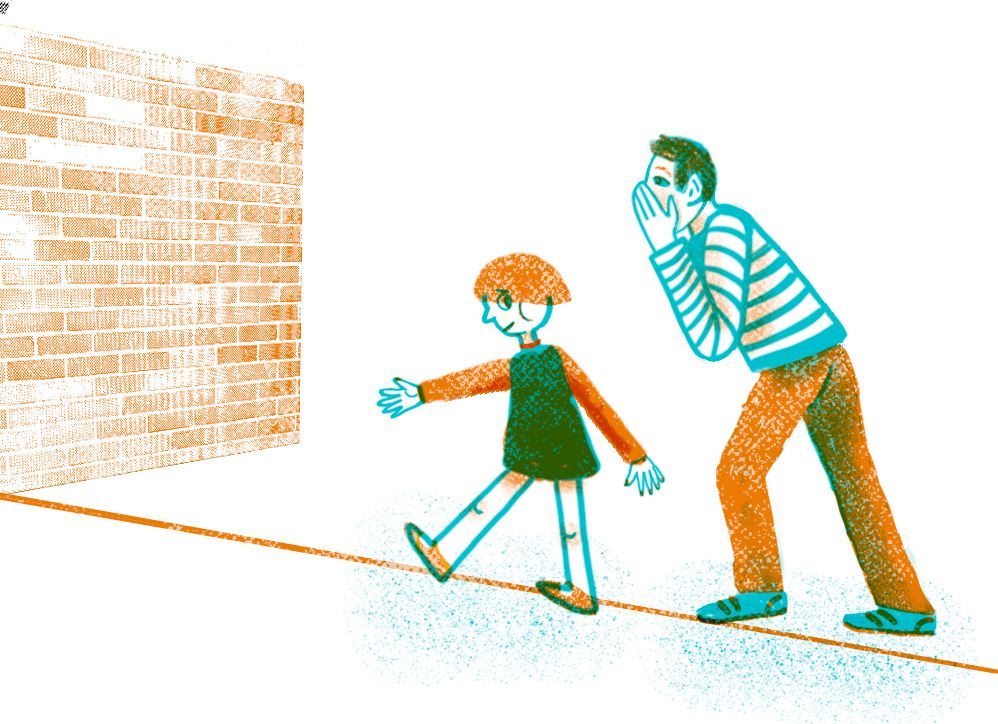 Illustration: Rita Cherepanova for TD
The association has four dads. Moscow specialist Dmitry Vdovin is engaged in a team of fathers. To become a coach in inclusive sports, Yuri himself had to put himself in order.
“I weighed under 100 kilograms, now I weigh 83,” Andrei's dad says not without pride. - Monday, Wednesday, Friday with us are the days of dads. After classes with children, we run for another two hours, jump, crawl, only then we go home. But there is little one physical form: you need to do everything with a special mood. Our children easily read the condition: if you come to the lesson, they will also be reluctant to do everything, they will be lazy.
Our children easily read the condition: if you come to the lesson sluggish, they will also be lazy “I was disappointed in medicine,” Yuri continues. - First, we took Andrei to the clinic, then refused. If he is hyperactive, he is simply prescribed sedative. Why calm the child with drugs? You can help him to waste strength.
The training ends, dads collect equipment in sports bags. Andrei, having received complete freedom, rushes around the site and laughs loudly. I distract Yura and ask him if it is difficult for him to be a dad of a special child.
“It is difficult when you are alone,” he answers a little, he answers, “and if you are all the time with the same people, if you have common problems, and the atmosphere between you is friendly, then it is almost easy.”
Coordinators hug
To learn more about the “Inclusive Sport” project, which takes place under the patronage of the Assistance Fund “Voluntary Society“ Mercy ”(House), I agree to meet with the project coordinator Saltanat Murzalinova-Yakovleva.
“Our children, who learn to live with autism, need a medium for communication,” explains Saltanate. - Since the usual occupation of children is a game, a model of joint sports of sports in the very best way to create such an atmosphere. From the association we selected children who can be calmly in the company, are not afraid of strangers. We needed helping children. They threw a cry on Facebook to their parents. The reviews were different: someone was indignant, and someone just took and brought his child.
The association has 25 specialists. The main backbone of the team is the Muscovites, who were joined by Kazakhstanis, including Saltanate.
Saltanat with pleasure tells me how in the summer they went to intensive to Georgia, and there are amazing beaches with magnetic sand and the sea. In children there are breakthrough successes, parents are distracted from life and daily routine.
Saltanate wants to boast of every child from the association. He tells how a rifat, who had a crisis not so long ago, has learned in a week on signs on the streets of the Georgian alphabet. Like her daughter Alice, seeing a child with problems, immediately takes him under her childhood custody. That football players from the Barcelona Academy on their visit to Almaty held a master class for their children and were discouraged: they could not understand where the healthy children were and where the autists were.
Saltanate itself has two children: Genghiz ten years old, Alice - eight. They are the most active assistants in inclusive sports classes. I am interested in why Saltanate brought them there.
- Do they have a choice? - Saltanate laughs. - No, I do not force them. It’s just that the perception of the world of the world depends on the perception of the world by their parents. If a person feels discomfort about stray dogs or children with disabilities, then he also sets up his child. I love our children, so my children have no choice but to love them too.
Before healthy children began to attend training, experts from the association explained to them what autism is, and what their task will be.
-We said that these are children who do not look into the eyes, that it is difficult for them to communicate, that they see the world differently, that they may not want to talk and play. Honestly, we ourselves could not imagine what would come of it, ”says Saltanate and was immediately distracted by children who are approaching her to hug.
“When the autistic learns to say“ hello ”and look into the eyes, he begins to appreciate this contact, and in no case can you ignore his greeting,” she explains. - When an ordinary child on the site constantly pulls the autistic: “Catch the ball, catch up with me, hold my hand,” the autistic begins to join the game himself. Children develop only when they stretch one after another.
Когда аутист научится говорить «привет» и смотреть в глаза, он начинает ценить контакт, и игнорировать его приветствие нельзяLilia Filatova 26 years. Her experience working with children's children is 10 years old. It is she who conducts all the training: so she planes two hours of classes that children have practically no time to rest. Lily moved to Almaty from Moscow to work in the association, leaving her parents and previous life there.
- The general goal of all classes is to create an environment in which it is possible to solve two problems at once. Special children need to “cook” in the game environment, feel emotions, laugh, run, play with peers. Adults cannot create such an environment with all desire. Healthy children learn to pay attention to others, to those who are harder, ”says Lilya. - And if we talk about specific purposes, then the guys learn to combine the work of the eyes and work of the body.
I ask Lilya to tell me about a particular case when classes helped the child.
- At the very beginning, a very complex child came to us - Oscar. He cried all the time, squatted and plucked his ears with his hands, classes brought him only stress. But no one in the classroom forcibly involved him. After some time, he no longer cried, just stood on the sidelines and watched the children. Two months later, he said: "I also want."
Bobra and chipmunks retreat
When it comes to Nazara, Lilya blurs in a smile: “Oh, Nazar we have such an interesting boy, he will give you one interview!”
A tall burning brunette Nazar stands out among the guys running and jumping on the site. He is the most adult, he is already 15 years old. Patiently does the exercises with seven -year -olds, but sometimes he bothers him. Then the coaches ask him for help.
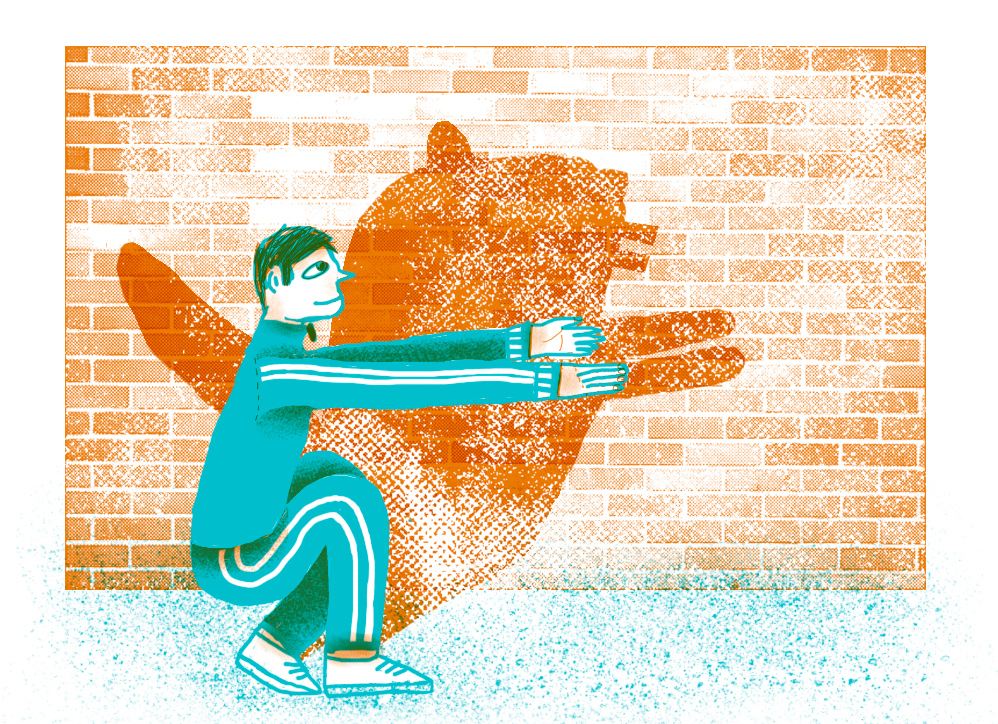 Illustration: Rita Cherepanova for TD
- Nazar, help!
- I help!
- Nazar, give me the ball!
- I give it!
- Nazar, come here!
- I'm going!
- Until the age of seven, Nazar was a "talking child with autistic features." Then, in his head, images began to arise, which he spun more and more. The main ones were beavers and chipmunks. Nazar ignored adults, spoke only about his beavers and chipmunks. When he at the age of seven came to the association, he had a strong neurosis, ”Lily recalls.
Nazar ignored adults, spoke only about his beavers and chipmunkNow Nazar himself has become an assistant - in the classroom he looks after the younger children. But until now, “beaver and chipmunks” sometimes capture him, and then he says: “I have stereotypical behavior again, I have to switch.”
On Saturday, even more children came to training-24. Today they have a master class from the captain of the national team of Kazakhstan according to the volleyball of Korinna Ishimtseva. The guys again divided into two teams. Genghis - Son Saltanate is an assistant, but he, like any child, wants to be distracted. His team cannot line up in a flat line.
- Ring, hold the team! Hold your voice! - Dads Chingiza shout. And the boy rushes to build a team.
I am sitting in the gym and waiting for the moment when Nazara can be distracted by conversation. Classes take place intensively, the break is given only to drink water, but the children seem to not get tired. And so Nazar sits on the floor and takes out his bottle of water. I sit down, he begins the conversation first.
- We went on a hike.
- Wow, where?
- To the mountains. There was a picnic. Tired.
“Nazar, you know why you come here?”
-And I myself was once a crisis child, I studied.
- What is a crisis child?
- This is such a child who twists stereotypes, he has problems with speech, cannot serve himself, does not do what they ask him.
- How to understand this - twists stereotypes?
- This is when the child repeats the same actions, even if there is no need for this.
- Do you like it in the classroom?
- Yes. When I have some kind of closure, anxiety, I can, without hesitation, tell specialists. I have closes. I get fed to something, I repeat the same thing all the time.
- And how are you doing?
- The simplest is to give yourself penalties. For example, make squats, push away several times.
- What else do you like to do outside the association and outside the house?
-To be honest, I like to go to basketball, on swimming, I like to watch something about cars on the Internet. I especially love Top Gear's program.
- Do you want a car?
Read also 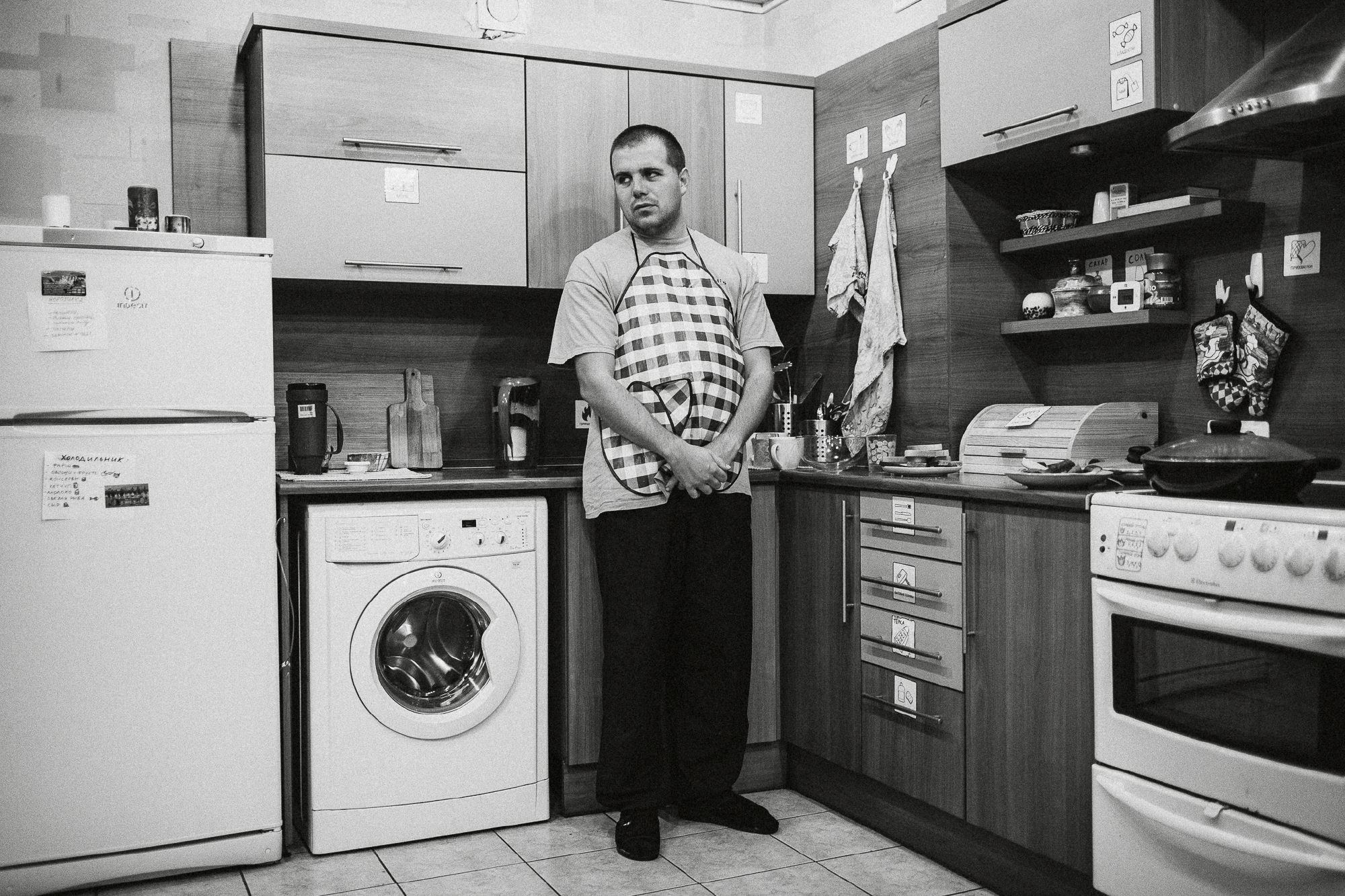
 Julia Tsvetkova: The apartment answer today has Russian mothers who raise children with autism, there is even hope for their autonomy and independence. But the situation may change in the root. This requires our help
- No. I would like to be able to drive. Having a car is expensive.
- Do you like going to school?
- Look, I'm now in homework. And I really like it so much. Teachers come to my house, and I have time everywhere. When I went to school, I didn’t really like it there. I do not see from the board, and guys ... Well, how to say ... Mom explained to me that the problem is not only in their behavior, but also in me too.
“They didn't want to communicate with you?”
- I am bored with them. They all the time play gadgets, scream, argue.
- What subject do you like the most?
- Physics. I like to solve complex problems, but sometimes I get two, because I forget to make a home.
The material uses links to publications of social networks Instagram and Facebook, as well as their names are mentioned. These web resources belong to Meta Platforms Inc. - It is recognized in Russia as an extremist organization and is prohibited.
The material uses links to publications of social networks Instagram and Facebook, as well as their names are mentioned. These web resources belong to Meta Platforms Inc. - It is recognized in Russia as an extremist organization and is prohibited.
inclusion