
Translated material
Books that you cannot find without us
Galina Yuzefovich - about three non -obvious novels worthy of attention
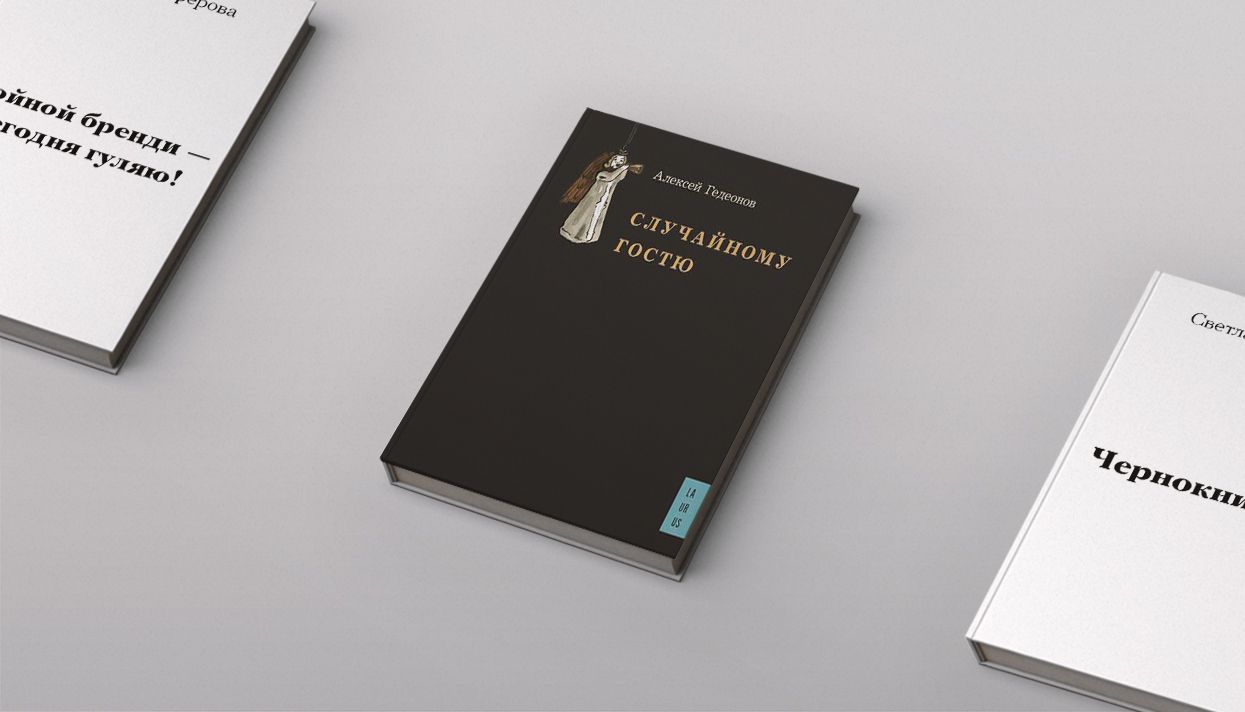
The Literary critic of Medusa Galina Yuzefovich in this review tells about books that the reader will not find just like that. Two of them - "Double brandy - I'm walking today!" Maria Eliferova and the “Warlock” Svetlana Meteleva - posted on the Internet, the third - the “random guest” by Alexei Gedeonov - was published in the Ukrainian publishing house Laurus.
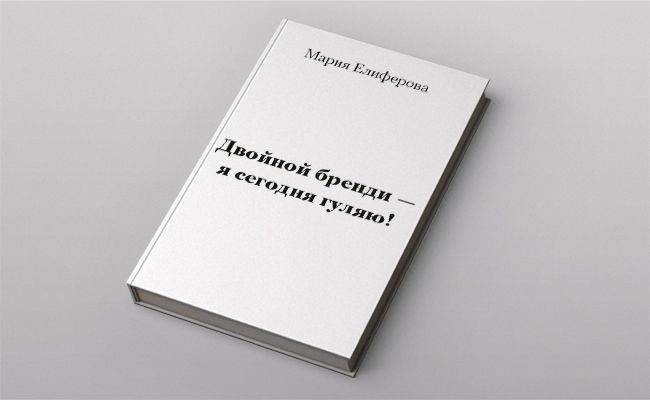
Maria Eliferova. Double brandy - I'm walking today!
The first is completely irresistible-Maria Eliferova’s novel “The Author's Death” was written in the Genre of the Vampirrier Genre, came out of almost ten years ago and was a wonderful successful for a literary debut. The second, “terrible Edda” (intricate fantasy in the scenery of Scandinavian mythology) appeared two years later and was already significantly less successful. The third, very fresh science fiction novel “Double Brandy-I'm walking today!” Several publishers were consistently rejected, and, desperate to see him printed, Eliferova decided to ultimately put her brainchild on the network for free.
The cause of publishing indifference is understandable: “double brandy” falls exactly into the gap between “real literature” and “science fiction”. For the first, Mars, spacesuits and aliens are too much in it. For the second - there is definitely lack of dynamics, exotic and adventure, but lyrics and philosophy - with excess. If this schematic description led you to thoughts about the work of the Strugatsky brothers and in general about the good old “speculative science fiction” (this term introduced Robert Heinline in everyday life to describe texts, the futurological surroundings in which is just a reason to talk about the human soul in inhuman circumstances), then you think in the right direction. Fiction in the “double brandy”-undoubtedly, the frame of the narrative, but actually the author needs it mainly in order to once again-and from a new angle-to discuss the current value of the category of otherness.
The action of the novel unfolds at once in two chronological layers of the XXIV century not too far from each other: in the joint Earth-Barnard Archaeological Expedition to Mars and the Scientific Congress at Barnard, where participants in this expedition present the results of their recent surveys. Barnards are the only (besides human) rational civilization found in the Universe, also humanoids, but their genome differs from the human by 10%, and this, apparently, is some very important interest. Barnardians are smaller, faster, more emotional and more mobile, they live less, only Maori can master all earthly languages (their larynx is not adapted to reproduce consonants), they have a strange system of group marriages and pulse 100 shots per minutes, and instead of formal legislation, they are based on a peculiar code of honor and insignificant sense of dignity. Barnard civilization is younger than human, which gives people the right to treat Barnardians down - as a frivolous younger brothers, a little lagging behind development. It is from this attitude that the main conflict of the novel is born-the quarrel of the Barnard professor-archaeologist Viktor Lai and the formal head of the expedition of Arthur Malori. Victor is selfless, open, friendly and proud. Malori, on the contrary, is hidden, restrained, envious and executed by prejudices. The situation is exacerbated by the romantic feelings arising between Victor Lai and one of the expedition participants - Zemlyanka Lika, as well as the fact that the unique material that was not previously studied at the disposal of archaeologists for the first time - the remains of Martian, indicating that the deaths of their civilization preceded the mutation and degeneration ...
Of course, all three conflicts - the contemptuous hostility of earthlings for Barnardians, the love of Victor and Lika, as well as the mysterious death of Martians - will be linked into a tight ideological node, which, when unraveling, will decompose into two simple statements. Firstly, “their own” and “strangers” really exist, and, as Kipling wrote, they will not come from the place, no matter how the individual individuals wanted the opposite. Secondly, these differences are not described in the evaluative categories “better”-“worse”, and attempts to see the world in a similar binary way lead to consequences sometimes regrettable, and sometimes simply catastrophic.
Some evidence of this message (very characteristic of the “speculative fiction” as such-the whole “world of noon” of the Strugatsky rests on such banalities and universals), however, is compensated by Eliferia charm and some kind of touching, slightly naive “needlework” of the text. The coating of amateurism in the purest and most high sense of the word (Eliferova’s book is a kind of game for one, a fairy tale that a book girl tells herself for his entertainment and pleasure at night) in the case of a “double brandy” turns into an inconsistent graphomania, but her direct opposite-a feeling of tender and fragile, really piece thing. Not as outstanding as the “death of the author”, but definitely the same pretty breed.
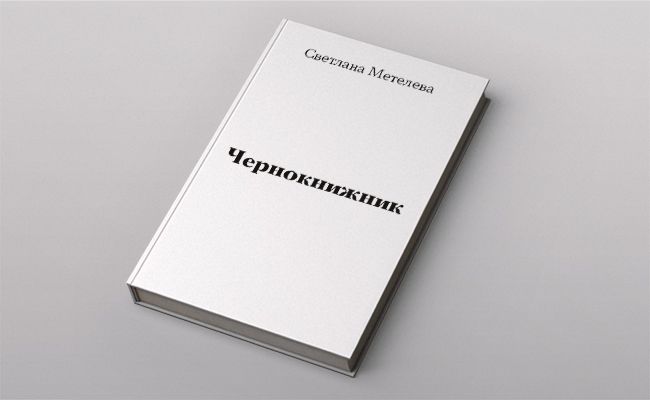
Svetlana Meteleva. Blacksnik
The mass grave of the Prose.ru site stores a lot of treasures, and the “Britainch House” Svetlana Meteleva is one of them. The novel, rejected, as far as I know,, nevertheless, belongs to the category of real, professional literature, written at the same time very consciously and reflectively-what is called “from the head” and at the same time completely honest, without pragmatic (and almost always barren) flirting with the reader. The name leads to thoughts about fantasy, but this is not so: “Blacksmithing” is also a story about the 90s in the spirit of “Cranes and dwarfs” by Leonid Yuzefovich or “Fortress of doubt” by Anton Utkin, and a classic plot about the “Cursed Book” with historical interludes, and a carbonated drug addict hallucinosis.
1994, Boris Gorelov, 38 years old, a drug addict sitting on a “screw”, incomplete higher, place of birth - Kharkov, three “walkers” (fraud, fraud, drugs again), leans back from the zone and returned to non -native, but beloved Moscow. In search of an overnight stay, Boris finds himself in the building of the former Institute of Marxism-Leninism, where he gets acquainted with the mysterious Konstantin Cyprisadis, president of the Ilion Fund for Assistance of Russian Culture. Cyprisadis offers Gorelov a job, which, however, in fact, is quite quickly turned out to be a standard setup. The Ilion Fund sells precious antique books stolen from the institute’s library, and the convicted Gorelov needs Cypriadis as a bargaining pawn - to get into prison instead if the scam reveals. Having browned his cartridge in time, the hero decides to intercept the initiative from Cypriadis and personally bargain with stolen rarities. From this point begins the path that will consistently lead Gorelov to an inconceivable take -off, complete collapse and through it - to spiritual transformation. Having begun with naked mercantile calculation, Gorelov’s relationship with books (and especially with one book - the first edition of Tomas Mora) are transformed into bizarre spiritual obedience, into a detached and almost crazy service.
Of course, Roman Meteleva is literary throughout through-not only the “name of the rose” of Umberto Eco, not only the entire domestic literature about the 90s, but also the Plutov’s romance, and the psychedelic experiments in the spirit of Hunter Thompson, and the devil knows what else ... However, the eternal companion of such “literary”-predictability is “criminal recorder”. inherent. The author deftly lays the loops, then scaring the reader with a damn thing, then calming her full exposure, then scratching the realities of the "dashing 90s", then stroking with book allusions. Even the final slightly sweet peace (Uff, all, have played enough-it is time to go to the happy ending) in fact that it turns out to be a trick-a promise that is not destined to come true, a knuckle with a mockery of reader expectations.
How, why a thing of this quality has been living in a literary landfill for several years - it is unclear. Of course, like any other text, she will benefit from an attentive editing, but even in the current form, the “Warlock” will give one hundred points of handicaps of half of the novels from the short-list of the Russian Bouquer premium.
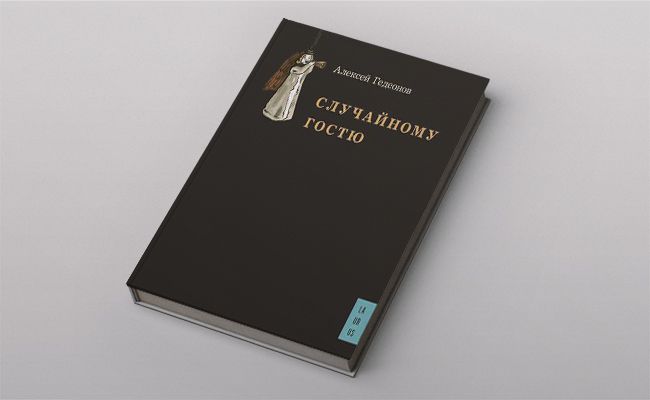
Alexey Gedeonov. Random guest. Kyiv: Laurus, 2016
Unlike the literary orphan, Eliferova and Meteleva, Alexei Gedeonov was lucky: he was picked up, loved, edited with the skillful hands of one of the best domestic editors of Elena Khomutova, delightfully illustrated and released the Kiev publishing house Laurus. However, this writer's luck for the Russian reader turns into direct bad luck: Gedeonov’s book is impossible to buy a book of Gedeonov (they say that some copies will be brought to the non-fiction fair), and it is still not available on the network. And this is all the more grief that Roman Gideonova is a rare example of not just reader pleasure, but a real literary miracle. If Mary Galina’s “autochthones” lead a line leading through Hoffmann and Bulgakov towards the “house in which” Mariam Petrosyan, then you can get some idea of this text. However, no-and this will not help, because such a trajectory does not take into account the incredible language that the novel is written-at the same time simple, subtle and poetic-vulnerable, organically fusion of the prize-ghost of Ukrainian, Polish and Russian speech.
The 12-year-old hero, from birth endowed with the gift of seeing the invisible, comes for the winter holidays to his grandmother in a city, similar simultaneously to Vienna or Krakow, but most of all to lions. Behind the windows there was a late Soviet poverty and shortage, but in the grandmother's house, in spite of everything, the ancient sacrament of preparation for Christmas is happening. With difficulty, the products turn into ritual festive dishes, the “Sherbourg umbrellas” are spinning on TV, invisible, but generally friendly evil spirits, “crusaders” of Senkevich (they reads on the holidays, are conveniently, are close to the denouement, heavy wolf snow is lying on the roofs, and the candles are stuck on the roofs, and the candles are stingy, and the candles are stingy, and the candles are stingy, and the candles are stingy, and the candles are stingy, and the candles are stingy, and the candles are stingy, and the candles storm Each sortie out of a cozy and inhabited home space promises a hero of danger and incredible adventures. And this is not surprising, because on the street are the darkest, most mysterious days of the year - days before Christmas.
Retelling a “random guest” is approximately as pointless as to state poetry in your own words. The magic that fills the novel by Gideonov and generously spilled over the edge is absolutely elusive - it is not in the plot and not even in words, it eludes a direct gaze, like shadows that seem motionless, but set in motion - strange, rhythmic, bewitching - we should take our eyes for a second. This is one of those relatively rare cases when I have to ask you to take my word: when planning purchases for “non-fiction”, include in them the “random guest” by Alexei Gedeonov. It is difficult for me to imagine the best - warmer, dense, material and at the same time so air - reading for the long and dark winter that we have to.
PS Here you can read other reviews of Galina Yuzefovich.
Galina Yuzefovich
Moscow