
Translated material
Awards to the intellect
The Nobel Week is probably the most intellectual week of the year, when not only newspapers and magazines, but also television, who is gravitating to simplification, talk about things that raise humanity in their own eyes. There are people who do not live for money, political intrigue and conditional "sex, rock and roll and drugs." People for whom the satisfaction of intellectual passion is the meaning of life
For 116 years in Stockholm ceremonies, everyone is already accustomed to the idea that medals are not obliged to pay tribute to something useful. True, it happened vice versa: in 1912, the Nobel Committee preferred Einstein the designer of new, convenient valves for gas lighthouses, and did not award the author of its author for the theory of relativity. But all three bonuses of this year are about “science for scientists”, that is, the methods and ideas that change the way of thought, and not for the final results like “particles of God” (the boson of Higgs was given a bonus in 2013) or a hare glowing in the ultraviolet (2008 award for chemistry for green fluorescent protein).
To combat different diseases, it would be nice to be able to turn on and off autophagia in cells. The merit of Yoshinori Osumi is precisely in the fact that he showed how to approach this task
Medicine: eat yourself
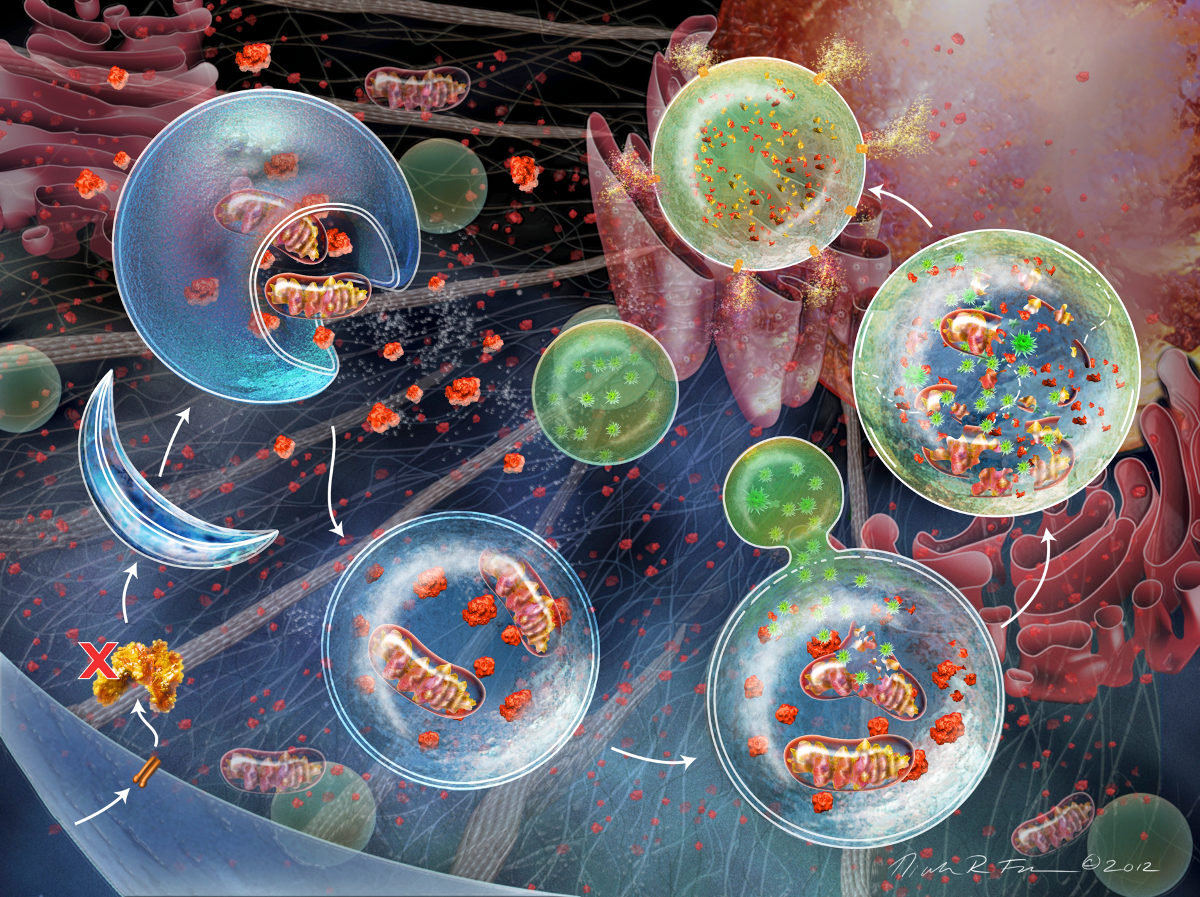
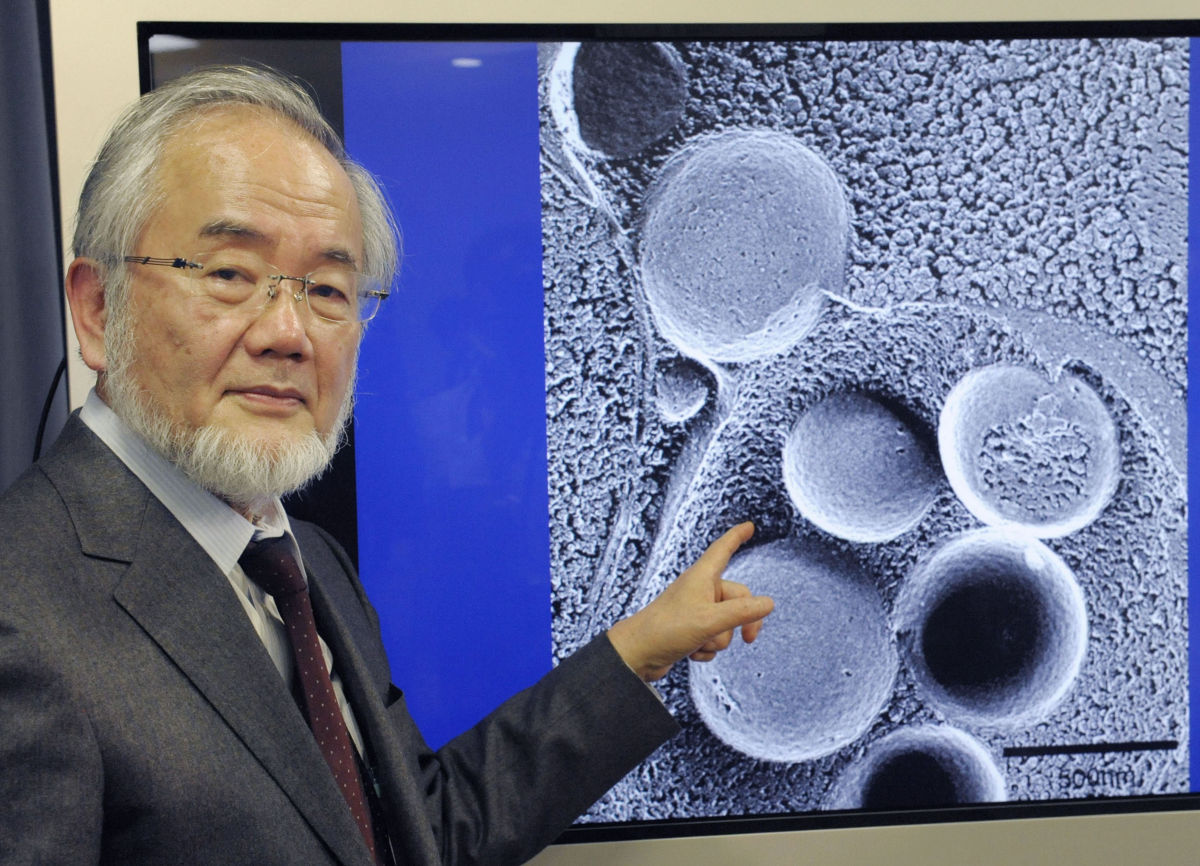
Autophagy - in the literal translation "Samotrace". Only this term is applied not to people who decided to dine with their own hand or foot in the acute phase of madness, but to living cells for whom such behavior is a vital necessity. The prize for the study of this process in the category “Physiology and Medicine” was awarded to the 71-year-old Japanese biologist Yoshinori Osumi, professor of the Tokyo Technological Institute.
The cell eats - and digests - its own organs (biologists call them organelles) and just protein molecules that it did not need. Thanks to another Nobel laureate, Belgian Christian de Duva, biologists have been aware for half a century that cells have lysosomes, a system of garbage processing plants for all occasions. There, as in the furnace, neutralized bacteria, viruses and other waste are sent. And sometimes there seems to be quite efficient spare parts of the molecular mechanism.
Dig in garbage is an ungrateful thing: like the contents of ordinary garbage tanks, cell waste has never been a subject of universal attention. It has not yet become clear that malfunctions in intracellular cleaning can be the cause of the most serious diseases, from cancer to Alzheimer.
Cells have the same problems as in cities where utilities were ongoing. For example, the neurons of the brain during Alzheimer's disease are dying because they are overwhelmed with mountains of uncleaned intracellular debris: neurons literally tears the protein of the beta-amyloid from the inside. Lysosomas could digest it in theory, but for this, the intracellular machinery should learn to identify beta amyloid, march it and deliver to the processing point.
And one of the causes of Parkinson's disease is called the mitochondria, which were torn from the chain. By tradition, they are called “cell energy stations”, but if you develop an analogy, this is not a peaceful solar battery, but rather a nuclear reactor that requires special safety measures. If from there comes a leak of aggressive molecules-oxidizers, they can start neurons with a mechanism of planned cell death. Usually this does not happen, because at the first signs of malfunctions they are noticed and utilized by the internal dumping system in the process of autophagy. But it is worth it to happen - and a person turns into a helpless disabled person.
With cancer cells, it is even more complicated: on the one hand, autophagy prevents them from being born - among intracellular debris, one that can turn a healthy cage into a tumor, and timely cleaning seems to solve this problem. But then, when the tumor is gaining strength, autophagy becomes an important detail of its defense system. The body resists cancer, creating uncomfortable conditions for these cells - what is called metabolic stress - and then tumor cells with luster enthusiasm begin to digest everything that poses a threat to them.
In short, to combat different diseases, autophagia in cells would be good to be able to turn on and off. The merit of Yoshinori Osumi is precisely in the fact that he showed how to approach this task. Before him, about lysosomes and autophagia could be discussed in the language of microscopy, close to the observation protocols for clouds: a bubble appeared in the cage, but something rushed into it. Osumi described the birth of an autophagosoma, means of delivery of cellular waste in the language of genes and proteins. It became clear which molecules put notes on the garbage, how other molecules recognize these notes, pack garbage, drag it and hand over it for recycling. What is this practical sense for medicine? There is hope that we will learn to mark with the help of drugs ourselves like garbage what we do not like in a cage, and send to destroy before undesirable processes are launched. Or just remind cellular utilities so that they fulfill their duties.
Chemistry: atoms
It is difficult to believe in it, but nanotechnologies still exist. It’s just that this word should be called not any process that gives enough fine dust at the output, but exactly what the laureates of this year in chemistry did. They came up with molecules that can work with cars in the size of the size of nanometers, and it is also important that they came up with a way to drive such cars in motion, because you can’t refuel them with gasoline.
Back in the late 1950s, the Nobel Laureate in physics Richard Feynman predicted a car from atoms, and everyone had already talked about them 30 years ago. American engineer Eric Drexler, thanks to which the word “nanotechnology” went to the masses, even published in 1986 a science-popular bestseller of “Crescent Machine”: a typical illustration for the book-gear wheels of hundreds of atoms that were applied to each other.
It is easy to believe that the embodiment of these illustrations in life is a matter of technology. Even the gasoline molecule from the school textbook of chemistry - a hexagon with a circle in the middle - outwardly similar to a nut laid down, and you just need to find a bolt of a suitable size to start designing. But real molecules with pictures from the textbook have nothing to do. This is rather a swaying jelly made of electrons spread over the space around atomic nuclei. Imagine a gear made of jelly. And to hook it behind another teeth is prevented by the fact that the electrons are primarily repelled from each other.
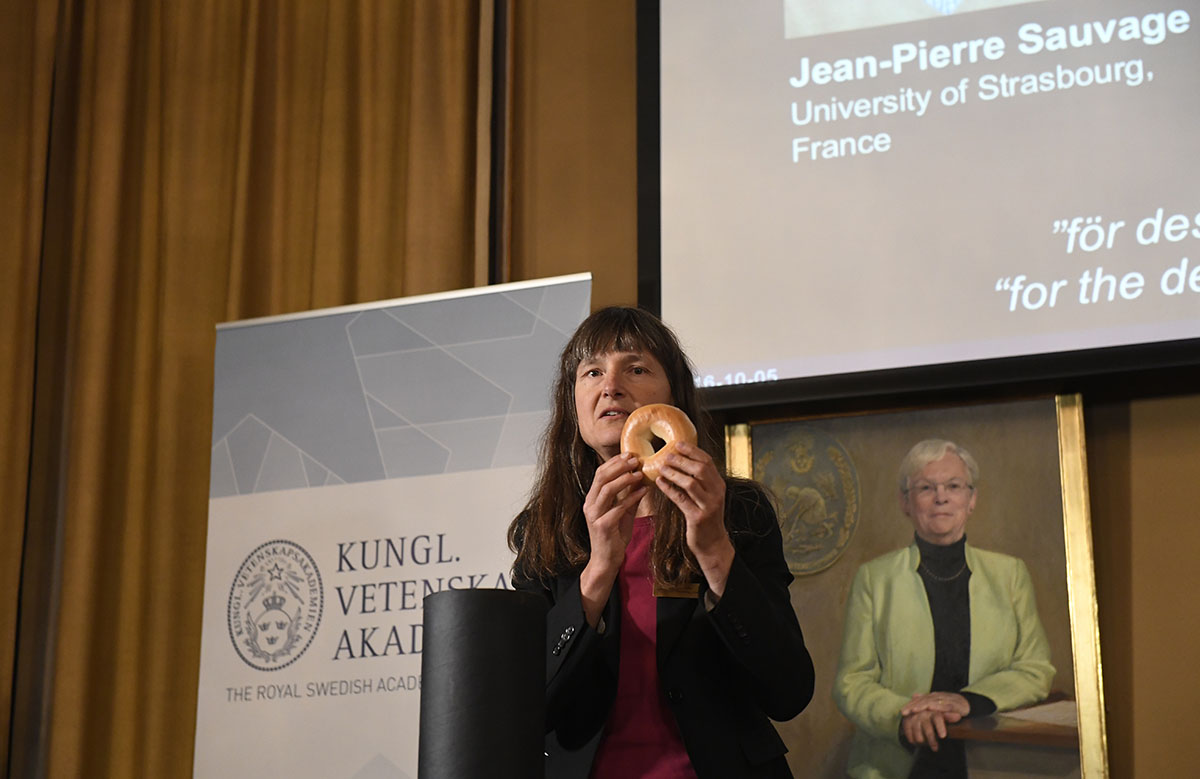
But jelly is not the most hopeless material. In the world of organic chemists, Professor of the University of Strasbourg, Jean-Pierre Owe,-the first in the list of Nobel Prize laureates in chemistry, enjoyed the reputation of a surgeon capable of making a mosquito organs-he learned to tie long molecules with a knot. And at some point I decided to try to close the two ring molecules on each other, like the links of the chain. So in 1983, catenans were synthesized, who depicted at the Nobel press conference with the help of intertwined rolls (chemists observed them earlier in insignificant quantities, not this was the first truly successful synthesis)-the first constructions that can be called the composite molecular mechanism.
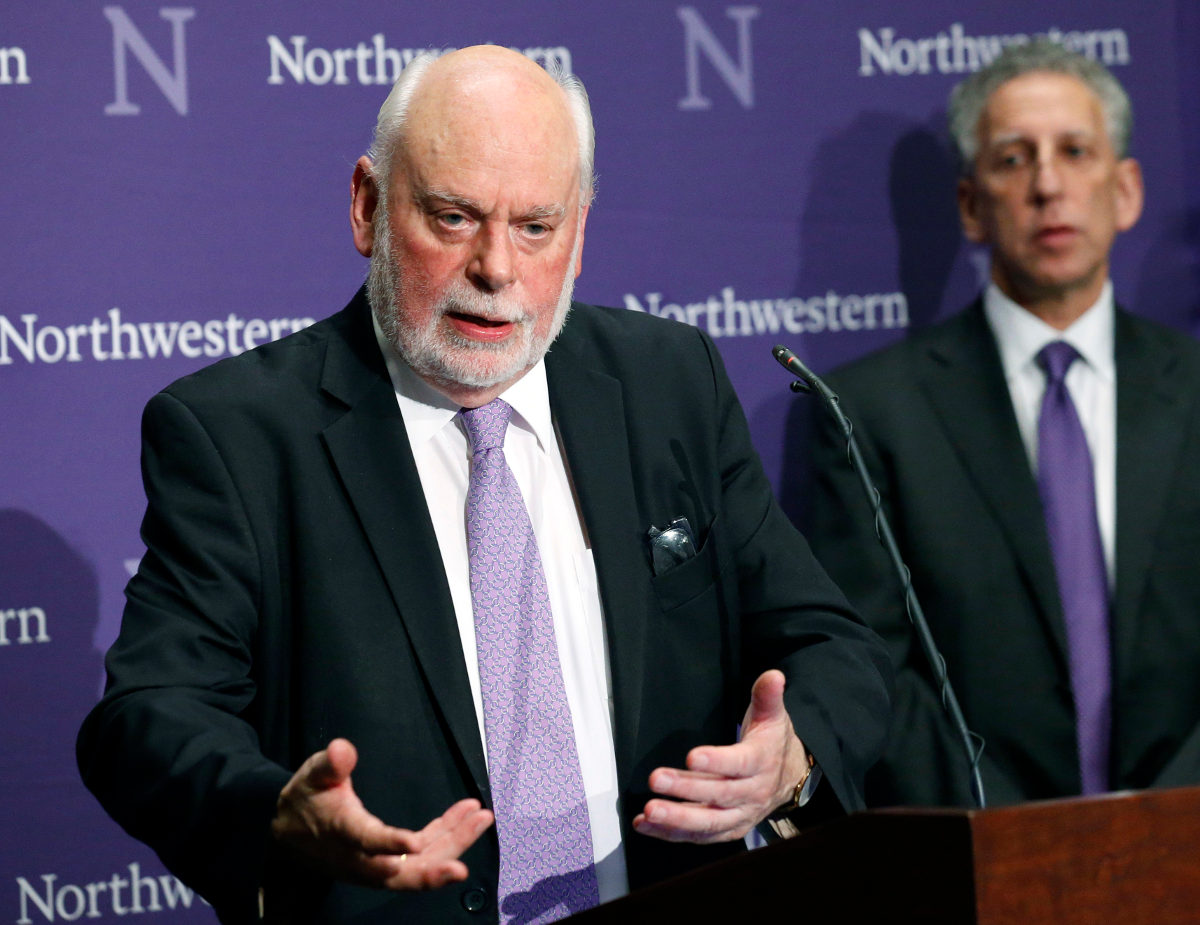
The main thing was to start: following the catenas in 1991, the Roatoxans appeared - rings worn on the rod and capable of moving freely along it. Of the three such rods, the Briton Frazer Stoddart, Professor Northwestern University (Chicago, USA), the second laureate, assembled a molecular elevator-along them, a molecule-platform with three rings around the edges rides up and down.
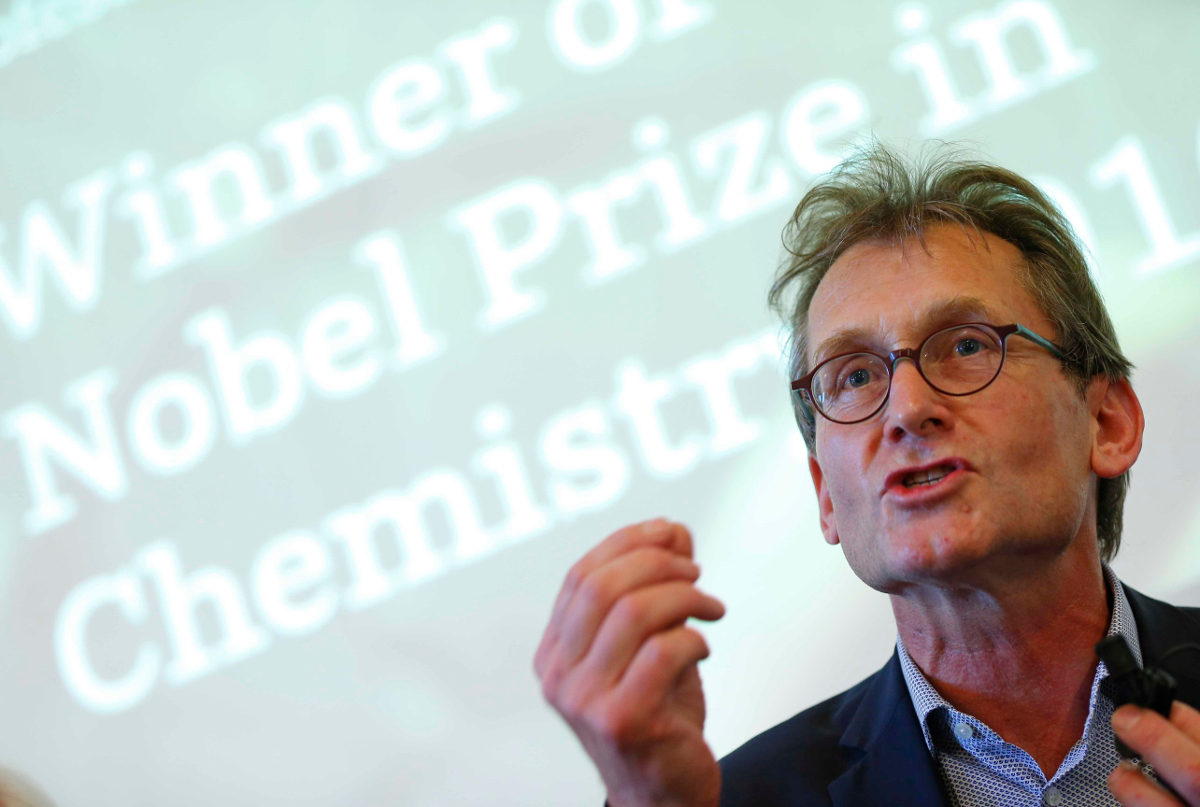
The third of the laureates, the Dutch chemist Bernard Fering from the University of Gruningen (Netherlands), brought the technology to perfection: at some point he presented the public with a molecule in the form of a racing car-two axes, four wheels, a narrow oblong body. The similarity in the form was not exhausted: this design could roll on the surface of the gold crystal. Then there were “muscles” molecules, who could bend and unbend with an effort, which is enough to bend a small petal of the gold foil. Fering invented molecular motors - a way to bring such mechanisms into motion. The source of energy, as a rule, is the light of the laser with a specially selected wavelength, so that it can be precisely dosed.
The Dutch chemist Bernard Fering brought the technology to perfection: he presented the public with a molecule in the form of a racing car - two axes, four wheels, a narrow oblong body. The similarity of the form was not exhausted: this design could roll on the surface of the gold crystal
What is it for? For example, for the delivery of drugs to a cage: here you can imagine a capsule with a door that is revealed in a specific body tissue under the influence of a laser beam, and a portion of a potent medicine comes out of the door. Delivery is not the only thing that can be invented by having such a promising tool: with light you can, for example, turn on and off the effect of antibiotics. This direction has already got its name - photofarmacology.
Physics: Imaginal Krendel
Physicists of mathematicians are often disliked, since they are mainly occupied by things too abstract-from coloring polyhedra in four colors to the classification of ways to tie the rope with a knot or searching for simple twin numbers. In the 1950s, Georgy Gamov, to whom we owe a large explosion model, was surprised to notice that only two areas of mathematics are useless for physics-the theory of numbers (the leading of the farm and the twin numbers) and the topology, an even more mysterious region. The 2016 Prize for “Topological Phase Transitions” proves that the classic was still mistaken.
What does the topology do? To answer this question, the representatives of the Nobel Committee needed a pretzel (two holes), a donut (one hole) and a roll (not one). If you strongly coarse, then the most basic geometric properties of things are interesting to the topists - those that do not change if the thing is crumbling or stretching, but not to tear. In this sense, a circle of both a square or a cup and a bagel is the same thing (imagine them cut out of very soft rubber, which allows you to mix one thing so that it acquires the shape of another). But Krandel (two holes) in the donut (one hole) and even more so you can not turn into a roll.
This explanation usually leaves the listeners a difficult feeling that mathematicians are ill with nonsense. But in fact, they are worried about the geometry much more exotic objects-for example, we can imagine in the form of a figure in an imaginary space all possible ways to turn a satellite or antenna (if something flat instead of a satellite or antenna, such a “figure in an imaginary space” would be a simple circle: each point of its point encodes so many degrees). Although the figure is imaginary, its properties are quite real.
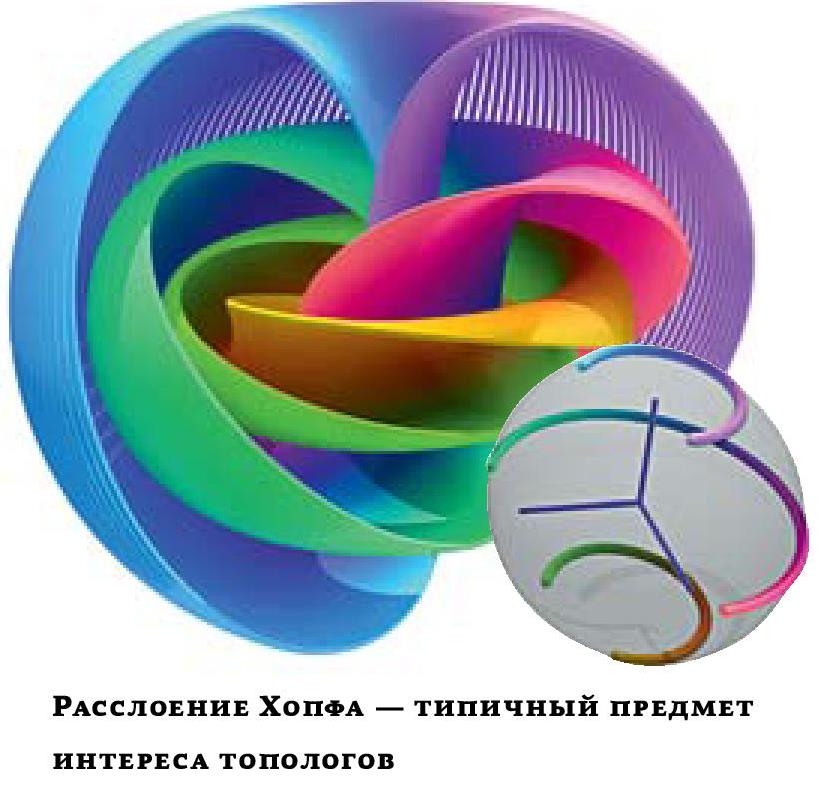
Physicists do not get used to the imaginary spaces. Some models of cosmologists suggest that our space is exactly what is imaginary, but in reality we live in a 10- or 26-dimensional world. But “topological phase transitions” appeared in a more mundane field of knowledge - a solid physics, which studies boring seemingly semiconductors or superconductors. In the tasks of how electrons behave inside them, and imaginary spaces arise with incredible geometry.
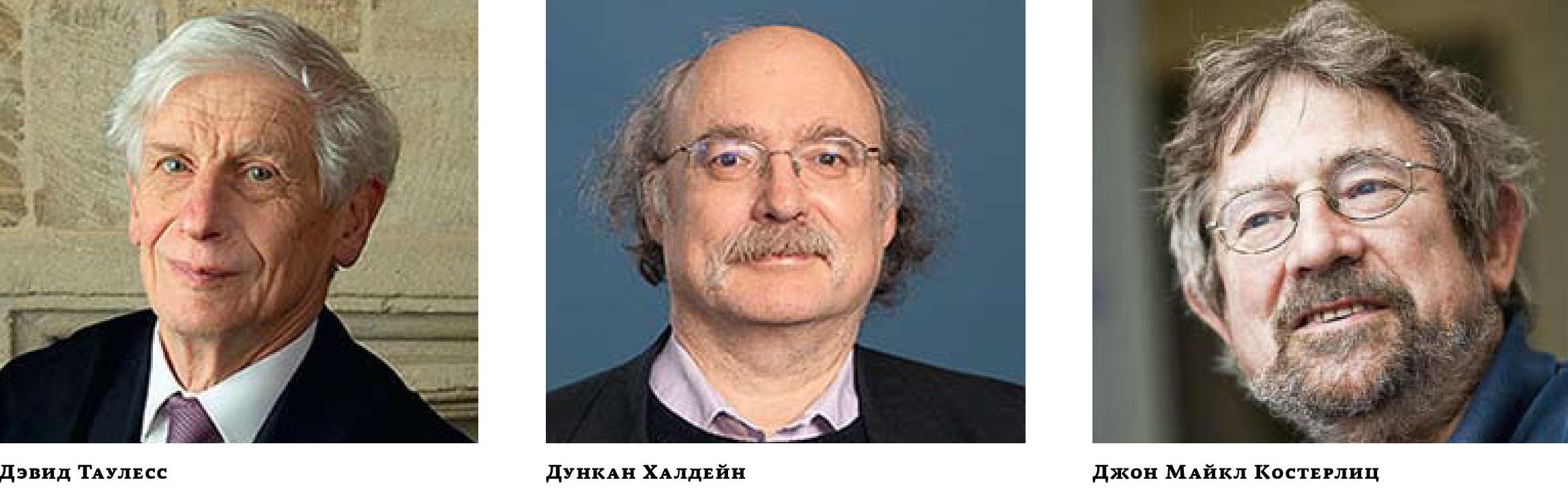
Therefore, it can be said that three American theorists - David Taules, Duncan Haldein and John Kosterlitz - received a bonus for linked changes in real electrical properties (for example, the conductor ceases to carry out or, conversely, gains resistance) with how the conditional donut becomes a conditional pretzel in an imaginary space.
Three American theorists - David Taules, Duncan Haldein and John Bonfire - received a prize for changing changes in real electrical properties with how the conditional donut becomes a conditional codel in an imaginary space
“Topological insulators” - exotic materials capable of such transformations that were first predicted by theorists and only then received in 2007. The hopes for more powerful processors and quantum computers are associated with them and the fact that the electronics in a hundred years will be replaced by spintronics when, instead of an electric charge, the spin will flow (a complex quantum characteristic of the particles). But this is a topic for future awards, and the current one is a good way to remind you that a big science does not come down to a list of topics suitable for getting into evening news.