
Translated material
All power to the quartermaster
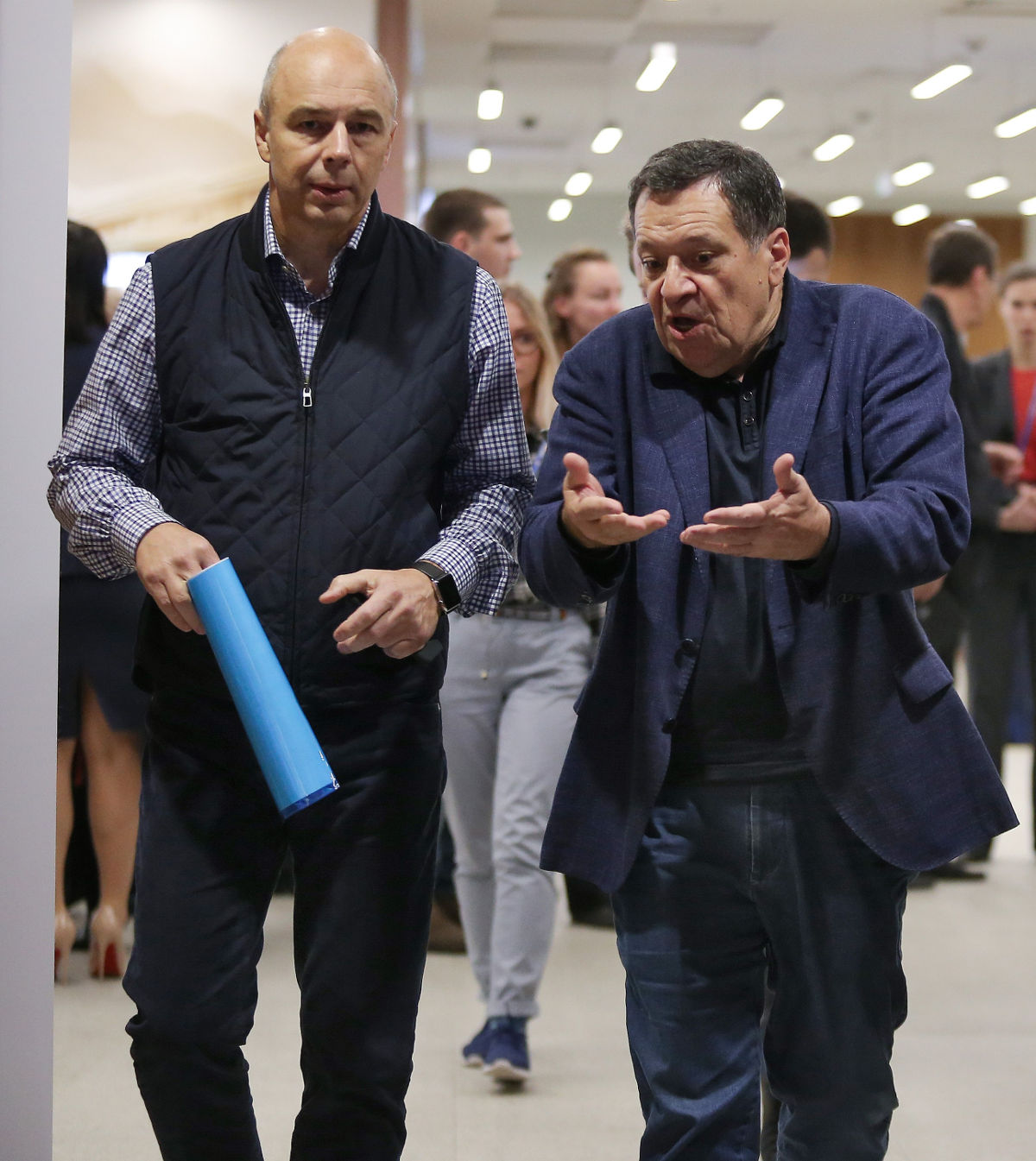
In just a week, moods have changed in the Russian economic power. The government has already refused to increase taxes. Instead, it sells Rosneft and Bashneft, returns to the normal indexation of pensions, reduces the tariffs of state monopolies and, having increased the budget deficit a little more, proceeds to the program to reduce it to 1.2% of GDP in 2019. The authorities will solve the problem of money at the expense of loans in the domestic market (two dozen trillion rubles have accumulated in banks), that is, the release of OFZ under 7–9% per annum.
But it is too early to rejoice: public duty will grow in order to satisfy the growing needs of the military.
Duel on debt
As readers of NT recall, the main problem of the 2016 budget, adopted almost a year ago, was its obvious unrealistic-the plan of income and expenses of the federal center was calculated based on the receipts of oil-eater at $ 50 per barrel. Already in February 2016, when oil cost below $ 40 for a barrel (on average, for three quarters of this year it costs so, it was more expensive, then cheaper, but on average exactly forty per barrel), it was decided in the government: it was impossible to guess the price of oil, as it instantly, in a month, to reduce government departments for years. By the fall, it will become clear how much money has, how much is oil, whether it will be possible to sell Bashneft and Rosneft, and VEBU get a large loan from Chinese banks. And finally, to understand how at all the current expenses can be reduced - the whole spring and autumn are given to the departments to “cut themselves” by 10% of the costs, and at the same time they inscribed the costs of the year 2017-2019 in the bar of the total expenses of 16 trillion rubles. per year.
As a result, in the 2016 budget they reduced everything except the military-industrial complex, which exchanged loans for new state guarantees (these are also budget expenditures) in the amount of 0.9 trillion rubles. The budget deficit for 2016 increased from planned 3.2% of GDP to 3.7%
This was an almost impossible task: on the one hand, to establish the maximum level of government departments, and on the other, to maintain the budget obligations: to index the pension inflation, disability benefits, salaries to state employees, etc. etc., which cannot be reduced. In the language of simple mathematics, this means that all other expenses will have to be reduced by the amount of two inflation. For example, with annual inflation, 10% irregular expenses of the Ministry of Defense will be reduced by 20% per year. And in the next, 2018, the same year. Even based on the old inflation forecast for the budget (4.1% of inflation after three years at best), in 2019, the non -social expenses of departments should decrease by more than 20% in real terms.
In a certain sense, the Minister of Finance Anton Siluanov in the summer of 2016 committed something like a feat-he managed to convince all industry lobbyists that for several years the head of the Central Bank Elvira Nabiullina was harassed for several years: inflation is evil, and for them too. Prior to this, the majority of industries were inclined to the theories rising in the world to John Meinard Keynes, and in Russia - to academician Sergei Glazyev and his high -loving teachers from the Russian Academy of Sciences. Namely: inflation is unimportant, only the growth rate of industrial production is important. Of course, with the program of the Growth Party, which so far (secretly) is sympathized even by some deputy prime ministers in the government of Dmitry Medvedev, parted not without difficulty. But here the arguments are obvious - the less inflation, Anton Siluanov said, the more money you will have. And the fact that the ruble can strengthen due to stabilization of inflation is nothing. Low inflation and a weak ruble - in wartime, the mowing is not like that!
Military requirements
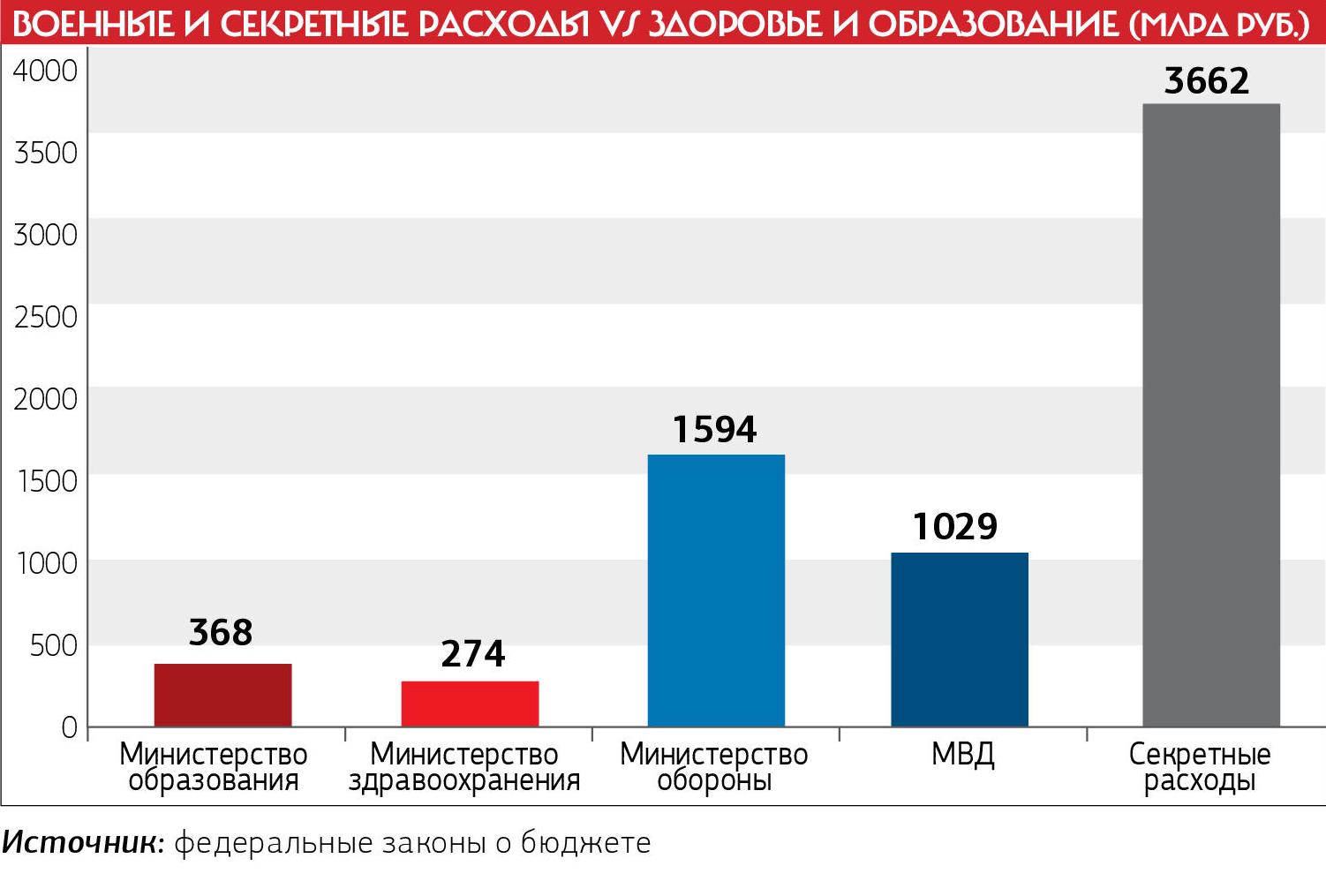
And the time in the yard is exactly the military. Since the beginning of 2016, comrades from the Ministry of Defense have concluded many contracts with enterprises of the military -industrial complex for the production of military equipment, taking for this loans in banks, based on the forecast price of oil $ 50 per barrel. Neither reconsider the contracts, nor pay the military less (and let them understand it themselves), nor stop the work of the military -industrial complex Anton Siluanov and his Ministry of Finance. As a result, in the 2016 budget, everything was reduced to everything except the military-industrial complex, exchanging loans for new state guarantees (these are also budget expenditures) for a amount of 0.9 trillion rubles. The budget deficit for 2016 increased from planned 3.2% of GDP to 3.7%. The Pension Fund, for the last year on its own collecting pension fees (since 2017, the Federal Tax Service will do this), I had to add another 200 billion rubles, and reduce the costs of another 1 trillion rubles inside the budget.
“Rosneft” with her state -press “Rosneftegaz” and the desire to buy the Bashneft’s state -package fell under a hot hand. It became clear that an additional budget deficit of 0.5% of GDP makes the privatization of about 19.5% of Igor Sechin’s shares almost inevitable, and that, previously successfully resisting any privatization in the oil industry, and even more so Rosneft, quickly convinced the Kremlin that privatization was needed. Of course, without unnecessary participants: Bashneft this week with a probability of 99.9% will be transferred for $ 5 billion Rosneft itself, and the state -owned state -packing for this amount of Rosneft will be sold for $ 11 billion in November. At the same time, Rosneft and herself would not mind buying part of their shares - as it turned out, Igor Sechin was aware of, aware of the state. that at least 1 trillion rubles. The main state oil company will still be taken out anyway (in order to avoid the rebellion of the military-industrial complex), and its choice is simple. Either without money and without “Bashneft”, or - without money, but with “Bashneft”. Guess what Sechin chose? We will not guess-the ability of the head of Rosneft to come up with something even more cunning at the last moment and successfully convince the Kremlin in this does not give us this right.
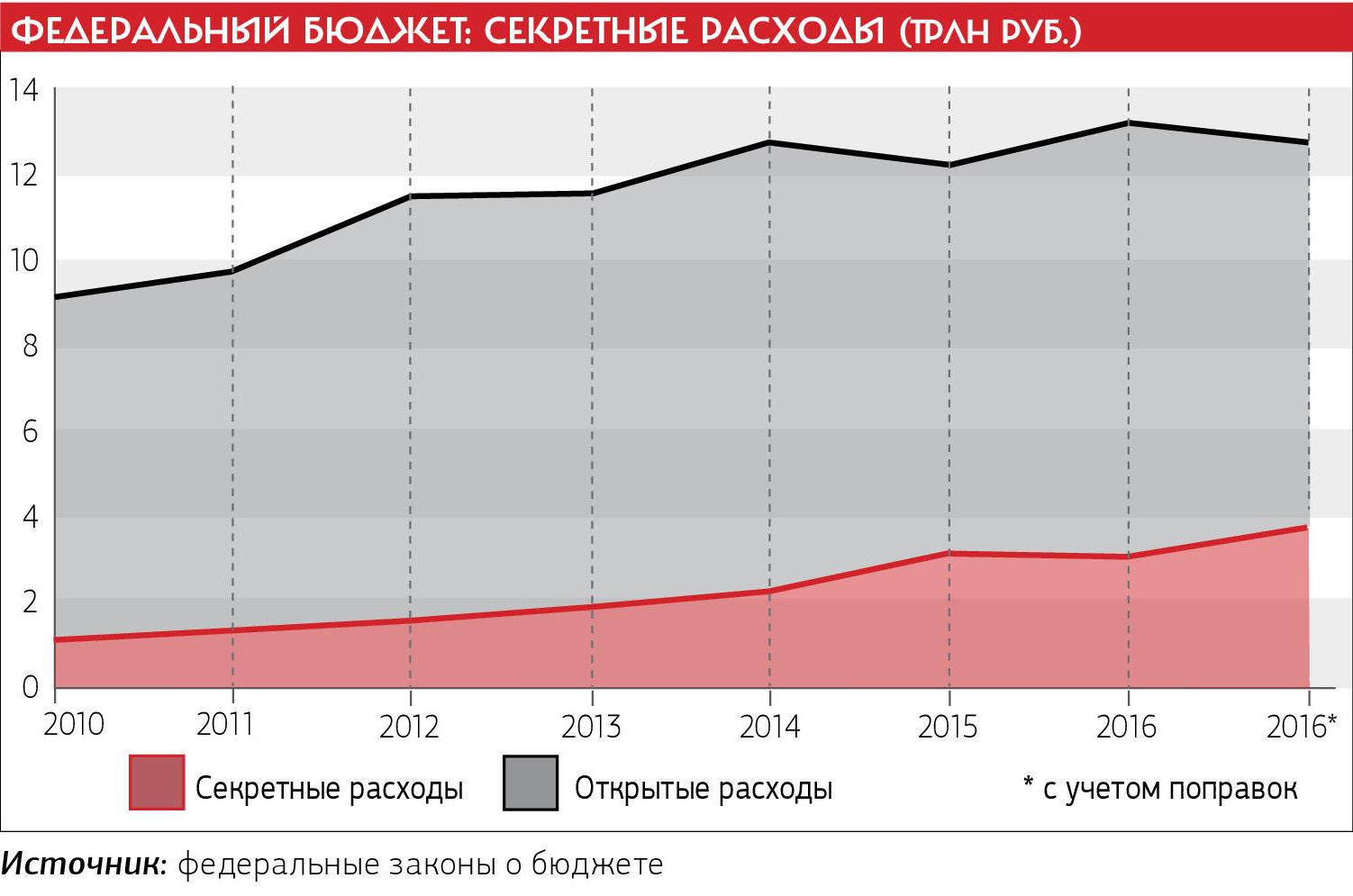
During the remaining quarter, they do not exclude in the Ministry of Finance, something else can happen, and since it usually does not happen good, but bad, the budget deficit for the year will not be 3.7, but 4%, which will be covered at the expense of an almost empty reserve fund, not one year-old and suddenly useful money of Rosneftegasis, as well as additional state bosses of 200 billion rubles.
The question is one: how is the Russian Federation going to live on, at least in 2017?
Siluanov scheme
The Ministry of Finance published the “main directions of the tax policy” for 2017-2019, of which it is quite clear: the department of Anton Siluanov, who all September forced the initiatives to increase all possible taxes at once (the last time, September 21, was proposed, as we already wrote, to create two alternative drafts of the VAT to 20% and with an increase in an approximated suitable tax on the income tax on Revenues are higher than a certain level from 13 to 20%), offers to leave the idea of increasing any taxes not even to the presidential election in 2018, but to leave them unchanged until 2020. It was decided not to touch the total social fees reduced in 2011 - the risks that they will increase to 34%, as before, have decreased significantly.
Bashneft this week with a probability of 99.9% will be transferred for $ 5 billion Rosneft itself, and the State Packet of the Rosneft who was in the worship of this amount in November will be sold for another $ 11 billion - Rosneft itself
The details of the scheme of Anton Siluanov, gradually becoming an independent and strong player in the government, will become known only this week. In the meantime, it can be assumed that since 2017, “budget consolidation” with a planned reduction in budget deficit to 1.2% in 2019 will be carried out in parallel with the rapid increase in internal public debt - through the issue of federal loan bonds worth about 1 trillion per year and above. With some probability, this will not allow Russia to return to the investment level in the medium term (Russia's rating agencies love first of all for the low ratio of debt and GDP - about 13%, according to Siluanov’s scheme, it will inevitably grow). Credit rates will not fall so quickly - a state that occupies in the market always competes with private borrowers.
Finally, state expenses will be deceived more slowly - to what can be occupied on the market, everyone will quickly get used to it, and even more so in the Ministry of Defense. However, the Central Bank has already received a carte blanche in suppressing inflation. Last week, the deputy chairman of the Central Bank Dmitry Tulin, who expressed doubts about the reasonable rigidity of the Central Bank, was transferred to banking supervision, and the block of monetary policy is now completely in the hands of the head of the Central Bank Elvira Nabiullina. There will be no doubt that there will be no doubt that with inflation in Russia will be over in the coming year and it will remain at the level of 4%. Moreover, there are chances that even after 2018, Anton Siluanov’s program to reduce the budget deficit will also be implemented - by him or his successors.
It is not worth it, however, to expect that after a five -year period of experiments in the field of manual management of economics and galloping oil, Russia is finally entering a period of more ordered policy. For example, an increase in public debt will in any case increase the inflationary background - and, therefore, the Central Bank will have to pursue a more stringent policy. But the main problem is among other equalizations is what budget consolidation is carried out for.
It is hardly possible to wait for “humanitarian investments” in education and healthcare. Doubt investments in new transport, and to mitigate the problems caused by urbanization, and to the Far East. In other words, the Ministry of Finance and the Central Bank, that is, Siluanov and Nabiullina (and later, apparently, to Alexei Kudrin), stopped twisting their hands only if they would not sharply reduce military spending. They obviously proved that they can hold the rear better than academician Glazyev and his colleagues from the Russian Academy of Sciences.
Alas, where there is a rear, the front is always implied. And the front is insatiable, even if invisible. The next round of tasks that contradict economic common sense should wait for the winners in the summer of 2017: the military has big plans for the state arms program until 2025 - it is twice as much as the Ministry of Finance is ready to give it. At the moment when Sergei Shoigu or any other Minister of Defense will be refused an urgent, the economic concept in the Kremlin will change again.