
Translated material
Pure white keys (1996)
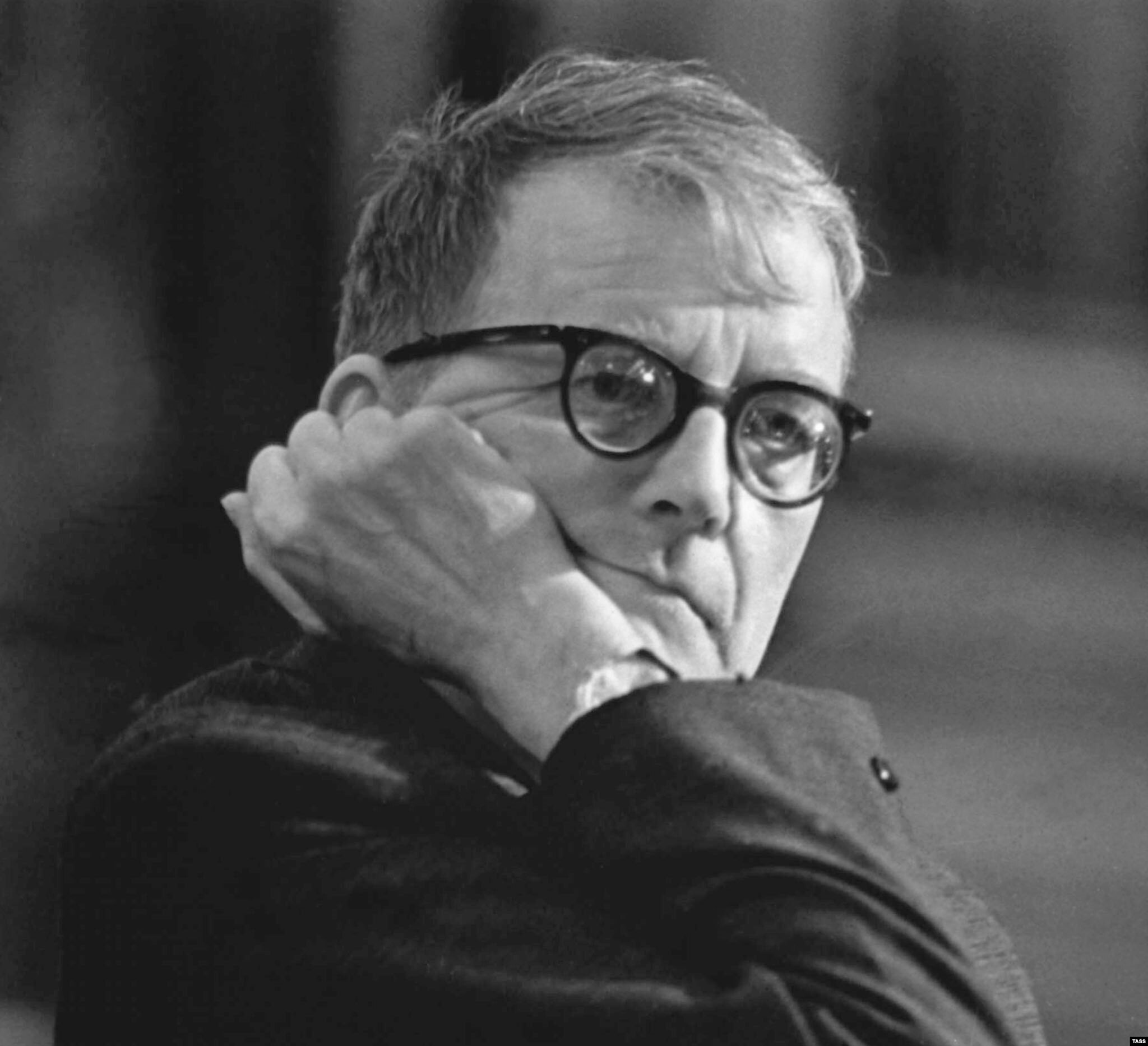
Memory of Dmitry Shostakovich
Archival project "Radio Liberty this week 20 years ago." The most interesting and significant from the air of Radio Freedom of twenty years ago. Incomplete story. Still living hopes. Could Russia go the other way?
The transfer first aired on October 6, 1996. The composer is remembered by the wife, son, musicians and poets who worked with him. Sounds Shostakovich's voice and his music.
Marina Timasheva : Irina Antonovna Shostakovich, Maxim Dmitrievich Shostakovich, Galina Vishnevskaya, poets Andrey Voznesensky and Evgeny Yevtushenko, altist Yuri Bashmet take part in the program. The program was prepared and conducted by Marina Timasheva and Ilya Dadashidze.
(The voice of Dmitry Shostakovich sounds)
The old record of the voice of Dmitry Dmitrievich is not too legible. The great composer argues with the classics about their attitude to death. In their works, she is accompanied by light, comforting music, and Shostakovich does not see anything comforting in death. “So far, our scientists have not thought of immortality,” he finishes. Indeed, scientists did not think of immortality, he himself thought - Dmitry Dmitrievich Shostakovich. To immortality. I don’t want to say banalities, Shostakovich is a genius, this is clear without us, and therefore it is better to listen to the people who knew Dmitry Dmitrievich. And I convey the word to Galina Pavlovna Vishnevskaya.
Galina Vishnevskaya : I met Dmitry Dmitrievich Shostakovich in 1953, when there was the premiere of the opera Fidelio at the Bolshoi Theater. I sang Eleanor, it was my first party in this theater, I was 25 years old. He was at the premiere. At that time he was a consultant issued to the Bolshoi Theater. I remember, even he had a salary of 300 rubles, in my opinion, and they arranged him there after the pogrom of 1948, when all his works for execution were prohibited, and he was completely without money, because he had no other income. He only lived by copyright or the works that he sold, and the state did not buy anything from him, of course, in those years. And he was arranged as a parasite was placed in the Bolshoi Theater. He was quite rare there as a consultant, but he was at the play, I met him. Then, when I married a glory, it was 1955, Glory had already introduced me into the house of Dmitry Dmitrievich. I often visited there, and our friendship lasted until our departure, more than 20 years. We celebrated the New Year together, and every year they celebrated birthdays, and in our house - mine and Glory and Dmitry Dmitrievich in his house. Our cottages were nearby, in Zhukovka, literally after a few houses, and we lived in Moscow - behind the wall of our apartment was his apartment. A neighboring house, but the wall adjacent to our living room. So we were very closely connected humanly with him.
Our cottages were nearby, in Zhukovka, literally after a few houses, and we lived in Moscow - behind the wall of our apartment was his apartment. A neighboring house, but the wall adjacent to our living room. So we were very closely connected humanly with him
Among other things, the first essay that he wrote for me was satires, Sasha Cherny’s poems, he dedicated this composition to me, I was, of course, the first performer. I sang. I later starred in the film, which was called Katerina Izmailova, this is the second edition of his opera "Lady Macbeth of Mtsensk district." It was 1965, he called me and said that it was planned to shoot a film in Leningrad, and he would like me to star in the lead role. For me, it was, of course, with great happiness. For six months we shot this film. And at the same time, I sang a concert with him, he accompanied me. By this time he played for ten years almost, his hands were sick, they took off, muscles were dying. And it was in Leningrad, in the Small Hall, in the break between the shooting of my film, he played me, accompanied his satires on Sasha Cherny's poems. Then I sang with him a few romances yet, and he was madly worried. He played, of course, fine, he did not go astray, his fears were in vain, but nevertheless his nervous state was important - at night he had a heart attack. He was lying in the hospital, and in the hospital he wrote for me a vocal cycle to the poems of the Soprano Bloc, cello, violins and piano, completely divine composition, divine music, some incredible beauty. It, this essay, stands especially in the work of Dmitry Dmitrievich. Maybe from the fact that he was in the hospital at that time, getting together with his death, he somehow turned his life, what he did in life, from a height, as if from heaven he looks at his life. I always have such a feeling when I sing this music. After that, he wrote the 14th symphony. I was the first performer. And, by the way, to the verses of the block, this cycle is also devoted to me. And he also wrote to me the orchestration of Mussorgsky for "Songs and Dance of Death", orchestrated specifically for me, and also dedicated this work to me. So I have the honor and happiness of being a singer, to whom such immortal masterpieces of our greatest composer of the 20th century are dedicated.
(Sings Galina Vishnevskaya)
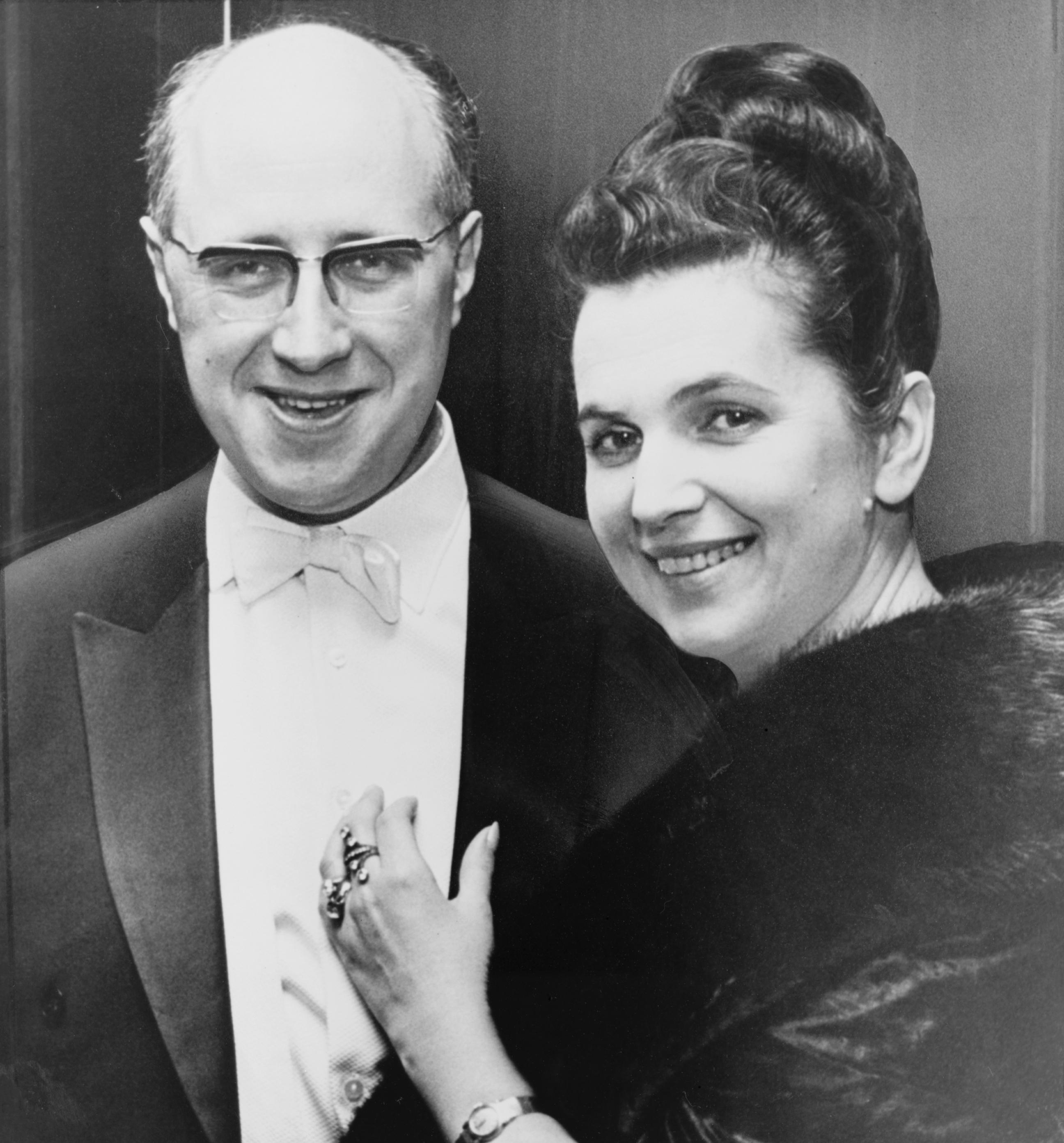
Ilya Dadashidze : Irina Antonovna, the second wife of Shostakovich, met him later than Galina Vishnevskaya. This happened in 1957, when she worked as an editor of the music publisher and was engaged in the libretto of the operetta "Moscow, Cheremushka".
Irina Shostakovich : I worked in a musical publishing house, I saw what love of my colleagues and admirers Dmitry Dmitrievich was surrounded, and how jealous they relate to those people who appear next to him. And I was very afraid of their trial and understood that the life of Dmitry Dmitrievich is a very difficult life. But, if we talk about the outside of the matter, he was a very light person, very simple, very well -educated and very punctual. But his days were full of labor, work, meetings, auditions, prime minister and concerts. A huge number of contacts. And it was necessary to somehow match, hold the tone.
And in family life - he was a Petersburg man, very restrained, with an outstanding sense of humor, with very modest requests, very caring and tender
I tried and still try. Dmitry Dmitrievich was a man with a very strong mental organization, and I think that he was a person with an internally very healthy, strong psyche that could overcome and endure a lot, which others cannot do. And in family life - he was a Petersburg man, very restrained, with an outstanding sense of humor, with very modest requests, very caring and delicate in the family. All his life he adhered to certain rules of everyday life. Those principles that he developed in his youth, life principles, he adhered to them all his life, and they practically did not undergo changes. He was a man of great courage, because he told his music the truth in the conditions of very unbearable when it was fraught. There was, in general, a fearless person.
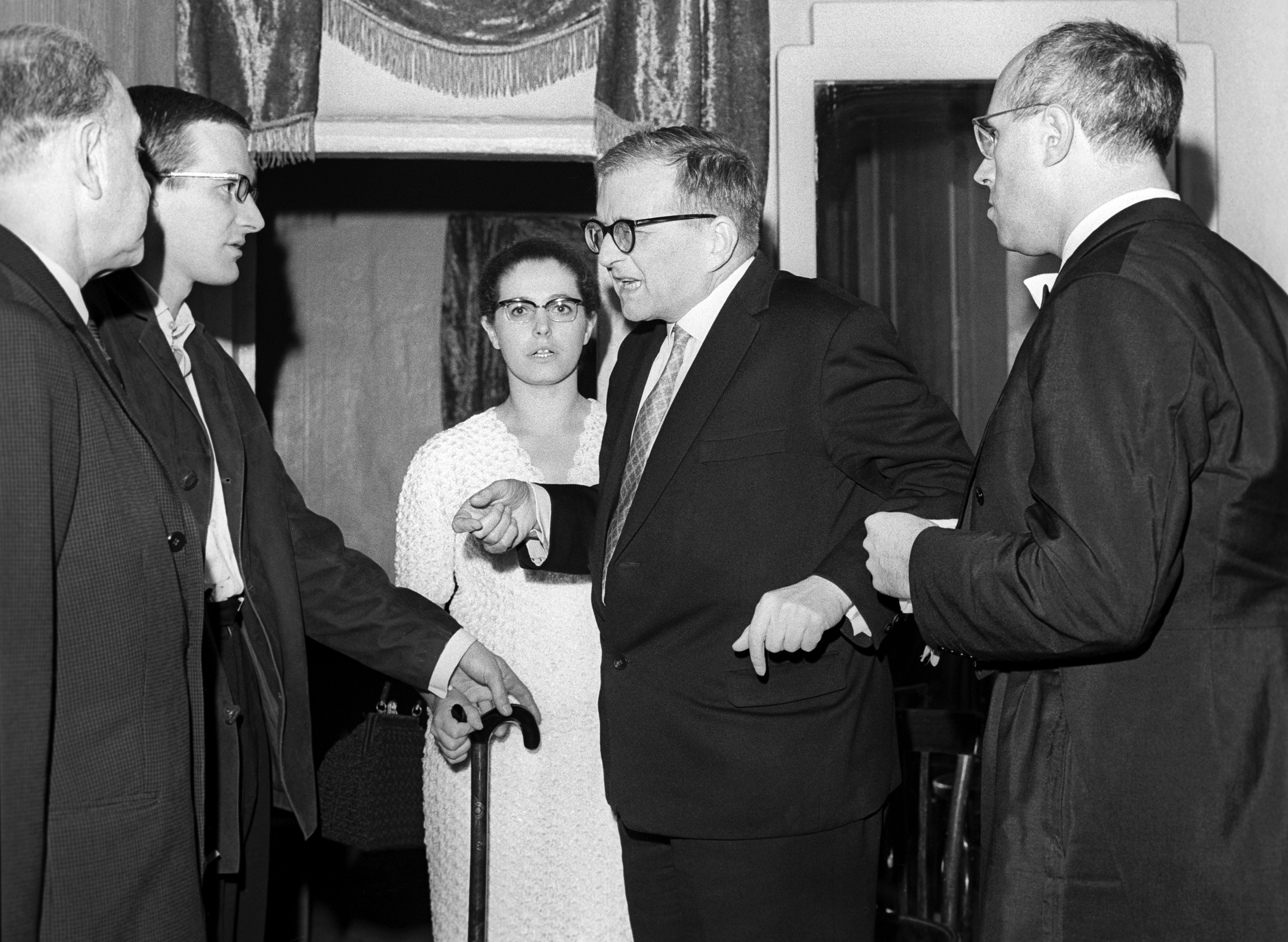
Maxim Shostakovich : Please tell me this photo: tickets for the 7th symphony are sold here. Was it during the war?
Dmitry Shostakovich : This was the performance of my 7th symphony in blocked Leningrad, when the city was besieged, blocked, and this, of course, is one of the heroic stories of our Soviet musical life, our Soviet musicians.
Marina Timasheva : This is a fragment of the conversation of Dmitry Dmitrievich Shostakovich with his son Maxim. The famous conductor Maxim Shostakovich now answers our questions.
Maxim Shostakovich : For me, to conduct the music of my father is great happiness and a huge responsibility. First of all, I would like to say that my father never dies for me, because through his musical phrase, through his music I hear his voice. Through his musical phrase, one can understand the type of his humor, his anger, his good, hatred, in short - his speech. When I play his music, I stand behind the remote control, I have the feeling that my father is next to me, and I hear his voice literally.
My father never dies for me, because through his musical phrase, through his music I hear his voice
Shostakovich’s music is such a concept in art that you cannot attach to some one time. Shostakovich is a huge master of generalizations. If he writes about the war, then he writes about the war that was about the wars that will be. One journalist once asked me: "What do you think, if Shostakovich lived in a free country, what kind of music he would write then?" In my opinion, this is not a very successful question, because it is customary to associate Shostakovich with large tragic canvases, and if we imagine that our future is so radiant that there will never be nothing terrible, nothing tragic, then this, unfortunately, is incorrect. And Shostakovich’s music will be fair for many, many centuries ahead. I must say that in musical life, Shostakovich never imposed his interpretations, he tried to avoid some mentor demands from musicians, especially when it was useless. Because he felt literally in the first minutes of rehearsal: if the conductor was generally far from his music, then Shostakovich closed even more, and if he trusted the performer, he sometimes led him for long conversations, as it was with Mravinsky. I was also lucky to hear a lot of comments of different from him, wishes and advice. I must say that if Shostakovich was not an academic professor for me, then the entire formation of my personal musical taste for me went through him, through our house, where there was constantly talking about performers, about the performance of successful, unsuccessful, and from this it was possible to take out a huge potential necessary for the conductor and performer - what is good, what is good. And these unforgettable for me, perhaps, some kind of table, at breakfast, from each of them, if it was a matter of music, Shostakovich reported some completely priceless information. I love my father so madly that it’s even difficult for me to imagine that my father could be better than him. He adored children and animals, in general, he was a real kind, soft person, but at the same time strict. How did he raise children? He never shouted, never punished, but we felt that if we committed some kind of act that he did not like, then his face was visible how he did not like it. And this was much more important to us than some reprimands. Thus, we tried not to repeat this. In short, it was a wonderful father.
Ilya Dadashidze : Good man. So he was remembered by the poet Andrei Voznesensky, although his cooperation with the composer did not lead to real results, and he could consider himself offended.
Andrei Voznesensky : I did not know Shostakovich closely, but everyone around him idolized, and I, too, especially the 6th symphony, these rustles, somewhere in 1936-37 there are present there. This is my favorite thing Shostakovich. And I was amazed when the phone was suddenly heard, Shostakovich called and asked to come to him. He said that he has a business offer to me. I came to him at the cottage. Pines stood. I was struck, I thought that the avant -garde man should live in a cubist house, and this was such a respectable general cottage, with a stable life, he had a lovely young wife, and everything was normal, respectable. And he set out his request to me. He said that he wrote music for the sonnets Michelangelo. But he is not satisfied with the translations of Efros. And he asked me to re -translate these things. I said: "Of course! Why not?" Moreover, he was always not only interested in me, but inspired, it was my idol, I was redrawn at the institute all Michelangelo, it was an amazing artist, and his sonnets too. Here it was necessary to compete with Tyutchev. And so I made my translations, as I felt, and, in my opinion, quite accurately, in a new way, in the rhythm of the original. And then he came to him. He seemed very much like. He called me to a city apartment, there Khachaturian, Levitin, Shchedrin were. They listened, I read, everyone was delighted. And then the thing was strange. I think that he, naive, like all geniuses, he believed that these poems were supposed to approach his finished music, but the music was written to the old translation, there was another rhythm. And so he was tormented terribly, and then he showed me his drafts, where "I feel the death. But I don’t know the hour." And when we met, he repeated this phrase several times, it was somewhere inside him. But it did not work out.
I saddened a little, and then I receive a letter by mail. It was a "Dostoevsky" such a letter, self -abundant that he asks for forgiveness
I was still pleased that the meeting with him was. But he was a shy person, he was afraid to say no. They even say that during the divorce he got on the train and then, already from the train, sent a letter that escorted his wife, where he said goodbye to her. He was a terribly vulnerable person. And suddenly, on the radio, I heard that Nesterenko was performing, and the translation was Efros. I saddened a little, and then I receive a letter by mail. It was a "Dostoevsky" such a letter, self -abiding that he asks for forgiveness. Well, how can a brilliant person ask for forgiveness? That, in fact, is all. And then - a meeting with music. This is the main thing. Then he called me and said that he wanted to write a big thing for my real, serious poems. "Cry in two unborn poems" he liked. Then, of course, he no longer had time to do this, so this manuscript remained, and the meeting did not take place. Another example. Now, everyone is trying to throw out the idols from us, they recall the "Pravdin" articles that he is a member of the party. But I believe that both Mayakovsky, and he, and Ezra Pound, who was, as you know, fascist, but he was a genius, and any of his musical line outweighed all those human weaknesses that could be. As the mother’s mother protects his chickens, so he defended his music and, thank God, thank you for protecting it.
(Music)
Marina Timasheva : The deadly smoldering did not touch Shostakovich’s music, but the authorities touched him. Andrei Voznesensky spoke of relations with this authority of the artist, and Evgeny Yevtushenko continues the topic.
Evgeny Yevtushenko : I saw how he was exhausted, twitched. When they now solve such issues and try to evaluate Shostakovich, his behavior, say, when he signed a lot of letters that glorify the party and performed at some, seemingly unnecessary meetings, then these people, condemning and sarcastically gloating about such weaknesses of the genius, simply do not understand what terrible era he had to live. God forbid that such brilliant people are born in such a terrible time. Yes, not only brilliant, in general people to be born at such a time!
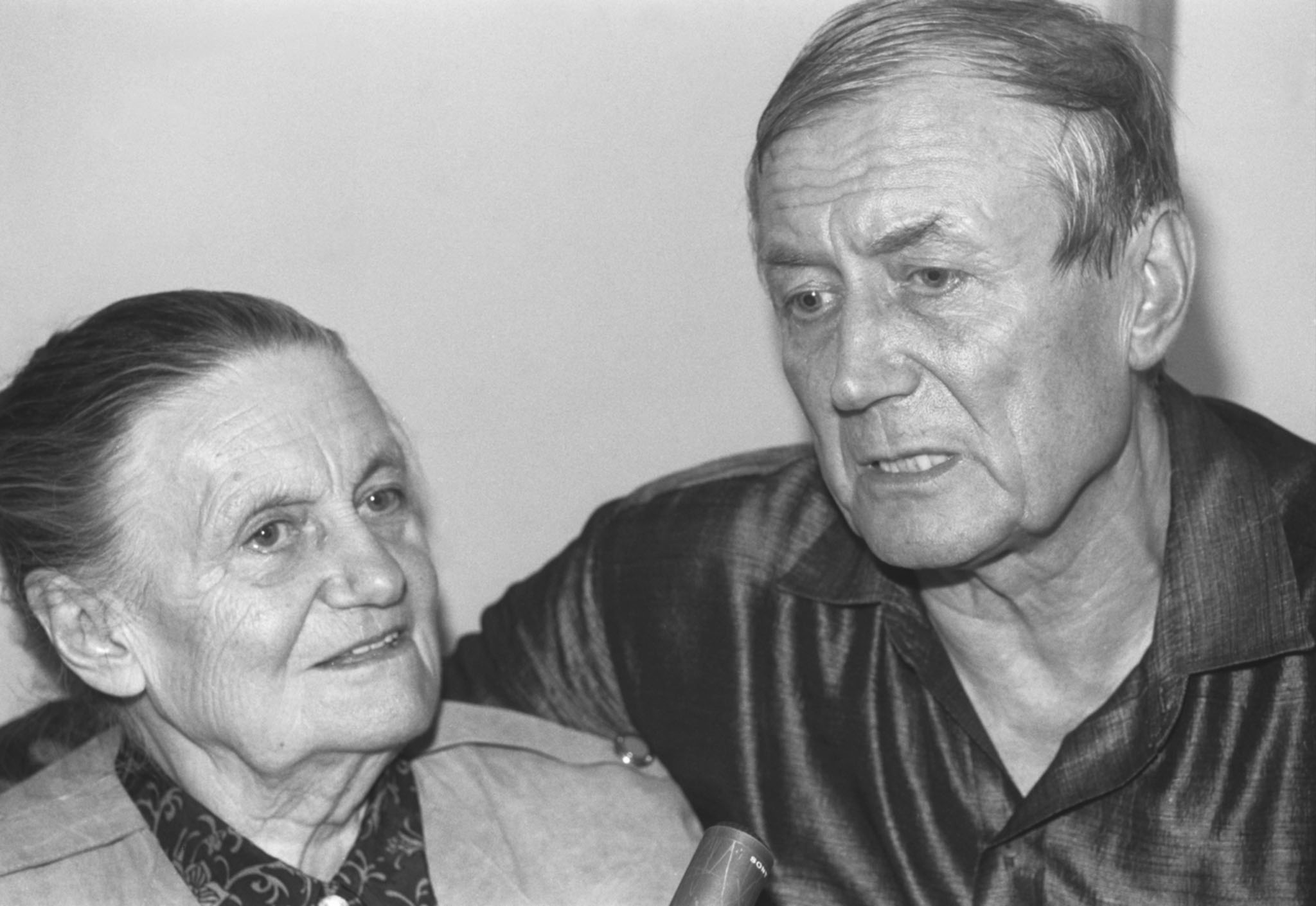
Ilya Dadashidze : About Shostakovich’s relationship with the authorities, we asked his widow Irina Antonovna to speak.
Irina Shostakovich : As you understand, he had to deal with the authorities in his life, and this topic in his work occupied a certain place all the time. And, perhaps, not only this concerned him personally, but in some more generalized form-his concepts over the years went from personal to some general. Even when he made the second edition of his opera Katerina Izmailov, he from his personal context, a more chamber libretto, came to a huge generalization, he would like it to be such a folk drama, or something. In his works, the artist’s relationship with the authorities, especially in the 1950-60s, is formulated all the time and very clearly, and not only in the 14th symphony, but also in many works. This confrontation is. I thought that the premiere for the composer was a great joy, pleasure. This, of course, is so, but they all went very difficult, because under a magnifying glass it was all considered, there were always some obstacles, and so it was until the very end. The first premiere that I saw when we started living together was the premiere of the 13th symphony. And it turned out that this, in general, is not only joy.
(Music)
Marina Timasheva : The 13th Symphony was written by Dmitry Shostakovich to the verses of Yevgeny Yevtushenko. Its first part was Babi Yar. The poet recalls.
Evgeny Yevtushenko : And once, when we sat with my mother on the 4th Meshchanskaya and played preference (although I play poorly, just to calm my nerves), the bell was undressed. Mom came up, then threw the phone and said: "They ask some Evgeny Alexandrovich. (Then no one has called me by middle name). Yes, some kind of halt calls himself Shostakovich." I somehow also did not believe it, but the call was repeated. It was Dmitry Dmitrievich. The first time I talked to him, of course, was shocked by his call. He said, in his inherent polite manner: "Dear Evgeny Alexandrovich, I read your poems" Babi Yar ", they excited me so much. Will you be so merciful that you will give me permission to write music for these verses?" I told him: "What are you asking?! Of course!" "Oh, how good! Thank you! Come, the music is already written." I came to him.
They ask some Evgeny Alexandrovich. (Then no one has called me in patronymic). Yes, some kind of impudent calls himself Shostakovich
I heard and saw the first performance of this music, when Shostakovich, sitting at the piano, he was a kind of orchestra, and he sang a batch of choir and the party of the soloist. It was an amazing performance. Я вам скажу честно, что если бы я когда-нибудь вообразил, что могу написать музыку (если бы у меня, разумеется, был талант), то, наверное, это была бы совершенно адекватная музыка, потому что это было поразительное совпадение слов с музыкой. Но музыка, конечно, делала эти слова значительно выше, придавала им какое-то значение, и, уж я не боюсь этого слова, не зависящее даже от качества моих слов, бессмертие. И не случайно события, которые происходили потом, показали, что это была больше, чем просто очередная симфония гениального композитора, это было общественное историческое событие – премьера 13-й симфонии. Сейчас многие уже забыли, а мне хотелось бы напомнить, что в канун исполнения трусливо отказались некоторые люди участвовать в этом. Отказался Евгений Мравинский, которому предложил Шостакович дирижировать, отказался певец Борис Гмыря. И, к счастью, Кондрашин посещал все репетиции, он знал музыку наизусть, взялся дирижировать, и нашли молодого певца Виталия Громадского, который за два-три дня выучил наизусть все пять стихотворений, на которые была написана эта симфония. Что касается меня, то я был потрясен не только такой гражданственностью Шостаковича и его творческим подвигом, когда он обратился к этой симфонии - он знал, что судьба будет нелегкой. Но это был еще и художественный урок для меня. Дело в том, что Шостакович соединил там то, что мне казалось раньше совершенно несоединимым. Ведь эта симфония уникальна тем, что когда, например, люди слушают стихотворение "Карьера" с такими строчками:
Учёный, сверстник Галилея,
был Галилея не глупее.
Он знал, что вертится земля,
но у него была семья.
То люди в зале хохочут, а когда они слушают "Бабий Яр" в этой же самой симфонии - они плачут. Там есть совершенно лирические интонации, переходящие, даже чем-то перекликающиеся с песнями Великой Отечественной войны. Это когда стоят русские усталые женщины в очереди. И, конечно, поразительный совершенно конец. После всех страданий выход в гармонию, в бесконечность. Я, к стыду своему, этого конца тогда не понял. Вообще, мне всегда была свойственна такая романтическая риторичность, и мне казалось, что конец симфонии должен быть более приподнятым, а Дмитрий Дмитриевич мне совершенно справедливо сказал: "Ну что вы, Женя, зачем что-то поднимать? Разве есть что-то выше самой гармонии? Ведь только в гармонии, в успокоении, покое внутреннем и есть смысл жизни и наше спасение". Не ручаюсь точно за эти его слова, но смысл был именно такой. Конечно, это дивный финал, и лучше придумать было невозможно.
(Music)
Илья Дадашидзе : Евгений Евтушенко говорил о выходе в гармонию и бесконечность. О гармонии и бесконечности жизни самого Шостаковича рассуждает Юрий Башмет. Особое место в его репертуаре занимает грандиозная Соната Шостаковича для альта. Послушаем ее фрагмент, а затем голос самого Юрия Башмета.
(Music)

Юрий Башмет : Кроме этого, это удивительный путь, который прошел Дмитрий Дмитриевич, я имею в виду его жизнь, и здесь, конечно, нельзя оправдывать систему, которая была прессингом для него всю жизнь, но, как это ни горько, нельзя и не сказать о том, что где-то этот прессинг способствовал самому языку Дмитрия Дмитриевича. Как вода течет из крана, вы палец подставили и то, что все-таки протекает в какую-то щелочку, с таким напряжением бешеным оттуда течет. This is the same. Поэтому это напряжение и возникло. But not only this is the matter. Если бы он родился не в Советском Союзе, не в России, он все равно родился бы гением и говорил бы о том же самом, но говорил бы другим языком, наверное. Так что тут вопрос: помогает или не помогает нация таланту своему? В данном случае, если хотите, это горько, но эта система его мучила, он жил тяжело, но в каком-то смысле она ему помогла преодолеть сопротивление, поэтому он не мог расслабиться.
Марина Тимашева : Так думает Юрий Башмет о судьбе самого Дмитрия Дмитриевича Шостаковича. А дальше он говорит о Сонате Шостаковича для альта.
Юрий Башмет : Я скажу, что после каждого удачного выступления с этим произведением, а их было очень много, я не хочу видеть людей, которые идут меня поздравить. Я нахожусь не в состоянии послеконцертном, а в таком состоянии, как будто я родился, заново обучался, стал знаменитым актером и только что исполнил трагическую роль в трагедии Шекспира, причем очень удачно сумел перевоплотиться. То есть исполнение Сонаты Шостаковича для альта в концерте не может быть в турне каждый день. Он сумел даже окончить сонату в до-мажоре. Меня этому никто не обучал, и я сам уже исполнял эту сонату несколько лет, как однажды я осознал этот факт, что соната оканчивается в чистом до-мажоре. Суметь в до-мажоре окончить свой путь самым трагическим образом, и суметь мажор превратить в самую трагическую тональность… Причем, до-мажор – это чистые белые клавиши.
Илья Дадашидзе : Мы хотим закончить эту передачу словами Галины Вишневской.
Галина Вишневская : При имени Шостаковича я вижу его лицо, слышу слово «Шостакович», а вижу его глаза – бездонные, за стеклами очков увеличенные, его детская улыбка, его лицо гения. Если вы его увидели, это лицо забыть было невозможно. Это было удивительно красивое, вдохновенное лицо. Это Шостакович.
(Music)