
Translated material
Aleppo - new Grozny?
Why world media compare the situation in Syria with the war in Chechnya. And is there any meaning
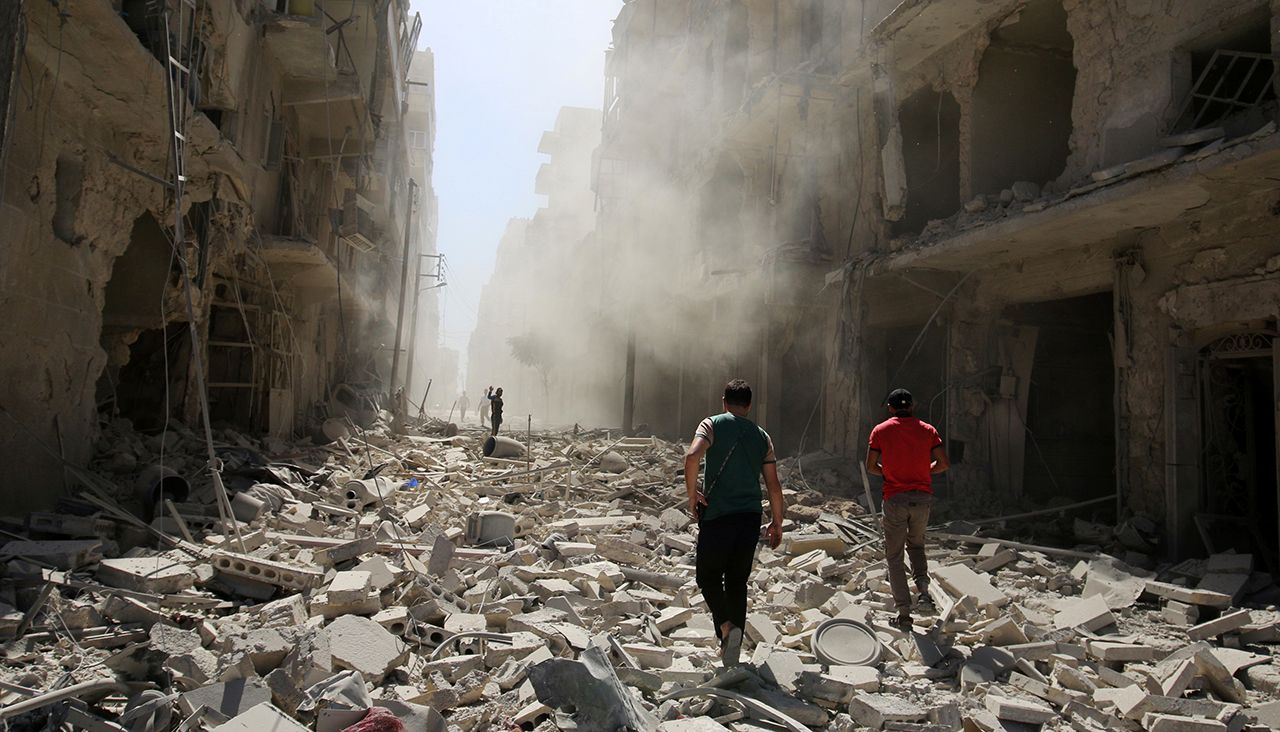
In recent days, against the backdrop of active bombing in Aleppo, foreign publications are increasingly comparing the war in Syria - and specifically the operation of the Syrian and Russian military - with hostilities in the formidable time of the Second Chechen War. This was written by al-Jazira, The Economist, Foreign Policy and many other publications; On October 11, the New York Times published a column on this subject. "Medusa" tells why the bombing of Aleppo liken the Chechen war - and whether there are other opinions on this score.
What is happening in Aleppo
The truce between the Syrian army and the local armed opposition, which was agreed by Russian Foreign Minister Sergei Lavrov and US Secretary of State John Kerry in the first half of September, lasted only a week and was not actually observed. Immediately after its completion in the vicinity of Aleppo, controlled by the rebels, a humanitarian column was destroyed; 20 people died. The international coalition of countries fighting with militants from the Islamic State suggests that either Russian or Syrian aviation bombed the column; Damascus and Moscow claim that there were no aircraft in this area. There were other accusations of shelling of civilians in Aleppo, including struck by hospitals in the city and the deaths of dozens of civilians. Kerry suggested checking Russia's actions on signs of war crimes. The military operation in Aleppo continues to this day; On October 12, according to Sky News, air strikes resumed with renewed vigor. The UN warns that the East Aleppo, which is controlled by the rebels, can be completely destroyed as a result of shelling until the end of the year.
Grozny and Aleppo: What are the common journalists
The world media regularly compare the situation around Aleppo with Grozny bombing during the Second Chechen War-in 1999, when Vladimir Putin served as Presidential Prime Minister Boris Yeltsin. According to the journalist of The New Yorktimes, Oliver Bullou, the main similarity is that, as in the case of Grozny, the ground operation does not bear fruit: the Syrian army has too few resources to take the city, and Russia limits its participation by air raids. Therefore, Moscow and Damascus attack Aleppo from the air, organizing individual corridors for the release of civilians and rebels who no longer want to fight for him. As Nyt notes, massive bombing will lead to the fact that in Syria there will simply be no one to negotiate with - since there will be no moderate opposition; When Aleppo finally surrenders, the world in this region will be as "fragile and unreliable as in Chechnya."
The column also contains amazing reasoning. Bullou writes that there is another point of view on the situation in Syria - the international coalition “no better”; But he answers himself that “this cannot be”: after all, any Western regime that “arranged that Russia was arranged in Grozny and Aleppo” will certainly fall.
Huffington Post compared Syria with Chechnya back in July 2016. Journalist Daniel Williams, illuminating the Chechen war from Grozny in 1999, recalls that the corridor for militants from Grozny was mined-and notes that the capture of Aleppo Bashar al-Assad would be defeated for the United States who supported the moderate opposition and for Saudi Arabia and Turkey, who put against the Assad of Islamists.
Russian specialist Mark Galeotti in an article for Foreign Policy also notes the similarity of the campaign in Aleppo with an operation in Grozny. In his opinion, Damascus and Moscow see the possibility of peace only on the terms of destructive victory and demonstration of firepower. According to Galeotti, Russia behaves in Syria in the same way as in Grozny; And not only from the point of view of military tactics. During the Second Chechen campaign, Foreign Minister Igor Ivanov, for example, told US Secretary of State Madel Olbrait that Chechen militants distribute photographs of bombed houses and hospitals in the media to discredit Russian power. Similar manipulations allow Russian authorities and now, the journalist believes.
The world community did not undertake any sanctions against Russia after Grozny bombing, and the Kremlin is sure that this will happen in the case of Aleppo, especially if Russia manages to achieve its goals and stop the civil war in Syria. According to the journalist, Putin believes that bloody conflicts can only be completed with a bloody way.
Similar arguments can be found in recent columns in Financial Times , on al-Jazire , The Daily Beast and many other publications.
Are there any objections?
The journalist of Novaya Gazeta, one of the most famous Russian military experts Pavel Felgenhauer notes that comparing Aleppo and the Terrible is erroneous. Firstly, he believes, the capture of Aleppo is not a decisive moment in the war for Bashar al-Assad. And secondly, the cordon ring around the city is loose, and the rebels even now can calmly leave the city to restore strength and regrouping. The victorious end of the war in Syria is not expected in the near future, according to Felgenhauer.