
Translated material
Bob Dylan: white spots, black holes
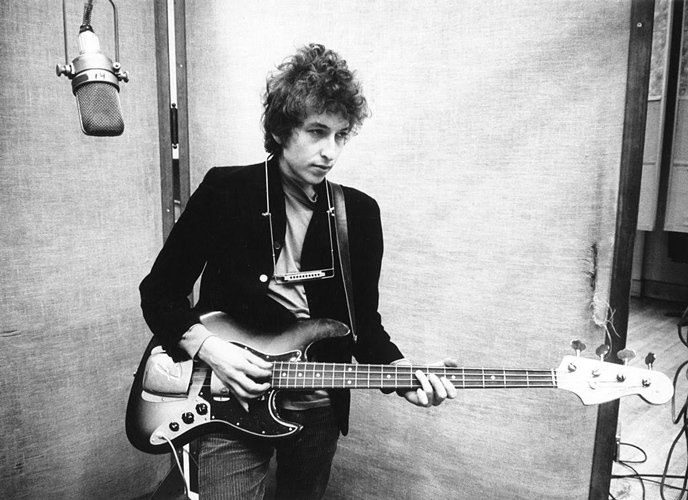
Regarding the award of Bob, Dilan of the Nobel Prize in Literature, journalist and writer Alexander Kushnir recalls the circumstances of the record of the album “Blonde on Blonde”, which turned 50 this year, one of the most significant and mysterious in the discography of the Great American Bard and the poet.
“Albums have always been to me something like a gravitational power. They had covers, front and back, which could be examined for hours. Everything was literally shaking from the desire to record records. ”
Bob Dylan
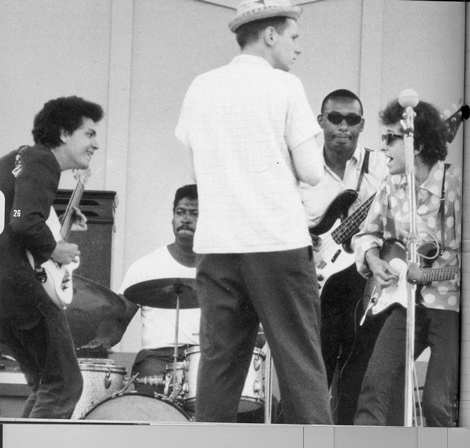
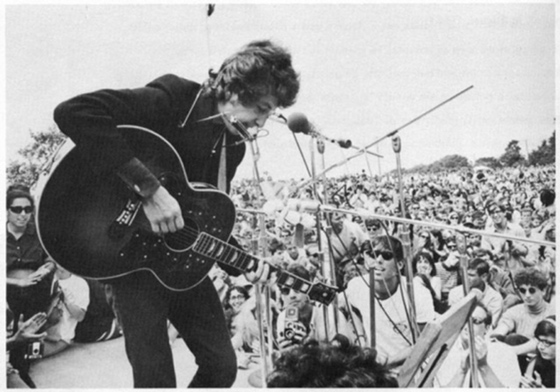
Since studying in the provincial Hibbing, Dylan dreamed of her own group. Having moved to New York, he spoke under an acoustic guitar and accordion for several years, and wrote his albums either in jam or with studio musicians. For the first time, Dylan played with the rock band at the Newport Folk Festival of 1965. "Take it, he is yours!" - The organizers announced the appearance of the poet on the stage of this club of amateur song. Farmers, students and bespectacled counter -cultures, holding their breath, were waiting for the next appearance of the curly “Savior of folk music”. But, as they say, it was not there. Dylan hit the flanks-electric blues and loud rock and roll. He went and shot all the expectations of the public - quickly and ruthlessly.
On this July day, fans experienced what a terrible weapon it was-Dylan with a skilled rock band behind his back. He managed to rehearse only a few compositions “in electricity” - in a company with an ingenious keyboard player Al Cooper, The Butterfield Blues Band , and, in particular, with a young Chicagen Bluesman Mike Bloomfield. Black and white photographs have been preserved, in which two crazy Jews, one of the hibbing, the other from Chicago, make faces for each other, herachate on the strings and savor the rape of the patriarchal covenants of the great-grandchildren of Moses.
In the final of their performance, a scandal occurred when the Folk Puritans wanted to cut the cable and turn off the electricity-solely because their 24-year-old idol betrayed the acoustic ideals of Newport. Later, critics wrote “open” letters to Dilan, the audience yelled: “Judas!”, But Bob moved forward at cosmic speed.
“Folk-fanzin editor Sing out! Irwin Silber in his letter reported me as if he was alone and some of them still owned the keys to the real world, ”Dylan later recalled. “But I knew very well what I was doing, and was not going to take a step back or retreat for the sake of anyone.”
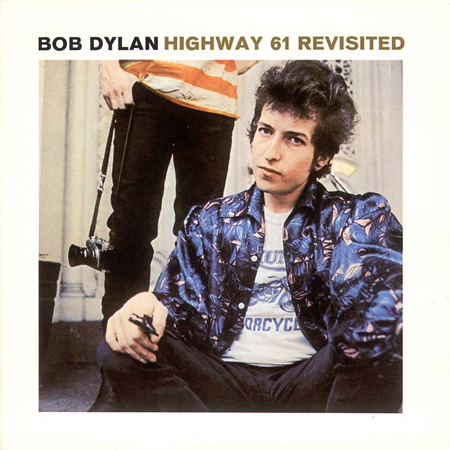
It is appropriate to recall that shortly before the Newport, the studio composition collected by Dylan, Bloomfield and the merchant recorded the sparkling album " Highway 61 Revisited" . Unfortunately, it so happened that this brilliant team was not destined. Cooper created his own Blues Project , Bloomfield founded Electric Flag , and later outplayed from the entire American blues elite - from Janis Joplin to Cooper himself, but then died of an overdose.
After the release of Highway 61 and the performances in the Newport, Dylan burned all the bridges connecting it to the folk community. Now the “Folk-Music killer” dreamed exclusively about electrical concerts, blues and loud rock and rolls. Dylan-Bard remained somewhere in the past: in small clubs, coffee houses and folk centers Greenwich Willidge. Armed with an electric guitar, Dylan took the Canadian group The Hawks (“Hawks”) as an accompanying composition and flew to the tour of England. The 1965 documentary “ Eat the Document” clearly demonstrates how “hawks” were good on stage. But, alas, in the studio walls of Dylan, a strong disappointment expected.
Having tried to fix several songs with The Hawks , Bob clearly realized that the recording sessions are, as they say, “not their game”. “Hawks” were an excellent concert composition, but in the studio they could not compare with the heroes of the album “ Highway 61” . An attempt to record the seven -minute ballad “ Visions of Johanna” , dedicated to the fighting girlfriend of Dylan Joan Baes, crashed. One and a half dozen takes in the studio gave a completely fault result. With grief in half, the musicians recorded the new single “ One of must Know ( Sooner or Later)” , but it took more than a week of work and about 25 (!) Bigs.
"One of the must be Know (Sooner or Later)"
Dylan, who is used to doing everything quickly, noticeably depressed. “I fall down at a crazy speed,” he admitted to Robert Shelton in those days. - For dozens of sessions, we got only one song. I won’t be surprised if there is simply nowhere to fall soon. This is some kind of real “flowering of decline”. ”
Sitting in the studio, Dylan twisted the next jambs from the scraps of Newsweek magazine and destroyed them at a machine -gun speed. The suit, as they say, is not pearl. Salvation came in the morning from the producer of Bob Johnston, who on his shoulders pulled out all the hardships of Highway 61 . After this album got into the top 3 magazines Billboard , important Bosses from Columbia Records began to look at Johnston as God. A native of Western Texas, he was not only a brilliant sound engineer, but also an excellent psychologist, as well as the author of several songs, which, for example, performed by Elvis Presley. And it is not surprising that soon Johnston was appointed leading producer Columbia Records for Folok and Country. Looking gloomily at Dilan's experiments with Friends from The Hawks , he wisely gave the poet the time to overcome, and then called him to talk in a nearby brew.
“Listen, I have an idea,” said Johnston Dilan. - Let's dump from here as soon as possible. We sign up in another place and with other people ... For example, in Nashville, where I have a bunch of cool musicians who worked with Presley and have played country, blues and rock and roll all my life. For example, “ Visions of Johanna” will be recorded from one or two duplicate, I swear by my mother! I lived there and I know absolutely everything. And there are only two hours of summer! We remove a comfortable hotel, put your piano in your room. In the studio, the time for recording is cheap, and the equipment is good. We arrive - and in a week the album will be ready. I answer. "
"Visions of Johanna"
Dylan thought. The proposal sounded tempting. What Nashville musicians are, Dylan knew firsthand. When the Highway 61 recording in New York was the guitar virtuoso Charlie McCay, Johnston convinced Dylan to invite the Nashville genius, who collaborated with Johnny Kash, Elvis Presley and Roem Orbison, to the studio. As the story says, Dylan lazily resisted, since the album, in fact, was ready and did not need anything anymore. But Johnston was a perfectionist worse than Dilan. Having seduced McCoi with tickets to the Broadway musical for his wife, Johnston half -spinning dragged the guitarist into the COLUMBIA Records building.
Then it turned out beautifully. Having received the desired tickets, McCoy already wanted to dump, but it wasn’t there. Both bobs begged him to play on the final composition “ Deslation Row” . This eleven -minute ballad was inlaid by Bloomfield virtuoso. But Dylan decided at the last moment to replace the electric guitar with acoustic. The venture looked doubtful: McCoy was late for his stupid musical, and he did not have a suitable guitar with him.
“There is no problem,” Dylan said. - There is a dozen in the corner. Choose any! "
There was nowhere to retreat with McCome. He sat on a chair, put on the headphones, listened to the composition and with a decisive gesture stuck a plug from the guitar cord into the remote control. He wrote his party from one double - so that Dylan almost crashed from a chair. Firstly, in the canonical version of the “Deslation Row” it was not necessary to change a single notes-McCoy’s guitar lace lay down on top of the track as glued. Secondly, in New York, no one has played or thought so yet. It was the glorified Nashville country school, where the songs were narrated mainly about how BL*The chisly wives cheat their husbands with carriageway cowboys. The cultural life in Tennessee has already vibrated on a simple route for several centuries: “Pab - Studio - Pab”.
"Deslation Row"
Dylan remembered this case with McCoy tightly. Yes, he never forgot anything at all. After that, in studio matters, Dylan began to trust 34-year-old Johnston as himself. But the problem was that the poet had absolutely no time for a trip to Nashville.
In the coming days, Dilan had to urgently marry a girl named Sarah Lunds - and marry without too much noise. The beauty Sarah was in the seventh month of pregnancy, and the annoying attention of the press loving Bob was by no means required. In brackets, we note that a long queue from beautiful ladies always lined up to Dylan, and this line, as a rule, moved very quickly. What are the girls-the whole generation of California Beatniks and New York Hipsters lay at the poet's feet. And it was pure truth.
Dilan continued an endless tour-until the summer of the 66th year. Hypothetically, in his schedule, there were small pauses - provided that several concerts would be able to move. And then the adventure with the Nashville record became a reality. With these thoughts, Dylan headed for his director Albert Groysman. A native of Chicago, he was formidable, owned a night club, as well as contracts with several stars of blues and folk rock. In any company, Groysman was in the spotlight, spoke in a loud voice and wore a 45-caliber in his pocket, which he had to use periodically. At least for intimidation.
Albert Groysman, one of the heroes of the epoch -making film “ Don ' T Look Back , owned 25 percent of Dilan's income shares. Therefore, he was mostly interested in multi -week tours and large solo performances. He knew the schedule of concerts and fees by heart, even wake up at night. Therefore, it is easy to guess how he reacted to Dilan's suggestion about the recording in Nashville. In this situation, Groysman automatically flew several concerts, and this, in his opinion, resembled the voluntary throwing of dollars into an open window. Therefore, a few hours later, he knocked out the door to the Johnston’s office with a blow of his legs and growled hostilely: “Dude, if you once again knit something about Nashville, I swear to you, you will be fired! You have heard everything perfectly now! And twice I will not repeat! "
Dylan did not witness this ugly scene, but this was not easier for him. Once again he hit between two lights: on the left - Groysman, on the right - Johnston. And from this situation he had to somehow get out. And Bob did this with his inherent ease of spirit and healthy cynicism. It so happened that among his friends, Groysman was the only person whom Dylan invited to a wedding. And the curly “Rimba with the guitar” simply could not take this opportunity.
“What gift should you make for a wedding? - the relaxed and not completely sober Groysman asked on the eve of the wedding. - Ask what you want! " Bob squinted cunningly, looked through the dark glass of glasses and said: “We went with me and Sarah to Nashville in February! There, literally in a few days, we will write down the album, I swear to you. It will be such a honeymoon, or something ... You can’t refuse the newlyweds, right? "
Dylan, although he was younger than Groysman, quickly studied his techniques. There was nowhere to retreat the latter, and he reluctantly agreed. At that very moment, joyful Dylan called Johnston, and Johnston called back to Nashville, buging a studio time in the local Columbia Records studio for February 1966.
Dylan leaned over the table and recorded the dates of the recording session to his notebook. In addition to Bob Johnston and Charlie McCoy, he did not know a single person in Nashville. Ahead of him was awaiting the unknown.
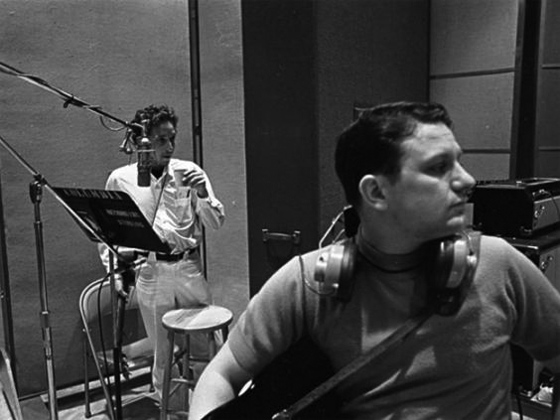 Bob Dylan and Charlie Macca
* * *
Nashville is 750 miles from New York. Starting the life of a clean sheet, Dylan flew there lightly, taking with him a multi -instrumentalist Ela Cooper and the guitarist The Hawks Robbie Robertson. Of course, Bob trusted Johnston and local musicians, but working with friends was psychologically easier for him.
“Johnston drove us along Nashville in his red“ Eldorado ”with a folding top and tried to sell this place to us as a defective,” Dylan later recalled. - As for me, so this city was as if immersed in a huge soap bubble. Then we and the merchant and Robertson were almost kicked out of the hotel for long hair. ”
Inexplosions of advanced hipster customs with the patriarchal features of the civilization of the Wild West continued inside the studio. For example, Johnston categorically did not like the partitions that separated the sessionaries from each other. An experienced producer who advocated the feeling of the elbow among the musicians, he always believed that his eyes and fluids are much more important than headphones or an “environmentally friendly sound” in a “single chamber”. Therefore, Dylan was not surprised to know that all partitions were demolished during the night Bob along with the assistant. He knew that sometimes working with Johnston “resembled drunk races”, and preferred not to get into other people's affairs.
Outraged by such vandalism, the owners of the studio flew out with the first flight with a mournful petition to the New York office of Columbia . But then they missed largely, having forgotten that Boss John Hammond at one time was the discoverer of Dylan. It is not surprising that the consequences of such a miss were not long in coming.
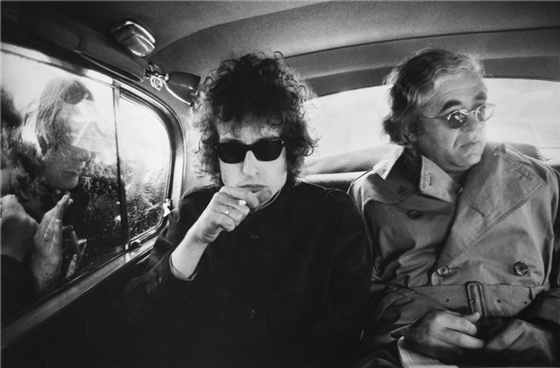 Bob Dylan and Albert Groysman
“The only thing I can tell you is that the other day I have lunch with Dylan and Johnston,” sitting in a luxurious leather chair, the director of Columbia Records launched a stream of cigarette smoke right into the faces of his grief-and-worm. - Therefore, you should understand: if Johnston wants to hang a microphone on the ceiling, I would advise you to urgently find the highest e ** staircase so that Bob can start as soon as possible. If this does not happen, I will cover your noev ark for half an hour. "
And at that moment, Dylan was literally in the seventh heaven with happiness. With the new studio team, they worked in a matter of hours. Unlike nightmarish sessions with The Hawks , they recorded Visions of Johanna in one night , and with the philosophical and intelligent saunome that the poet dreamed about in New York.
Then it was the turn of the new ballad “Sad Eyed Lady of the Lowlands”, which Dylan dedicated to his young wife. At this very time, Sarah, like a Decembrist, sat in the corner of the studio and fed the monthly Jesse. She, not without surprise, watched Bob showed the musicians a song dedicated to her, and then let them go for a lunch break. Like, he still needs to add a couple of verses. As a result, the record continued in a day when the poet finally designed a canonical version of the text, full of pictures, moods, images, faces, places and things.
"Sad Eyed Lady of the Lowlands"
During this session, many actions returned to the participants with a ringing boomerang. At the very beginning, the musicians complained to Johnston that they were used to working with ready -made compositions painted on notes. But this was the wrong case. Right in the middle of the night, a poet burst into the studio with his eyes red from insomnia and exclaimed loudly: “Hey, I finally finished the song! Is there anyone alive here? "
In the case of Sad Eyed Lady of the Lowlands, Johnston woke the musicians dozing in the studio, and Dylan, looking at their rumpled faces, mockingly said: “Yes, everything is simple, only three chords.” And when everyone realized that this song consists of thirty verses and playing it literally “to infinity”, Johnston yelled for the whole Ivanovo: “ Play! Don ' T Stop! Just Keep Playin '! ”
“Eleven minutes later it was recorded,” he recalls years later. - We played simply flawlessly, and no one could believe that this happened. Because everyone guessed that their lives had changed. And Nashville has changed, and the music around has changed. ”
"I Want You"
After this victory, the work on the album was carried out in a different way. Somewhere at noon, Dylan called Ela Cooper into his hotel room and played a new melody on his piano-for example, the innocent hymn of sex I Want You or the surrealistic Memphis Blues AGain . Dylan planned to record all the musical nuances on the recorder, but Cooper offered not to waste time.
"Memphis Blues Again"
“Listen, Bob, let's not be distracted by technical trifles,” El said with a confident tone. “My memory will be your voice recorder.” You play, and I will remember everything! You can not worry. "
Since Dylan knew Cooper for the first day, he did not argue. El went to the studio to work with nadouches, and the poet remained in the hotel, concentrated and in complete silence added the text. It is curious that sometimes the provincial silence annoyed Bob, and he finished the songs right in the studio, sitting at the piano. It took up to three to four hours of expensive studio time. The musicians at this time watched TV, chopped into table tennis or just slept. Closer to midnight, everyone gathered in a tonent, turned on tape recorders and began to “glue” the whole song: text, the main melodic line, rhythmic pattern and guitar-clavy arrangements.
The record took place in two stages - several days in February and several days in March 1966. Lastly , the Rainy Day Women #12 & 35 was recorded, which will subsequently be on the album of the first. Johnston enthusiastically listened to her demo-option and proposed to record this psychedelic march as "stylization under the" orchestra of the Army of Salvation ", sitting on acid." Dylan, of course, liked the idea, and he asked the musicians to urgently hide from the nearest pub all booze. Там же по просьбе Дилана они подобрали и искусного тромбониста — возможно, для того, чтобы быть последовательными в собственных безумствах.
«Rainy Day Women #12 & 35»
Отдегустировав литры местного вина, музыканты в четыре часа утра начали имитировать звучание «Оркестра Армии спасения». Дилан, глаза которого блестели пьяной фантазией, попросил лучших сессионщиков Нэшвилла разухабисто петь припев « Everybody must get stoned» — ключевые слова песни, которая уже через неделю звучала на радиостанциях.
Это была веселая и изысканная провокация — с очевидными намеками на «кайф», к слову, не сильно замаскированными. Вскоре все — начиная с «детей цветов» и заканчивая «яйцеголовыми» профессорами — обсуждали наркосленг фразы «каждый может упороться». Примечательно, что все эти дискуссии происходили на должном литературном уровне — к примеру, на страницах журнала Time ...
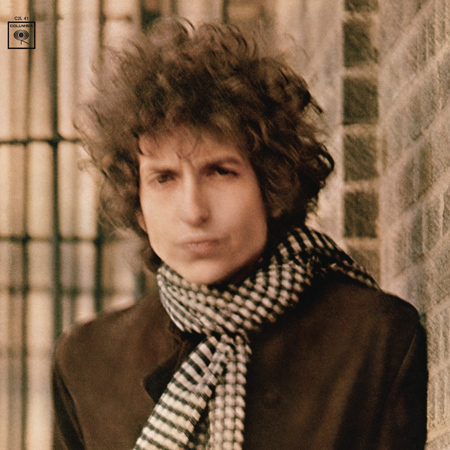
Но вернемся в студию. Когда, прилетев в Нью-Йорк, Джонстон смикшировал все песни, выяснилось, что записанного материала хватит на два альбома. Тогда Дилан решил не мелочиться и впервые в истории рок-музыки замахнулся на две пластинки скопом. По версии лейбла, этот двойной альбом материализовался на прилавках 16 мая 1966 года, привлекая покупателей странным названием « Blonde on Blonde» .
Произошло это событие с сознательным нарушением всех правил маркетинга — день в день с выходом нового диска Beach Boys « Pet Sounds» . В офисах Columbia Records творился страшный бардак, и в широкой продаже альбом появился лишь в июне — одновременно с двойным альбомом Фрэнка Заппы « Freak Out!» .
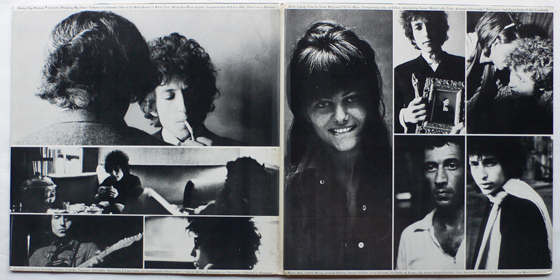
Любопытно, что при оформлении внутреннего разворота « Blonde on Blonde» дизайнерами были использованы не только снимки Дилана, но и фотография Клаудии Кардинале — как выяснилось впоследствии, с неочищенными авторскими правами. Спустя полтора года, после угрозы со стороны ее юристов, внутренний дизайн альбома претерпел существенные изменения, и черно-белая фотография итальянской красотки была изъята.
Необходимо заметить, что в коллекциях меломанов существует как минимум одиннадцать версий « Blonde on Blonde» . Все это напоминает игру «найди десять отличий». Со временем режим моно превращался в стерео, а стерео — в Dolby Surround. Менялись и общее время звучания диска, и названия композиций, не говоря уже про такую «мелочь», как внутренний дизайн. В это сложно поверить, но канонического варианта альбома « Blonde on Blonde» , поднявшегося до 9-го места в хит-параде журнала Billboard , не существует в природе до сих пор.
Не так давно в интернете была опубликована полная стенограмма ознакомительного интервью главного редактора журнала Rolling Stone Яна Веннера с Диланом. Примечательно, что в далеком 1969 году Боб охотно говорил с Веннером на любые темы, но наглухо закрывался, отвечая на вопросы, связанные с « Blonde on Blonde» . Судя по интервью, уже в шестидесятых годах Дилан был человеком закрытым и мнительным. С тех пор прошло несколько десятков лет, но ни разу Дилан не возвращался к теме нэшвиллской сессии 1966 года. Музыкальные критики часто цитируют его интервью журналу Playboy 1979 года, но даже там Поэт отделывается общими фразами.
«Если говоришь правду, это очень здорово и правильно, — признавался позднее Дилан в своей автобиографии. — А если врешь — ну, все равно это здорово и правильно».
Как бы то ни было, но до сих пор ни в одном исследовании про Дилана, к примеру, не написано ни слова о происхождении названия альбома. Что значит выражение «Блондинка на блондинке»? Официальные биографы на эту тему молчат. Да, в 1966 году не существовало ни пиар-служб, не пресс-релизов, но тем не менее как подобное оказалось возможно? Очередные белые пятна и черные дыры, увы…
Дилан как-то обмолвился, что название пластинки появилось в последний момент, причем чисто ассоциативно. Фанатские сайты намекают на его роман с фавориткой Энди Уорхола, блондинкой Эди Сэджвик, которой на альбоме была посвящена композиция « Leopard- Skin Pill- Box Hat» . Кто-то считает, что эта двойная пластинка была посвящена друзьям Дилана — Аните Палленберг и Брайану Джонсу из The Rolling Stones . Who knows? Короче, очередная тайна Дилана, покрытая пылью десятилетий...
«Leopard-Skin Pill-Box Hat»
Говорят, что в одном из радиоинтервью Боб заявил, что в середине 60-х его потрепанный амфетаминами мозг состоял исключительно из полос — то светлых, то темных. И вот как-то раз в его голове скрестились две светлые полосы, и он увидел вывеску « Blonde on Blonde» . В итоге получилась идеальная обложка для альбома, который неоднократно входил в топ-10 лучших пластинок всех времен и народов. Красивая версия, но только этого радиоинтервью Боба Дилана никто так и не нашел.