
Translated material
"The main problem is not in bombs, but in distrust"
Interview of the author of the book about the Cold War of David Hoffman
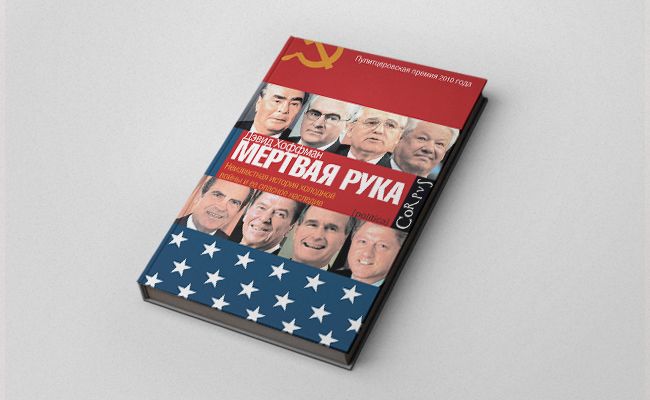
On October 3, Russiaannounced that he was leaving the agreement with the United States to dispose of weapons of plutonium. The rhetoric of the New Cold War in recent months and years is generally becoming increasingly widespread - both in the statements of Russian officials and in the media . Medusa talked about the current phase in Russian-American relations and the new arms race with David Hoffman-Columonist and invited editor The Washington Post, which in 2010 received the Pulitseri Prize for the book Dead Hand. The book spoke in detail about the last stage of the Cold War and how America and Russia solved the problems of nuclear disarmament in the early 1990s.
- It seems to you, can you call everything that has happened recently with a new Cold War? Or another phase of the new Cold War?
- A very difficult question. You see, the Cold War was based on ideology-it was because of it that two huge blocks of countries threatened each other with deadly weapons. And sometimes the threat was very serious. For example, in the fall of 1983. If you look at the declassified documents about the events then, it will become clear that the problem was in a huge misunderstanding between the two countries, in their inability to correctly interpret each other's actions. Then NATO had great exercises - and the Soviet Union believed that they could be a cover for a nuclear attack; The USSR even sent planes through the North Pole to look for launchers. I hope that today such a situation is no longer possible and that we still do not move back to this state of affairs-although in 30 years, of course, many could forget how scary it was.
At the same time, one cannot but admit that relations between countries are not very good now. They develop, as it were, in a sinusoid - it is better, then worse; Now everything is quite bad. This, of course, bothers-also because many dangers that existed in 1983 exist now. For example, what is called systems of increased combat readiness - when it is possible to launch rockets towards the enemy in a matter of minutes. These systems are still in place. Actually, it would be worthwhile to deal with them for a long time-but, I’ll tell you honestly, none of the parties showed special enthusiasm about this. If you were in America or in Russia, if you serve in the strategic missile forces, your work is to shoot when they order, and no one wants to deprive yourself of such an opportunity. Of course, I think that if both countries together decided to somehow change the operation of these systems, delay the possibility of pressing a button, this would hardly have worsened our safety. The fact that there is no conversation on this topic, is the legacy of the Cold War.
- And what are the bad systems of increased combat readiness? What is the problem with them?
- They increase the danger of making a mistake. You need to handle nuclear weapons very carefully. Thank God it happens-this is actually quite amazing that for all these years, none of the parties has never been mistaken and did not press the button. But still - why do we need these missiles that can be launched in four minutes? We could do something to make the world safer, but nothing happens.
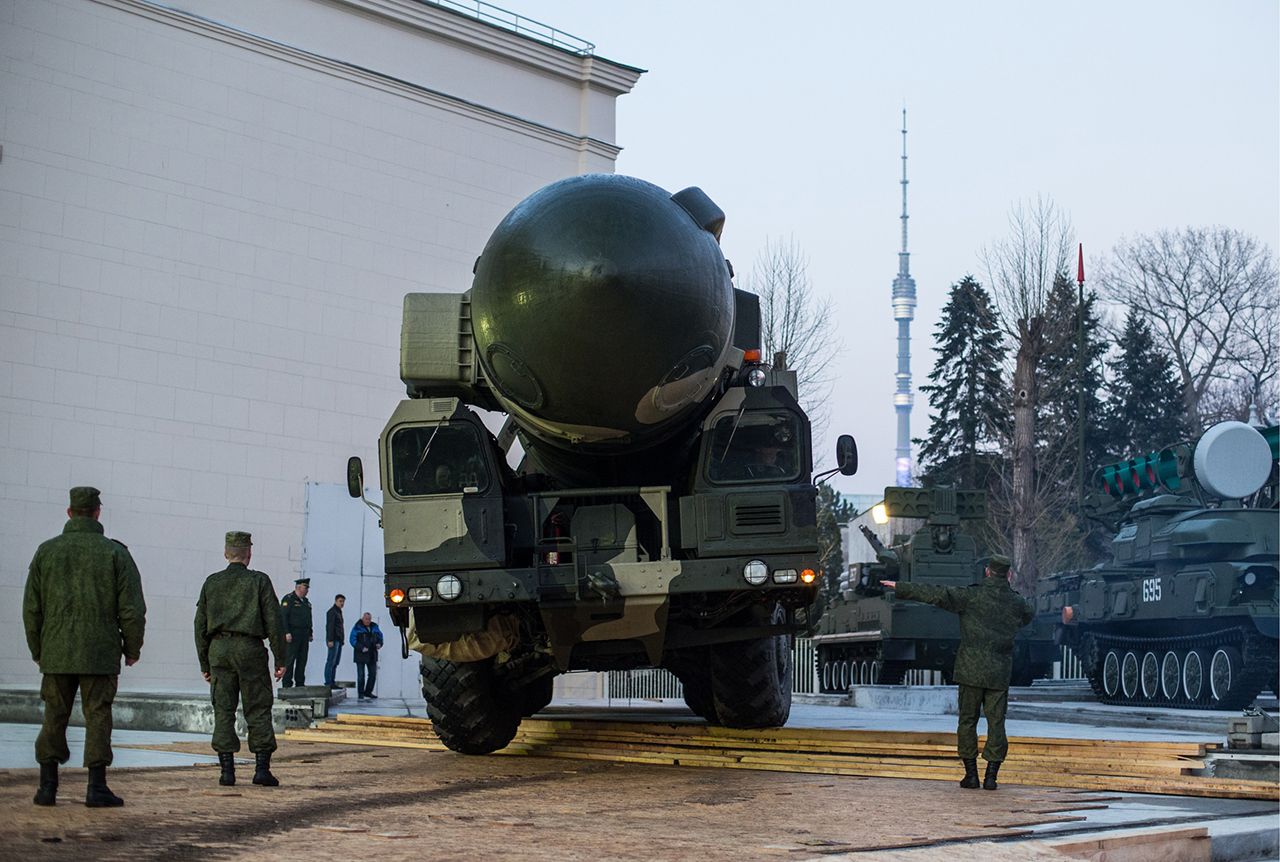
- Do you have the feeling that Russia, on the contrary, begins to make it more dangerous? Recently, Putin announced the exit from the agreement on plutonia.
-It is still necessary to share different aspects of the problem. First: real actions. New installations, missile placement, launches. Second: Rhetoric. Some official statements, propaganda. Third: Strategy. How we formulate threats, how we structure troops, how we plan weapons. All these things do not always coincide.
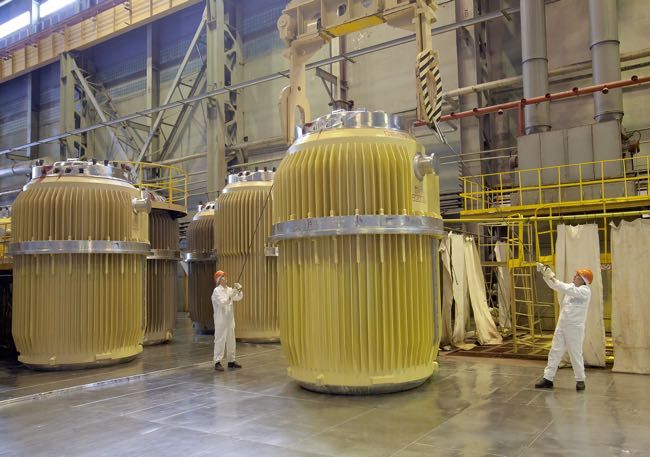
As for rhetoric - yes, there is some conflict in the public field, quite radical and, in my opinion, optional statements are made. But the agreement on plutonia is already about real actions, and here everything is more complicated. An agreement is precisely an agreement, not an agreement - it implied that each of the two countries should get rid of 34 tons of plutonium used for the manufacture of nuclear weapons (together this would be enough for the production of 17 thousand warheads). This plutonium was simply stored somewhere, it was not needed by the bottom, and it was possible to eliminate it, mix with other substances to get fuel for nuclear power plants. Russia did this, and America had difficulties - technological, economic, and environmental. We began to build a plant for this, pushed hundreds of millions of dollars into it, now it is built only by 60% - and it is already clear that this is a disaster. That is, in fact, America has not fulfilled its obligations. And Russia in response decided to use plutonium for other purposes-not for weapons, but for something different from the application provided for by the agreement.
Putin’s statement that Russia will no longer observe it - purely political, it, in fact, does not affect anything, because the situation with this agreement was not very good. On the other hand, still such agreements are needed, because they ensure the confidence of the parties to each other. We agreed on something, and this is happening, and we can check it-the possibility of verification is very important here. Now we come to the fact that both countries say that they will not use plutonium for weapons, but in fact no one can check it; Both Russia and America can do what they want. In fact, it would be nice to understand that disarmament is not a reason for trade and not some kind of favor. This is the only way to make the world safer.
- It also seems that with all these statements, Putin returns relevance to the conversation about nuclear weapons. Over the past decades, people seemed to have forgotten about this topic.
- Here I do not agree - perhaps because all this time was immersed in the topic. During the reign of Yeltsin, a lot was done so that the world became safer. America has allocated billions of dollars to collect nuclear materials scattered across the vast territory of the former USSR so that they are reliably stored. Go to Ozersk - you will see a huge new warehouse of Uranus and Plutonia, very modern; It cost $ 300 million. We built it not for charity reasons, but for the sake of safety. Go to the pike - you will see a huge factory there, which is engaged in the destruction of chemical weapons. In Semipalatinsk, Russia, the United States and Kazakhstan for 17 years, carried out a secret program to take out and protect Plutonium remaining at the training ground in Semipalatinsk. Seventeen years! All this continued until recently.
Probably, it is possible that people had such a feeling: UV, the Cold War ended, you can breathe calmly and discuss something else. But active work on conservation and disarmament was constantly carried out-including in the 2000s. A joint -reduced threat created by Nann and Lugar senators and Lugar were jointly, about four billion dollars were spent on it. Now most of the events within the framework of the program are suspended - their validity expired, but they were not resumed. In Russia there were high oil prices, the economy grew, and your government said - that's it, we no longer need it.
- When did this happen?
- It's hard to say. I think at some point in the current presidential term of Putin. Together with Nann and Lugar senators, I went to some of the listed places in 2007-and then everything continued. As under President Medvedev. Basically, agreements have ceased to be valid in the past few years.
- In general, how much a nuclear threat is a topic for discussion in America now? It seems that they do not talk about it.
- No, they don't say. But the topic for discussion is Russia - and this is unusual, this has not been in the last couple of decades. In part, of course, there are political reasons, but it is also important what people understand: Russia is the only country in a world that has a nuclear arsenal comparable to our nuclear. Russia and the United States have 95% of all world nuclear weapons for two. China has only 200-300 nuclear warheads. There is nothing to talk about the rest. So the relations of Russia and the United States are always in the context of nuclear weapons, even if this does not directly say.
- We now said that joint programs for the conservation of nuclear materials have stopped. And the arms race - is it continuing? Is new weapons developed?
- First of all, it is worth remembering that during the Cold War, two countries for two had almost 60 thousand nuclear warheads. We managed to reduce this amount by almost four times. But this is too much-we have warheads who just lie and dust in warehouses, there are still scope for reducing weapons. Alas, this is closely related to politics-it is hardly worth expecting any actions in the field of disarmament, when the relationship is so intense. At the same time, it must be understood that countries inevitably modernize their nuclear arsenals - this is what you need to do if you want to remain a nuclear power. For example, Russia is now modernizing the weapon that was done in the 1970s. Here everyone has its own cycle: America conducted modernization in the 1980s and 1990s, and Russia began to do this only now-but this does not mean that it is ahead. Just these two huge ships move at different speeds.
And already the third story is new weapons. China is very actively engaged in this, and Russia and America, of course, are also developing new supersonic weapons that can be used to deliver ordinary or nuclear missiles. Or weapons of especially high accuracy. That is, the race is to some extent-but, of course, now the situation is not at all the same as it was in 1983.
- How can the current situation change under the new president of the United States, in your opinion?
- It depends on what will happen in the political sphere, and I do not think that nuclear weapons here will be the main issue. There are disagreements between the countries on some serious topics - say, in Ukraine and Syria. If these crises can be solved, progress is possible in nuclear weapons. Until then, I think, it is unlikely that something will change.
- Well, it is obvious, for example, that there is a noticeable antipathy between Hillary Clinton and Vladimir Putin. Should this be affected by relations between countries?
- No matter how we wanted to think that in international relations, the leaders and their characters decide everything, everything is much more complicated. The countries have their own interests. It all depends on them.
-Nevertheless, even from your book it is clear that the strategies of Reagan and Bush Sr. against the USSR and nuclear disarmament were largely determined by their characters-say, Bush did not trust Gorbachev, and this impeded the development of relations.
- This is also true. In general, what lesson can we endure from the history of the Cold War? The main problem was not in equipment as such, but in who programmed it and how. Not in technology, not in bombs and not in installations as such, but in the relations between leaders who did not trust each other and did not understand how each of them thinks.
A good example is the program of strategic missile defense, which was insisted by Reagan, the so -called Star Wars. Reagan and his people did not understand that the USSR had already tried to create such a system - and they did not succeed. The Americans were sure that the Soviet Union could win this race, and continued to insist on spending a lot of money on this program. That's what distrust leads to. Of course, if it turns out to establish it, the situation will be completely different.
- There is simply an opinion that Vladimir Putin raises all this nuclear topic in order to create the impression that Russia occupies the same important situation in world politics as 30 years ago. But in fact, this is not so.
- Of course, today's Russia is not a Soviet Union. I think that both you and your readers agree with this. But your country still has a huge nuclear arsenal, and it is impossible to ignore it. And yes, now, a few weeks before the presidential election, Russia in America is a very discussed topic. For the first time in many years.
- That is, it turns out, Putin has achieved success?
- I will ask one question: and this whole situation is good for Russia and its citizens? The Russians removed something good out of all this?
- Well, there are different opinions on this score. By the way about the topic of Russia in the USA: now there is still a lot of talk about cyber weapons. In your opinion, is this as serious problem as nuclear weapons?
- Look, nuclear weapons acts in three ways: it is an explosion, huge temperatures and radiation. This is a very serious destructive power that can destroy millions of people. As far as I know, no one has died from cyber weapons yet. Yes, with it you can hack an electric substation, and if you are in the hospital at this time for surgery, this may end badly. But now, it seems to me, cyber weapons are more about the hack of different systems: economic, communication, information. Of course, it is possible that in the future it will be capable of mass murder. But then let's talk about other global threats! There is a global climate change - glaciers can melt, and we will all just drown. There are global infections - you yourself see how Ebola or Zika act; Not a single country has immunity against this. Of course, all these are also important topics.
- You wrote three books, they are all to one degree or another about Russia - and all about its past. In the modern history of Russia, in what happened in the 21st century, do you see any interesting topics?
- Oh, this is too big a question. I need a couple of hours to answer it. Better I say this. Over the past 30 years, Russia had a lot of difficulties. Perhaps they are not comparable to anything at all, through which your country has passed in its thousand -year history. The struggle for freedom, the struggle between the state and society, the transition to the new economic model, the discussion about whether Russia is part of the Western world and Europe ... The main question, in my opinion, - what lessons we have learned from what has happened in your country from 1989 to today? And this is a question that is facing you, in front of a young generation. What have you carried out for yourself? What would you like to save from what was achieved, what - no? For me, the answers are self -evident. But I will not tell you them. You need to answer this question yourself.
Alexander Gorbachev
Moscow