
Translated material
Shamania of persecution
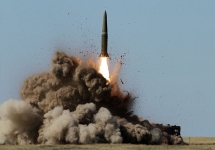
The deployment of the Iskander operational-tactical missile systems in the Kaliningrad region is designed to fend off a possible threat from the emergence of American missile defense facilities in Europe. This was stated by the head of the State Duma committee on defense Vladimir Shamanov, Interfax reports .
“These missiles will be, first of all, aimed against those objects that violate the balance, balance, and which are set or will be put in the foreseeable future within the so -called PRO,” Shamanov said.
Shamanov praised the tactical and technical characteristics of Iskander. “Yes, this is an increased charge, this is amazing accuracy. As the artillerymen say, entering the stake. That is, in essence, the deviation from the aiming point is no more than one meter,” the head of the committee noted.
According to Shamanov, it would be reasonable to carry out work to restore the Russian military bases in those countries where they existed in Soviet times. Answering the question of what form the return of the Russian military presence to Cuba is possible, the ex-commander of the Airborne Forces stated that the Russian parachute-long regiment could accommodate on the island.
Shamanov also opposed the reduction of military spending. “I think that these conversations that are about reduction (military expenses) in the current environment, well, they are unattractive, at least,” he said.
On October 7, the media reported the transportation of Iskander-M missile systems to the Kaliningrad region, which could carry a nuclear charge. Sources in American intelligence confirmed the transfer of missiles. The next representative of the Russian Ministry of Defense, Igor Konashenkov, confirmed reports about the transportation of Iskander. At the same time, the general said that one of the systems was specifically "put up under the flying American reconnaissance department to clarify the parameter of this spacecraft."
Konashenkov noted that the Iskander repeatedly transferred to the Kaliningrad region in the past, and stated that this would happen in the future. "As part of the combat training plan, the missile troops divided the year -round training, overcoming significant distances in the Russian Federation in various ways: air, sea and their own strokes," the general said.
On Friday, NATO Secretary General Jens Stoltenberg said that the alliance members are concerned about the placement of Russian missiles near their borders. He called the policy of Russia "more and more assertive and unpredictable." “Over the past weeks, the Russian side has launched a missiles that can carry nuclear ammunition closer to the borders of NATO. This is part of the trend towards large -scale initiatives in the military sector and military exercises near our borders,” the Secretary General said. “The allies are extremely concerned about such behavior. We will continue to implement our policy of strong defense in combination with a political dialog.”
On Tuesday, the first deputy chief of the main operational department of the General Staff, Lieutenant General Viktor Poznikhir, said that the US anti-missile defense is a greater danger to the nuclear potential of Russia and China than previously considered. The true goals of creating a global system about the United States, he called "a decrease in the potential of the strategic nuclear forces of Russia, and in relation to Chinese missile -nuclear potential - obtaining the possibility of its complete embrace." "The system about significantly changes the balance of forces in the field of offensive weapons, as it allows you to more effectively plan a disassembled missile blow," the general emphasized.