
Translated material
Unsinkable cute
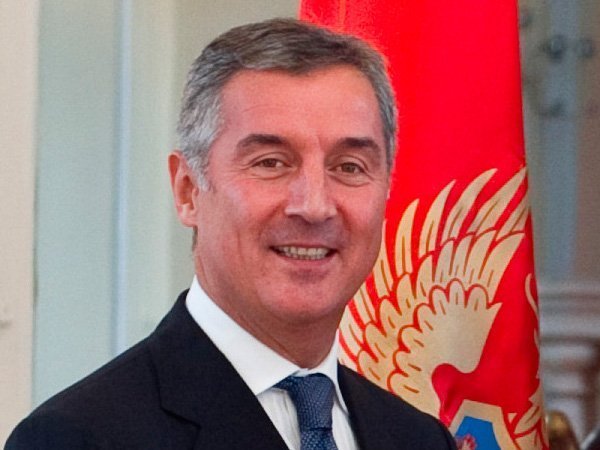
 Prime Minister of Montenegro Milia Dzhukanovich En.Wikipedia.org
The parliamentary elections held in Montenegro on October 16 did not give a definite answer to the question about the winners. According to reports, none of the parties received the absolute majority.
Both sides-the ruling Democratic Party of Socialists, under the leadership of Prime Minister Montenegro, Milia Dzhukanovich, and the opposition, said that they gained enough votes in order to form a coalition with other parties and, thus receiving the majority in parliament, begin to form the government.
According to the Kommersant newspaper on October 17, the VHI is still gaining about 42% of the vote, which will allow it to get 36 mandates in an 81-seater parliament. At the same time, the Democratic Front, even in the case of creating a coalia with the Democrats party and the Key Association, can get 35 seats.
The forecasts about the election results were significantly varied. Some experts did not exclude that in the end, the Government of Dzhukanovich may be changed by the opposition, which opposes integration with the European Union and joining NATO, as well as for the development of relations with Serbia and Russia. They emphasized that in society there was dissatisfaction with Dzhukanovich’s regime, which has been in power for 25 years in a row.
Others reminded that attempts by those interested in this to stop the sliding of the Styugoslav countries in NATO and the EU were still not successful, and did not exclude that the same thing would happen this time.
Now the chances of the party of Dzhukanovich and its opponents look approximately equal, but there is reason to believe that the outcome is already clear and the party Dzhukanovich will find the opportunity to attract supporters and hold in power. This was in an interview with Polit.ru was told by Pavel Kandel, a candidate of historical sciences, a leading researcher at the Black Sea-Medial Research Department of the Institute of Europe, RAS, head of the Center for Ethno-Political and Interstate Conflicts.
“Although both parties that participated in the elections in Montenegro - that is, the pro -government democratic party of socialists, led by Prime Minister Milo Dzhukanovich and two opposition bloc (and in reality, several parties that performed separately) - they say that they are the winners of the elections, in reality, the situation until the last moment, that is, the official completion of the votes and the distribution of mandates in parliament, will remain vague. The question of who has at least a slight advantage will be open.
So far, the chances look approximately the same, but it is “approximately”. Because if we talk about reality, then Dzhukanovich and his party are already 35 (according to other sources - 36) mandates, and the parties of national minorities are Bosnitsa, Croatian and Albanian - four more mandates. In addition, among the so -called opposition there are parties that very often went with Dzhukanovich, and “bite” them will not be difficult for him, as it happened more than once before.
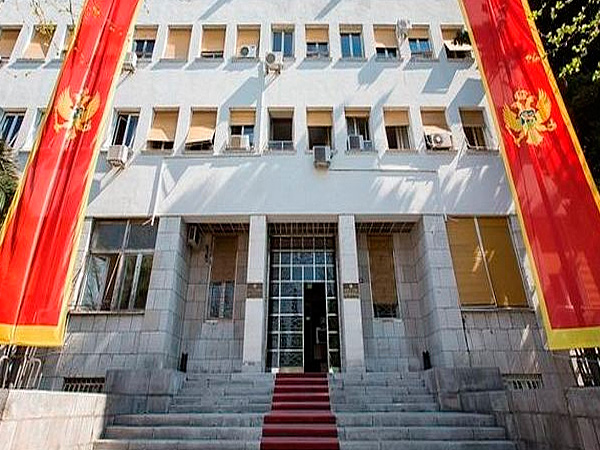 Parliament of Montenegro
As for the parties of national minorities, again, it is very likely that they will go to the coalition with Dzhukanovich-because it happened more than once. Anyway, these parties have no reason to experience sympathy for the Proserg or Prorusian forces that form the basis of the opposition.
So it is more likely that Dzhukanovich will be able to win-not to mention the fact that he still has a single batch, and the opposition has two coalitions of several parties each, and parties that have not yet joined any coalition. Of these, the opposition has to be put together by a general block that could form a government - which, of course, is much more difficult [what the traffic police would have to do].
So it is most likely that Dzhukanovich will once again be able to remain in power, as it was for 25 years, which he and his party are in power. Accordingly, the policy of Montenegro in relation to Russia is likely to not change, that is, it will remain actively anti -Russian, ”said Pavel Candel.
The expert explained that with the victory of the opposition in the election, prospects would be significantly different from the current ones.
“In the event of the victory of the opposition and the formation of the government by it, one could assume that, firstly, the question of joining NATO will be the subject of a referendum. In fact, there are a variety of forces among the opposition, and some of them advocate the entry, while others are against, but everyone agreed on the fact that they were ready for a referendum.
So, one could expect a referendum; One could expect the abolition of anti -Russian sanctions by Montenegro - well, and generally more favorable to Russia of politics. But I think that the victory of the opposition is unlikely, ”concluded Pavel Candel.
Recall that the relations of Russia and Montenegro worsened somewhat when it became clear that she intended to join the North Atlantic Alliance. At the same time, experts argued that this step of Montenegro is not anti -Russian and a country is needed to solve its internal problems.
As the Doctor of Historical Sciences, Professor of the Russian State University Sergey Romanenko, explained “Polit.ru”, such an action was, first of all, to ensure Montenegro security from neighbors.
“This step was expected for a long time, because Montenegro was a member of the partnership for the sake of peace. I must say that not only Montenegro, but also all the post-Yugoslav states sought and strive to join NATO. And the point here is not at all in relations with Russia, because they are still quite far from it, in another region, and do not have a direct border-but the fact is that for the post-Yugoslav states this is, in general, a guarantee from each other.
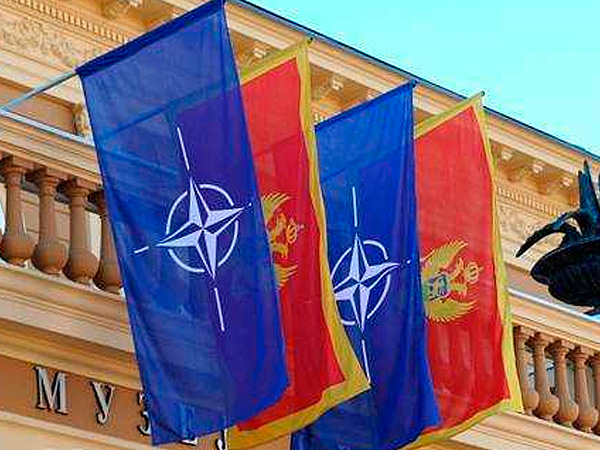 Flags of Montenegro and NATO
In the 1990s, there was a bloody war in the region, the traces of which were not yet erased in political memory. Therefore, these states seek to join NATO and the European Union. In addition, there is a second point: they want to be members of the leading world organizations, economic and military-political, respectively. Therefore, there is no need to look for any anti-Russian subtext in this step, it is simply the logical development of the Montenegrin in particular and the post-Yugoslav policy, ”said Romanenko.
See also: in the parliamentary elections in Montenegro won the ruling batchPrime Minister Montenegro asked to immediately accept the country in NATO Anna Sakoyan, the last newborn NATO