
Translated material
Gleb Korepanov: Without new sanctions
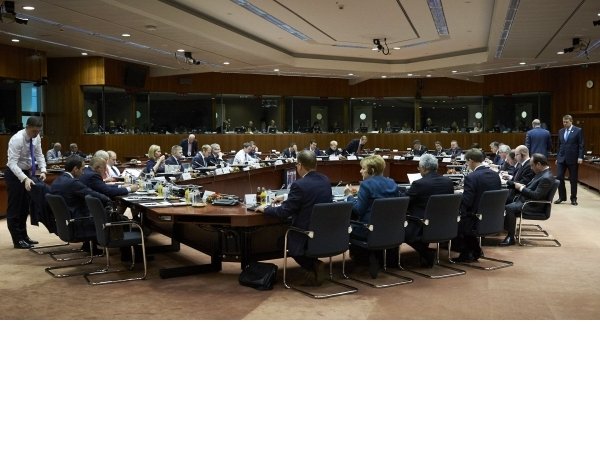
According to the results of the two -day EU summit, which ended in Brussels on Friday, European leaders postponed the adoption of new sanctions against Russia in connection with the bombing of the Russian VKS of the eastern part of Aleppo, which is controlled by an armed opposition against the Syrian government army. The initiators of the expansion of restrictive measures were the UK, Germany and France, but after a difficult discussion, the Italian Prime Minister Matteo Renzi managed to convince the summit to wait for punishment. Nevertheless, European leaders made it clear that Russia should stop Aleppo's bombing, regarded by some as war crimes, otherwise new sanctions will be introduced with lightning speed.
The content of the final declaration of the Council of Europe in part of Russia has become very unexpected for many. In anticipation of the summit, Western media reported that the EU leaders are going to make the most stringent statement towards Moscow, which will framed the practical expression of the document - new sanctions. Options for expanding restrictive measures against individuals and legal entities of the Russian Federation, tightening cooperation in the military-industrial complex were pronounced.
Ultimately, the final declaration looked much softer. European leaders only “strictly condemned” attacks on the civilian population of Aleppo, committed by the “Syrian regime and its allies, in particular Russia”. The EU Council called for the immediate termination of hostilities and the resumption of political negotiations under the auspices of the UN.
“The guilty of violating international humanitarian rights and human rights will have to be responsible for their actions. The EU considers all possible options, including subsequent restrictive measures in relation to people and institutions that maintain the regime in the case of continuation of violence, ”the document says.
The merit is that the final declaration contains relatively soft formulations belongs to the Prime Minister of Italy Matteo Renzi. According to The Financial Times , during a nine -hour meeting, he insisted on the exclusion from the final statement of the clause on the introduction of new sanctions. Renzi was not the only opponent of tightening the sanctions regime, his side was also taken by Spain, Austria, Cyprus and Greece, the publication clarifies.
IL Foglio Italian Redientric newspaper writes that France and Germany did not expect such a tough position from Renzi, which, however, is not going to refuse already imposed sanctions. He reminded this at the beginning of the week in Washington at a meeting with US President Barack Obama.
The Italian political scientist, an expert at the University of Pisa Andrea Dzhantti, on the contrary, believes that the exclusion of the word “sanctions” from the final statement of the Council of Europe was an expected decision. “The sanctions policy are doubtful among many observers and specialists. Other European countries adhere to a similar point of view - Greece, Hungary, Slovakia, and even in Germany many circles, primarily economic, seriously doubt the usefulness of sanctions, ”Dzhanotti told Kommersant .
France President Francois Hollande noted that although the summit did not decide on the expansion of sanctions due to Syria, the EU will continue to put pressure on Moscow to establish a truce in Aleppo. The Chancellor of Germany Angela Merkel, disappointed with the results of the Brussels meeting, also stated that the continuation of Aleppo's bombing could cause new measures against Russia.
Official Moscow has not changed its attitude to the EU sanctions policy. According to the press secretary of the Russian President Dmitry Peskov, sanctions cannot contribute to solving the problems that we are discussing together. ” “We believe that this causes severe harm to Russia's relations, both with individual countries and with the European Union as a whole. Moreover, the harm is primarily caused to citizens of those countries that take part in economic activity. ”
The tightening of the sanctions regime now depends on the further behavior of Russia in Syria and, first of all, in East Aleppo. From Thursday there is a “humanitarian pause” mode there, during which Russian VKS does not apply air strikes in this part of the city.
“The discussion of new measures against Russia is activated if the pause ends with increased terrorist activity, including in relation to civilians who should leave Aleppo on humanitarian corridors,” the director of the Russian -Vostok -West Center Vladimir Sotnikov told Kommersant. “The second moment was connected with the first: Western partners made new charges about the death of the civilian population, if the Russian grouping is Russian grouping, if the Russian grouping The VKS, together with the Syrian government troops, will have to resume the bombing of the places of clusters of militants. "