
Translated material
Instead of human rights activists - former chief of "Butyrki"
Elections in the Prison observation commission were compared with the "special operation"
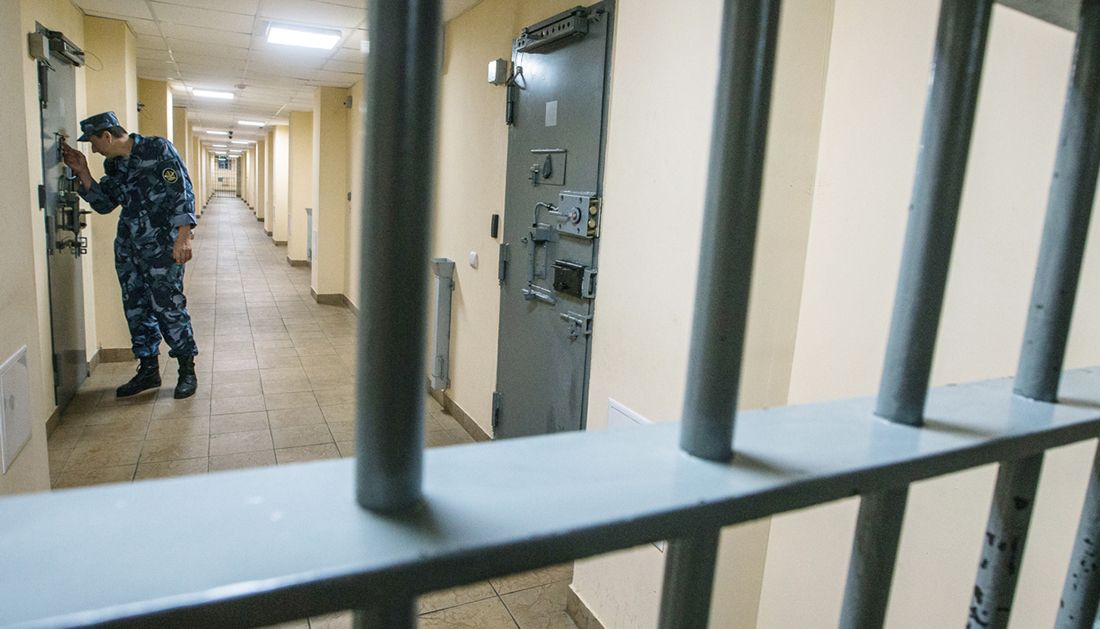
The new composition of the Public Supervisory Commission (PMC) for places of imprisonment, published in the evening of October 21, did not include its most famous participants - human rights activists Zoya Svetov, Anna Karetnikova, Elena Masyuk and Andrei Babushkin. But a new member of the human rights commission that controls compliance with legislation in pre -trial detention centers and colonies became the defendant in the Magnitsky List Dmitry Komnov. Medusa figured out that it was wrong with new purposes.
The PMC has existed in Russia since 2008 - then a law was adopted on the formation and work of public supervisory commissions that control the observance of human rights in places of enforcement. The composition and number of each organization establishes the Council of the Public Chamber. Members of the PMC have the right to visit places of enforcement, talk with prisoners, take part in the discussion of the transfer of convicts to other conditions of detention. Representatives of the PMC consider the appeals of violation of human rights in places of forced content, which can be reported to the authorities, public organizations and the media.
In the evening of October 21, it became known that many well -known human rights activists would not be included in the new PMC. Following the results of the vote, which was held by the Council of the Public Chamber of the Russian Federation, the lists of members of the PMC of 42 regions were approved. 31 people will work in the Moscow commission. Among the new representatives of the PMC there were no journalists and human rights activists Elena Masyuk, Andrei Babushkin, Zoe Sveta, Anna Karetnikova who worked there earlier.
Dmitry Komnov, a member of the Moscow Peninsula, became a defendant in the Magnitsky List . The former head of the Butyrka pre -trial detention center was fired after death in the prison hospital of Sergei Magnitsky. The lawyer of Hermitage and his lawyers have repeatedly said that he was denied medical assistance in the Butyrka pre -trial detention center and created torture conditions. In addition, Pavel Pyatnitsky, a representative of the “Center for Supporting the Spiritual Heritage”, who was accused of corruption and extortion during his work in the PMC, will continue the activity in Moscow.
Human rights activists call the re -election the “dispersal” of the PMC. The author of the law on public control in places of forced content Valery Borschev in an interview with Novaya Gazeta said that such appointments were made consciously. “A special operation was carried out to destroy public control in places of forced content,” said Borschev. The observer of the Moscow Komsomolets Eva Merkacheva, who will continue to work in the PMC, wrote on her Facebook page: “There will be corpses, there will be torture, there will be a lot of grief and tears without real human rights. I really hope that the Public Chamber will fix the situation and will be election. Otherwise ... Perhaps I myself will publicly leave the PMC. ” The “defeat” of the window called the actions of the Public Chamber and human rights activist Anna Karenikova. “Does that mean a war? Who made the decision, who is beneficial? And will it be interesting to society? Journalists, respond. I don’t know if something can be changed, but probably you have to try. Now it all depends only on you. Not only my life. There are many lives. "
Journalist Zoya Svetova was a member of the Moscow PMC for three terms (eight years) and, by law, could continue to work in the PMC in another region. She wanted to enter the PMC in Mordovia. “In Mordovia, 18 colonies. Obviously, 9 members of the PMC simply cannot physically check whether human rights are respected there. The FSIN of Russia and the Public Chamber do not need human rights activists in this region. I remember how I came there with an audit several years ago, and the local Commissioner for Human Rights said that he had no complaint from prisoners. And every day they called me from the colonies and begged to help, write about the daily lawlessness that is happening there, ”said Svetova.
The Public Chamber is considered to be honest elections. “The process of forming the PMC was as open as possible. Working groups gathered, discussions were held at various venues, ” said Alexander Brechalov, secretary of the Public Chamber.
Sasha Sulim
Moscow