
Translated material
Budapest autumn: thaw and blood
60 years ago, an uprising in Hungary was flashed and suppressed
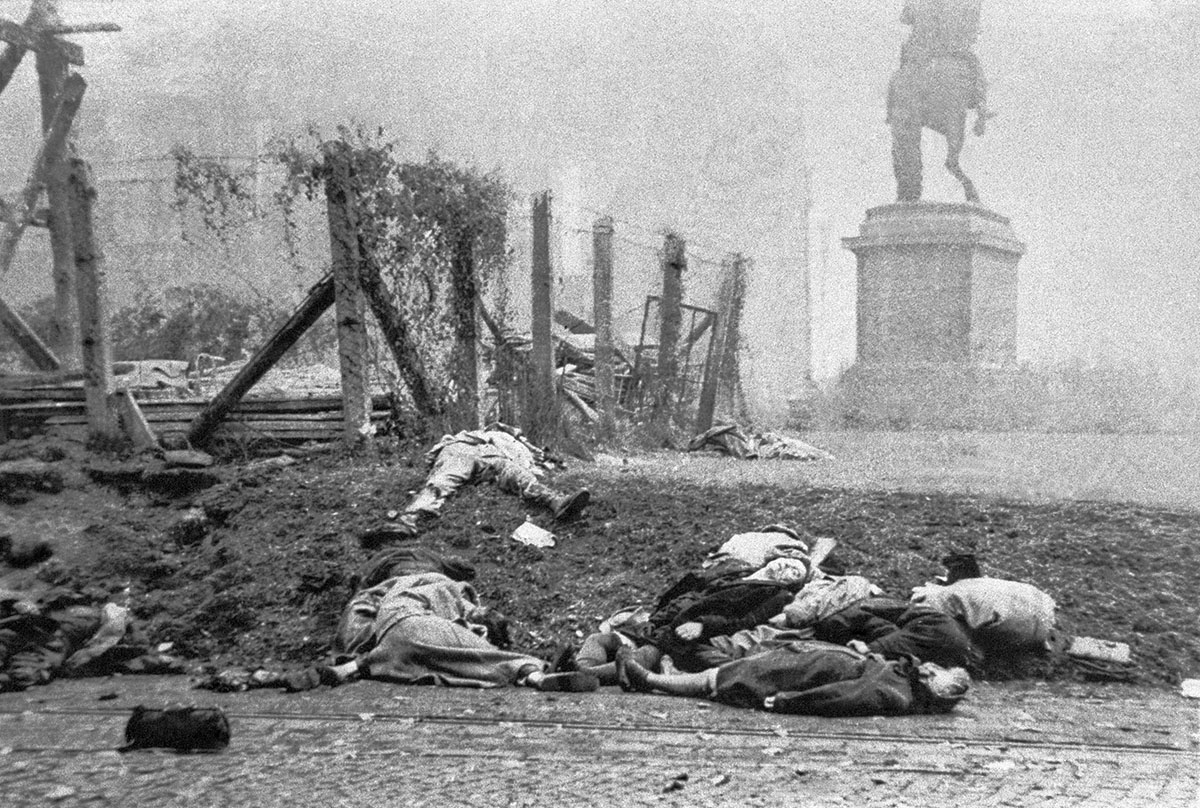
After the death of Stalin, a “thaw” passed throughout the social camp. In Hungary in 1953, she led to the restriction of the power of the dictator Matyash Rakoshi, the organizer of the bloody purges, who retained the post of first secretary of the Hungarian party of workers (VPT), but in July 1956 he was removed from him and left for treatment in the USSR. The government was headed by the protege of Lavrenty Beria and Georgy Malenkov, the former head of the Ministry of Internal Affairs of Imre Nary, the Comintern and at the same time the informant of the Lubyanka (the pseudonym "Volodya"). However, otherwise the Cominternites in the Moscow 1930s did not survive.
FERMENTATION
Nadi spent an amnesty, turned political repressions, eviction from cities on a social basis, stopped building a number of large industrial facilities, weakened pressure on the peasants, reduced taxes, reduced food prices, and raised salaries. This brought him popularity. But on April 18, 1955, Nadi was shifted from his post, and later expelled from VPT as a “right -wing bias”, remaining a symbol of reform in the eyes of the Hungarians.
After the XX Congress of the CPSU in Hungary, fermentation again went. The catalyst was the June uprising of Polish workers in Poznan at the factory. Stalin - then, according to various sources, 54–74 people died. On the other hand, discontent was heated by the American Committee “Free Europe” - on September 8, 1954, he approved “Directive No. 15. Hungary. The Focus operation, in accordance with which the program “National Resistance Movement” of 12 points was developed. Radio "Free Europe" explained it in a special program.
Bronze boots
On October 6, the reburial of Laslo Raik, a prominent communist, accused of Zionism and tortured in 1949 on the direct order of Stalin, took place. The demonstration collected more than 100 thousand people. Calls were sounded for the resignation of Stalinist Erno Hero, who took the place of displaced Rakoshi in the party. He was considered one of the perpetrators of repression.
Nadi convinces Moscow of fidelity to socialist values. But at the same time he abolishes state security, introduces a multi -party system and free elections
American diplomats reported: "The situation in Hungary worsens quickly, undoubtedly faster than it foresaw in Moscow." On October 13, the call of “Free Europe” sounded: “Demand the withdrawal of units of the Soviet Army, demand democracy instead of democracy, independence instead of guardianship!”
Three days later, an independent student organization was created in Seged. And on October 22, the capital's students joined it, who put forward 16 requirements for the authorities (the convocation of the party, the appointment of Nadia by the prime minister, the withdrawal of the Soviet troops, the demolition of the monument to Stalin, the refusal to study the Marxism-Leninism and the Russian language, etc.) and planned on October 23 the march of protest in the center of the capital. According to the memoirs of the press secretary of the Soviet embassy, Vladimir Kryuchkov, the ambassador Yuri Andropov then became clear: "The issues will now be resolved not in the offices, but on the streets."
Gradually, the number of participants in the demonstration reached 200 thousand people. The calls sounded to return the old national symbolism and expel the Communists. Organized groups began to attack barracks, withdrawing weapons: an uprising began.
In the evening of the 23rd, speaking on the radio, Hero announced the “counter-revolution” and threatened the “consequences”. In response, the rebels went to storm the Radio House with a demand to transfer their program requirements on the air. The protection of the building opened shooting, the return shots were also heard, the first killed and wounded appeared. The rebels mined weapons in civil defense warehouses and in police sections, captured a cartridge factory, a western station. Trucks appeared on the streets of the city, from which weapons and ammunition were distributed.
The monument to Stalin was demolished - it had to be cut with a welding machine. Parts of the statue were dragged to the building of the National Theater, where the crowd spat them on. There is a picture of the head of the “leader of the peoples” on the tram tracks. His bronze boots stood on the pedestal until the end of the uprising.
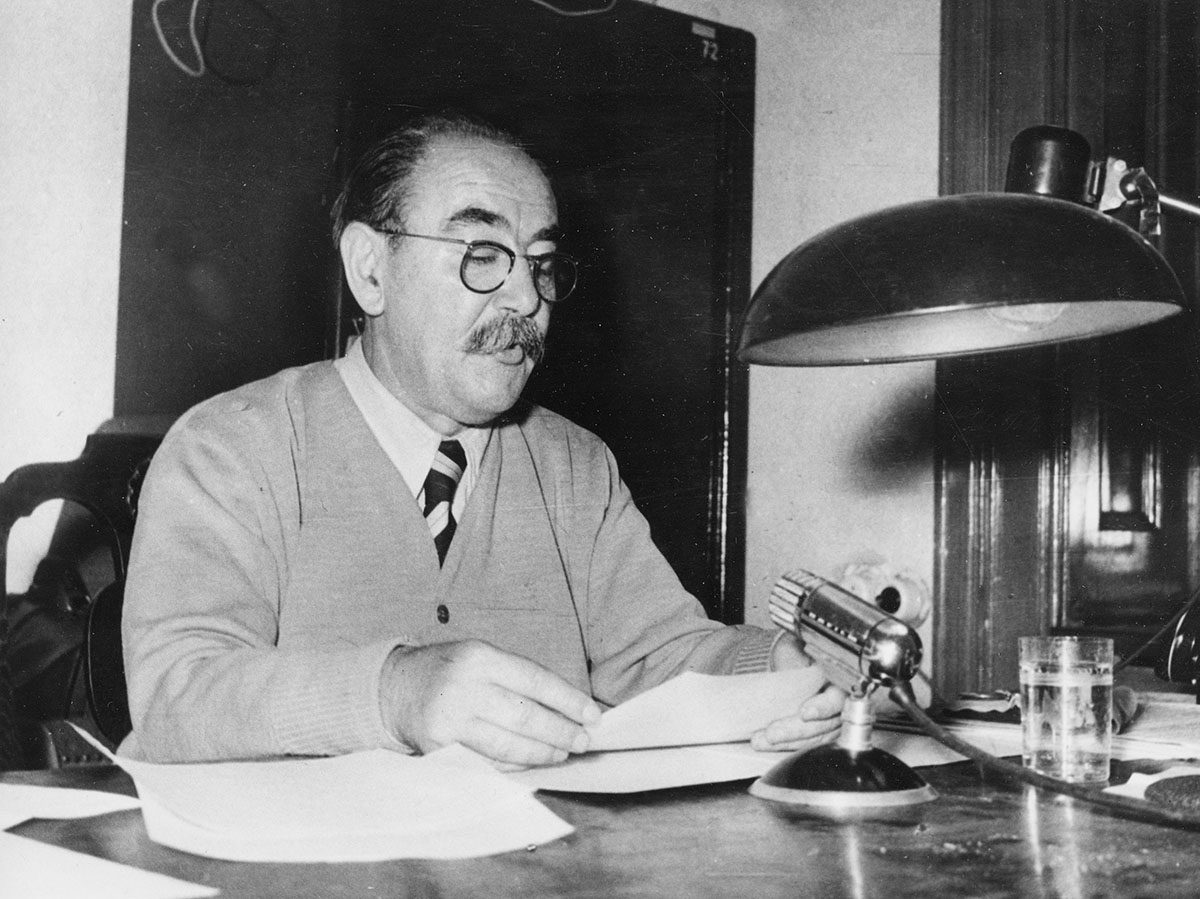
That night, Imre Nadi becomes the head of government. And Ernao Hero calls to Moscow and asks to introduce troops.
At war as in war
About 6 thousand military personnel, 290 tanks, 120 armored personnel carriers, 156 guns with the order were introduced into Budapest: “Open only the fire!” In the Ministry of Defense of the VNR, the confusion: a weapon sent to workers of factories and a party asset falls into the hands of the rebels, part of the Hungarian security forces passes to their side.
Members of the Presidium of the CPSU Central Committee Anastas Mikoyan and Mikhail Suslov, KGB chairman Ivan Serov, deputy chief of the General Staff, Army General Mikhail Malinin arrived from Moscow to Budapest. They “recommended” immediately replacing Hero as the first secretary by Yanosh Kadar, who suffered, like many, from Rakoshi. But it was too late, and a day later the Tsekists had already reached the airfield through the raging city on the tank.
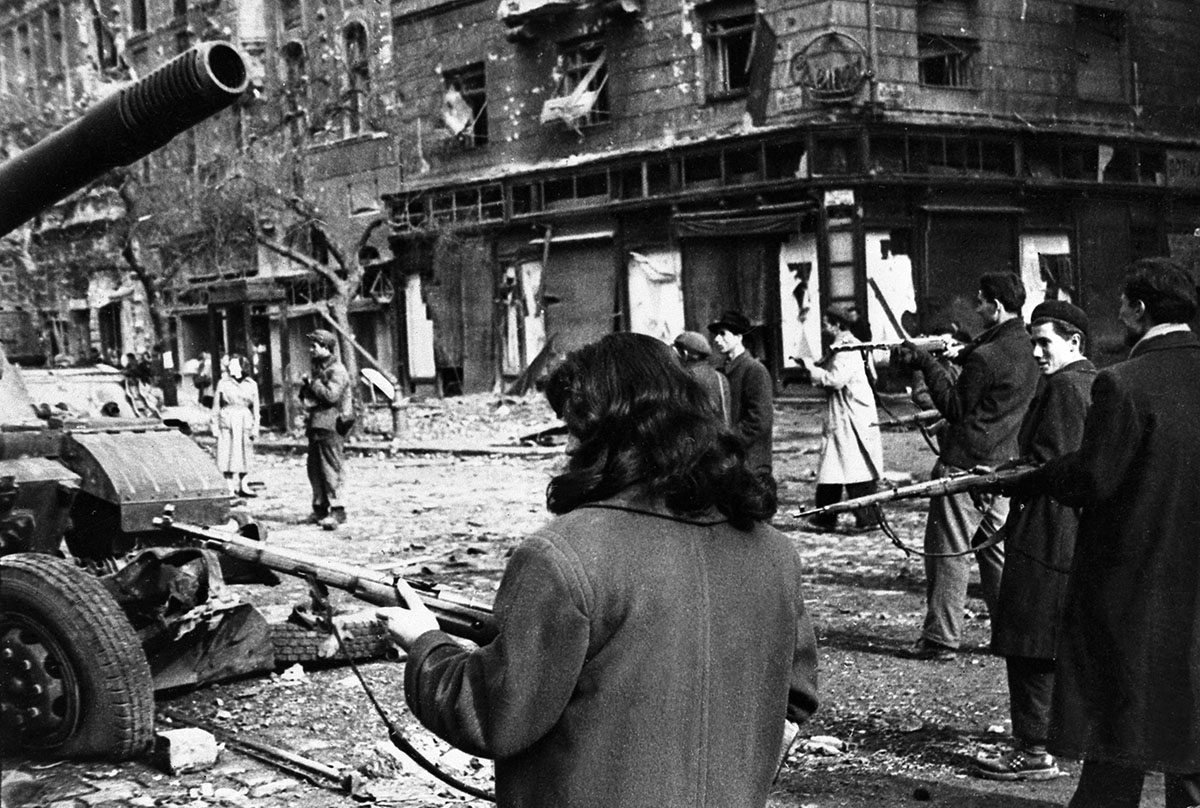
The fracture occurred on October 25, when a crowd gathered at the parliament on Koshut Square. During a peaceful rally from the roofs and attics of neighboring houses for manifestants and Soviet soldiers, aimed fire was opened. Soviet soldiers in response also began to shoot. He who arranged a provocation is unknown, but this has hardened the rebels. The struggle acquired a national liberation character. In Budapest, autonomous battle groups operate: a detachment of Jozhef Dudash from 400 people captured the National Bank and millions of forints "to continue the struggle." At the site of the authorities, the Revolutionary Committee arises, and at a number of enterprises - working committees. The new government, in addition to the Communists, included the philosopher Dyurd Lukak and the former leaders of the independent party of the small hosts Zoltan Tildi and Bela Kovach. Imre Nadi said on the radio: "The government condemns the views in accordance with which the current popular movement is considered as a counter -revolution." He announces the ceasefire, the beginning of negotiations on the withdrawal of Soviet troops from Hungary, the coagulation of the VPT, the dissolution of the Hungarian People’s Army and the creation of new armed forces under the leadership of the Revolutionary Military Council, headed by Major General Bela Kirai and Colonel Malether. From that moment on, Imre Nagi from a party functionary turns into a national leader, who leads resistance in the name of freedom. The communist, the future hero of the Soviet Union, Yanosh Kadar chooses a different path - he makes a bet on the USSR.
Moscow poker
In the Presidium of the Central Committee of the CPSU, opinions were divided. For "democratization" with the preservation of the "leadership of the Communists" - Khrushchev, Mikoyan, Malenkov. Against - Molotov, Voroshilov, Bulganin. The advanced “Pravda” says that the USSR agrees to “democratization” of the VSR, provided that its membership is preserved in the Warsaw Pact. And on the 30th, the most amazing document of the post-war era was published-a declaration on the basics of relations with socialist Islands. Events in Hungary are evaluated as “fair and progressive movement of workers”, to which reactionary forces joined. The USSR is ready to enter into negotiations with the STR and other socialists on the issue of the stay of Soviet troops in Hungary.
Was it a disguise? In any case, the threat of the integrity of the social camp was evident.
On October 30, Mikoyan and Suslov are again in Budapest. They give “good” to the change. Nadi convinces visitors of fidelity to socialist values. But at the same time, state security abolishes, introduces a multi -party system and free elections.
Soviet troops leave the capital. Caliness occurs under the cover of euphoria. Enterprises, transport, banks, shops, schools, universities do not work. During the operation “Blue Rain”, the guards of Bela Kirai and the militants of Yozhef Dudash catch and brutally kill party functionaries and GB officers (it is believed that they were identified by brown boots of special cut). In the city committee of the VKT, 20 Communists are nailed with nails to the floor along with the portraits of Lenin.
The leadership of the PRC, Poland and Romania, the Communists of Italy, even the Yugoslavs in conversations with Soviet leaders express “extreme concern”, in fact, advocating suppression of the national uprising. And on October 31, Nikita Khrushchev radically changes the course. Defense Minister Georgy Zhukov is preparing an operation to suppress the "fascist rebellion."
The movements of the Soviet troops began. Seeing this, at at 19 o’clock on October 31, he announced the withdrawal of Hungary from the organization of the Warsaw Treaty and turned to the great powers - the USSR, Great Britain, the USA and France, as well as to the UN with a request to guarantee neutrality: he did not know that the USSR informed the USSR that the Hungarian events were “the internal business of the Eastern Blok”, not wanting to start the war with the Soviet Union.
About 26 thousand were arrested or interned. Man, 13 thousand. From them received deadlines, about 350 are executed. 200 thousand fled from the country
Operation "Whirlwind"
On November 1, Janos Kadar and his ally, Ferenz Munny, flew to Moscow for negotiations. And at five in the morning on November 4, the Vortim operation began. 17 Soviet divisions were opposed in Budapest, according to various sources, up to 50 thousand people. Somewhere else 10 thousand-in the National Guard and in armed detachments. The rebels have about 100 tanks. In the Soviet troops - 3 thousand in Budapest, only three regiments, 10 anti -aircraft batteries, several construction battalions showed real resistance. However, there was no one to lead the rebels.
On November 3, negotiations on the withdrawal of Soviet troops began in the parliament building. The delegation of the USSR was headed by the first deputy chief of the General Staff Malinin, the Hungarian - the new Minister of Defense of Malether. At the suggestion of the Soviet side, negotiations were transferred to the military base of Techel: at night, in the middle of a solemn dinner, the entire Hungarian delegation was arrested. On November 7, Kadar announced the transfer of the entire power in the country to the hands of the "worker-peasant government." On November 10, the fate of free Hungary was decided. Imre Nag and a number of ministers with families took refuge at the Yugoslav embassy: from there they were lured under the guarantees of security, data on the advice of Yuri Andropov personally Yanosh Kadar. On November 22, when leaving the embassy “for following in Yugoslavia,” Imre Nagi was arrested and interned in Romania, where he stayed until April 17, 1957, when he was given the Hungarian authorities.
In a closed court, Imre Nagi did not find himself guilty and refused to ask for pardon, saying that history and the world communist movement would judge who was right. On June 16, 1958, he was hanged along with his associates - by that time General Malether and publicist Miklosh Gimim.
The stripping began: about 26 thousand people, 13 thousand of them received deadlines (846 were sent to Soviet prisons), and about 350 were executed, 200 thousand people fled from the country. Zhukov received the fourth star of the Hero of the Soviet Union for the suppression of the “fascist rebellion” ... In December, the ensemble Boris Alexandrov arrived in Hungary. The halls burst from the public, stormy appliances rattled.