
Translated material
The world as a project
Why did the Nobel Committee need Bob Dylan
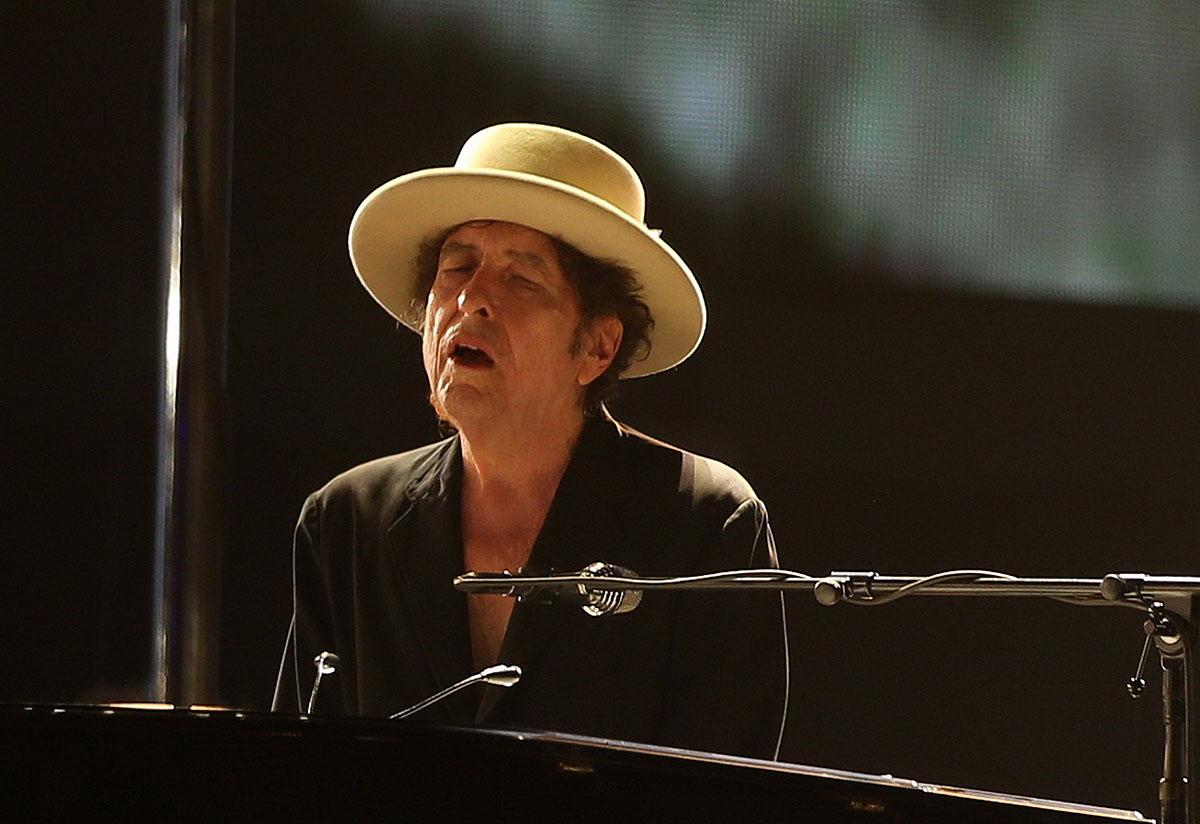
The award of Bob Dilan of the Nobel Prize in literature caused a flurry of discussions, but the laureate himself still keeps magnificent silence. The representative of the Swedish Academy was not able to contact Bard to find out if he will appear at the award ceremony on December 10. This also strengthens the noise raised by the witty decision of the Nobel Committee: in the journal of the American Pen club, poets express the hope that the singer of protest will make a political gesture and abandon the award, like Jean-Paul Sartre.
At the same time, the laureate cannot be called completely unexpected. In the “short lists” of the Nobel Prize in Literature (unofficial, of course, the short linkets of omnipotent bookmakers-we will see the official only 50 years later) the name of the great American bountain Bob Dylan appeared for a long time, in 2011–2013 he was considered the second contender for the award, in 2015 and 2016-the fifth. And a wave of amazement, rising, despite this, lively, is curious on its own.
"The wind of idiots blows into my buttons"
The empty conversations and the names of more worthy applicants (Philip Roth! Haruki Murakami! Adonis!) In this case, in this case with interesting reasoning about how Bardov’s song in general and Dylan Bob in particular, are interspersed. It is amazing how easily the conversation about Dilan comes down to the question of whether the musician can be considered a poet. The dispute that in Dilan is primary, you can lead endlessly: yes, he constantly changed styles and made a revolution in his own sound; No, his music, depriving her of words, would never have hit the hall of fame of the world rock and roll; Yes, Dilan fans love him primarily for poems, but his most famous songs, published in a column, look lonely (“The wind of idiots blows into my buttons”); Yes, its influence on modern culture is huge, but the list of modern poets, owed to it style and poetic language, will turn out to be much shorter than the list of rock stars, who have rehearsed only Knockin 'on Heaven's Door. But these disputes are meaningless, and not even because there is no Nobel Music Prize: in the logic of the Nobel Prize in literature, this award becomes the best of possible decisions.
At this feast, not just a lot of called and few elected, but the confusion and politics forever reigns - starting from the very first presentation in 1901, when, instead of the obvious Leo Tolstoy Nobel, the French poet Sully Praudom received Nobel.
Idealistic orientation
We somehow instinctively believe that the only World Literary Prize should award for literature of the text, annually choosing the best of the best writers. But actually she never did this. At this feast, not just a lot of called and few elected, but the confusion and politics forever reigns - starting from the very first presentation in 1901, when, instead of the obvious Leo Tolstoy Nobel, the French poet Sully Praudom received. In the list of laureates of the award there is Winston Churchill, who received it almost for speech, and Mikhail Sholokhov, who received it by patronage, and Theodore Mommzen, the author of historical works. The philistine idea of literature is competing here with the will of Nobel to award the literary works of the “idealistic orientation” and the need for the committee with each such rewarding to the whole world. In a sense, Nobel, more precisely, all five Nobel prizes in the aggregate, is the project “Peace”, an expression of an idealistic dream of transformation. That time was something like ours: the world is rolling into the abyss, but we are trying to push it back with some single efforts. The literature here noted as art, but as ideology, not as creativity, but as a completely practical task, and up to the Second World War, the Committee tossed with this task and Xiak, sometimes making rather clumsy decisions - well, after the war of great writers and texts of idealistic orientation, it became so much that it became decisively impossible.
Today, the Nobel Committee found the perfect form of existence, even distributed between the Socialist and Poetry. That is, the “idealistic” in the understanding of the Nobel Committee is either a struggle and exposing social injustice, or an exit from this injustice into a transcedal one: Doris Lessing or Tumas Transrustrer, Mo Yan or Shemas Khini. Well, Bob Dylan, of course, is both. This is not an expansion of the boundaries of literature, but the expansion of the border of the struggle in literature. Of course, he should give a prize a couple of decades ago - but what to do if you had to be Kipling to get it forty.
CHAMELEON
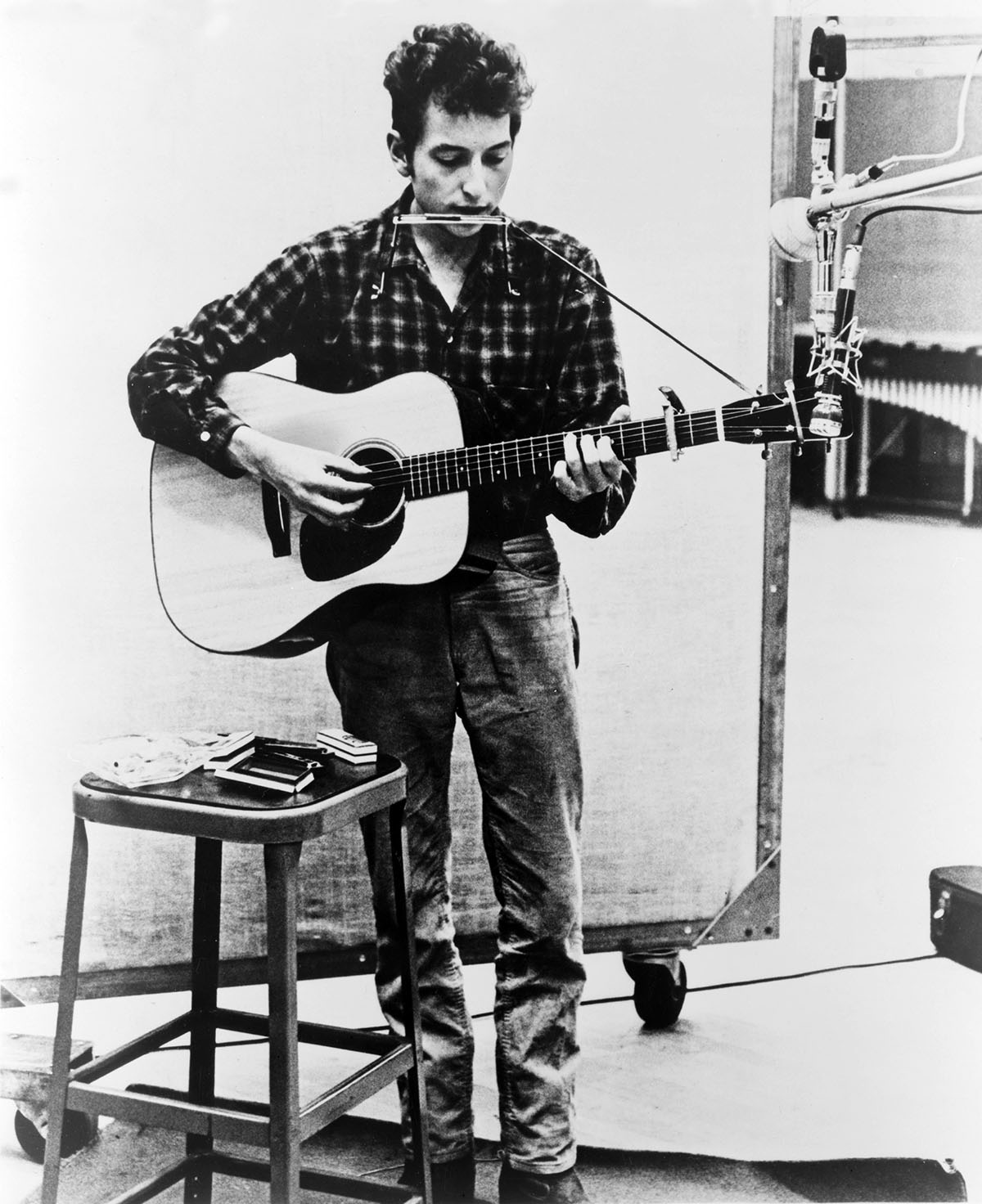
During his long musical career, Bob Dylan so often changed musical appearance that his chameleonism became inseparable from himself. They expected the folk from him-he left the blues, they expected rock and roll-he came with lyrical love ballads, and then suddenly turned to Christianity and released a whole album of musical sermons. Among his last albums are the album of Christmas chants and the album of the Cereps Frank Sinatra. Todd Hinse film “I'm not there”, published in 2007, poetically retells the life of Dylan in six and a half phenomena, and different episodes of the Dylanov’s biography are depicted by different actors: he is a black boy, a fan of Woody Gatri, traveling on a commodity, then Christian Bale, and in his most famous rock and rolling hep Blanchett. The Hinse film tells not so much about Dylan, but about how many different lives can fit into one. Unlike the same David Bowie, for whom the change of images and musical style was part of a continuous musical experiment, for Dylan it was more likely to speak the possibility of all the voices of all. His “you” is always addressed to everyone at once and each individually: “You can wear cotton, you can wear silk, / you can drink whiskey, or you can eat caviar, or you can - bread, / sleep on the floor or in the royal bed.”
On the day of awarding, Dilan Nobel on the Web, a translation of Blowin 'in the Wind made by Grigory Kruzhkovo was dispersed: “How many more guns should we fade, / before concluding the world? / Listen, friend, that the wind sings, / the wind will bring the answer. " It seems that these lines, the early, still remembering the American folk roots of Robert Allen Zimmerman (from Odessa on the paternal line and from the Turkish kars in maternal - how many countries that distinguished themselves in the twentieth century only the history of the genocide are happy to consider Bob Dylan “their own”) will become the only adequate reflection of this poetry in Russian. If poetry is difficult to translate into other languages, then the rock and roll lyrics remains completely as a block inside its own culture, demanding not only the adequacy of meaning, but also the adequacy of the context. In order to hear Dylan, as they heard him in America half a century ago, we must go to where the echoes of the Betniks era are still heard, where there are clashes with the police on every corner, and for curly cosmas they can even pile in the “progressive” capital of Country Nashville, where the protest stands on the first line of the agenda and a small person goes out against the government to inform him, how much he is not with him. agree. And in the hands of this man - no, not a guitar, but in the most literal sense - a word.
Words are in the wind
You will need a lot of translation enthusiasm and even more poetic talent to translate the truly main texts of Dylan into Russian. For example - Subterranean Homesick Blues 1965. The energetic text gives out the spirit and moment of time in the highest concentration, every phrase is a blow, such a “I see, then I sing”, where the stream of words, like a stream of thoughts, weaves pictures and conversations from the street (“I stand on the sidewalk and I think about the government”) into the common picture of the world: “Do not wear sandals, do not get into scandals, you do not need a synoptic, to understand where it is blowing. wind". But the main Subterranan Homesick Blues was, of course, the video - the most famous video with young Dylan and one of the iconic musical clips of all time and peoples where the author goes outside, holding a weighty folder of pieces of paper with words from the text of the song, and in turn releases these words into the wind. Each card has its own design, some words are deliberately written incorrectly (“Suckcess”), some people do not deliberately coincide with the text (“look out, kid, you gonna get hit” sings Dylan, and the cards show “Watch out out!”, “Gere they Come”). But the words become the weapons of the bard (a bard with a capital letter, like Shakespeare, in the English tradition).
The power of the Dylanov words was such that Papa John Paul II once built a whole sermon on the paraphrases from Blowin 'in the Wind
If the Nobel Prize was given to Bob Dylan for something-not for poetic art, which is undoubtedly, but there are masters and briefly,-this is how half a century ago he went out against guns with words. In the anti -war Masters of WAR 1963, he sings: “You, who built all these bombs, / hidden behind the walls, / hidden in their offices, / I just want you to know that I can see through your masks.” He remained the voice of a generation that came out onto the streets, who escaped from cozy houses from good mothers and daddy in search of freedom, but the main thing is that what he sangs, be it the story of his experiments with drugs or a long winding road of his love affairs, his voice became stronger and more durable when the state, society, and the form of things that developed. The power of the Dylanov words was such that Pope John Paul II once built a whole sermon on the paraphrase from Blowin 'in the Wind.
For rage
It is clear that when the Dylanovsky protest sounded at full power, it would be impossible to reward for him, he simply could not be the mainstream. And that today, handing the Nobel Prize to Dylan, we are trying to resurrect the spirit of not so much generation of beatniks and free American sixties, not only the voice of popular anger, which grew out of African American state -owned traditions and southern folklore traditions, but this ability to steadily and directly stand against all injustice. Destructive wars are again in the world, entire peoples die almost on the air, under the invisible gaze of the world community. We are not waiting for the Messiah, but one who can feel and express collective rage and helplessness. And here, even the living Bob Dylan cannot give us comfort - this is probably why he does not answer the calls of the secretaries of the Nobel Committee and his Nobel speech in December, most likely, we will not hear. Everything that was supposed to be said has already been said - there is nothing more to add.
At this feast, not just a lot of called and few elected, but the confusion and politics forever reigns - starting from the very first presentation in 1901, when, instead of the obvious Leo Tolstoy Nobel, the French poet Sully Praudom received Nobel.