
Translated material
Joseph Stalin, Typical Project
Is it easy to perpetuate the image of the leader? Report from Surgut
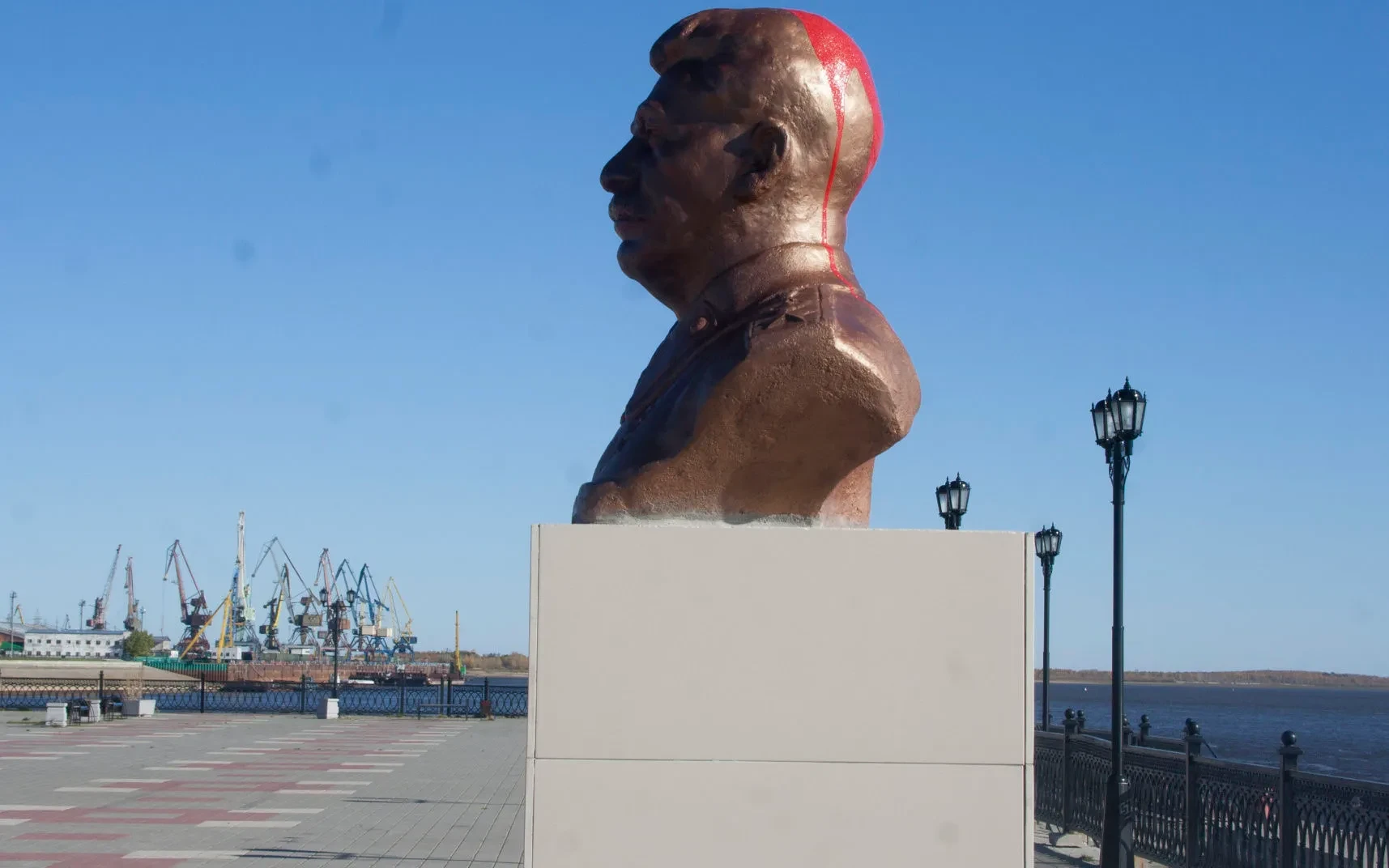
Is it easy to perpetuate the image of the leader? In general, it was not difficult to raise money for a monument to Stalin Surgut in three weeks. The bust was purchased in a workshop that produces it in series. The administration did not interfere, and the victims of repression were also not so firm in the assessments of the personality of the tyrant.
The monument was opened on the outskirts of Surgut, on the banks of the Great Siberian River Ob. When the scarlet fabric was thrown away from the pedestal, a mustache opened, proudly lifted nose, a magnificent spot, a medal of the Hero of the Soviet Union on his chest.
On the pedestal with gilded letters, “Joseph Vissarionovich Stalin” was laid out, and a lot of garbage will be applied on the elegant gold plate on an elegant gold plate. But the wind of history will scatter him. ”
At the opening, grateful descendants laid flowers, made speeches, put the sentries in Galif and Kirsz boots around.
The next day the holiday has deteriorated a little. The head of the information policy department of the Surgut administration, Ekaterina Shvidkaya, said that the bust was installed illegally and, most likely, would be demolished by court. Unknowns twice doused the monument with red paint and once wrote on the pedestal: “Executioner”. The first time the paint was washed away immediately (who is also unknown), so only between the gold letters were red stains. The second time the hosts of the monument caught on late.
When I arrived in Surgut, there were no more signs about the grave on the pedestal.
-Did someone cut? I asked.
“No,” one of the authors of the monument was embarrassed, Denis Hanzhin. - It’s just that we didn’t have a glue ...
In general, two weeks after the grand opening, accompanied by the All-Russian scandal, on the embankment was the monument erected by the descendants “_osif Vissarionov_ch Stalin” (the wind of the story dispelled two letters with a sign) and looked at the Great Siberian River Ob.
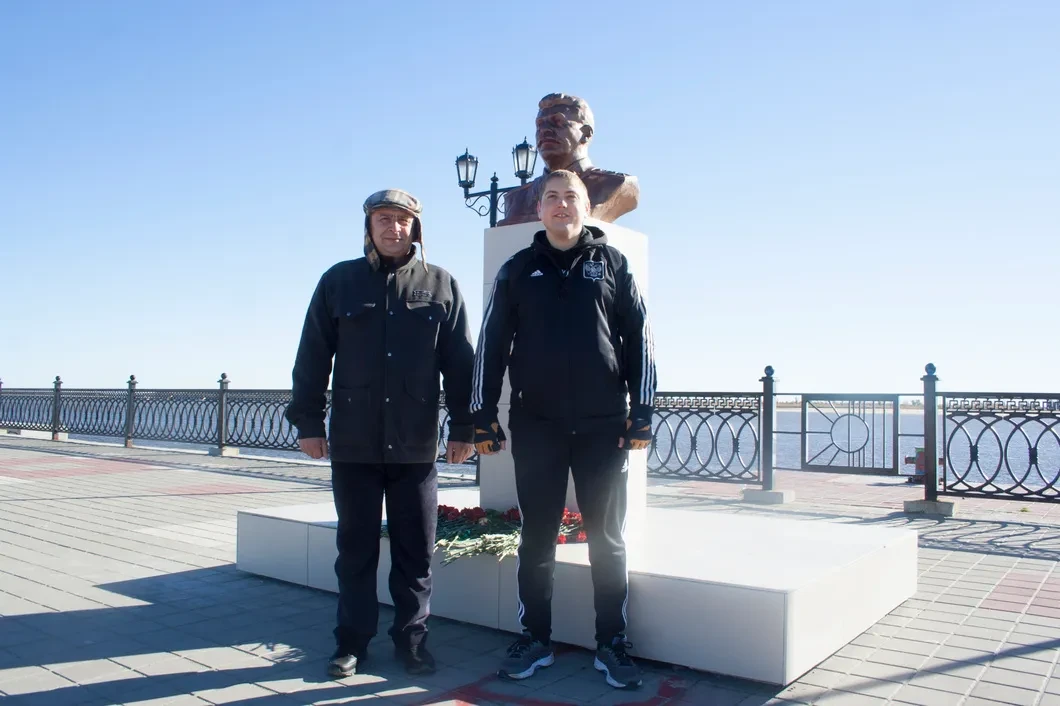
- This is a historical place. There was a pier here, from where the ships with soldiers went to war. And here, at the fish factory, our heroic grandmothers worked in the war. How many valuable fish surrendered Surgut, how many furs!
- And your grandmother about the monument to Stalin said?
- Mom and grandmother supported me, the aunt is generally delighted. Ordinary people support. The younger, the more questions. Generations degrade. Well, you know - they now do not even have astronomy at school ...
With two initiators of the installation of the monument, we meet right under it. Denis Hanzhin is the leader of the Russian Spirit, Albert Leonov is the director of the jurist public organization.
“It is unfair that we remember the great victory, and we forget its author,” Hanzhin explains on the way. - What past we choose for ourselves how we relate to it - the future depends on this. If we are the descendants of the winners who built the Great Supreme Power, then we have such a promising future ... We conducted polls in the largest Surgut groups of VKontakte, where 6-7 thousand Surgutians are sitting. 60% voted definitely for, only 20% - against.
“The worse, the more admirers of Stalin,” nods Albert Leonov. - Still, they understand that if there was Stalin, someone would croak. Sanctions? What are the sanctions? Ukraine? What Ukraine?
The birth of civil society
At the end of April 2016, the organization “working youth of Siberia” (RMS) appealed to the city administration with a statement on the installation of the monument to Stalin. There were three initiators: the RMS itself, the “Russian spirit” and the public organization “lawyers”. The latter is engaged in legal assistance, the first two were famous for the propaganda of sobriety, sports races, the organization of a referendum on the ban on the sale of alcohol after 20.00 (the sale was really banned) and the selfie contest in the form of Stalin's Narus. Even among the initiators, the Conscience organization included. She became famous not so much by runs and the struggle for sobriety as armed skirmishes with Caucasians. A year ago, the leader of the “Conscience” Ruslan Ayupov was put on the federal wanted list, and in the spring the deputy head Evgeny Karmaz went to the colony for participating in a mass armed fight.
In May, the project of the monument to Stalin was sent, as Denis Hanzhin says, "to the commission on topumimics ." The opinion of the commission was divided, and at the meeting at the end of July, she transferred it to the Public Council, which should be created after the Duma elections.
- They decided: the boys will cross. They began to delay, ”says Leonov. - We agreed that there should be a public council. And made their own.
19 organizations entered the new council: from the Union of Local Wars Veterans to the Homeless Animals, “Grace”, from the director of the organization of invalids “Tifloput” - to the wanted leader “Conscience”. Together, the Council was not gathering. They voted in absentia in absentia, but unanimously (the leader of the veterans and the director of Tifloputi, however, then abandoned their votes).
“We issued a protocol,” Hanzhin says concisely. - Have you decided: the land under the city monument? So, belongs to the people. We submitted the application, did not receive refusal. Silence is a sign of consent. We decided to put it. All.
In August, Hanzhin announced a fee for a monument (145 thousand rubles) through BoomStarter-a website for searching for sponsors (right now they collect money for the Muslim calendar-2017, Christmas trees for children with disabilities in Chelyabinsk and a film about 28 Panfilovtsy). For three weeks, 246 people were transferred to the monument to Stalin 165 033 rubles.
A bust of a concrete in bronze was ordered in a workshop in North Ossetia. According to Leonov, the layout did not have to come up with a layout: Stalin was still in Ossetia in series. A month passed from the announcement of the collection to the opening of the monument.
“Gathered and did,” says Albert Leonov. - A striking example of the birth of civil society.
Stalinist Buddhist
We go to the office of "jurists" past construction and dull high -rise buildings. Leonov shows the advertising shield on which he hung a photo of Stalin two years ago with the inscription: “Thanks to Grandfather for the Victory” (“I was nearly torn for this, they didn’t burn it with *** on the stake”), then a strange building with flags on sticks and round drums.
- This is a small corner of Buryatia ...
“Albert is part -time Buddhist,” Denis interrupts.
“Not part -time,” Albert is offended. -I am engaged in the revival of Buddhism in the territory of the Yamal-Nenets Autonomous Okrug. I feel the persecution of power. The priests hiss, ***. I met with the former chairman of the Duma, who said: "There would be iron eggs in the administration - we would have demolished the hell and your Buddha, and your Stalin."
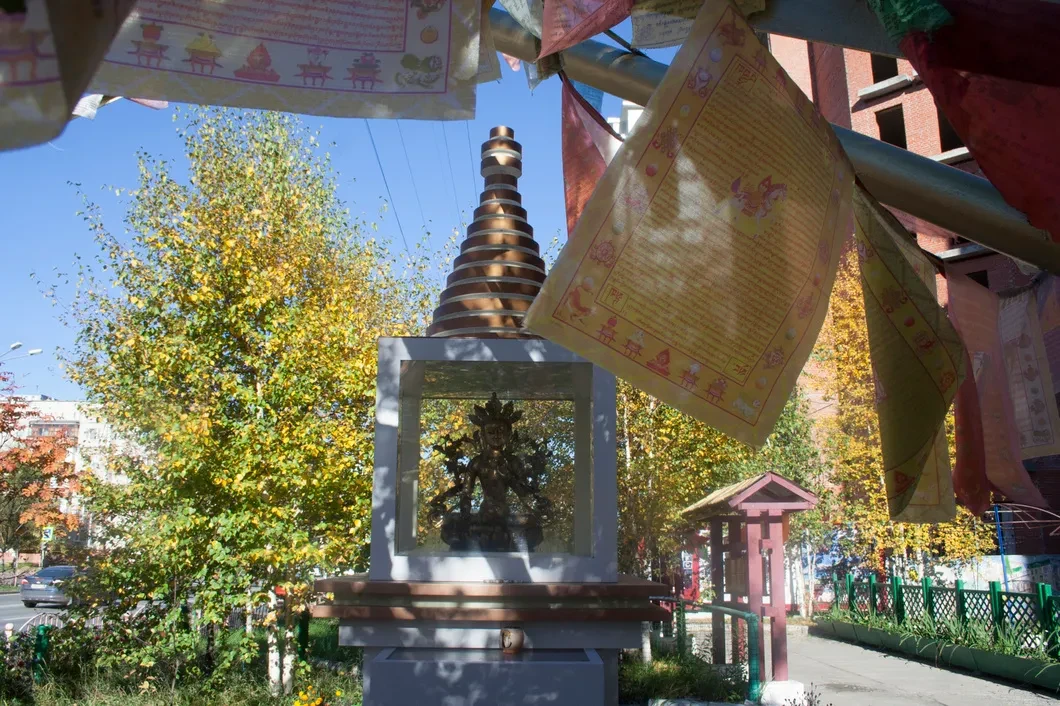
Immediately behind the drums, Albert proudly stops:
- Here. Buddha statue. I installed three years ago. Brought from Tibet. The followers of the Buddha - they work a lot, so the customs officers helped me. Now protects us, Buddhists. As if all Buddhist datsans pray for us daily. How many Buddhist datsans are in Russia - everyone is praying.
I look at the statue in a transparent box. Behind the Buddhas, metal flowers sprout, a touching small heel is exhibited forward.
- Did you put it without permission?
“Well ...” Albert pulls. - The Buddha is on such a territory that it was difficult to say: maybe on a private, maybe on the city one. When I put it, there was a screech - in general, a guard. "Point buildings, we will demolish!" And I tell the chairman of the court: imagine, will believers go to the General Prosecutor's Office? Sangha ( Buddhist community. - E. R. ) will turn to protect the rights of believers. He immediately calculated everything and said: "To whom does your Buddha interfere with?"
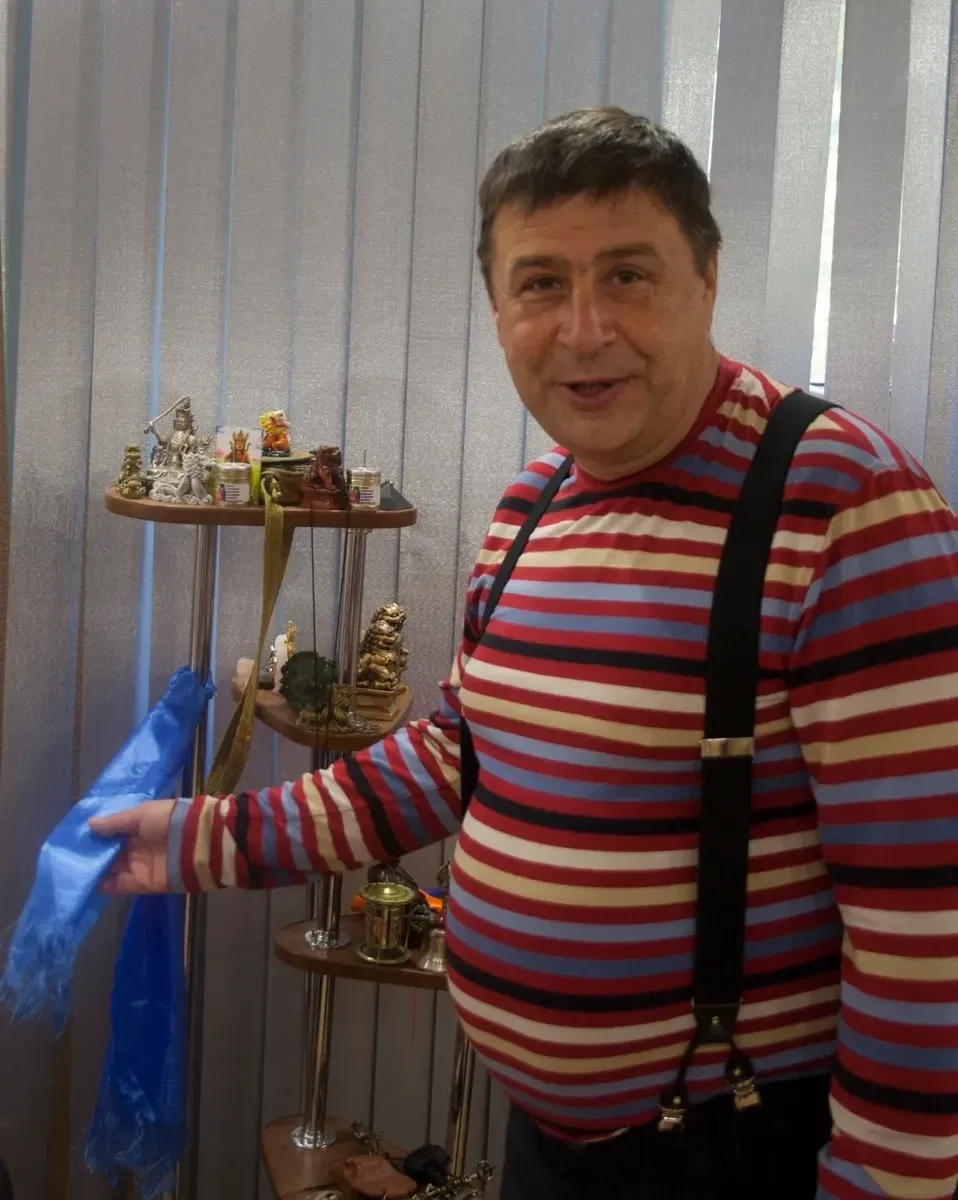
- That is, when you put Stalin, did you go through the Buddha? - I bent mine.
- With the Buddha, everything is easier, Buddhists are such people ... I received an offer from the believer who was a stuntman. He says: “How they will demolish - let me sore gasoline and set fire to myself. And I will tell you where to put the cameras. There will be such a fire show, in ten minutes the generals will fly, a wave in China, in Tibet will rise ... ”In general, we have a person who is ready to sacrifice himself for the sake of faith. The famous stuntman is like that.
We silently look at the Buddha. His face is calm and cold, like Stalin’s, but Albert looks at him gently, like a baby.
- He glows at night. Only worships. Twice a year it is necessary to disassemble it in order to clean it. It absorbs negative energy from all over the city - and rusts. This year, so much energy hap - they cleaned three days with denture brushes.
"What are you awesome?"
I failed to find out the attitude of the Surgut administration towards the monument to the monument. They sent an unsubscription from the Department of Architecture. The press service of the city hall answered in fright that the moral aspect of the installation of the monument was not commented, but very kindly advised to call the University of Surgut: “They will tell you everything without us.” According to Albert Leonov, the deputy mayor called him on the day of installing the bust and asked: "Are you, I went nuts?"
“We have such a kind, peculiar,” Leonov sighs. - What does the authorities say, Moscow, the president - ours of everything purple. Everywhere in Russia, the authorities built the vertical - but we do not have. When we came to the head of the city in T -shirts with a photograph of the Hero of Russia Ramzan Kadyrov, we did not even want to say hello. Only the deputy head and asked: “What did you do? I am an officer, chased him in the mountains, and you are here. ”
“You see, we are almost the only ones here to promote Putin’s policy, his eyes,” Hanzhin sighed. - As Putin himself said: "Not all the cranes managed to fly up to me, I had to return."
Hanzhin and Leonov laughed merrily.
"When we came to the report of the head of the city in T -shirts with a photograph of Ramzan Kadyrov, we did not even want to say hello"
- And you did not think to erect a monument to Kadyrov? I asked.
“No, Kadyrov is alive,” Leonov was surprised. - Such figures as Putin, Kadyrov, are early for them. It is necessary that time pass after death, for evaluation. Although some respected people, orientalists, the activities of Ramzan Akhmatovich Kadyrov are already compared with Moses.
“At first everything was bad there,” I said. - He didn’t succeed quickly.
“Well, Kadyrov’s too,” Albert sighed.
"Lams loved to walk along the roofs of prison"
The city of Surgut is great, but the monument to Stalin was erected exactly opposite the place allocated to the monument by the repressed. Just did not notice, says Hanzhin.
- We did not climb their land. Perhaps if they erected their monument, we would have thought ten times whether it was necessary nearby. But let them put their own now, we do not mind. Stalin himself was a victim of Khrushchev’s political repression. We are against the numbers of repressions overstated. The time was turbulent, many real killers, pedophiles, embezzlers-officials ...
-About pedophiles in the 1930s I did not hear something.
“It’s just that every business needs to be disassembled,” Leonov intervenes. - I had one grandfather during the war was the deputy chairman of the collective farm. When people went to the front, they asked for bread to spend. It turned out a shortage, he was given three years. Another grandfather worked in the NKDVD, with Beria. I studied ... let's say this: the identification of the "enemies of the people." Investigated terrorist attacks in Ukraine, when the mines were blown up, revealed panickers during the defense of Moscow. I revealed per day.
- You do not go to the Immortal Regiment with him? - Denis asks respectfully.
- I haven't walked yet. I myself worked in the KGB, in the analytical department, in Omsk. I processed anonymous letters. It was a matter of opening a spy network. We had special specialists who, by handwriting, could be determined by 80% whether a person writes the truth. We saw what an emotional state a person had ...

- Listen, but it is not embarrassing that many Buddhist lamas were repressed? - I ask out of place.
- This is a discussion question. They told me that the Lams were loved at night to walk along the roofs of the prison. Do you know what levitation is? ..
“It was the case, the spy network was opened. We had specialists who, by handwriting, could determine by 80% whether a person writes the truth. They saw what an emotional state a person had ... "
In the end, I ask who could dive Stalin with paint.
“This is purely Bandera, purely OUN-UPA,” Albert says calmly. - We have a large lobby of those who support Bandera. We think they did it. Their style.
Communist impasse No. 2
I find the nest of Surgut Bandera on a yellow-blue sign.
-Ours as they saw, they say to me: you change the sign. And I to them: so you first change the coat of arms of Surgut. It is also yellow-blue with you.
A native of Western Ukraine, chairman of the Ukrainian national-cultural autonomy of Ukrainians of the Ugra, general director of the Surgut trade and industrial house, businessman Vladimir Samborsky founded the local branch of the Yabloko party, and he flew to Moscow twice, instead of the portrait of the president, he kept the post-poster of the Deep Purple group (19 times for their concerts for their concerts I traveled ”), in an interview with the local agency“ Sia-Press ”(which was established by his son) opposes the war in Ukraine, and calls the installation of the monument to Stalin and“ disgusting cynicism ”. It seems that ideological opponents to touch Samborsky are afraid in response. Not because of its influence-because of the sharp language.
I ask who could dive the monument with paint. Samborsky immediately calls acquaintances to the police and the prosecutor's office, asks, hangs, hanging.
- The Stalinists themselves doused. They just attracted attention to themselves. These people are stuck in the past. They are like a trolley. The horns clung to two wires. While the current is going on - they go, the current was cut down - they stopped, and that’s it. Dead end. Communist impasse number two.
- Why is the city administration not reacting?
-Apparently, the administration is waiting for what they say in the Khanty (Khanty-Mansiysk.- E. R. ) . Khanty is waiting for Moscow. No one knows: it has come in Moscow to Stalin’s time or not yet. No one will do anything without a signal. They are dead themselves. Even bribes are taken without enthusiasm.
“These people are stuck in the past. They are like a trolley. The horns clung to two wires. While the current is going on - they go, the current was cut down - they stopped, and that’s it. Dead end"
Samborsky knows about how in Surgut they erected the monuments in half: he completely financed the monument to the teacher opened in the summer in front of the local pedigree (the sculptor made the monument to the person of Samborsky’s mother, a teacher from Berdichev), and in 2005 he paid and erected a monument to Taras Shevchenko in the city center.
Samborsky is taking me to the Shevchenko monument. It gets dark, twilight fall on gray Khrushchevs with pink balconies. Suddenly, in the middle of the empty road, a cork from expensive jeeps forms (“Here is the office of Gazprom,” Samborsky throws in passing). We stop near a small birch grove. On a granite pedestal in front of her stands a very solemn bust.
Samborsky tells how for three years he could not get the land under the monument, how the city hall examined various projects for months, each time demanding something to change; How the land was allocated under it with communications from below, so I had to put a bust away from them ...
“I moved to the side a little bit, only eight meters ...” explains Samborsky. And I understand: if not for “a little bit”, Taras Shevchenko would be illegally in the city.
"Our memory"
-They brought our family here on a barge in 1930, they said: get out! Six families were planted in a clean forest. They threw out two axes, the saw - they were afraid to give more, suddenly they would arrange a rebellion. Among the locals they allowed rumor: enemies of the people go, hide the axes. At first, my dugouts dug, then they built huts, cells literally. They launched old people and children there. Imagine: the forest is felled in winter, a wet man, there is nowhere to dry. In the first winter, half died out. She died out, did not die. Small and old people. Only strong men remained.
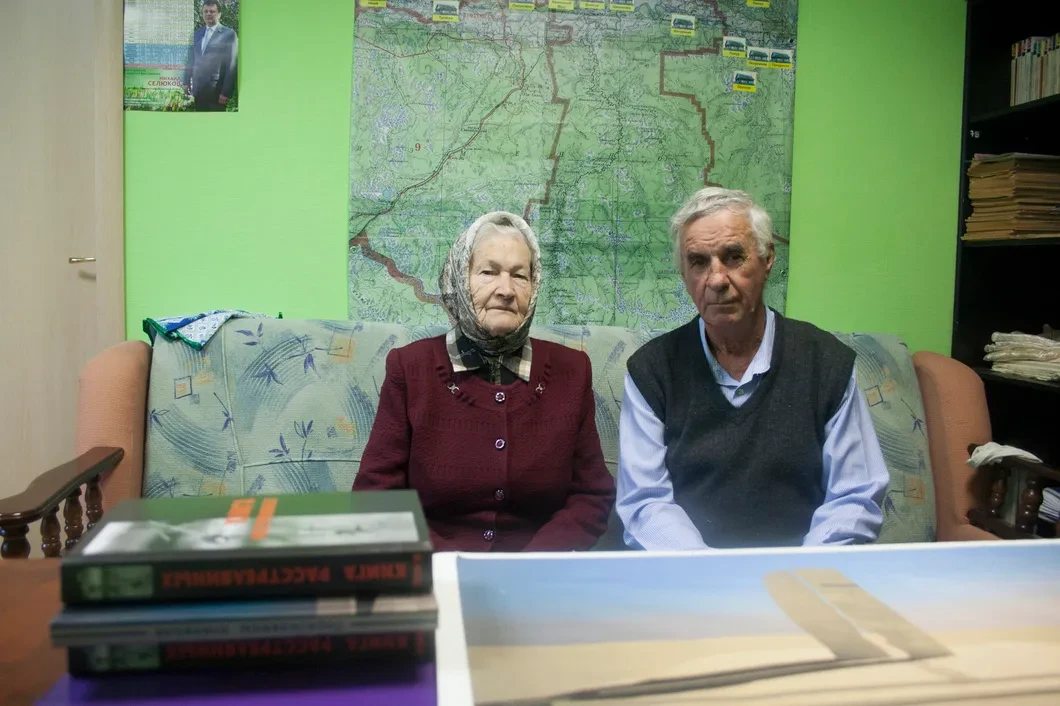
Pavel Aleksandrovich Akimov, the chairman of the public organization “Our Memory”, tells calmly and without expression - for the hundredth time retells obvious facts to the new person.
“Our memory” are two tiny rooms in a residential building on a black cape, now - the southern outskirts of Surgut, earlier - a separate village on the banks of the Ob. In a Soviet way, bright green walls, camps of camps on the walls, a samovar in the corner ... If you believe the cards, the black cape was a neighbor of the places where it was allowed to settle the exile. “Our memory” is the only organization in Surgut that is engaged in the help of repressed. Where can she be if not here?
Until 1930, there was about nothing around Surgut. About 20 thousand inhabitants lived in the entire area. In just two years, from 1930 to 1932, their number grew by a third. By 1932 there were already 8900 exiles-a third of the entire population. According to Akimov, in fact there were more of them, only in the first two years of expulsion the statistics of exiles did not conduct. How many died over these two years, never to recognize.
“I found statistics,” says Akimov. -Here, to the Tobolsk North, it was sent to three streams-1931-1933-450 thousand dispossessed. I survived only a third.
There were no camps around Surgut, but the dispossessed were drunk massively: Western Siberia, Northern Territory, Ukraine, Volga, Ural, Bashkiria, Crimea ... brought on barges, thrown out on the bare banks of the Ob.
Judging by the documents, mostly large peasant families were sent here, who held horses, cows, rebuilt large houses. Many were taken for refusing to join the collective farm, some - for reluctance to renounce the dispossessed relatives. They confiscated not only at home and cattle, but even clothes, personal belongings.
Первые годы здесь стоял голод. В докладной записке Генриха Ягоды от 26 октября 1931 года сообщается об огромной смертности спецпереселенцев, особенно детей. В возрасте до трех лет умирало 8—12% — то есть каждый десятый.
За зиму 1930-го поселки посреди тайги вымерли почти полностью. В первую весну в поселках ссыльных разыгралась цинга. Люди ели лягушек, мох, толкли листья. На следующий год стали сажать картошку и держать скот. Формально поселки не считались лагерями, на деле были в ведении ГУЛАГа.
— Ваши родители радовались реабилитации? - I ask.
— Конечно, — удивляется Акимов. — Они пережили унижения. Если где-то выборы шли, их не приглашали. С места выехать не могли. Когда кто приходил из армии, все смотрели, гордились. А нас не брали, мы были враги. Мать получила паспорт только в 64-м году, как на пенсию вышла. До этого раз в неделю отмечалась в комендатуре. А брат в 53-м из села сбежал. Ему 13 лет было, пора в колхоз, а он учиться хотел. У него одна только справка была, что он семилетнюю школу окончил, — с этой справочкой и сбежал. Они с ребятами на теплоход до Сургута со стороны реки влезли. Потому что перед трапом ходил председатель колхоза, следил, чтоб никто не сбежал.
— Ой, я сама так сбежала! — Валентина Яковлевна сидит рядом с Акимовым под картой поселков ссыльных — в платке, строгая, седая. В 1930 году ее родителей с девятью детьми выслали в Сургутский район из-под Омска. — В 46-м пришел пароход, мы с девчонками только погрузились — видим, председатель колхоза на лошади скачет, кнут скрутил, хлещет кнутом, орет: «Хорошо, пароход отошел, а то б я вас всех вытаскал!» Так я уехала в город, в техникум…
Сейчас в «Нашей памяти» состоят 760 человек — таких же, как Валентина Яковлевна или Акимов, ссыльных. Я спрашиваю, как в их молодости говорили о Сталине.
— Со страхом, — говорит Акимов. — Стукачи были почти в каждой деревне. Кто-то слово сказал лишнее — все, 58-я. Можешь загреметь.
— Помните такие случаи?
— Дядю в 46-м забрали. «Враг народа». Жену его уволили из школы, выселили из казенной квартиры. С тремя ребятишками мыкалась по соседям. 10 лет дяди не было. Когда вернулся, я от него слова не слышал, где он был.
— Теперь буду я рассказывать, — вмешивается Валентина Яковлевна. — Третьяков Иван Иванович. Был взят, за что — не знаю. Работал завхозом в совхозе «Верный путь». У Сережи отца взяли, расстреляли в Ханты-Мансийске. Еще Гребнев, дядя Коля. Еще другой был, вылетел из головы. В нашем Нагорном поселке был Шубин Матвей Яковлевич, бондарь на рыбучастке. Папа тогда работал на конном дворе, Шубин пришел к ним в конюховку, сидят, разговаривают с дядей Романом. Утром бах: нет дяди Романа. Приехали, забрали. Потом Самалов Иван Васильевич также: поговорил — забрали. Сначала никто не мог понять, а потом поняли: если Шубин в каком-то разговоре поприсутствует — обязательно человек исчезнет.
— А сталинисты говорят, вы получаете липовые справки о реабилитации ради денег, — говорю я.
Акимов как-то теряется.
— За реабилитацию платят 676 рублей к пенсии. Всем одинаково. Только какие они липовые, если справки — из управления внутренних дел?..
Неловко говорить, но, кажется, бюст Сталина возник вовремя...
…В 1960-е все изменилось: здесь нашли нефть. В Сургут хлынул поток новых людей. Ссыльные перестали быть большинством, Черный мыс превратился в городскую окраину. И оказалось, что в обычной для России битве между детьми репрессированных и детьми охранников победила нефть. От времени землянок и цинги в городе не осталось ничего.
Говорить о том, что нужно поставить памятник репрессированным, «Наша память» начала еще в 2005-м. Только к 2010 году согласовала его проект: расколотая девятиметровая бетонная стена с двумя бронзовыми людьми. «Это символизирует, что все невзгоды, которые люди поимели, люди прошли и раскололи эти стены, выжили. Вот суть», — объясняет Акимов.
Место на набережной у Черного мыса выбрала администрация Сургута. Она же год назад выделила грант в миллион рублей. Но стоимость проекта оказалась 6,5 миллиона, которых все еще нет.
— От нас запросили: кто должен за памятник платить? У нас решение было такое: раз ссылало нас государство — пусть оно и несет эту ответственность, — говорит Акимов очень серьезно. — Расчетный счет у нас, конечно, есть, мы сейчас начали его публиковать. Пока ничего не прислали. Да и кто нам будет перечислять деньги?
— А на Сталина стали.
— Ну, это понятно, — обижается Акимов.
Неловко говорить, но, кажется, бюст Сталина возник вовремя. Впервые за десять лет про памятник репрессированным в городе заговорили всерьез. Акимов нашел спонсора, который готов построить основной бетонный каркас памятника на свои, чтобы потом возместить из государственного гранта. Основной каркас памятников обещают сделать до морозов. Отделку и бронзовые скульптуры — летом.
На фоне Сталина
— Архитектура хотела, чтобы на месте памятника камень лежал. Но его в снегу машины затопчут, снег зимой — метр, а рыбаки ездят.
Мы приезжаем на набережную сияющим холодным полднем. На месте, где будет установлен памятник жертвам репрессий, метрах в полутора над землей торчит табличка, обнесенная аккуратной оградой, как могилка на кладбище. Сталин — в паре сотен метров сразу за ней, между табличкой и рекой.
— Зря вы этот ваш, ну, памятник тут поставили, — вежливо говорит таксист. — Украдут его. Вон дом брошенный, там 30 бомжей живут.
К Сталину Павел Александрович предлагает не идти: между ним и памятником его жертвам тянется глубокая канава. Но Валентина Яковлевна первая лезет через канаву вперед.
У подножия постамента лежит несколько привядших гвоздик, на брусчатке красной краской написано: «Я (сердечко) люблю тебя», сверху черным приписано «не», — словно это не борьба за коллективную память, а переписка двух пэтэушников.
— Табличку сняли! Здесь табличка была! — Акимов подскакивает к постаменту, всматривается в пустой прямоугольник от обвалившейся надписи. — «Осиф». Значит, «Осиф» уже, — констатирует с удовольствием. — Начинается. Скоро весь растащат. — Обходит кругом, видит алый затылок, подпрыгивает. — Так он все-таки облитый! Облитый! Эх, блин, фотоаппарат не взял.
— Поня-ятно… Поня-ятно… — Валентина Яковлевна смотрит на памятник, как на порвавшего штаны внука. Акимов отходит в сторону, она продолжает рассуждать вслух.
— В честь чего он появился тут, за какие дела? Столько тут было плохого натворено для народа. Хотя, говорят, это Берия все сделал, Сталин только подпись ставил. И не читал.
— Не дурачок же Сталин совсем, — вмешиваюсь я.
— Не дурачок, а не знал. Подсовывали ему.
«Сталину как полководцу — надо памятник. Но только в том виде, что он полководец. А как руководителю тех лет — не надо. Это я как раскулаченная считаю»
— Значит, не виноват он ни в чем?
— Если так судить — это Берия виноват. А что войну выиграл — это Сталин. Если б не Сталин такой напористый и Жуков такой умелец — победы бы не видать.
— Люди, которые памятник Сталину тут поставили, то же самое говорят.
Валентина Яковлевна задумывается.
— Сталину как полководцу — надо памятник. Но только в том виде, что он полководец. А как руководителю тех лет — не надо. Это я как раскулаченная считаю. Только раскулачивал Берия.
— Когда вашу семью раскулачили, Берии еще в помине не было, — не удерживаюсь я. — Он еще в Грузии жил!
— Я маленькая была, не помню… —
Акимов возвращается к Сталину, обходит вокруг.
— «Генералиссимус»! За все его правление 52 миллиона людей приговорили. 52! Не считая войну.
— Тут Валентина Яковлевна говорит, Сталин не знал, что были репрессии, это Берия все устроил, — говорю я, чувствуя себя стукачом Шубиным.
— Да ну, — отмахивается Акимов. — Берия — нормальный мужик. Он эту Грузию вытянул, междоусобицы ликвидировал. Потом давал разрешения на хорошие дела. Я сейчас уже не помню, какие... ну, на нормальные. Это его в 1953-м Хрущев опозорил.
— А как вы Сталина как полководца оцениваете?
— Да какой он полководец? – удивляется Акимов. — Закидал всю Европу своими трупами!
— Что, Жуков тогда один войну выиграл? — вспыхивает Валентина Яковлевна.
— Да и Жуков этот такой же! 26 миллионов людей потерять!
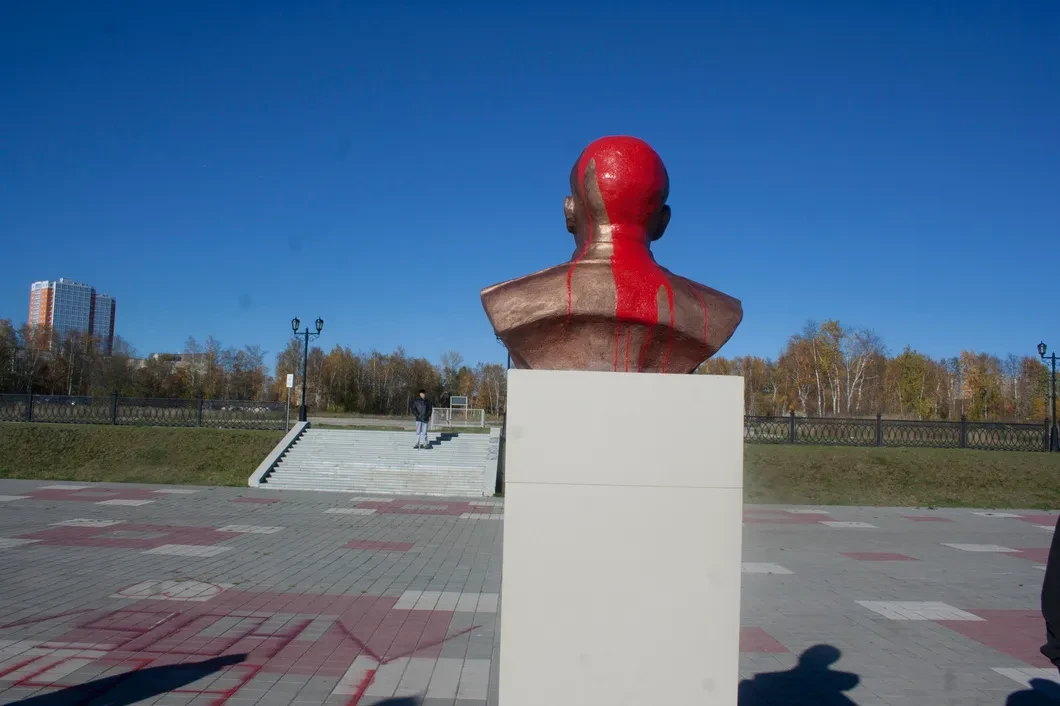
— У меня в головенке не умещается: того хвалили, этого хаяли… — ворчит Валентина Яковлевна под нос.
— А еще сталинисты собираются памятник Берии здесь поставить, — добавляю я.
— Ба-атюшки! — всплескивает руками Валентина Яковлевна. — Одурели совсем!
…К машине возвращаемся в мрачном молчании. Не дожидаясь помощи, Валентина Яковлевна отважно ухает в канаву, пытается выбраться, но пробуксовывает в жидкой грязи. Акимов скатывается следом, подхватывает под остро торчащий локоть, толкает:
— Ты давай, маши крыльями, маши. Так, глядишь, и взлетим. Улетим отсюда. Let's…
Я хватаю Валентину Яковлевну под другую руку. «По-ле-те-ли!» — кричит Акимов, и мы выскакиваем прочь — прочь от жидкой грязи канавы, прочь от набережной, откуда увозили на героическую смерть солдат и привозили на бесславную жизнь ссыльных; прочь от «Осифа» с алым затылком; спиной к великой сибирской реке.
Surgut
PS
Через три недели после установки памятник Сталину демонтировали по решению администрации Сургута. Бюст стоит на складе управления лесопаркового хозяйства Сургута. Мэрия готовит документы, чтобы взыскать денежные средства, потраченные на демонтаж.