
Translated material
The last flight of "Douglas"
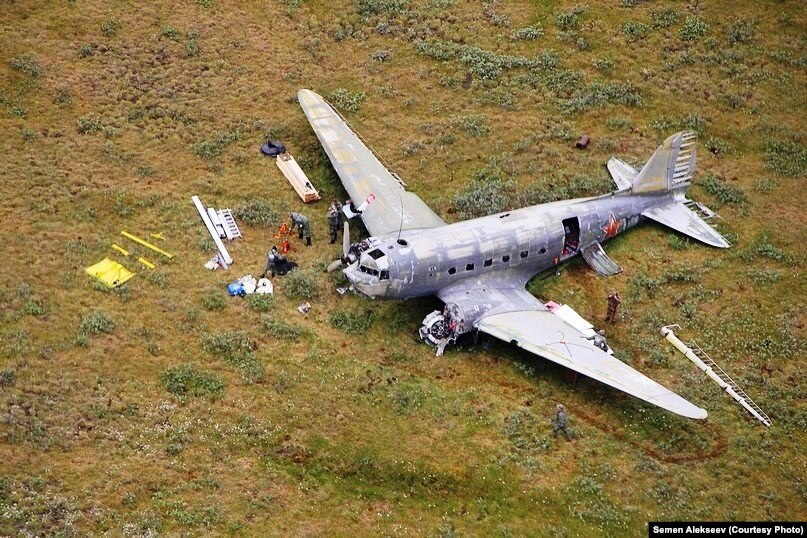
The Museum of Mastering the Russian North will soon open in Krasnoyarsk. The Siberian Expedition Center of the Russian Geographical Society has submitted the recently the project of its exposition. One of the main exhibits of the museum will be the American Douglas American aircraft recently delivered to the city from the tundra. Its story is worthy not only of the museum exposition.
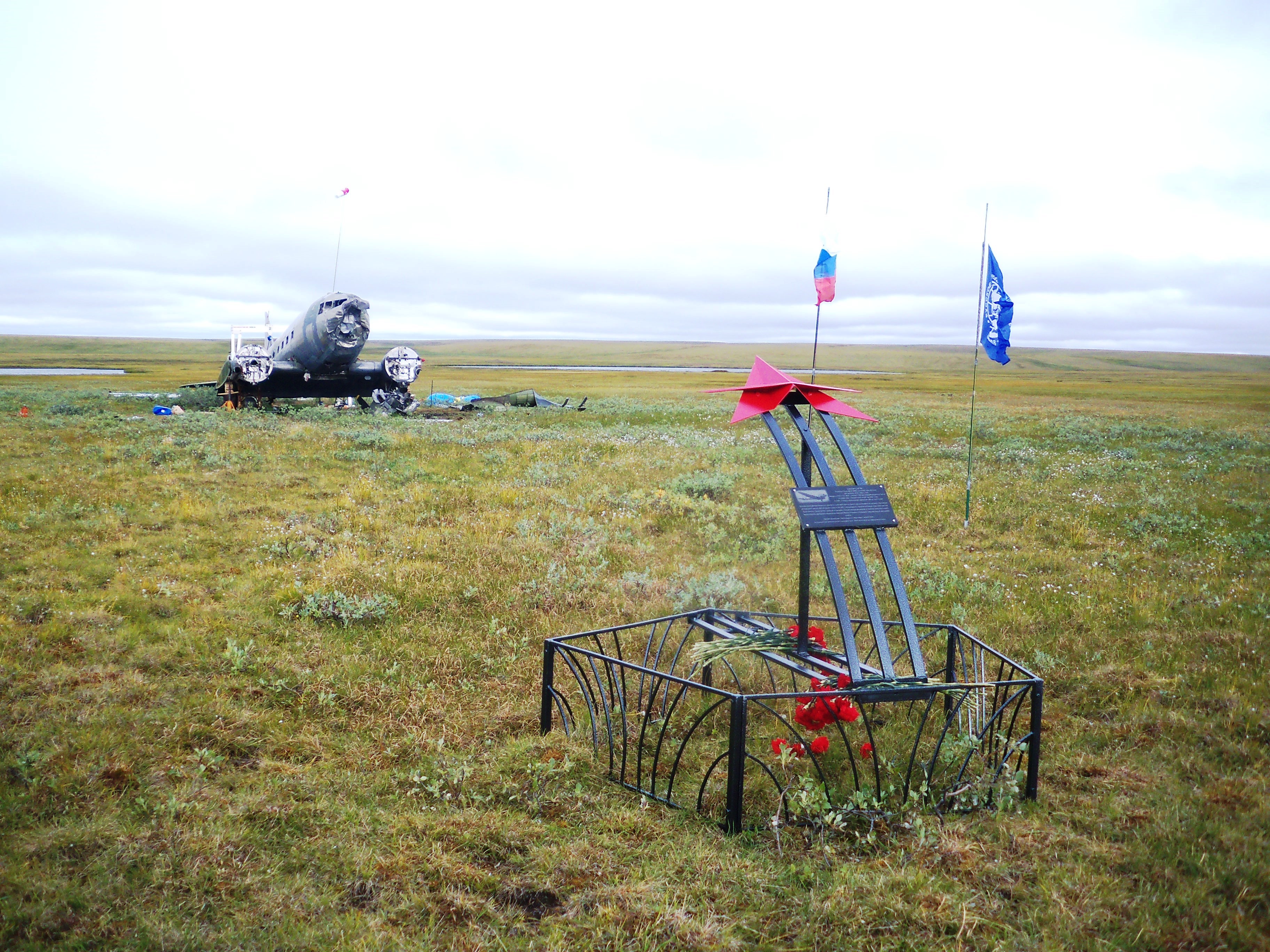
In August 2016, the American Douglas of the S-47 of 1943 of the release last time took to the air. The starting point was the peat swamp in the tundra, near the Taimyr village of Volochanka.
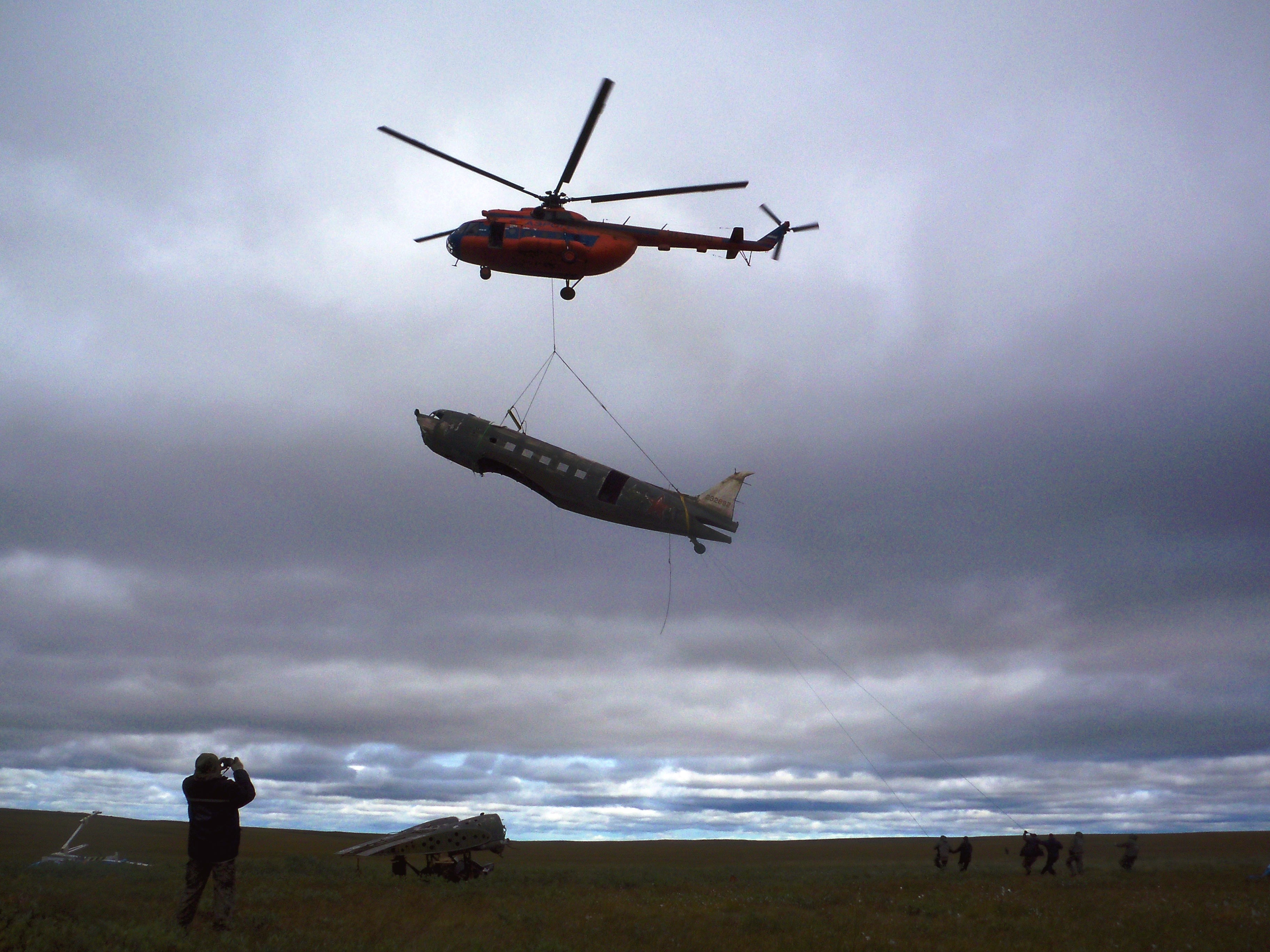
It was here that 69 years ago this plane, on board of which were 36 people, as the pilots say, "sat on the forced" and lay in the tundra for almost seven decades. Part of the crew, led by the commander, as well as several passengers, then died, the rest were saved. And this summer the plane again rose into the air - on the outer suspension of the helicopter, having made a path 80 kilometers to the Pyasin River, then on a barge to Valka, and from there on trailers to Dudinka. Then the path of Douglas continued on the ship to Krasnoyarsk, where it will become the main exhibit of the future museum of the development of the Russian North.
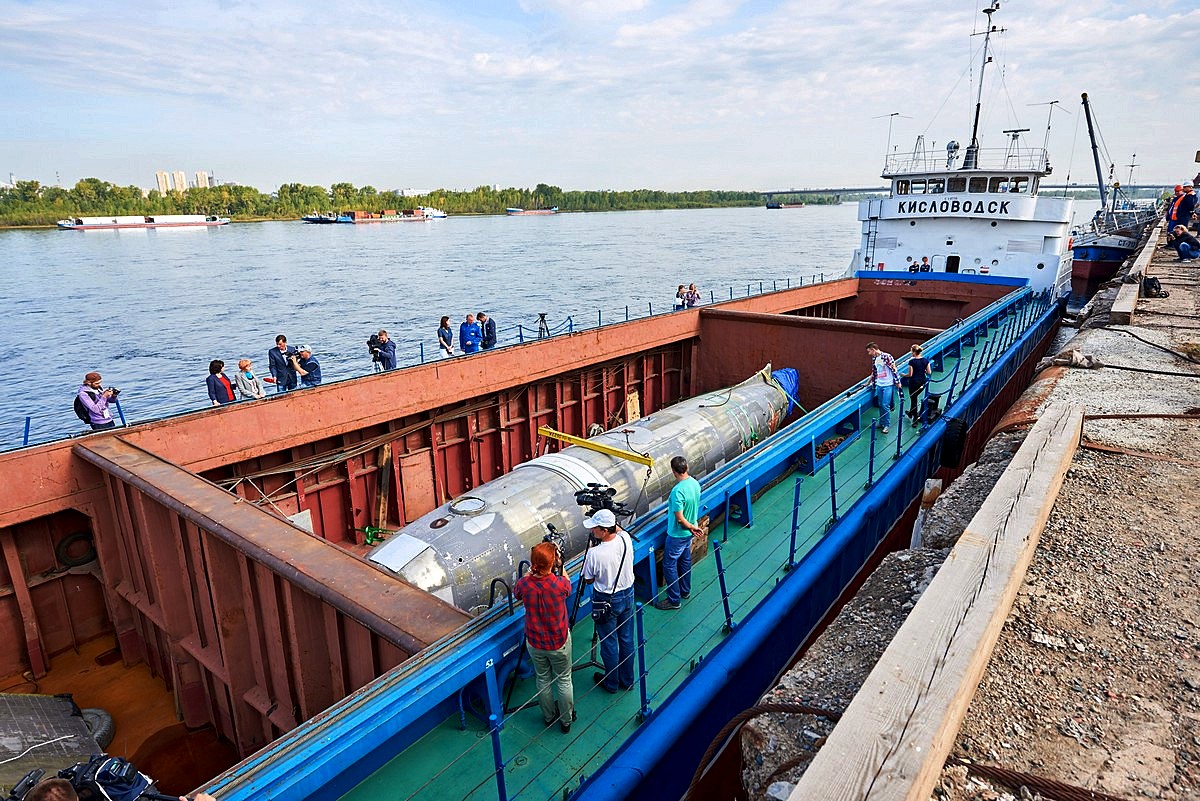
Vyacheslav Filippov , a reserve lieutenant colonel, an employee of the Military Engineering Institute of the Siberian Federal District, will recreate the history of the legendary Krasnoyarsk air route for several years, Alaska’s highway-Siberia, according to which, during the Second World War, Lend-Lid-Lisa aircraft were distilled from the United States to the USSR. From American aircraft plants they went to Ferbenks. And from there, along the hanging conveyor, in his own way to the Chukotsk Welkal, then to the Seimchan, to Yakutsk, to Kirensk and, finally, to Krasnoyarsk.
“There was a high -class airfield in Krasnoyarsk, capable of accepting all types of aircraft that were then in service,” says Vyacheslav Filippov. - Plus, an aircraft repair plant worked here, there was everything necessary for the maintenance of aircraft. That is why all Lend-Lids fighters and bombers passed through the Krasnoyarsk airport. On the Krasnoyarsk air highway, 8094 American aircraft were delivered to the front-almost half of all received on Lend-Lease.
The transport S-47 Douglas, manufactured in the USA in February 1943 and came to Siberia in Alsib, was also from Lend-Lizovsky. His story could be lost among the stories of many sides sent to the front or crashed in the rear, during a drive along the highway and training flights (and the “rear” disasters were not uncommon, and the reasons for this). Moreover, this "Douglas" was written off immediately after the crash in the tundra and forgot about it. But, as Filippov says, in this life everything is solved by chance:
- I am friends with the museum workers: I throw them the information that I managed to "dig" about the aircraft and people of aviation, they share with me. The director of the Museum of Krasaire airline Irina Dvornikova once showed me the photos that a person brought to her, whose name she did not even ask, only knows that the geologist. According to the photographs, it turned out that in Taimyr in the tundra there was a healing American Douglas. His factory number on Kile was visible in the photo-232892 and a half-erased on-board number on the fuselage-N-328. And at the number to “break through” everything that was with the plane, is easy, ”says Filippov.

And this was what. “Douglas” came from America to Krasnoyarsk on March 12, 1943, a couple of weeks after giving up from the factory conveyor. But he didn’t get to the front. He was transferred to the Main Directorate of the Northern Sea Route and assigned the onboard number "USSR N-328". The task of the aircraft was ice intelligence and escort of Arctic caravans and convoys, walking through the Kara Sea. The names of the pilots who worked on it are also known. One of them, Mikhail Titlov, was awarded the Order of the Patriotic War of the 2nd degree for the wiring of caravans.
At the Karesky Naval base, Douglas worked until the end of the war. And then he was at the disposal of civil aviation. Under the number, L-1204 operated ordinary passenger flights from Krasnoyarsk to Igarka and vice versa. On April 23, 1947, during a flight from Kozhevnikov’s Bay, an accident occurred during a forced landing of the aircraft in the tundra. Exactly a month later, Douglas was written off.
“It became clear to me that this miraculously preserved to this day the plane should somehow be delivered to Krasnoyarsk, because he was a place in the museum,” says Filippov. -After all, this is not just a metal that has once been written off on the scrap, this is our living story. This "Douglas" is the only Lend-Lidovsky, preserved in Russia. Yes, and Lend-Lease aircraft of other types that we see in museums are, in fact, layouts, “native” details in them are few. In addition, this aircraft is tightly connected with the history of the Krasnoyarsk Territory.
But Filippov had to look for like -minded people for a long time. They responded only in the Russian Geographical Society, in its Siberian Expeditionary Center.
- To prepare an expedition called "Douglas is waiting!" He left for more than one year, ”says Vyacheslav Filippov. -Firstly, various kinds of approvals were needed: this is the territory of the federal reserve. Then I had to choose the best time for the expedition: you can work in the tundra for no more than a month a year, otherwise a serious risk for its ecology is created. And the rest of the time there is no longer to go there. The logistics was carefully and carefully worked out: they calculated how much time the aircraft parts will take the airplane in the air, at what time we should wait for the barge, and at which trailers should wait. Everything was thought out to the smallest detail: how to organize life, how to warm, how to cook, even a portable bathhouse was. Stone with special tinctures from the vile.
And of course, the most important thing - they provided for the smallest details what tools will be needed to make out the plane. They took them with a margin for all occasions. After all, there is nowhere to run after another, if one does not fit. They also acquired instructions for maintenance and assembly of Douglas, old, still military, American. A collapsible crane was even ordered, which was very useful.
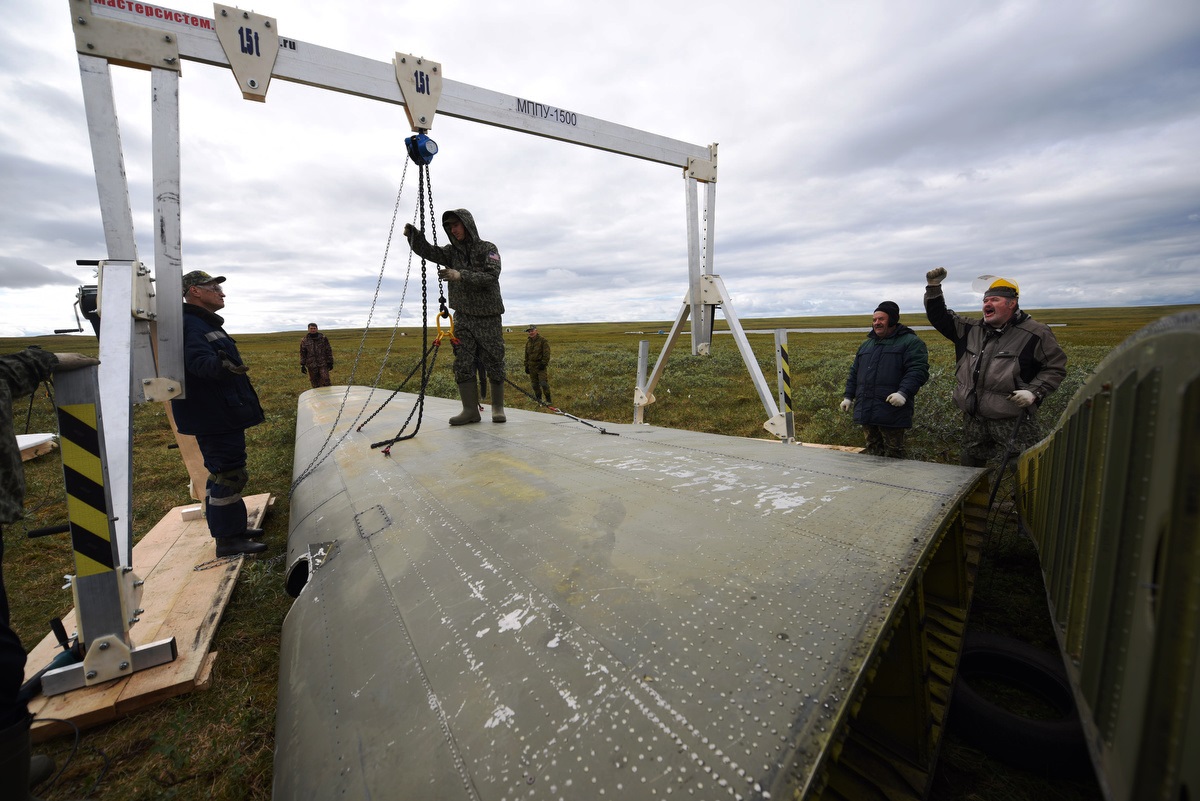
Filippov says that the team was formed so that everyone had their own area of responsibility. Zevaki and tourists were not needed there. And they worked all for the idea, for free.
-They collected "Kulibin" -mnogators who can do ten things at the same time. Each person had specific functions: someone is responsible for the camp of the camp, someone for equipment, someone for safety. But everyone, when required, took the worships in their hands and disassembled the plane without talking.
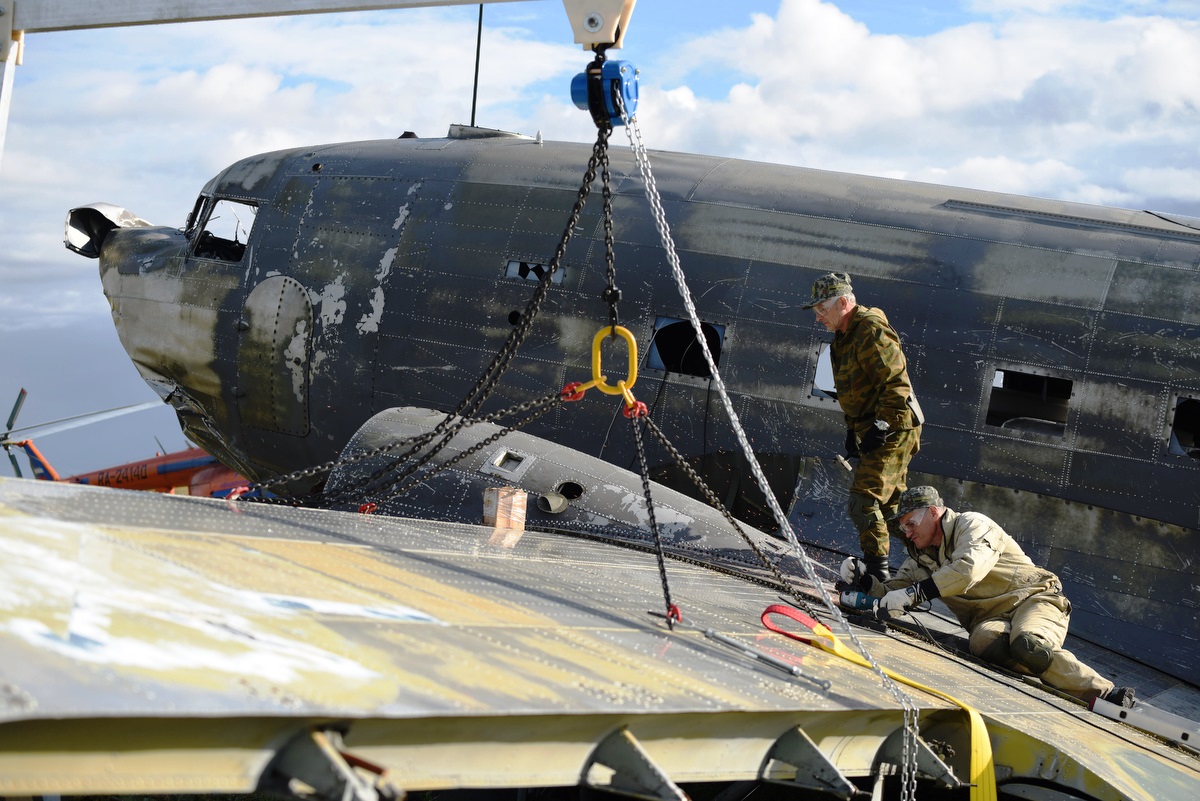
The expedition participants tuned in different options, up to the point that they would have to fly to the tundra in a year and continue to work. But almost 70 years after the crash, Douglas was in such a state that they did not believe their eyes.
- The fact is that he stood all the time on wheels. In winter, he was carried by snow, he was like in a snowy house. And the melting in the north passes quickly, besides, strong winds instantly dried it. Therefore, corrosion was zero. The plane was completely dry. There, inside him, the birds were nested, they lived inside constantly. It was possible to make it out in a week.
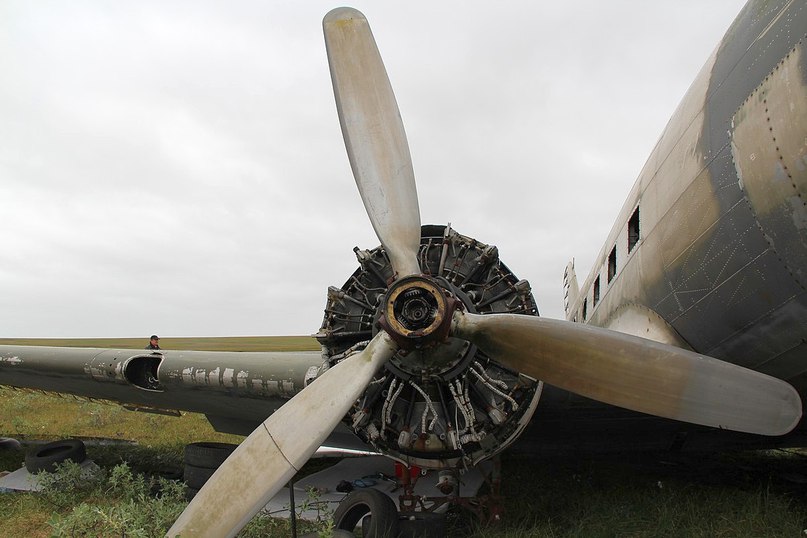
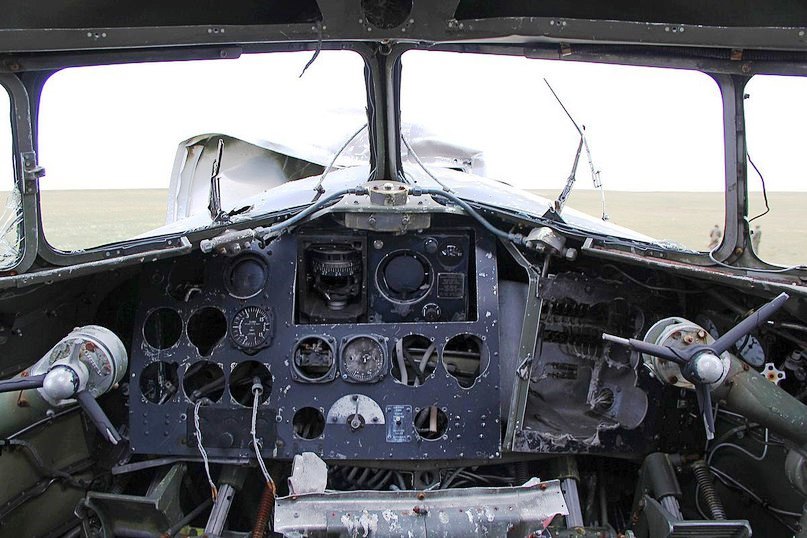
The equipment of Douglas also survived. True, it was discovered, according to Vyacheslav Filippov, not inside the aircraft, but around him:
- The tundra people plundered the plane in full. The seats, devices, parts of mechanisms, a walkie -talkie, stoves were torn ... But where will you carry all this in the tundra? As a result, they threw it right there. The details of these in the district gained a whole truck.
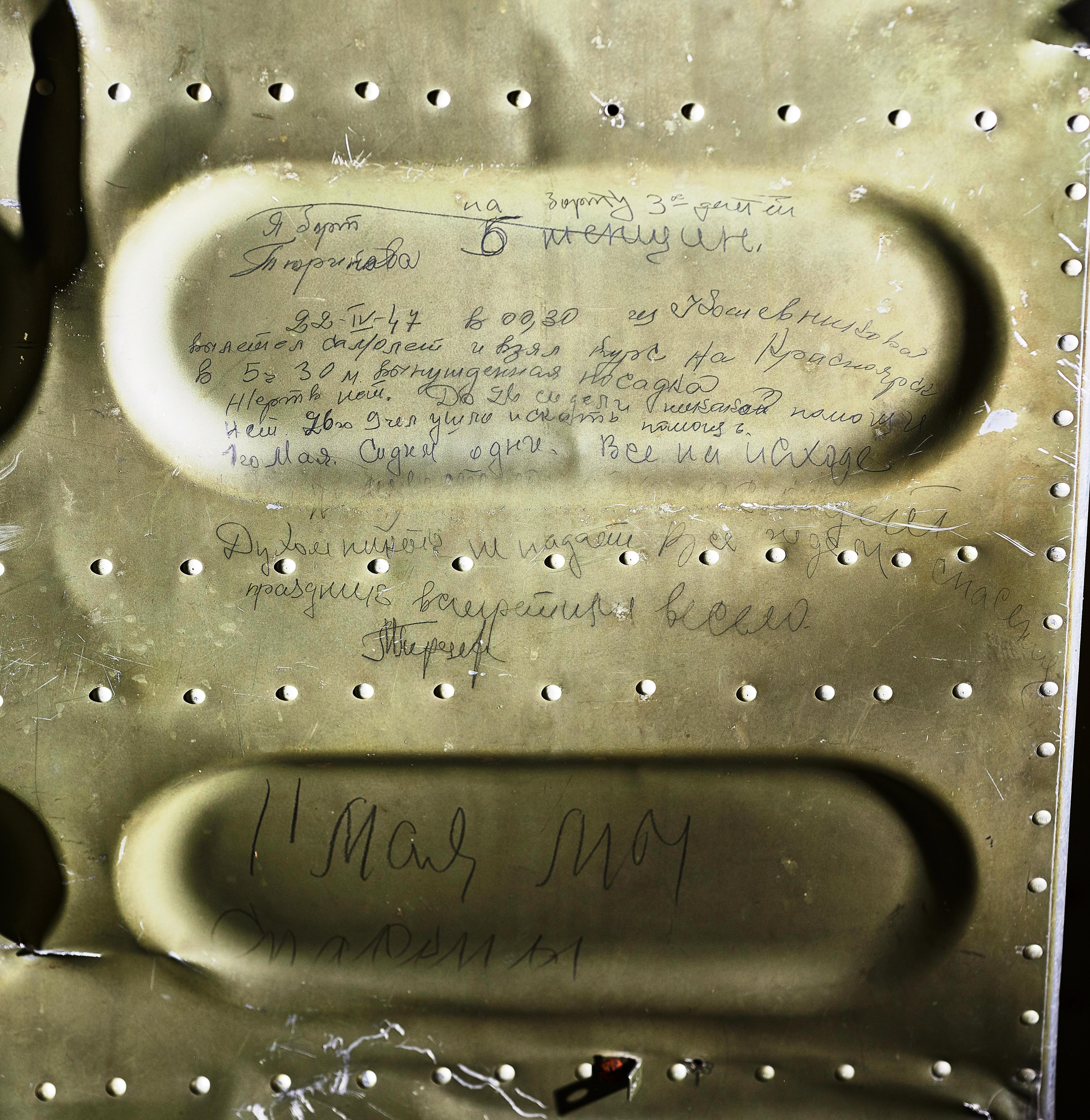
And also the participants of the expedition on the lining inside the Douglas found records made by a chemical pencil. The first refers to April 23, 1947.
"I am the board of Tyurikov. On board 3 children and 6 women. 04/22/47 at 00:30 from Kozhevnikovo flew the plane and headed for Krasnoyarsk. At 5:30 a forced landing. There are no victims."
And here is the record from the first of May: "We are sitting alone. Everything is running out. Nobody is falling in spirit. The holiday was celebrated. Everyone has fun."
And the last, May 11: "We are saved."
What happened in those 19 days that people spent in the tundra after the crash?
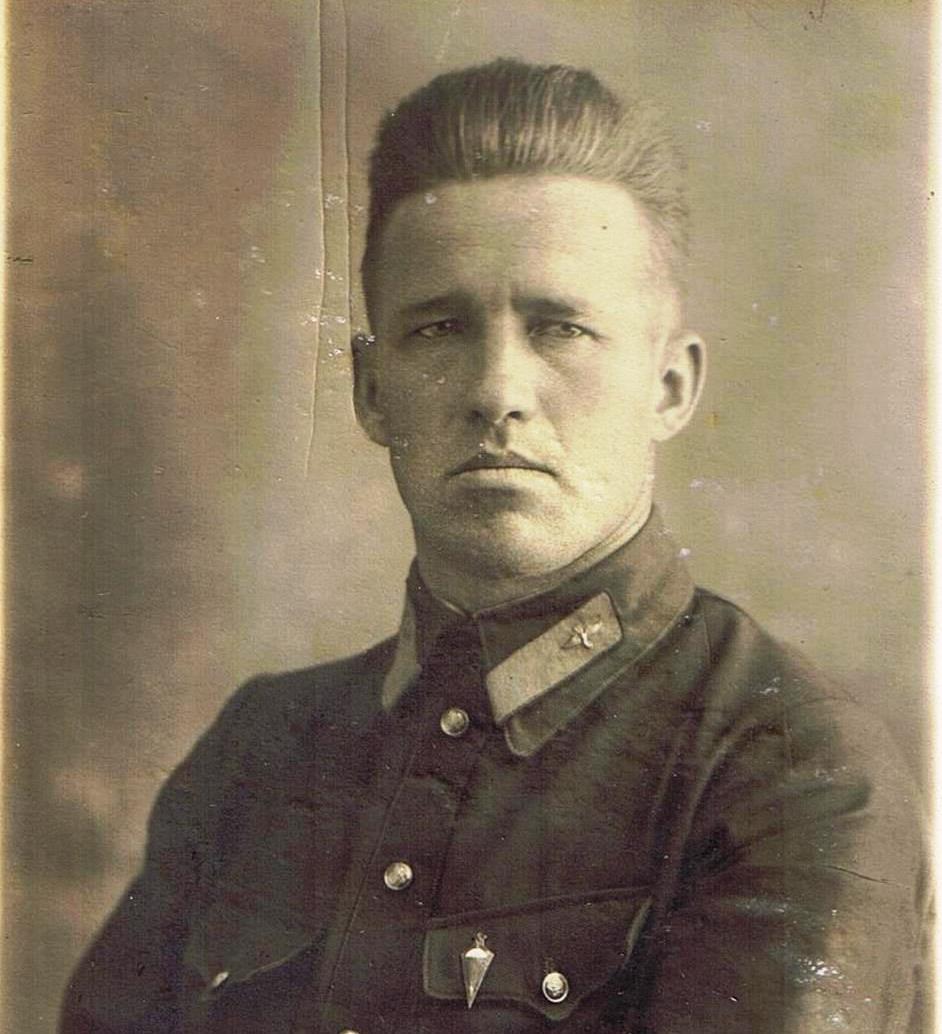
- The crew commander Maxim Tyurikov was an experienced pilot. He was awarded the Order of the Red Star in 1945, the sign of the Honorary Polard in 1943, medals "For the Defense of the Soviet Arctic", "For Valiant Labor in the Great Patriotic War," says Vyacheslav Filippov. - It is easy to blame the deceased, in the acts of the investigation of the accident there are different conclusions: supposedly departure from Kozhevnikov’s bay was carried out without the permission of the port head, in absurd weather. But when the malfunctions with the engine began and the pilot could not return to the departure port due to weather conditions, he decided to continue the flight, landed the plane and saved people. Now it makes no sense to look for the guilty. And this is definitely not the crew commander. Perhaps the reason for the incident in poorly performed regulations, immediately after which the Douglas went on a flight.
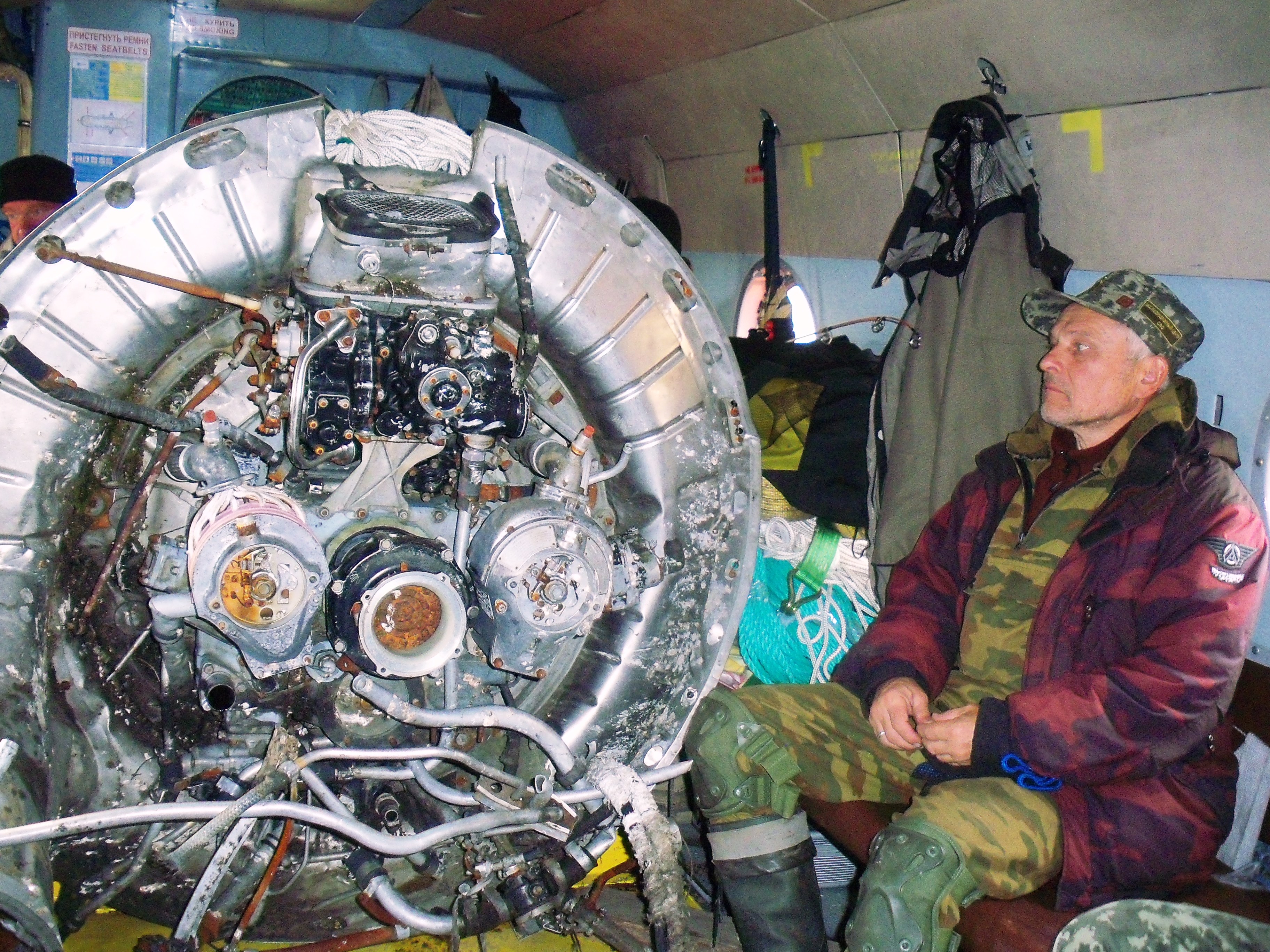
During these works, the units were checked and sorted out, oil was changed. Maybe there was an error during installation, says Filippov. In flight, the left engine of the aircraft refused: in his air he began to knock out oil. The pilots, after the pressure drops to zero, is turned off this engine and continue the flight on the right motor. In addition to the right motor, the generator refused. The design of the American aircraft is such that the walkie -talkie is powered only from the generators installed on the engines, that is, the board was left without communication. After that, the flight lasts another 5 hours, almost blindly and at random: the strongest snowfall began.
- In order not to cool down at all, Tyurikov begins to look for a place for landing. And he chooses for this in a little Malian flat site. As it turned out later - a peat bog. It is worth evaluating the professionalism of Tyurikov, who only on the visual landmarks was able to land the plane rather softly, and, despite the capture of landing, no one received injuries. By the way, the failed engine during landing was torn off the motor frame, and he went into the swamp in the front. It is preserved in the swamp as new. We figured out a defect, everything was clear in the wake of oil.
In 1947, the search for the aircraft was organized immediately: both by air and on the ground. But they were looking not where the emergency side was, but where the connection was lost, that is, many kilometers from the real place. At this time, 36 people remain in the middle of the tundra: 31 passengers, including women with young children, and five crew members. Products are cut off, there is no connection. The official documents related to the disaster indicate that the commander of the Tyurikov, Bortmeikhanik Pismarev and Bortradist Smirnov, along with six passengers, went to look for help. And disappeared without a trace.
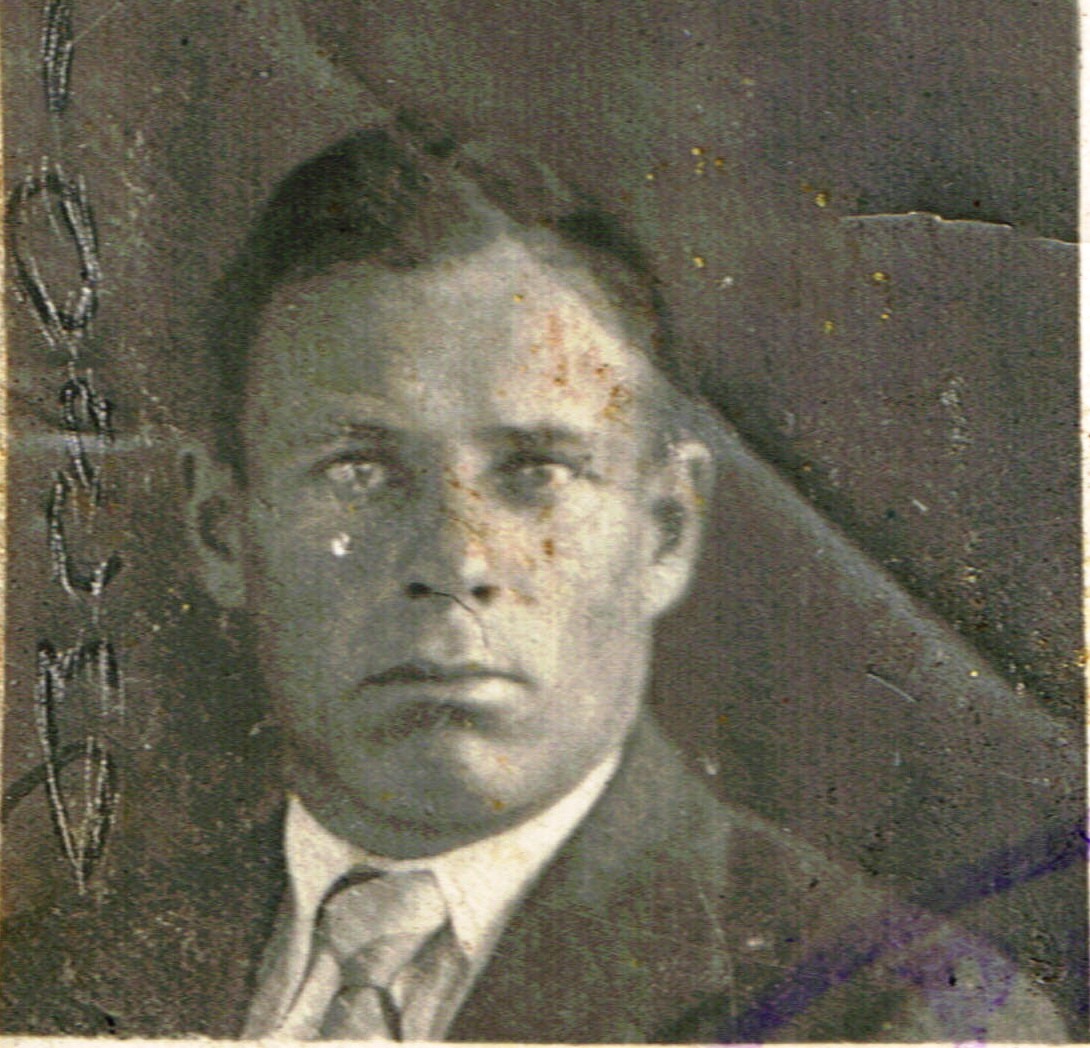
Only recently it became known how everything really was, says Vyacheslav Filippov. The memoirs of the wife of Bordradist Alexei Smirnov Tamara remained, where she writes that in addition to ordinary passengers on board there were six unscrewed convicts, which were put on the aircraft at the last minute. Tyurikov could not refuse. And when the plane made an emergency landing, it was these six that were interested in the abyss from the field of view. Perhaps they have faults and the disappearance of three crew members.
“We have our own version of events,” says the expedition participant Alexander Matveev. - Maxim Tyurikov was a very correct person, reliable. As a pilot, he understood that they were looking for and found. And, most likely, I just decided to take the convicts away from other passengers, from women and children. He, Pismarev, Smirnov and six prisoners leave to look for housing. With passengers, the second pilot Anoshko and Motorist Shekodanov remain.
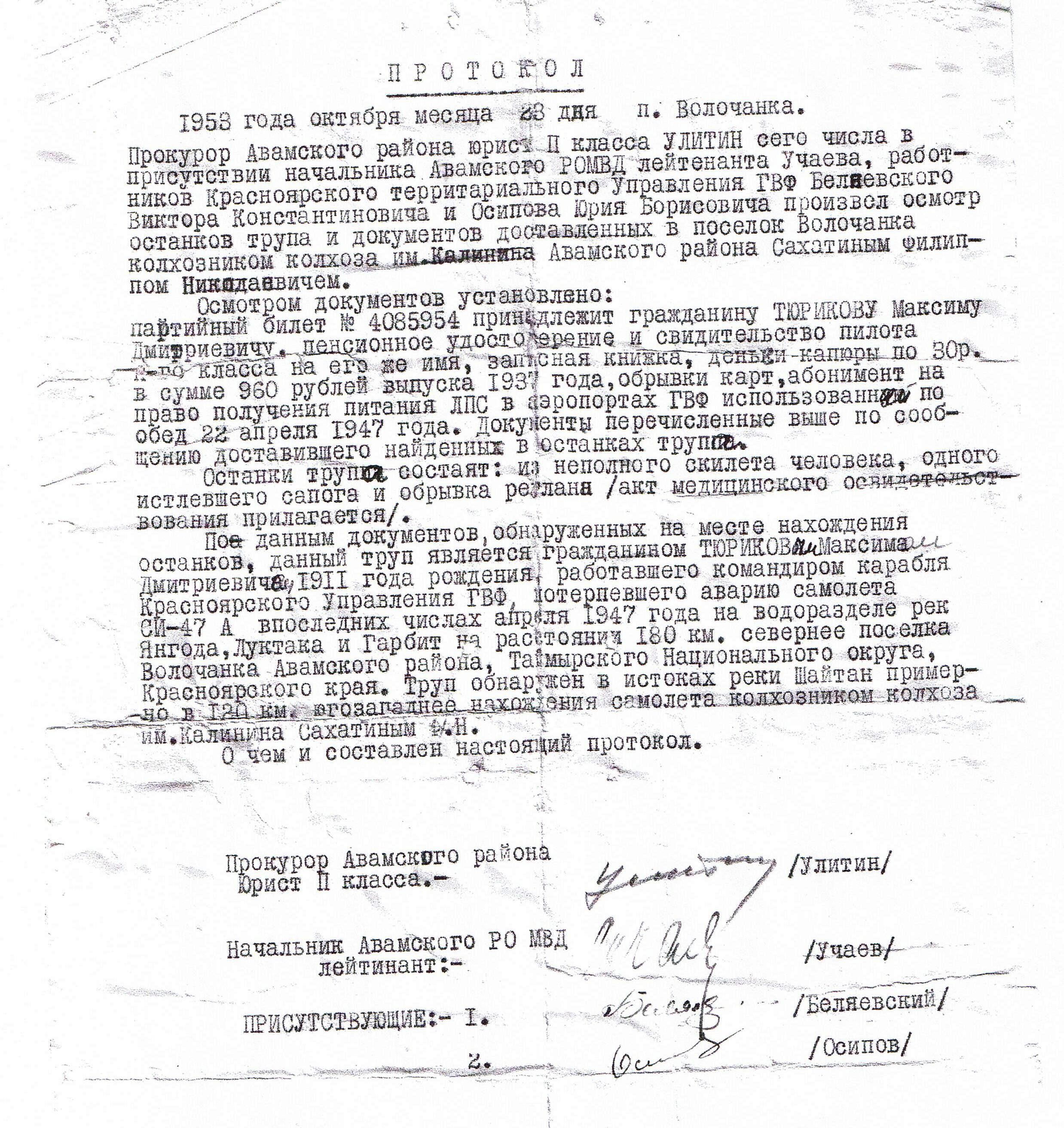
... Tyurikov found the remains of Tyurikov only six years later, in 1953. 120 km from the crash site accidentally discovered by a local hunter. According to the protocol, the remains consisted of "an incomplete skeleton, a decayed boot and a snatflake of Ralann." But the documents - a party card, a pilot certificate, a pension certificate, a lunch ticket for 22 April 1947 - all were in the name of Tyurikov.
The rest sunk into the water. Until now, all eight people, says Filippov, are listed as missing:
- Perhaps they really drowned - they hit the wormwood. But, most likely, the pilots to die “helped” the convicts. After all, there is such evidence: people of one of the search groups in the tundra noticed six men, everyone was in the same blue jackets (according to the description, this is how these prisoners were dressed). We sat, warmed up by the fire. They are asked: are you looking for a plane too? They nodded, that’s the end and ended ...
The search for people stuck in the tundra was decided to stop in early May. The head of the Krasnoyarsk Office of the Civil Air Fleet said that everyone was recognized as dead.
“This was learned about this by Bortradrian Smirnova, who worked at the communications unit herself,” says Vyacheslav Filippov. - Contrary to all official regulations, she gave a radiogram to Moscow in the name of Stalin, where she described the situation and asked for the search to continue. At that time, they reacted quickly: the head of the department was removed from his post, and several experienced polar crews were sent to the tundra, one of which, under the control of Fedor Shatrov on May 11 and was looking for Douglas.
All people remaining in place were alive. The remnants of the products were divided as they could. They warmed up at the stoves for warming up engines, burned aircraft fuel. They were evacuated, and the plane was written off. At that time, it was impossible to take him out of the tundra. It turned out only 69 years later.
- This plane is a ready -made monument itself. Not impersonal board, but specifics. We want to restore it to a museum state. He is practically intact. With a flattened “muzzle”, you just have to thoroughly tinker, but we already have a turn of former aircraft, who want to start work as soon as we call, ”says Filippov.
The aircraft should become the main exhibit of the Museum of Mastering the Russian North. The Siberian Expedition Center of the RGO recently submitted the project of his exposition. It will contain sections associated with the river fleet, northern sea expeditions. And of course, with polar aircraft.
- Any museum associated with technology should be alive. It is necessary that visitors to the museum can climb into the Douglas cabin, sit at the helmets, and work with rudders. It would be great to install airproofers or aircraft carriers there. Other polar aircraft to the museum "pull up". For example, Li-2 from Dixon or IL-14, which is not needed by anyone in the Novosibirsk region. And a line of three polar aircraft is already real beauty, ”says Vyacheslav Filippov.