
Translated material
Power against the word
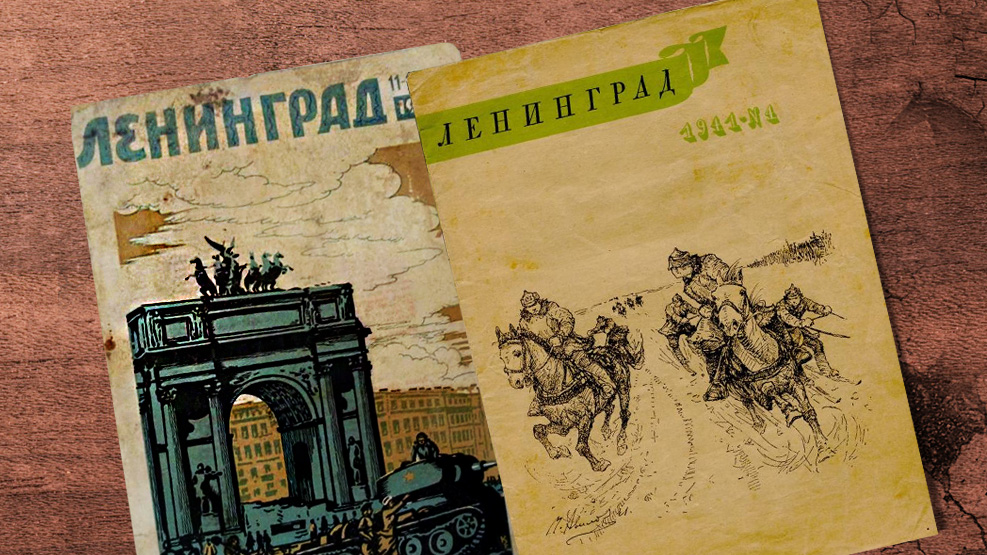
This year marks 70 years to two political events that are not directly related to each other, but the symbols of the Soviet era. In August 1946, the Organizing Bureau of the Central Committee of the All -Union Communist Party of Bolsheviks adopted the famous resolution on the magazines "Star" and "Leningrad". And a little later, in the fall of 1946 in the Perm Territory, in the village of Kuchino, the correctional colony of a special regime, called the "Camp Perm-36", began to accept especially dangerous state criminals.
On October 2, in St. Petersburg, in the editorial office of the Zvezda magazine, the power of the word and the word of power took place, dedicated to the resolution of the Organizing Bureau of the Central Committee of the All-Union Communist Party of Bolsheviks (b), and on October 27 in the memorial complex of political repressions-this is the name of the Perm-36 camp-the All-Russian Scientific and Practical Conference "Gulag: Echo of the War and Echo of the War and Echo of the War and Echo of the War and Echo Victory ". The head of these two projects, historian Julia Kantor says:
- It is more correct to talk about one project in two parts. The fact is that both projects, in St. Petersburg and in Perm, are associated with the post -war Soviet Union, with a change in mentality, with the sensations of people who survived the war, the blockade of Leningrad, with the return of front -line soldiers, with the relationship of the intelligentsia and the authorities and with a change in the contingents of the Gulag. Both of our projects are connected with 1946, because it is this year that two dominant directions of relations between the state and personality, the state and the people appear. The notorious resolution of the Organizing Bureau of the Central Committee of the All -Union Communist Party of Bolsheviks (b) on the magazines "Zvezda" and "Leningrad" is the most severe symptom of what is happening in Soviet power structures, in their attempts to influence not even public opinion, but on public consciousness. It is no accident that this city, the Northern capital, was chosen in this resolution: it was not even an unprecedented phenomenon as the Leningrad blockade, how much in the fact that it was the city of unconquered. And what Olga Bergholz said in 1943, when the blockade was just broken: "Now we have felt our strength!" - This feeling was not the words of Bergholz, but a social sensation, which was very strained by the highest echelons of power.
There was a common problem: the state’s pressure on the intelligentsia
And Zhdanov, always remaining, as it were, in Leningrad, certainly personified this main ideological line, carried out directly by Stalin and the Kremlin. Therefore, the decision on the magazines "Zvezda" and "Leningrad" was a blow to the polar magazines, Leningrad was a young magazine, and Zvezda was the oldest Soviet magazine, with a claim to freedom, freedom of presentations and reflection, including military and post -war. After all, we understand that those works that were harshly criticized with the fantastic generalizations that the Ricochet hit throughout the country, they made Leningrad the first goal. First, and then - everywhere. And about this on the round table , which I called the "power of the word and the word of power", a certain dualistic design, we talked about how this decree affected not only Leningrad and Moscow, but throughout Russia, including other republics. In particular, we had a speaker from Vitebsk, who spoke about the situation of those years in the Belarusian SSR, and there was also a national aspect. There were my colleagues from Kazan. And it must be remembered that 1946 is also a discussion about the national in literature, the unity and great friendship of the peoples, and the silence of a huge number of situations related to interethnic relations, and in general situations in the Soviet republics. We also talked about the province. There was, for example, a report related to Novgorod. The Novgorod region was organized in 1944. By 1946, it was one of the youngest regions of the country. It was allocated from a huge Leningrad region. And from each report it became clear that the problem was general: the state’s pressure on the intelligentsia. This is important. Through campaigning, through scourging, through the infamous principle: "I have not read, but I condemn!" And, of course, on the desire of the intelligentsia itself, this somehow does not even confront ... You see, in the intellectual environment, and yesterday and today, the fact of independence can be interpreted by power as a confrontation. And always for the authorities may seem dangerous. Of course, we spoke in the historical premises of the Zvezda magazine, which in itself gave an additional flavor to our round table, that the relationship between the intelligentsia and the authorities, and the ability to critically comprehend any reality are always the subject of a strong interest in upstairs. I would say "upstairs".
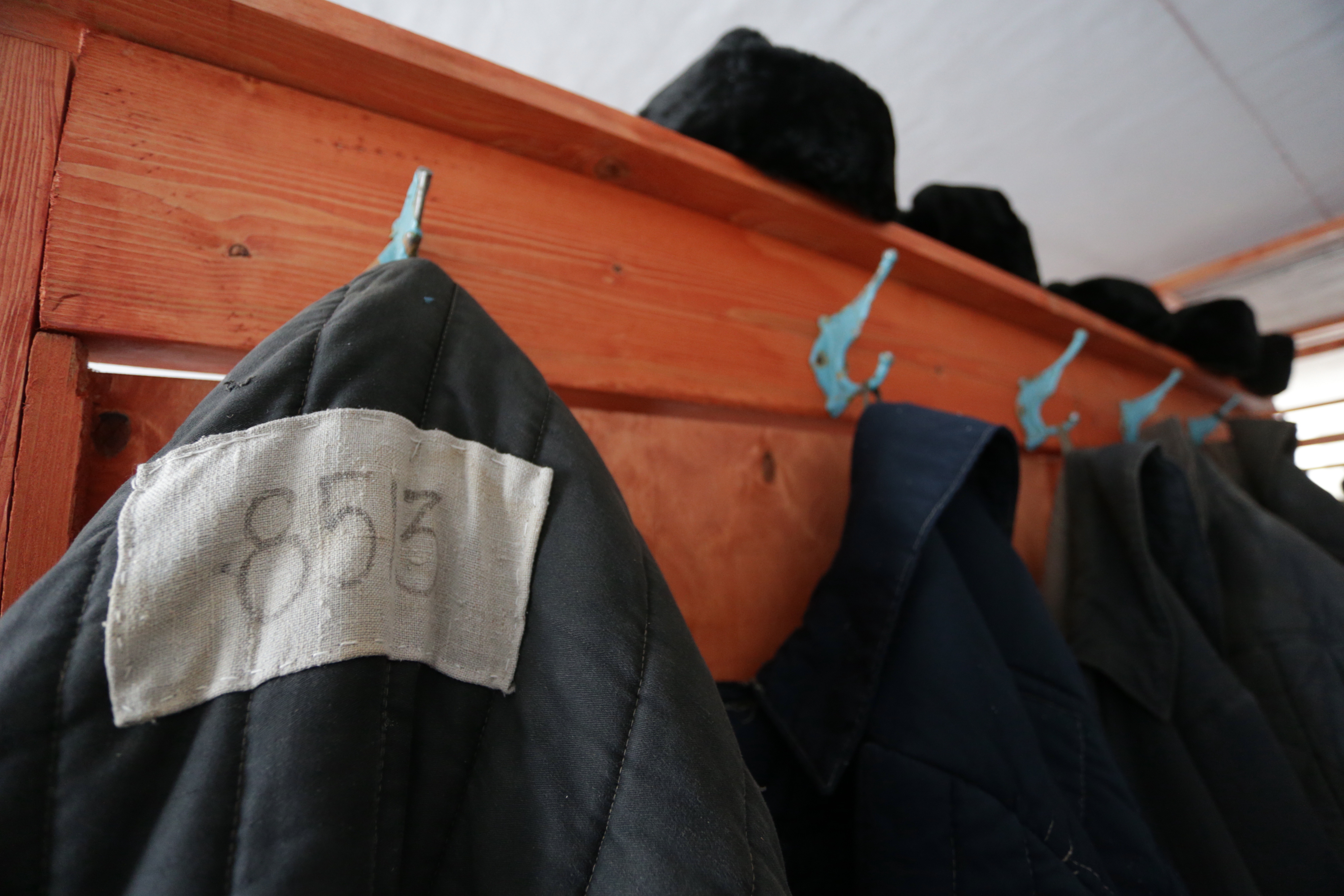
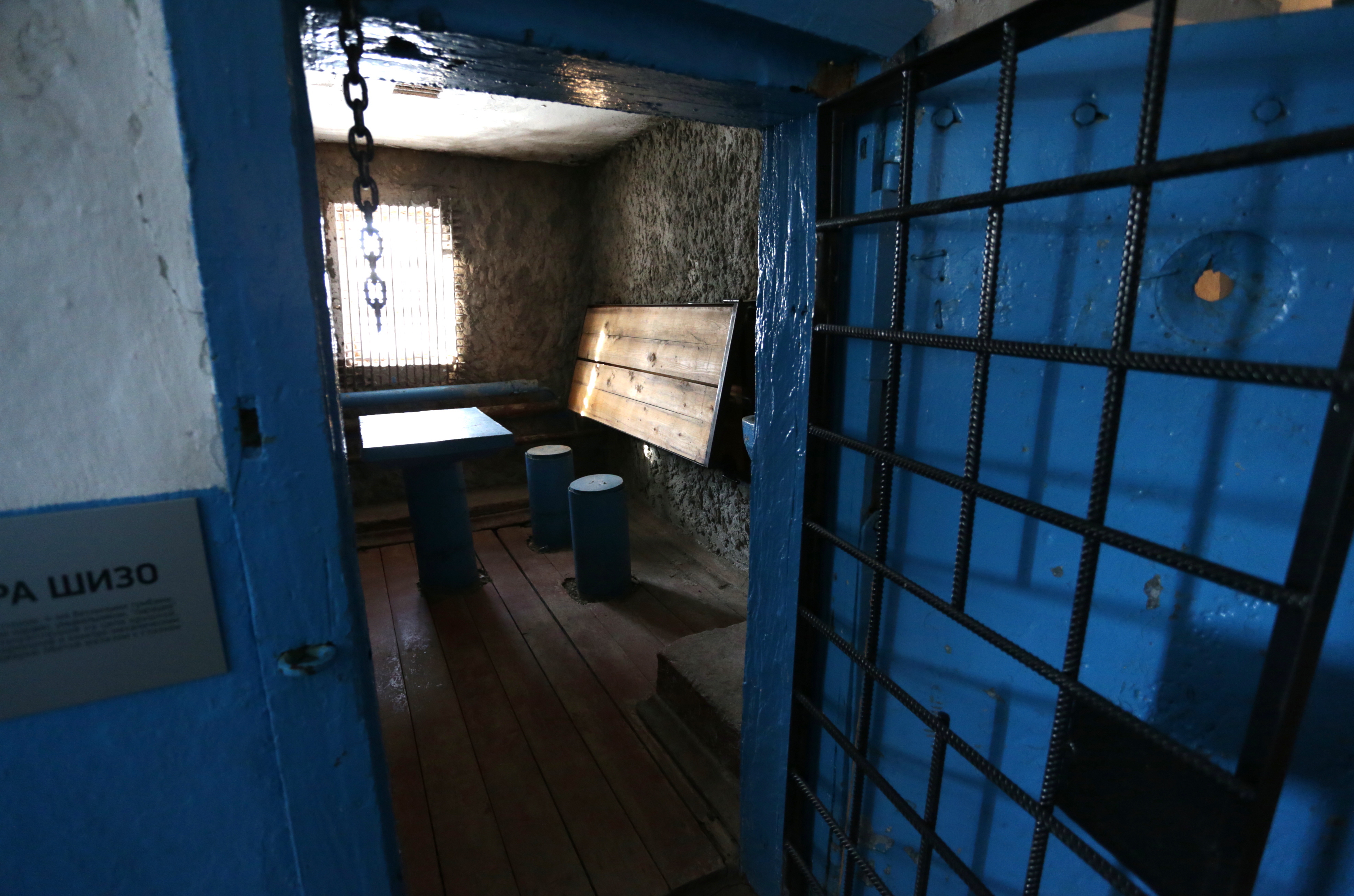
And, ultimately, we understand that the point of view on the historical event, on the literary work, if it descends as the only correct one, is actually a synonym for censorship. As you know, this topic has not gone too far from us in 70 years. And the fact that we are observing the close interest, on the one hand, of the polarized state of the state, on the other hand, to the topic of history, to modern literature, this is also an occasion for sociological discussion, than we were engaged in the literary and historical circle in the Star. This is the first part. The second is in Perm: there will be much larger in size, in format a conference than in the "star", which I called "Gulag: the Echo of War and the Echo of Victory." You understand that this topic was generally not discussed in such a volume and in such an angle. We know about camp literature. Solzhenitsyn. Shalamov. And Shalamov is a special case. He has a theme of the post -war Gulag, if we, for example, recall "The Last Fight of Major Pugachev." These are military officers who passed the war and reached Prague and Berlin in the Gulag. This is a topic that should sound. The theme of the role of prisoners, their slave, martyrdom in the defense and industrial complex, in military and post-war recovery. There are books on the economy of the Gulag. But there are segments that need to be compared together. What role the Gulag and the management of prisoners of war, which de jure was not part of the Gulag system, played in this restoration. Spaniards, Germans, Poles, Baltic states in the Gulag. This is also a separate question. The issue of collaboration. The question of whom the Soviet government considered collaborators. Those who fought for the independence of their homeland, for example, Poles, and those who really collaborated with the SS and with other occupation units. All these topics need serious discussion. And moreover, for me these topics, as for a museum worker, and not only as a historian and teacher, are important in order to understand how this is represented in a museum environment. You know, paradoxically, but if we put on a map of our country, I’m talking about the Russian Federation, on the map of the Gulag , and we will put a map of regions on it, where there are museums associated with the Gulag, we will see that the picture is almost identical. Another question is that this does not exist "because of", but mainly "contrary to". By the will, the strength and honesty of museum employees who understand that the history of our country is indissoluently connected with the history of the Gulag. From the very beginning of his appearance, from Solovki, and ending with his last camps. And in this sense, we are absolutely no coincidence at this conference in a very difficult place, unfortunately, the situation around which is not simplified over the past time, and, unfortunately, it does not simplify because of the monstrous, in my opinion, confrontation of both parties, one of which, in theory, should be creative. I'm talking about a memorial complex of political repression, as is now called the Perm-36 museum. For museum reasons, I, as a person engaged in the history of the Gulag, was not sideways from very unpleasant, it was softly said, boorish events in relation to this museum, when he was folk and private when they tried to close it. There was a moment when they tried to close him with an administrative resource at all or make a museum of the Soviet penitentiary system out of it. To great happiness, the efforts of employees of various museums, and, including thanks to the rather surgical intervention of the Union of Museums of Russia, thanks to the resource that Mikhail Piotrovsky, who went there, was with him (we brought museum experts from various regions, including foreign ones, for example, from the Polish Museum of World War II), this museum was not only preserved, but also to expand its development and expand its development and expand its development and expand its development and expand its development and expand its development and expand its development and expand its development and expand its development and expand its development The concept that continues to form. I have a direct relationship to this. I am an expert of a private working group to perpetuate the memory of victims of political repression. This is my immediate field of activity. And, you know, a very strange situation arises. This museum exists, quite interesting exhibitions are opened there, sometimes not even in quality, as in any museum. But the museum is the successor of the former tradition. Museums should be professional. And now, despite the colossal difficulties that this museum has, it is developing. And we decided in this way to help him, so that some events, except for exhibitions, were constantly taking place, some kind of scientific development. Therefore, we do the second part of the project in the Perm memorial complex of political repression. This camp colony is 70 years old. Now, literally these days, and this is not directly related to this conference, but this is directly related to the date of the formation of this institution, an exhibition called "History of one camp" has opened. This is the history of the institution of the Armed Forces 389/36, this exhibition talks about the late period of the camp. This camp changed its name, its functions, the composition of prisoners. The last period to which this exhibition is dedicated is 1972–1987. This was the last camp where dissidents, human rights activists, and just enemies of the Soviet regime sat. This is not the same thing at all. Thus, our project is dualistic. It unites two regions, but ringing, I would say, one topic is a post -war society.
- Why is the resolution of the Organizing Bureau of the Central Committee of the CPSU (b) about the magazines "Star" and "Leningrad" historians and human rights activists attach such significance? After all, before him and after, many other decisions were adopted, and besides Zoshchenko and Akhmatova and other writers fell under the rink of party criticism? Back in 1944, the Banner magazine was subjected to criticism with subsequent reorganization. In 1946, the poetess Aliger, the poets Selvinsky and the Aseev were criticized, in the newspaper Pravda they were defended by Korney Chukovsky for his Bibigon, the list can be continued ...
As soon as the Battle of Stalingrad ended, a sharp increase in censorship begins
- Point blows of power against various segments of the intellectual environment took place throughout the entire time of the Soviet regime. And, paradoxically, the greatest relief of censorship and at the same time the smallest attention of the authorities to culture arose precisely when the authorities simply were not before this matter. This happened in the most difficult period of the Patriotic War. No matter how scary it was, around the war, the army recedes, and the authorities are engaged in what it should do: it protects the country. Moreover, with the help of the Gulag and slave labor of prisoners. This is tragic and understandable. And as soon as the Battle of Stalingrad ended, a sharp increase in censorship begins. By the way, the first closed art exhibitions are Stalingrad exhibitions. And in Stalingrad itself. With monstrous formulations in the local press under dictation, of course, the regional party authorities have been written. You see, the artists of Stalingrad "are not well-educated enough", "do not understand the classics of Marxism-Leninism", "sow pessimism" and "relish the ruins." The monstrous formulations, which then went to Leningrad. But with Leningrad the situation was special. And he was deliberately chosen. And the point is not whether they loved or did not like Stalin and Zhdanov this city - of course, they did not like. The fact is that Leningrad is a symbolic city. In every sense. Akhmatova - the idol of the intelligentsia, Zoshchenko - the idol of the common people. They took it into ticks. Still, as I said at the beginning, it was not pointed, but generalizing, "about the shortcomings in general." Yakov Gordin, the editor -in -chief of the Star, is going to engage in a psycholinguistic analysis of the Zhdanovsky resolution. This is completely clear, because those psycholinguistic formulas that are invested in Zhdanov’s mouth are not random. This is a carefully selected text to influence the psyche. The psyche of those who listen to this. So it was. I had to interview Daniil Granin, in particular, regarding the story, when he first read this resolution, and he said: “I remember how I read this resolution on a street newspaper shield on Litein Prospekt. I stood in a tank jacket that was wet from the rain, barely analyzing the seal on a dark cheese sheet. I believed that it was necessary, it wouldn’t be needed. It’s painfully scolding, frantically: “Unconducted, unscrupulous hooligan” - this would be about Zoshchenko! If it were not for Zhdanov. The echelon - and then they did not see him in our army.
Then there was a “second series”, and we also talked about this on a round table in the “star”. In 1954, Stalin is no longer there, but the English students come, and then the already well -known story, when Zoshchenko does not agree to talk about how he was scourged aloud, and Akhmatova says only two words: “Only so ...” and again it is clear that time has not changed. Both in 1946 and in 1954, and then, after the XX Congress, and Olga Bergholz tries to change the situation. She also got it. She was behind the "loss of vigilance and the glorification of the universal scriptures of Akhmatova." She also hit the fact that when Akhmatov in 1946 after the decision was deprived of bread cards, Olga Bergholz wore her food. And she was told that it could be expensive for her. To which Olga Bergholz, who survived the blockade, said: "And I did not know that the revolution has such a punishment - starvation!" After that, they stopped printing it.