
Translated material
Maxim Russo: Children's Treasure
Maxim Russo 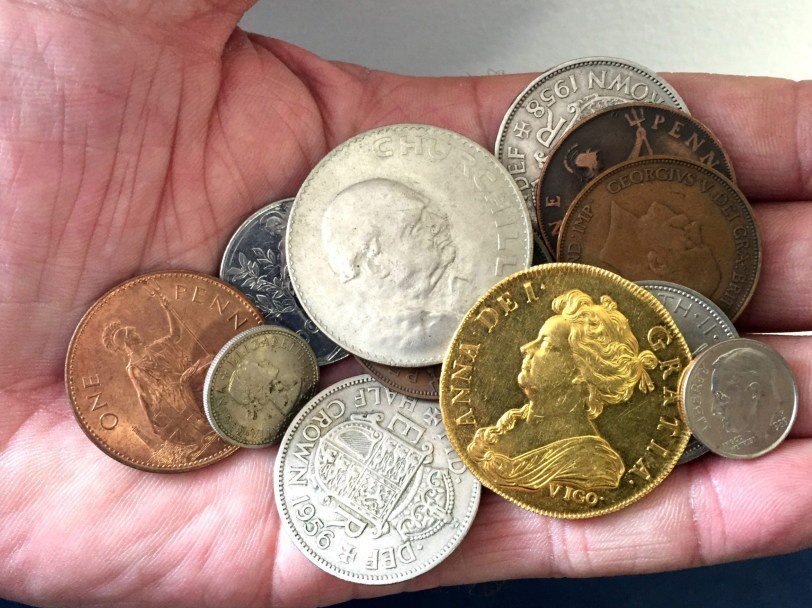 Boningtons
 Boningtons
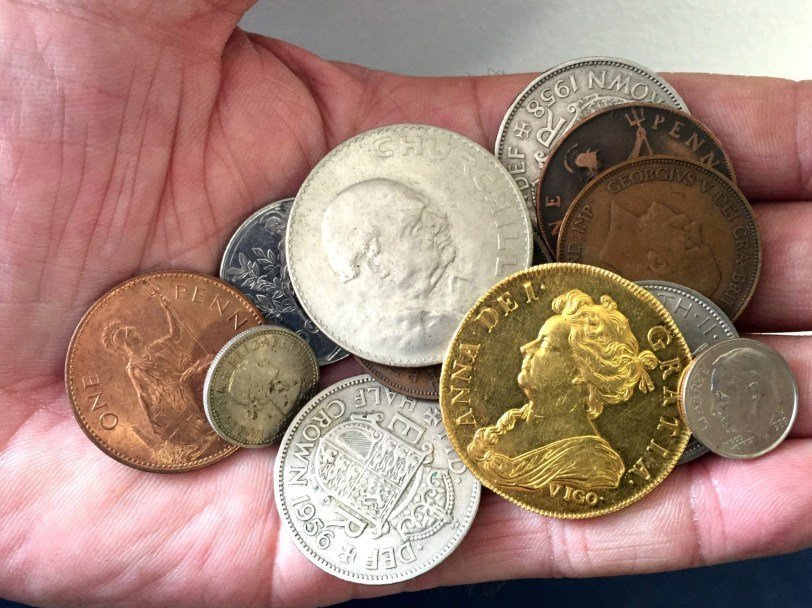
The extremely rare British coin of the beginning of the 18th century was used for a long time for children's games in the same family from the city of Bishops Stortford in Herrfordshire.
According to the owner of the coin, who wished to maintain anonymity, his grandfather traveled a lot and gave his grandson coins of different countries. The boy, playing pirates, loved to hide them in a small box as a "pirate treasure." The recently matured boy remembered his children's treasures and decided to give them to his little son, but previously attributed several coins that interested him to evaluate the BoningTons auction house. He was informed that one of the coins is nothing more than the “Vigo Monet” - the rare English coin of the Queen Anna era made of gold, which was captured from the Spanish galleons during the battle of the Vigo Gulf in October 1702.
During the war for the Spanish inheritance, the United Fleet of England and the Netherlands tried to capture the important Spanish port of Cadiz, but failed. Retreating, heading the fleet, Admiral George Hands found out that about 30 ships were standing in the northwest of Spain in the Vigo Bay, transporting gold and silver from American colonies. According to modern estimates, their cargo was over 3400 tons of silver and 200 tons of gold. Galeons guarded the squadron of French warships. In the Gulf of Vigo, the ships were due to the battles that were conducted around Cadiz-the usual port of their destination.
George hands blocked the exit from the bay, and on October 12, 1702, he attacked French and Spanish ships. After the defeat of the French, the Spanish Admiral Manuel Velasco ordered to flood the galleons. But the British still managed to capture several ships.
At the time of the battle, part of the gold and silver was already unloaded and sent to Madrid, part of the precious cargo was at the bottom with flooded ships. But the British managed to capture several tens of tons of silver and much less gold. A large batch of tobacco, which was sold in London, also fell into their hands and gave rise to fashion for chewing tobacco among the British. In general, the battle in the Gulf of Wigo did not so much enrich England as it hit Spain.
Later, the treasures lying at the bottom of the Vigo Bay became legendary. It was they who served as a source of financing for Captain Nemo in the novel “Twenty thousand leagues under water”. Although the booty of the British was not so great, they skillfully used it with propaganda goals.
The keeper of the monetary court Sir Isaac Newton received 4504 pounds of 2 ounces of silver (about 2043 kg) and 7 pounds of 8 ounces (about 3.4 kg) of gold to make coins from them that glorified the victory of the English fleet. In total, coins were minted in the amount of 14,000 pounds. From silver made coins in six pence, shilling, half a crown and crown. Gold went on coins with a face value of half a given, Gineya and five Gine. On all coins there was a portrait of Queen Anna and the inscription Vigo. As stated in the special royal decree, the name of the bay was placed on the coins "under our image as a sign of distinction from the rest of our gold and silver coins, so that the offspring continues to remember this glorious act."
Photo: boningtons
Five Gine in England at the beginning of the 18th century were a very large sum. The average earnings of the working manufactory at that time were no more than five pounds per year, that is, a little less than five guns. Therefore, only 20 pieces were minted with a dignity of five guns. Until now, fifteen of them were known. All of them are stored in private collections. The coin got from his grandfather turned out to be the sixteenth.
Over the past half a century, only six cases of open sale of such coins are known. The last time this happened in 2012, and the price of the auction reached 296,160 pounds (360,200 US dollars). According to experts, the current owner will be able to sell his coin for at least 200 - 250 thousand pounds, and probably for a large amount.
When the owner of the coin learned the true value of his children's toy, he left the building of the auction house, got into his car and rejoiced there so energetically that the employees saw the windows how the car jumps in the parking lot. The next day, the owner of the coin returned to make sure that he had not been played.
See also: The Swiss Farmer found a treasure with Roman coinsthe coronation medal in honor of Queen Anna, a unique medal “For the cessation of the plague in Odessa”, recorded by Newton.