
Translated material
Lovely bones
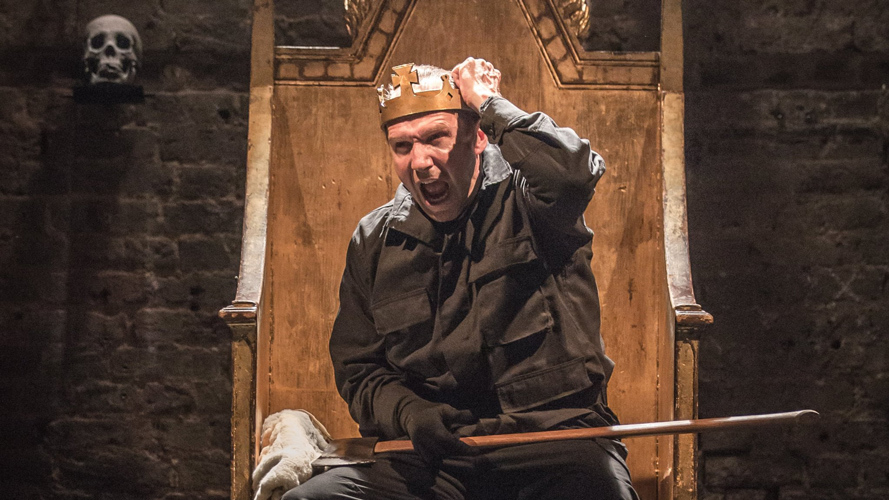
The negotiations on the production of the Almeid Theater began just at the moment when the most important event occurred in the posthumous history of Richard III: on the parking lot in Leicester during archaeological excavations, the skeleton of the latter of the plantagenets was discovered. And - grief of the Ricardians! -“Everything was confirmed”: the curved cinqueforated spine of the King-Humpbone with his shameless final clarity seemed to gain the weight of the Shakespearean play. The performance begins with this: on the small scene of the Almeid theater (there is a hall of all places for three hundred), excavations are going on, a deep grave is dug in the damp ground, the first -alarmed hand is carefully removed from it, and then the main trophy - that very ominous skeleton. Prince Hamlet, perhaps, would appreciate the find, and there would be something to joke about the graves. "Richard died, Richard was buried, Richard became dust, ashes - land ..."
The open grave will not go anywhere during the action - it will simply be covered with a transparent glass, which will be shifted as needed: there are a lot of deaths in the play, do not dig a redone each time. Convenient, practical. In this pit, all the laid backingms, rivers and others will find death, but it will remain to the end the grave of Richard, who, when it comes to the Bosworth field and “half a dwell on the horse” and will take in the end. This is the same pit, patiently waiting for the killer and a usurpator, and even the skulls, gracefully arranged here and there on the stone back, is perhaps the most beautiful, joyful and optimistic of what has been seen in the theater recently. “Previously, this was considered a paradox, now it has been proven,” as Shakespeare would say. Sometimes it is worth reminding that tyrants are mortal.
This theater and its actors do what they are used to - remind the audience of the genuine power of words. This is not so little.
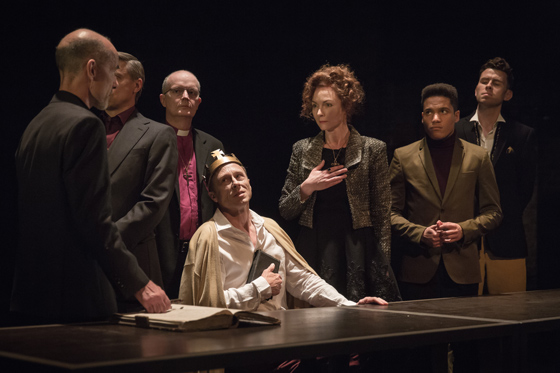
Richard III Rupert Gulda was made simply and clearly, with that old -fashioned reliable narrative conviction, whose numerous fans are no more ready to abandon their own addictions than Ricardians - their own. The director, somewhat excessively inclined to what is called “bright details”, could not resist them and in this performance - for the most part strict, excellent gloomy and very dark (replica about the “sun of York” here seems to be a mocking exaggeration: what is the “sun” and “jubilant summer”, sir, and “winter of anxiety” as it is). A table and throne are available from the props, the rain of iron chains shares an empty scene, the actors wear modern costumes (only closer to the finale, business coats and new overcoats will be decorated with chain mail and armor) - but the temptation is great, and the Lord Hestings reads Stanley's providence about the bloody wildgest from the screen of his smartphone, immediately, poking on buttons, poking on buttons, buttons gains an answer; The killers wear red gloves and photograph the atrocities on the Polaroid ; King Richard goes to the battle, holding a new geographical map in front of him (where is this barefoot or how is it there?), And the Queen of Margarita (the Great Vanessa Redgrave, the favorite partner of Fains), the graying lady in the military overalls, faded and bloodless, does not part with a haggard plastic navel, replacing the dead. baby. The directorial jokes are quite innocent and even funny (Hestings plays out the part flawlessly - how did the courtiers do without smartphones?) - but the meaningful “metaphors” look at least naive.
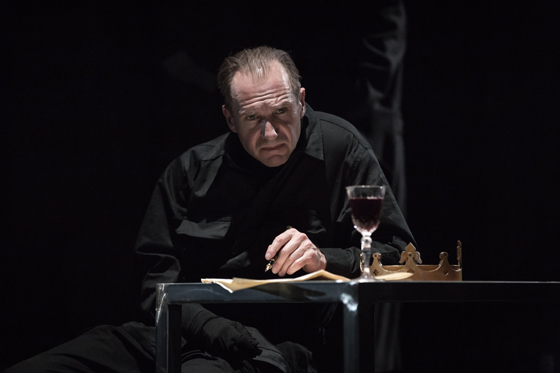
Moreover, they do not need them at all. You either have a king or there is no king. In the performance of the theater "Almeida" the king, of course, is. Raif Fins shine with a brilliance showing a corporate acting paradox, to which the viewer is not ready every time: the poetic charm of a quivering intellectual with a delicate soul and the most affectionate manners in the world, without visible efforts, changes a fantastically heartless villain to the role of a fiction. Gratitude to the project Theater HD is never superfluous, and in this case especially: Feins filmography does not give ideas about the actor’s real scale. Neither Amon Get in Spielberg, nor the one-one-willy-call, nor even his own Coriolan (although, it would seem, the common Shakespearean territory) will not be compared to Richard III, as well as the movie of the dusty romantics from the Hitclip to the “English patient” is not able to compete with the Jack Tanner recently played in “man and superhuman” (This performance was also on our screens).
 © Marc Brenner
Feins - like many of the English actors - a genius of duration. Continuity of existence in the role. It is impossible to "mount", cut in the middle of the breath. The role of Richard - as it should be, changing the larva, generous to hilarious cynical apartments and outbreaks of wild rage - in the performance of Fains is unique with rhythmic sophistication (smooth, but not monotonous), seamless transitions from replica to threats, from flattering to the meek wishes of the imminent and terrible death, from the muffled wishes of the imminent and terrible death, from tears to vile giggling, etc. The actor is not spent on pauses at all, which seems to be necessary for our enterprising murderer to somehow realize what is happening, appreciate the stages of his big path. Let us recall the closest English Richards played by Martin Freeman (in the theater) and Benedict Cumberbatch (in the series "empty crown"): both required at least a second respite, a change of light. Freeman, who played Richard, the king of mediocrity, had to gain air so as not to suffocate from his own impudence and the amazing fussiness of the environment. Cumberbatch, whose Richard could well have pronounced the Nerovo “what a great artist dies!”, It was necessary to lower the imaginary curtain from time to time and worships - at least in front of himself, the most enthusiastic viewer.
Fayns, whose role can you call the uniform (and hypocrite, and seduce, and rape, and roar with a frantic dragon, and he has to swing the sword very actively), builds it on one dominant: it is said “there is no conscience” - that means no. No. The actor is not succumbing to the obvious temptations of the role: he does not exchange for experiences about the fate of the cripple (objectively by ominous), or for the old bitterness caused by a lack of maternal love (Cambeblantch simply could not pass by this), or to tempt pathological bloodthirstiness and sweet -loving, etc. The total lack of conscience, coupled with complete impunity, is quite enough - born in voluntary professional captivity and the character nourished on one cynicism looks extremely modern. In an interview, Rupert Gold willingly talked about how relevant such Richard in the conditions of today's British politics. Feins wanted to play the hero with a typical conservative in a tweed suit. Twid was canceled - but the "gentleman with retrograde physiognomy" remained as a universal image.
The hump gives out less a villain than a transparent indifferent look full of secret arrogance. It is precisely due to the lack of moral obstacles that Richard with such a breathtaking smoothness glides from the first dream of the crown - to the very waiting grave. Along the way, the spectators are mixed with a tough, somewhat dreamy mine that does not change, neither when he admits to his passion Lady Anna - he not after an unexpected bride’s death. Rupert Guld carefully read Shakespeare - the motive of “the impossibility of being in time” for the villainous appetites of the sedimentary monarch is quite intelligible there (not inscribed in a turn, to those who have at least a drop of soul, and therefore doubts, the head from the shoulders), and the director turned it into his main trick.
 © Marc Brenner
But not the only one. Almost the best of what was done in the play of the Almeid Theater is that the Shakespearean play is played there as a great poetic text. In general, the requirement to “return poetry to poetry” is a common place in the claims of the British inhabitants to any classical productions (the same nonsense as “play Chekhov in Chekhov” with us). But in the play of Rupert Gulda, the actors make immeasurably more than simply loudly recite the text of the losers “with expression”. “Richard III”, whose lion's share consists of nightmares, spells, curses and - separately - teaching the science of curses and spells, made it possible to detect and make the very structure of his poetic magic (a filming play with “songs of the replete” of ancient filids). It's all about tautological rhymes, endless verbal repetitions with which this Shakespearean text is generously, as it seems, no other. In Russian translations, this is usually lost, at least sampled names or titles remain unchanged: “Edward died that Edward killed; // The second Edward is killed for mine ”or“ Yes, your king will disappear from gluttony, which has become a king, destroying the king! ” ("The bad infinity of history" is provided exclusively by poetic means). But in the original text of such rhymes, turning a stanza running in a circle into a rhythmic funnel, much more. So, Feins and Redgrave make microscopic stress on each such rhyme - and the ring from the words around Richard is compressed more and more. To come to the famous monologue in the finale: “Run? But from myself? And from what? // from revenge. Will I take revenge on myself? // alas, I love myself ... ” - gradually all these endless Myself merge into one, and this is not just total loneliness - here a point of self -destruction is found.
The ghosts of the dead, in turn visiting Richard and Richmond in front of the battle, sing their terrible cradle with an unchanged chorus: “In battle, you remember tomorrow about me, // Sword of Razor, Example and die!” The nightmare of the nightmare on the Almeida stage is simple-minded, even rustic, stage scenes and the final jump of the villain into his legal grave, in general, are deprived of some kind of dazzling effect. This theater and its actors do what they are used to - remind the audience of the genuine power of words. This is not so little. Even if only ghosts can use this force.