
Translated material
"Kohl on Easter, people were not allowed into the Kremlin"
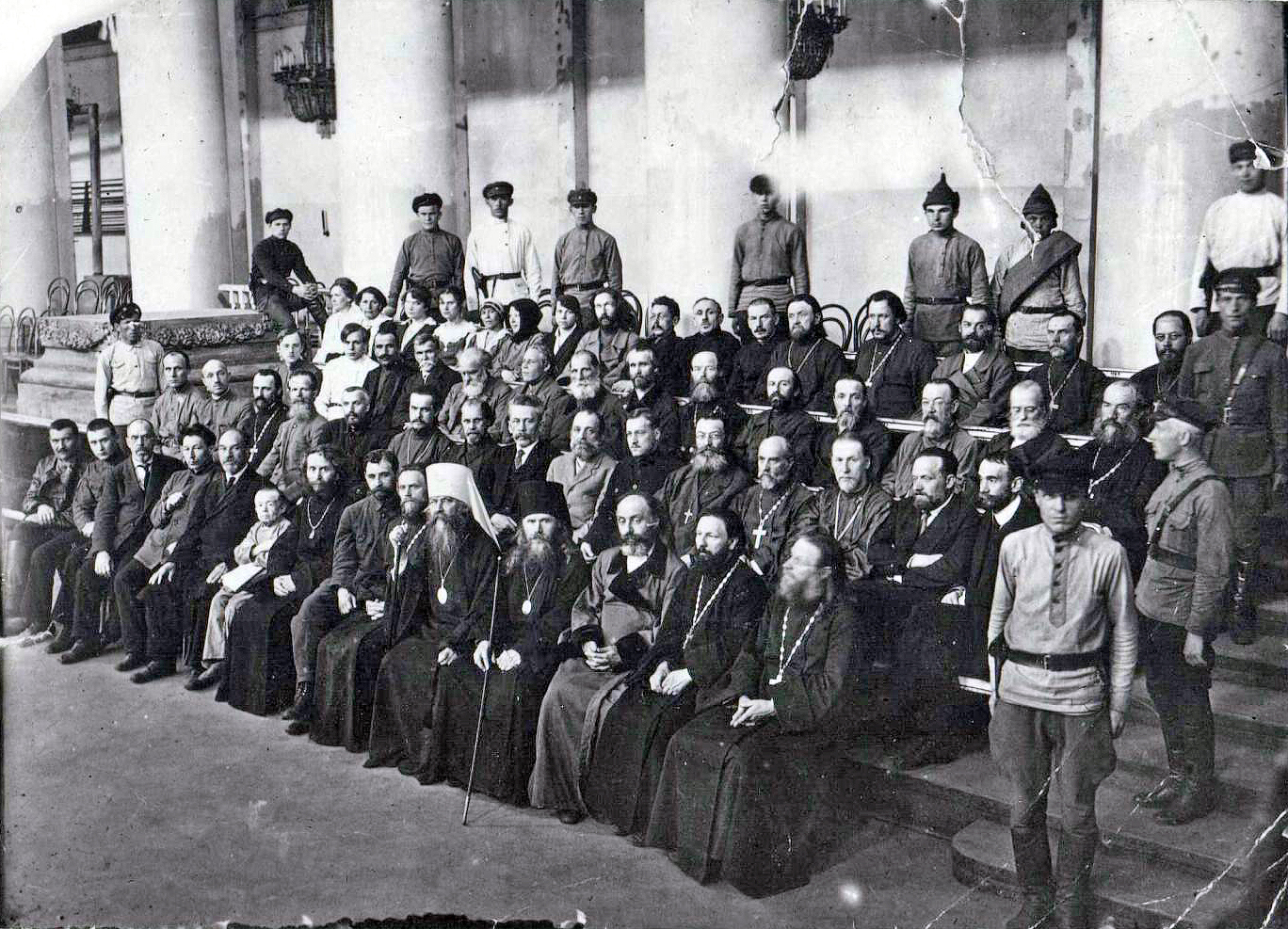
On October 30, we recall the victims of the Stalinist repressions
Even in the era of the Silver Age, when the church lost the battle for the soul of believers, especially in large cities, the clergy remained an important part of the Russian population. It was the high, 70-80-meter bells, and not the Stalinist skyscrapers, then formed the image of Moscow. In order for the “forty magpies” to still work properly, a full and diverse church state was needed. Add here monasteries, farmsteads, metropolitan wards, houses. Not a Vatican, of course, but its state in a state connected by invisible threads. Muscovites are accustomed to the fact that the main plant “cell” of their area was by no means a quarter, but a church parish. Merchants with great zeal competed for the right to play the role of a church headman. The opportunity to hit the first on Easter from the bell tower of Ivan the Great was played at the auction; Prices exceeded hundreds and thousands of rubles.
In the 1920s, a stunning composer Konstantin Sarajev lived in Moscow, who wrote works only for bells and asked the People's Commissariat of Education to arrange a concert bell tower in the Yakimanka region. Anastasia Tsvetaeva wrote about the young genius the book “The Tale of the Moskovsky Ringera”.
The pressure on the church went gradually. In 1918, tens of thousands of believers tried to get to the Kremlin for an Easter celebration, but the Bolsheviks did not let the crowd inside. “If they overshadowed a red rag - a face ...”, Tsvetaeva will write about a new coloristic decision of the Kremlin. And then - “Ku to Easter, people did not let the Kremlin into the Kremlin” White plastered walls were pulled out by burgundy matter. The counter -revolution was manifested even in color!
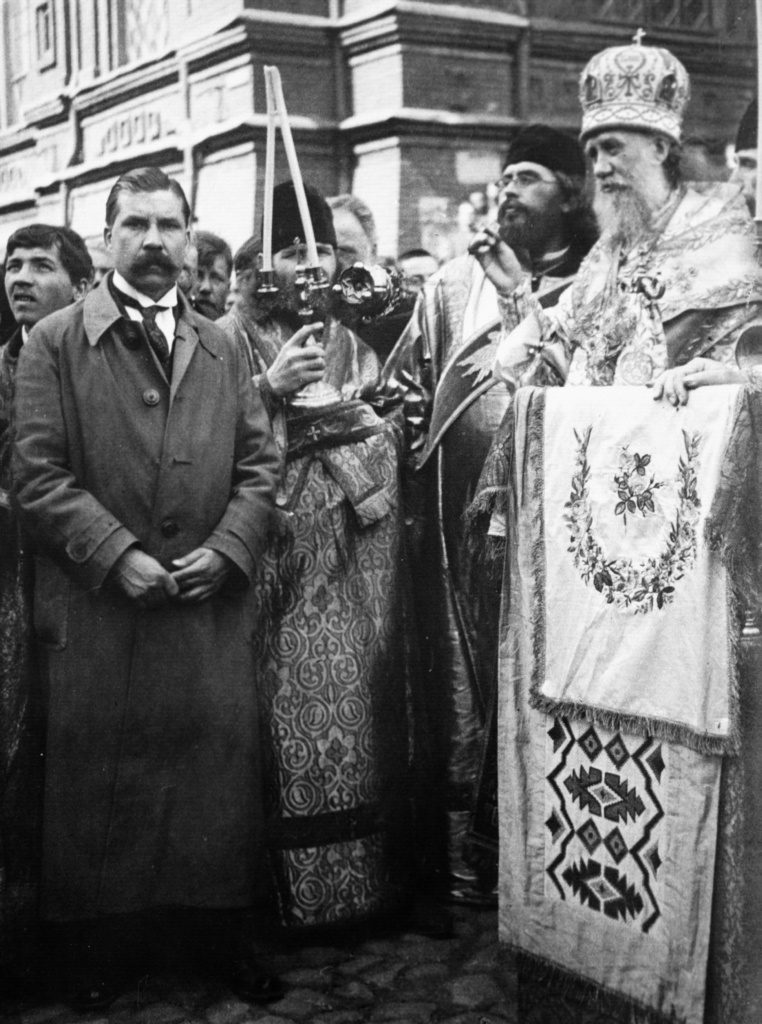 The Patriarch of Moscow and All Rus' Tikhon serves a prayer at the Moscow Church of the Great Ascension at the Nikitsky Gate. Moscow, 1918 Photo: RIA Novosti
The first commandant of the Kremlin, P. Malkov, was embarrassed by the abundance of icons in the main Moscow fortress: “Dirty, blackened, almost completely with knocked out glasses and long faded lamps, they stuck out not only in the walls of the Chudov, Arkhangelsk and other monasteries, but everywhere: in the Trinity Tower, at the very entrance to the Kremlin, above the massive gates, over the massive gates, right Closing driveways in the Spasskaya, Nikolskaya, Borovitskaya towers. ” The Bolsheviks arranged an operation to evict monks from the Kremlin to completely secure a strategic citadel. Lenin did not understand the Kremlin icons, but demanded not to touch those of them for which Lunacharsky personally stood up.
In the early 1920s, jewelry was massively removed from churches. Here is what the daughter of a priest of the Pyatnitsky church in Zamoskvorechye wrote: “Father asked not to take away all the values, but to leave the holy vessels, i.e. The bowls and spines for the sacrament, in return to which he undertakes to reimburse the state their value by collecting funds from parishioners. In those years, it was real. There were many believers, and the father enjoyed love and respect. However, the Bolsheviks and fees accepted, and everyone selected the values ... ". Then humiliating disputes unfolded between representatives of secular and church power. The anti -religious museums, the bell tower of the passionate monastery, which stood on the site of the present Pushkinskaya Square, were opened, became a space for campaign materials.
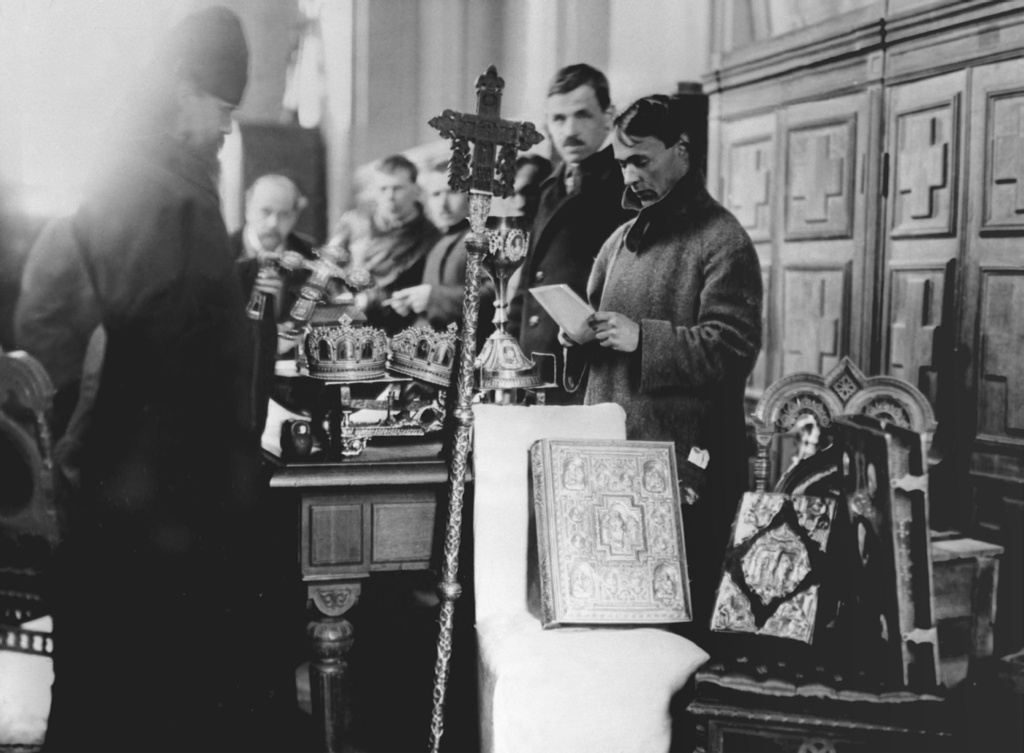 The removal of church values from the Cathedral of Christ the Savior, destroyed in 1931, photo: TASS
The circulation of the magazines "Atheist" and "Atheist at the machine" grew. In the district manuals, anti -religious sections have firmly settled. Here is just one example of the east of Moscow: “All anti -Passhal work should go under the sign of the fight against religion, and in particular, with Easter as an instrument of class enemy in its resistance to the construction of socialism and the implementation of the fourth year of the fourth year of the five -year period. To tear the worker, an employee, an employee, a handle, a schoolboy from the church, to brightly contrast the proletarian holiday of the Kulask-Nepman Easter with its class ideological poison and drunken life. ” But if in the early Soviet period the priests tried to lick, humiliate, send, pull to their side, then in the late 1930s the process of physical extermination began. Where they used to try to fight with a word, they began to click the shutters.
In 1843, 5179 persons of the spiritual rank constantly lived in Moscow, according to the results of the 1902 census, 10,235 people were attributed to church ministers. We can take into account the fact that the population of the city has increased significantly in three decades, but this will not protect our consciousness from terrible numbers. Only at the Butovo training ground were about a thousand people who suffered for commitment to Orthodoxy. Today we recall the fate of only a few priests.
Vladimir Alexandrovich Proferansov
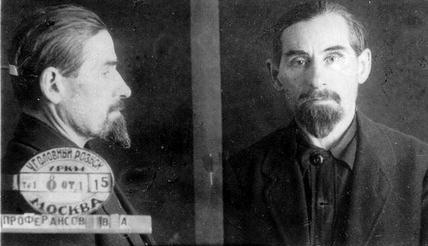 Vladimir Proferanov, 1937 Photo: Wikimedia Commons
By the time of the shooting, Vladimir Proferansov turned 62 years old. He was born in an Orthodox family: his father served in the Novodevichy Monastery. Such dynasties were not for Moscow something out of the ordinary. We know cases when the priest fed the flock for 50-60 years.
Almost the entire life of V.A. Proforasov, who has taught the Law of God for many years, is associated with the Church of George the Victorious in the old archers. It is located 300 meters from the organs building on Lubyanka. In the 1920-1930s, Vladimir Proferanov worked in church and administrative bodies-first under Patriarch Tikhona, then under the locomotor of the patriarchal throne of Sergius. He refused to cooperate with the heirs of the Extraordinary, was sent to Semipalatinsk, after which he tried to establish a peaceful life in Mozhaisk near Moscow. However, the Soviet machine of terror, which once noticed unreliable, then did not let it go. Vladimir Proferanov was shot a week and a half after the second arrest, December 15, 1937.
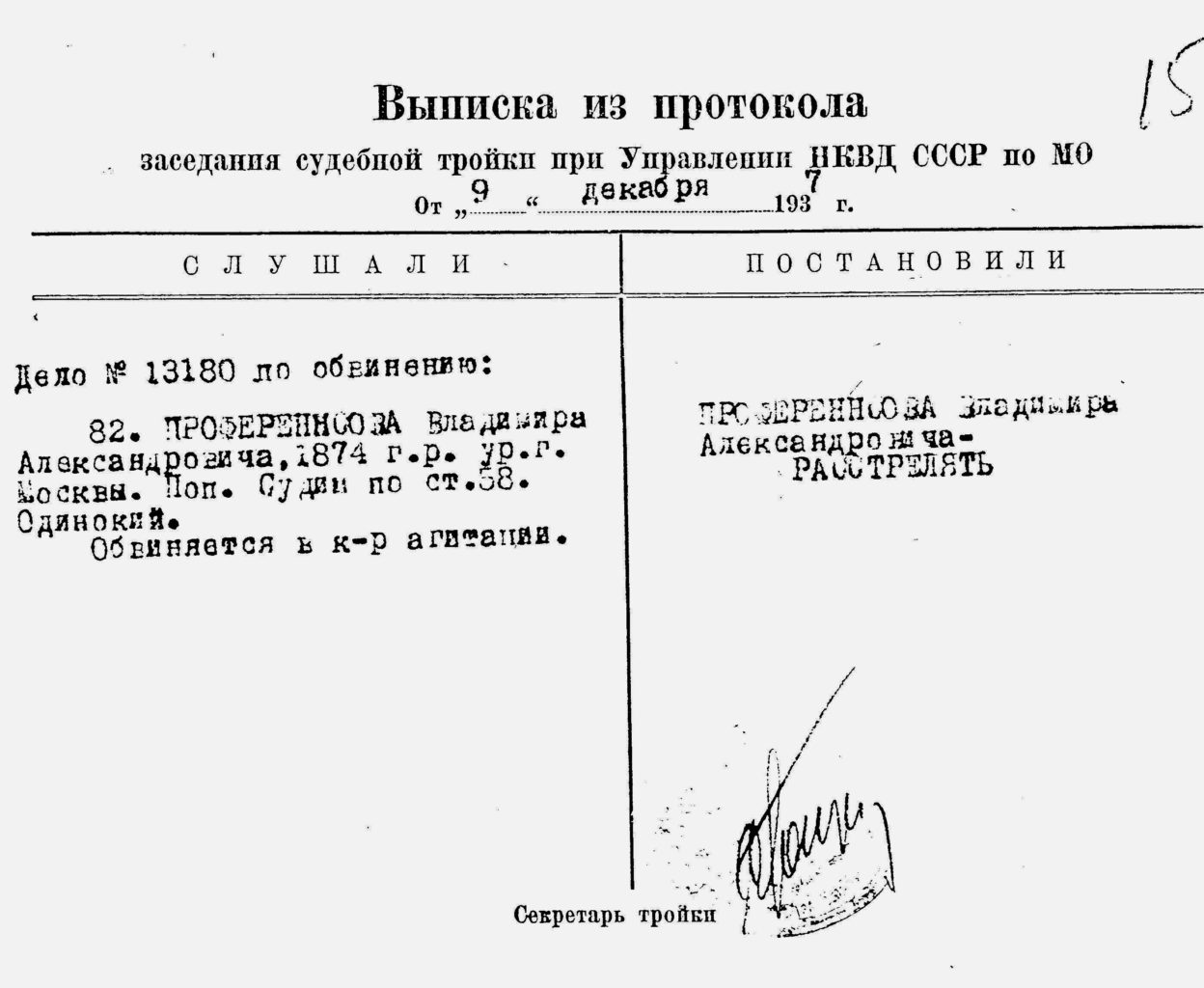 Extract from the protocol of the court troika photo: Wikimedia Commons
Sergey Alekseevich Merev
In the center of Moscow, there are practically no temples that would not lose a significant part of the clergy in the 1930s. At the beginning of Maroseyki, near the former building of the Komsomol Central Committee, is the temple of St. Nicholas in the Klenniki built in the XVII-XVIII centuries. At the beginning of the 20th century, his father Alexy Mechev served and pronounced and pronounced penetrating sermons. For the area where they were mainly engaged in trade and momentary benefit, such an act seemed a feat. Berdyaev looked here repeatedly.
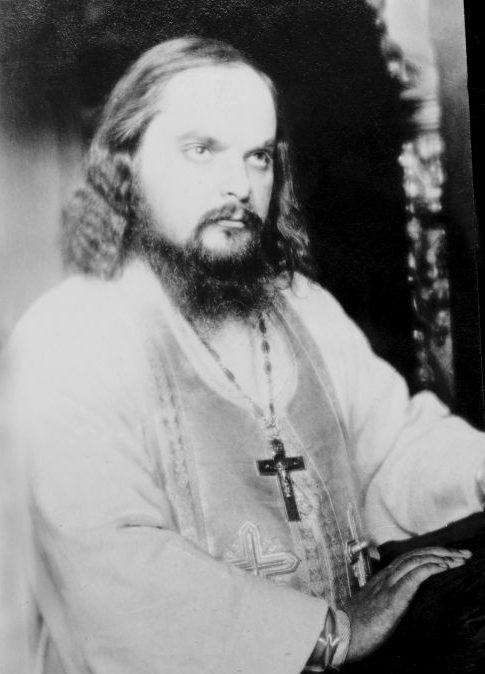 Sergey Mechev Photo: Wikimedia Commons
Alexy Merev died his death in 1923, but his son Sergey had to sip salty tears in full. He assumed the troubles of organizing the Marosey parish, served here until 1929. Sergei Mechev refused to join the renovationists and belonged to the “non -memorable” (those who did not mention the locomotives of the patriarchal throne Sergius in their prayers). In the early 1930s, S. Meachev was exiled to the north, but even there he managed to remain faithful to Orthodoxy. “Transitation by labor” only strengthened the spirit of a true Christian. At the same time, he served in the catacomb church. The essence of this phenomenon is described in detail by the daughter of the priest Maria Shakhovskaya in Alexander Lipkov’s “Evidence Roman” “I have been to you with a grass ...”: “Of the ten years that my father was a priest, for three and a half years he served in the church officially. Then he left for the state. And then the family settled in Maloyaroslavets. In 1931, we managed to buy a house, which is still intact. There he made himself an upright in which he had a home, secret, or, as they now call, a catacomb church. People who wanted to communicate with him came to him - they arrived secretly, tried that no one would notice them. They never came a large company - one, a maximum of two people. ” Sergei Merev was shot on January 6, 1942.
Pavel Sergeevich Ustinov
The priest was born in 1890 in the family of a trademark as a bachelor's goods. After graduating from the Moscow Theological Academy in 1914, he met his wife, Claudia Ivanovna. “Today I dreamed of: young, lively, clean - like a fresh breath of a spring breeze ... I woke up, and it is so easy in my soul. And the sky is clear, blue, the sun shines affably. And I remembered that today the beginning of spring. And even more delighted. After lunch, he went for a walk - to admire how the sun warms the cold land with his rays, how streams murmur about the awakening of life, as birds rejoice in the coming spring, ”wrote Pavel Ustinov to his wife in March 1914. During the years of Soviet power, the family was not easy. In 1920, P.S. Ustinov defeated the next amateur on an anti -religious dispute. “Our family was deprived of the right to vote, we, as they say, are deprived of,” the wife noted anxiously in 1929. In 1932, Ustinov was convicted for three years, after his release he settled in Murom. At the same time, the wife is dismissed from the Moscow institution and refused to register in Moscow. The family is reunited in Murom, but not for long. On December 17, 1937, Pavel Sergeyevich Ustinov was shot in Gorky. Less than a month has passed since his second arrest.
Nikolai Ivanovich Vinogradov
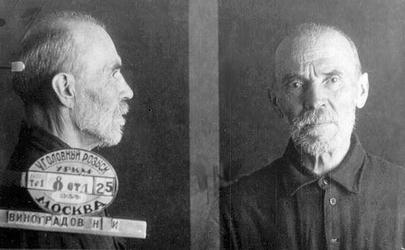 Nikolai Vinogradov, 1937 Photo: Wikimedia Commons
The fate of this Moscow priest is simple, but indicative: daily work allowed Nikolai Ivanovich deservedly to receive a respected and significant position. He was born in Dmitrov in 1876, studied at the Moscow Theological Academy, first taught the Law of God, but over time he began to draw him to the real church service. He was the rector of the now demolished Church of Nicholas in Pupyshi and the Flora and Lavra surrounded to this day on the hook. By the age of 48, Nikolai Ivanovich became the dean of the entire Zamoskvorechye, the old Moscow district, sung by Ostrovsky, Shmelev and Grigoryev. The priest had four children. At first he was exiled to Kargopol, and he met his last dawn at the Butovo training ground in 1937.
It would seem that memorial lists have long been published, memorial complexes were built on the territory of the shooting "plants". But each time the priest, who in a positive manner mentioning the name of Stalin, becomes on the bones of dozens of his compatriots. Damocles Sword of Knowledge of one’s own history should never allow us to fly to Stalinist crimes.
On November 4, the next exhibition from the series “My History” dedicated to the period from 1945 to 2016 will open in the Manege. It seems to me that the simple viewer will be interested to look at her exclusively to study modern ideologies.
The restoration of the patriarchate and flirting with the church in the late 1940s does not make Stalin a hero. The history of the Russian 20th century showed us that no education (even the spiritual seminary of Joseph Dzhugashvili) does not automatically vaccinate from the evil of totalitarianism and dictatorship. The best such vaccine for today's staggering mind is a trip to the Butovo training ground. There, among apple trees and serene silence, what does not give the soul and conscience to break through the bottom completely.