
Translated material
Prophet without honor
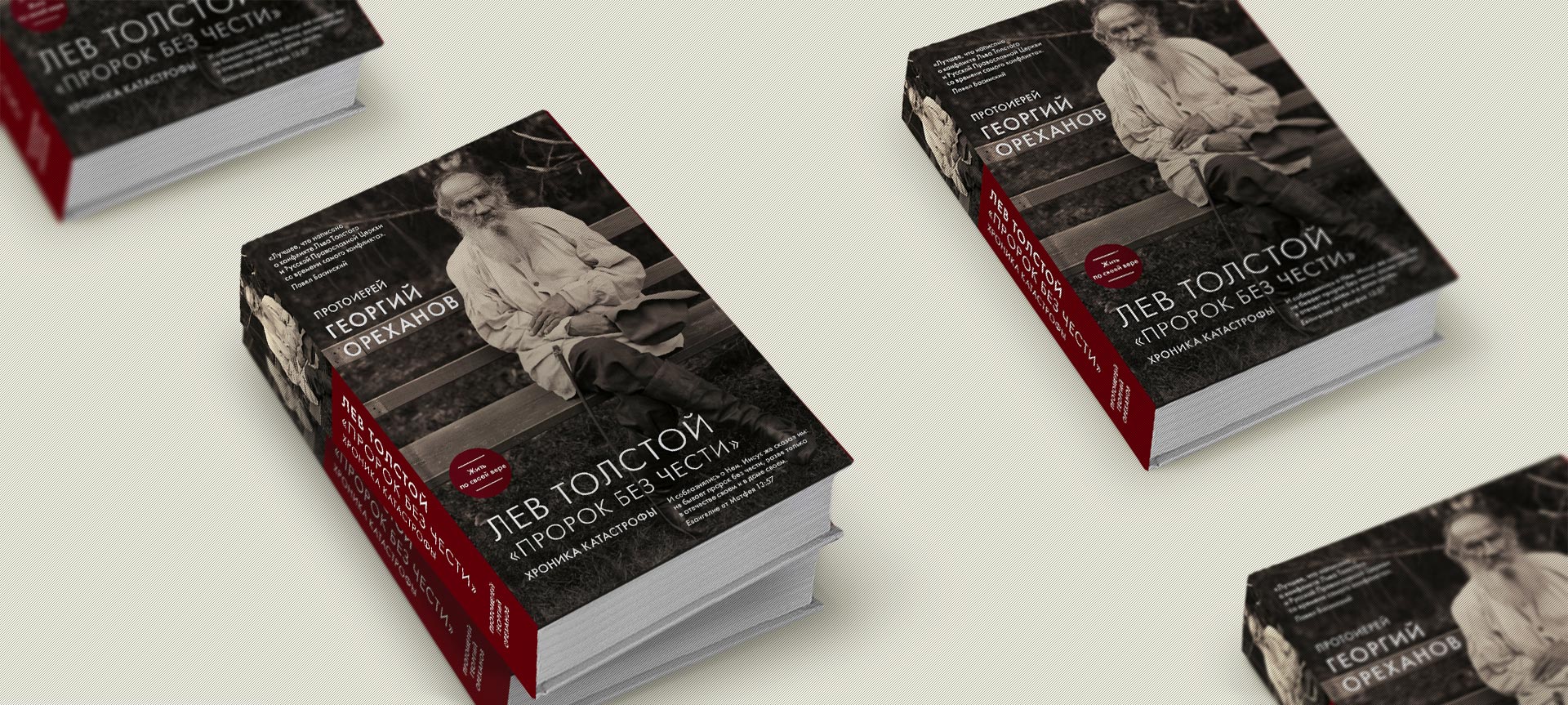
“Such things” publish a fragment of the book of Priest Georgy Orekhanov about Leo Tolstoy, published in the publishing house Eksmo
Leaving and death of L. Tolstoy
The question of the departure of L. N. Tolstoy is of fundamental importance in the history of his conflict with the church. If the writer’s anti -church sermon was an important event in the life of Russia, then one can only assume what a public resonance would have the repentance and reunification of the writer with the church. Khodasevich wrote that this hypothetical event "would have passed far from a trace, not only for himself, but for all of Russia, for all its religious, mental, and perhaps political life."
“Flight or pilgrimage”, “Triumph or tragedy”, “Sister or nun”, “Searching for a way of the impasse or the search for the plot for a new work” - this is how the question was for Russian newspapers and magazines and for the entire Russian reading society.
A formal reason for the writer's departure was a conflict with S. A. Tolstoy about the will, secretly from the family signed by L. N. Tolstoy. The essence of this conflict was that, according to this will, the youngest daughter, A. L. Tolstaya, was appointed the writer’s arbitrariness, and the actual right of publication of the writer's manuscripts passed into the hands of V. G. Chertkov, the publisher of Tolstoy and the implacable enemy of his wife. The latter guessed about the possibility of the existence of such a will. On the basis of distrust of the wife’s side, searches in his room and nervous seizures, Tolstoy’s relationship with his wife worsened and led to the fact that at night on October 28, 1910 he was forced to secretly flee from Yasnaya Polyana with his doctor Dushan Makovitsky.
This event was of great importance to all of Russia, if not for the whole world. S. N. Durylin reports that on the day of the first news of the departure of the newspaper they literally torn from his hands, and Durylin remembers a similar attitude to printed products only once in his life: on the day of the announcement of the war with Germany. On the day of departure, by 10 o’clock in the morning, many newspapers did not have newspapers left, they were bought up. Of course, there was a lot of “too human” interest in the family drama and just in someone else's grief, the desire to make an interesting news.
With what feeling Tolstoy left the estate, what stood behind this care, why did he go to Optina Deserts?
Last non-meeting with Dostoevsky: Hell Fire
Tolstoy very critically perceived the works of Dostoevsky's works of Dostoevsky. This also applies to the novel "Brothers Karamazov." This is evidenced by the numerous letters of L. N. Tolstoy, for example, a letter to A.K. Chertkova, in which the writer speaks of his "aversion to anti -artistic, frivolity, croiling and inappropriate attitude to important objects."
However, it is surprising that it was this novel by Dostoevsky that became the last book, which L. N. Tolstoy read before his departure from Yasnaya Polyana. Perhaps the image of the elder Zosima could affect Tolstoy’s decision to leave the tribal nest. After the writer left Yasnaya Polyana on the table in his office, the novel “The Brothers Karamazovs” remained, and in the chapter “On Ada and Hell Fire”, Tolstoy was made a note “NB” and several lines were drawn out. Already being in Kozelsk, Tolstoy does not forget about the novel by F. M. Dostoevsky and asks the youngest daughter to send the second volume. This was the last non-meeting of writers on this earth.
* * *
It would be wrong to associate L. Tolstoy only with family conflicts. The question of faith, of the spiritual foundations of life did not give him rest in the last years of his life. The formidable prediction made by F. M. Dostoevsky in the “Writer’s Diary” in 1877 turned out to be: “The peasant faith” did not let deep roots, everything had to be started again. July 30, 1906, L. N. Tolstoy writes in his diary: “Is there God? Don't know. I know that there is the law of my spiritual being. Source, I call the reason for this law God. ”
The image of the elder Zosima could affect Tolstoy's decision to leave the generic nestBut where and why did the writer run away with a dark inclement October night of 1910? Unfortunately, when discussing this issue, the objectivity of many authors undergoes a very serious test. One, representatives of the school of unreligious humanism, really want to present the case so that Count L. Tolstoy ran away “to nowhere”, he simply “left everyone”, as he wrote down in his diary on September 24, 1910, that is, a little more than a month before leaving: “From Chertkov, a letter with reproaches and denunciations. They tear me apart. Sometimes I think: get away from everyone. " In other words, Tolstoy simply wanted to leave somewhere, having no idea either about the direction of the movement, nor about its goal.
There are reasoning and another kind. The writer knew in advance that he would go to Optina Deserts and meet there with the elders, and it is this circumstance that testifies to the repentant state of Tolstoy's soul.
What do we really know from reliable sources? Of course, L. N. Tolstoy wanted to talk with the Optinsky elders, primarily with the elder Joseph (Litovkin). The writer’s sister, M. N. Tolstaya, reports this in a letter to S. A. Tolstoy: “Before the arrival of Sasha (the writer’s daughter - Author), he did not intend to leave anywhere, but was going to go to Optina and wanted to talk with the old man. But Sasha, with her visit, turned everything upside down the next day. ” True, this is a later certificate related to the moment when the writer was already in Shamordino.
This is confirmed by the writer, D.P. Makovitsky. He testifies that L. N. Tolstoy decided to go to Optina and Shamordino in advance , already on the way in the carriage and from the coachman he asked which elders are in Optina, and told Makovitsky that he would go to them.
It seems that the truth is that this intention was carefully hidden from everyone, including at the first moment and from Chertkov. Indeed, when A. P. Sergeenko, secretary and closest assistant V. G. Chertkov, appeared in Shamordin, Tolstoy said that he would not go to the elders. Later, Tolstoy clarified that he himself would not go to the elders if they do not call him.
In these fluctuations and conflicting instructions, the struggle of hope and fear is visible - ten days before his death, as well as throughout his life, L. N. Tolstoy was looking for answers to the questions that tormented him precisely in the Optina Desert. True, this desire was not yet repented in the church sense: at the first appearance of the envoys of the closest friend, the writer showed cowardice.
“Leo Nikolaevich had a strong desire to talk with the elders. I never walked a second walk (Lev Nikolaevich in the morning) I explain the intention to visit them <...> in my opinion, Lev Nikolaevich wanted to see the Hermit’s hermits not as priests, but as hermit, to talk with them about God, about her soul, about hermits, and see their life, and find out the conditions on which you can live at the monastery. And if possible - think about where to live on. There was no question of any search for a way out of their position, as the churchmen suggested. ”
Ten days before his death, as throughout his life, L. N. Tolstoy was looking for answers to the questions that tormented him precisely in the Optina DesertAt Tolstoy. "Yasnaya Polyansk Notes" by D.P. Makovitsky. Prince. 4. S. 405.
All that we know about the elder Joseph, the student and the nearest cell of the Monk Ambrose, about his great humility and simplicity, unearthly kindness, which was reflected in a constant meek smile, indicates that such a person simply could not like Tolstoy, very sensitive to everything that humanity and simple wisdom showed . In the last days of his earthly life, L. N. Tolstoy made a choice in favor of those people who carried this humanity and to whom he trusted more than anything else.
First of all, this is a sister, M. N. Tolstaya. You can reflect on the question as much as you like, “did he want to talk to her as with her sister or as a nun?”, But it is obvious that in these tragic, fatal days, hours and minutes the writer was looking for support from those whom he believed. He was looking for spiritual support where he could find her and always found where the elders lived, where he was never rejected.
I will not once again dwell on the circumstances of the writer's brief stay in Optina Desert, they are described many times almost by minute. The writer was located in the pilgrimage hotel of the Optina Desert, where he was recognized, and took a walk to the monastery, in which the elder Joseph lived at that moment. But, standing at the threshold of the door to the monastery, Tolstoy never found the strength to cross this threshold. The meeting with the elders did not take place. Maybe it was the most tragic non-meeting in the life of the writer.
In the last days of his earthly life, Leo Tolstoy made a choice in favor of those people who carried this humanity and whom he trusted more than anything elseAfter visiting Optina Desert, the writer heads to Shamordino, where at that time his sister lived, M. N. Tolstaya is the closest and dear person at that moment. The meeting of L. N. Tolstoy and his sister is described by indirect sources. Of great interest is evidence of an eyewitness, daughter M. N. Tolstoy E.V. Obolenskaya. Another important source is the letter of an unknown author, written, as his text testifies, according to the writer’s sister, M. N. Tolstoy, and the unknown nun of the Shamordinsky monastery. This letter reports that the meeting of his brother and sisters was very touching, the writer spoke of his desire to put on a cash and live in Optina, fulfilling the lowest obedience, but at the same time he would put the condition not to force him to pray. Tolstoy said that he had not seen the elders, or rather, did not dare to go to them, because he doubted that they would accept him, excommunicated from the church. But at the same time, he claimed that the next day in the evening he was going to go to Optina again, meet with the elders and spend the night in the monastery.
But the plans of L. Tolstoy to remove the hut in Shamordin and live for some time next to the monastery and the sister was not destined to be realized. On the evening of October 30, the daughter of the writer, A. L. Tolstaya, and her friend and assistant V. M. Feokritova, arrived at M. N. Tolstoy. They intimidated L. N. Tolstoy with reports about the possibility of pursuing the writer by the spouse and other family members. D.P. Makovitsky reports that panic fear owned both girls.
The arrival of the youngest daughter affected Tolstoy oppressively, he was afraid of the chase and decided to leave Shamordin, apparently, to his like -minded people to the south of Russia, but on the way he fell ill and was forced to leave the train to Astapovo station, where a separate premises were provided to the writer and the house of the head of the station I. I.
George Orekhanov Books Leo Tolstoy Literature writers Orthodoxy Religion