
Translated material
Heavy honeycombs of writing
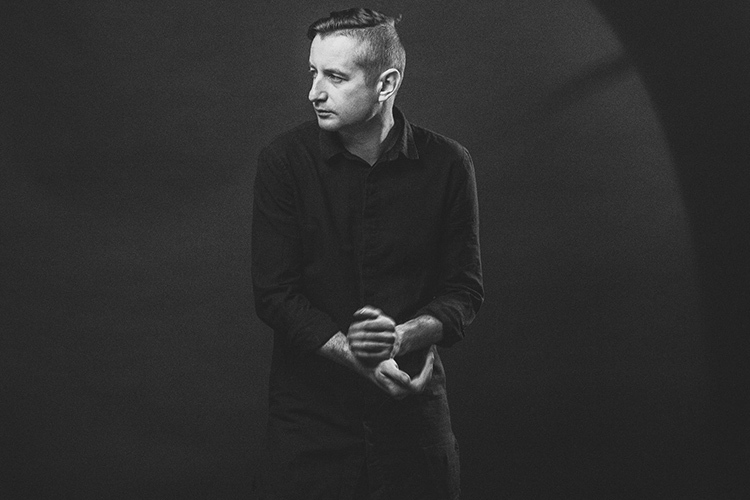
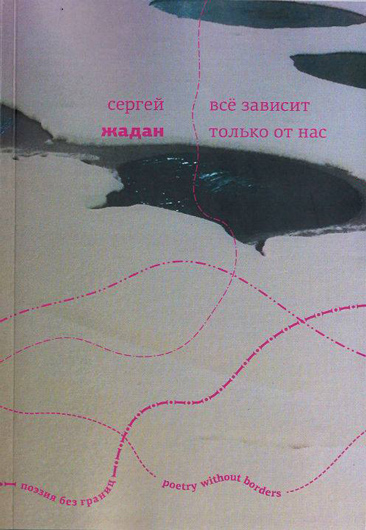
In the collection of translations from Sergey Zhadan, published in a series published over the barriers in a small, but already significant, Latvian town of Ozolnieki, different stages of development of the Ukrainian poet are presented: from the beginning of the 2000s to the mid-2010s. Fifteen years - and several historical eras. Translations made by Igor Sida, Dmitry Kuzmin, Stanislav Belsky, Igor Belov, Andrei Shchetnikov, Alexei Tsvetkov, Boris Kherson, Maria Galina and Polina Barskova (with the participation of Ostap Kinya) are included here.
In general, Zhadan is a poet of the catastrophic creation of the world (and the main stress here should not be put on catastrophic - although it cannot be lost from sight - but on cosmogonic pathos).
Heavy stone coal in forest roots
Iron blades through sand and coal
Mounted - link to the link,
Growing around the cores,
The hot core of the year is burned.
(Translation of Stanislav Belsky)
The era of the nineties and two thousands, on which the author’s youth fell, unfolds with him as a huge cosmogonic epic, inhabited by bandits, nouveau riches, drug addicts, street children, prostitutes, militants, “killers and blatarians”-and at the same time, surprisingly, a complete triumph of life. According to intonations, rhythms, moods, passions of Zhadan of the first parts of the book - not so paradoxical - relative to the early -Soviet poets with their brutal revolutionary romance: Bagritsky, Svetlov ... This is vast, diverse, extending from rhythmic likening (“And there was no life of your end, it was looped, like a novel, / and prostitutes of crazy hearts / Small hearts / Small hearts Heated fog ”(translation by Igor Belov)) to the direct mention of names and almost quotes. One of the poems is called “Mikhail Svetlov”, and the hero-Bandita is haunted by dreams about the “burning fields of the Andalusia”: “... I drank the spirits of Salvador Dali, / repeating everything-my Andalusia, my Grenada” (translation of Igor Belov). The other is the “ghost of the rebel” - an unknown, unnamed country, “and at the bottom of its leather satchel - / Dutch tobacco and volume Apolliner” (translation by Dmitry Kuzmin) - bow “Tikhonov, Selvinsky, Pasternak” Bagritsky.
 © Poetry without borders
Here - much more serious than a parody. Such a kinship is not (simply) the result of influence, which probably was: the fact is that any influence can take place only if it falls on prepared, susceptible soil. All these are the prints of the same matrix on the material of different times - matrices, the main features of which go back to the pathos of primary Christianity: the latter will be the first, and the stone rejected by the builders will become the head of the corner.
And Christian sources of Jadan are well aware, even emphasized. Here are the new Magi bring the gifts of the newborn to the newborn to the newborn:
And then we all who stood behind him,
Put their amulets, knives and rods,
Someone even got Navaha with a carriage of carved
And back he stepped back so that others could come.
There were already gold and porcelain,
silver, carpets and pile of warm things,
And the windows looked at the Black Middle Yard,
And smoke rose into the sky from rural furnaces.
(Translation by Maria Galina)
True - unlike the primary Christian and communist versions of the matrix - the question of a child’s universal salvation in any conceivable version is not considered by the heroes of the latest epic at any of the levels. Here, we can say, Zhadanovsk cosmogony, in many ways archaic - more archaic, more archaic - appears to us at the same stage that precedes ethics. Ethics have not yet been born here. So far, purely rapture by life and an boundless excess of possibilities.
This pure barbarism is new, post -Christian. The god of Christians, as we have already noticed, is familiar to Him, but he is a part of a completely new integrity, unfamiliar and alien to the people of the departed era (“Jesus thinks of you when you think about drugs”; “Our Lord came up with tramadol to / smooth out those sharp contradictions that exist / in civilizational development” (translaages of Belovsky and Igor Belov, respectively)). But actually it-clearly came to this world for the second time-and can be pushed out:
And your son, Maria, says wonderful words,
sees signs, about his miracles - rumor,
And he repeats us stubbornly, that only in love all power,
As if grass grew out of the ground from love.
<...>
Let it fail from here, far from sin,
Otherwise, we will let the red rooster into the sky ...
(Translation of Boris Kherson)
It is impossible not to pay attention to the fact that Zhadan is the same age as our Boris Ryzhnya (an accurate peer, one -year, older than his sixteen days), who in his Sverdlovsk wrote, in essence, about the same thing: about the gang nineties, about the early violent deaths of peers, about the dark time of chaos.
But what a huge difference.
Red - grit and tragic. Zhadan - no matter how terrible and merciless - no. He is not about decay and end. He is even when about murders and cruelty - about the birth of a new world on the wreckage of the old. And the world of the new chaos for him, perhaps, is not so dark - rather, even opposite. Yes, this world knows suffering:
I clean blood from under my nails every morning
Because I tear my chest every night,
Trying to tear out all the excess hearts,
growing in me every night
Like earthen mushrooms.
(Translation of Dmitry Kuzmin)
However, he is generous, predatory, primitive colorful. Such a world is an object (deadly) game and sensual pleasure.
The time when the fat boils in smoky kitchens
And the cook chop the obedient greens with knives,
The time when female dresses disappear in the darkness of the courtyards
central hearts and Tatar sauce;
The Lord gave us our borders,
Our anger and courage, our cocaine,
I am now worried every time
Coming to the participle or translating
Grandmas from one bank
In another.
(Translation of Igor Sid)
And so - everywhere, except, perhaps, the last part of the book - but about it separately.
Early Zhadan is epic and fascinated, intoxicated by the world. In his poems, taking advantage of any occasion and even dispensing it without it, enormous volumes of life with the whole abundance of diverse, breathing, flickering details are included. These words are even translated (what is in the original?) I want to roll down in the language, absorb them into yourself, interact with them bodily.
You will answer today, touching the warm letters,
Serving them in darkness, confusing vowels with consonants,
As a driver in the old Warsaw office.
Heavy honeycombs of writing
They are already fading with the gold from which the tongue arises.
(Translation of Igor Sid)
And this does not interfere with the scale of vision - on the contrary, only contributes to it.
How often does poetic speech manage to be simultaneously indignant, carnal-blunder (directly with all the organs of senses, including taste and smell: the world has a plowing, tart) and widely obscene? Combine irony and pathos, vitality and criticality, mythological and analytism? The early Zhadan is just that: powerful as a myth, and terrible as a myth. At the same time, the young poet does not release the connections that permeate and combine different areas of being for a minute. Quite like in a myth, all objects are animated by him and feel each other, and man and peace grow from each other - like each other - indistinguishable from each other.
... In fact, the culture of the beginning of the century
Already imprinted by the veins on your slow hand,
rooted in the fractures of your elastic hair,
intercepted carelessly in the wind,
scattered over the fingers,
like jets of warm water above the washbasin,
like clay color necklaces over cups and ashtrays,
Like a long autumn sky
Above the corn field.
(Translation of Igor Sid)
Something I do not remember that in the same years (not to mention the fact that later) such verses were written, such a pagan fullness of life was pronounced in Russian.
With its poetic formation, Zhadan is done harder, land, sharper and worse. Less than mythological, more and more social.
Poetry - this is the last bridgehead for inconsistent,
A worthy rebuke with a general nonsense.
Poets are kept together, like the sailors of one cruiser.
And when the cruiser is hopelessly on the bottom,
Poets substitute faces in the wind and sing
Anthem Brotherhood and Fidelity
high net voices.
Only someone alone all the way, from the first note,
Constantly shimly
Insert jaw.
(Translation of Dmitry Kuzmin)
Most of all, Zhadan is in the last part of the book - "Why I am not on social networks." She is about the events and people of the last two years. About the war in the Ukrainian southeast.
Paints go from this part of the book-it is all gray-steel. It is not here - as in the beginning - a hot crush of understanding things, a violent excess of forms, a every minute miracle of existence. Only names (and not everyone), persons and fate. And in every poem - death. In each.
They were covered, wrote, all
Together, in one gulp. Then ours returned
pick up the dead. Rather, what is from them
left. The hardest all with the legs. Everyone has
There must be two legs. They were folded -
So that each has two legs, preferably -
one size.
(Translation of Dmitry Kuzmin)
But even reading the last, terrible part of the book, you find yourself behind the thought: this poetry, crowded with almost all of the story that was held before it, the fragments of its bitter experience, is still a poetry of a new, after many crashes, the beginning of the world.
There is so little love,
Love is so defenseless.
Cry, breaking the darkness with your warm hands.
Cry and do not leave him a single step.
The world will never be the same as before.
We will never let him
Be the same as before.
(Translation of Dmitry Kuzmin)
This is a stubborn, strong poetry of the young people, who still have ahead.
Sergey Zhadan. It all depends only on us: selected poems / translation from Ukrainian. - Ozolnieki: Literature Without Borders, 2016. 128 p. (Poetry without borders)