
Translated material
Syria: intermittent truce
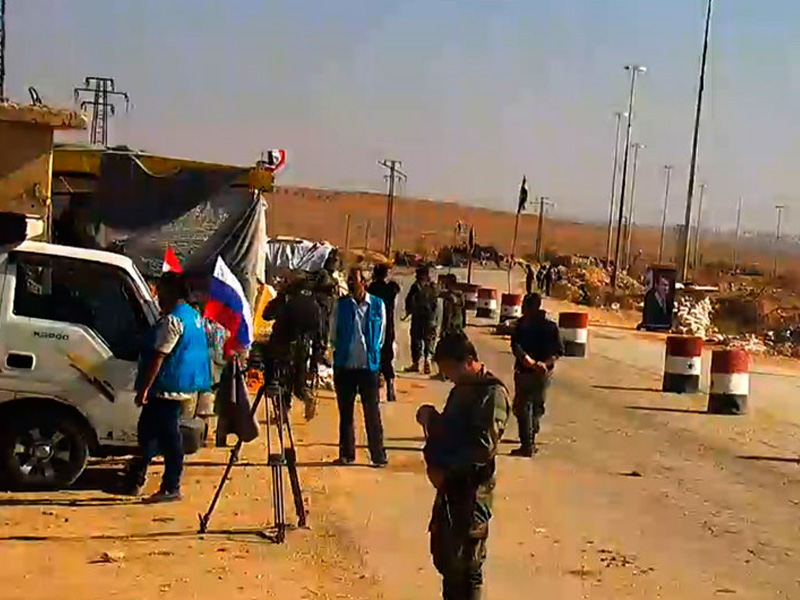
The media discuss the situation in Syria. In some, there were news and reasoning that Russia was going to once again organize a humanitarian pause in Aleppo. In others, commentators discuss in generalized terms about how to stop the war.
Aljazeera writes that Russia offers to arrange another humanitarian pause on Friday in Aleppo. She accompanies this proposal calling for the militants to take advantage of the pause in order to leave the besieged eastern part of Aleppo. Corridors will also be able to use civilians. The unusual feature of this statement, comments on Aljazeera, is that the Russian Ministry of Defense first turned directly to the rebels. The material notes that previous humanitarian pauses were mostly not too successful. There was practically no help to the besieged part of the city, few residents left the city.
CNN adds to this that in the past there were already several attempts to stop military operations, but they all turned out to be unsuccessful. At the same time, both sides of the conflict accused each other of disrupting the truce. The most successful was the episode with a humanitarian pause in mid -October, when military operations stopped for several days, although the pause was originally planned for only eight hours. But even in that case, the ceasefire de facto was interrupted when Russia resumed air strikes in Aleppo. The article also notes that Washington proposed holding bilateral negotiations with Russia in November.
International politicians and political scientists are making plans to resolve the conflict in Syria, writes Financial Times . They talk about safe areas, and humanitarian zones, and different diplomatic schemes, and the return of refugees. The problem is that these conversations do not lead to the end of the war. According to the author, the only effective way to really stop it is to divide the country into parts. The author should do this, the author, should be done by the USA and the EU. And then this division plan should be carried out by involving a large number of military contingent for this in order to force people to fulfill new rules. The last point is necessary, and that is why politicians prefer to talk about useless, but also not requiring such radical intervention of schemes.
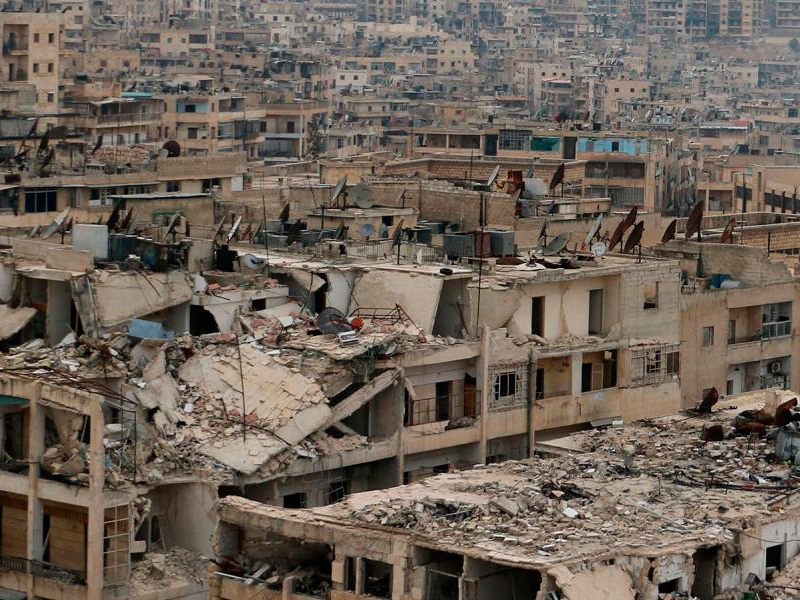 The view of the city of Aleppo
The current situation in Syria reminds the author of the war in Lebanon, which began in the mid-1970s. And it ended only in 1991. Its ending became the result of a combination of different factors. Russia then lost the Cold War and was forced to behave bow, in particular in the Middle East. In Iran at that moment there was the pragmatic Ayatollah Hashemi Rafsanjani, who sought to improve relations with Saudi Arabia. Syria considered that Lebanon was quite weakened from the war so that he could easily be held in the field of influence, without using military operations for this.
Nevertheless, an agreement on the termination of hostilities, achieved by external players, was applied using the external armed forces. Actually, Syria introduced 40,000 military there. The war ended, but left behind a ruined state, which did not completely restore after this military injury.