
Translated material
Heavenly matter
How a healing meteorite contributes to the revival of the Perm village
Tabers are a small village, which are many in the Perm Territory. The largest enterprise here is a sawmill, they drive around the streets on motorcycles with strollers, and in a local store pickles and tomatoes are collected from the population - humanitarian aid for students who have left to study in Perm. Tabers are unusual in that the whites here do not fill with meat, but by the liver. And yet - more than a century ago a meteorite fell here.
Museum of one day
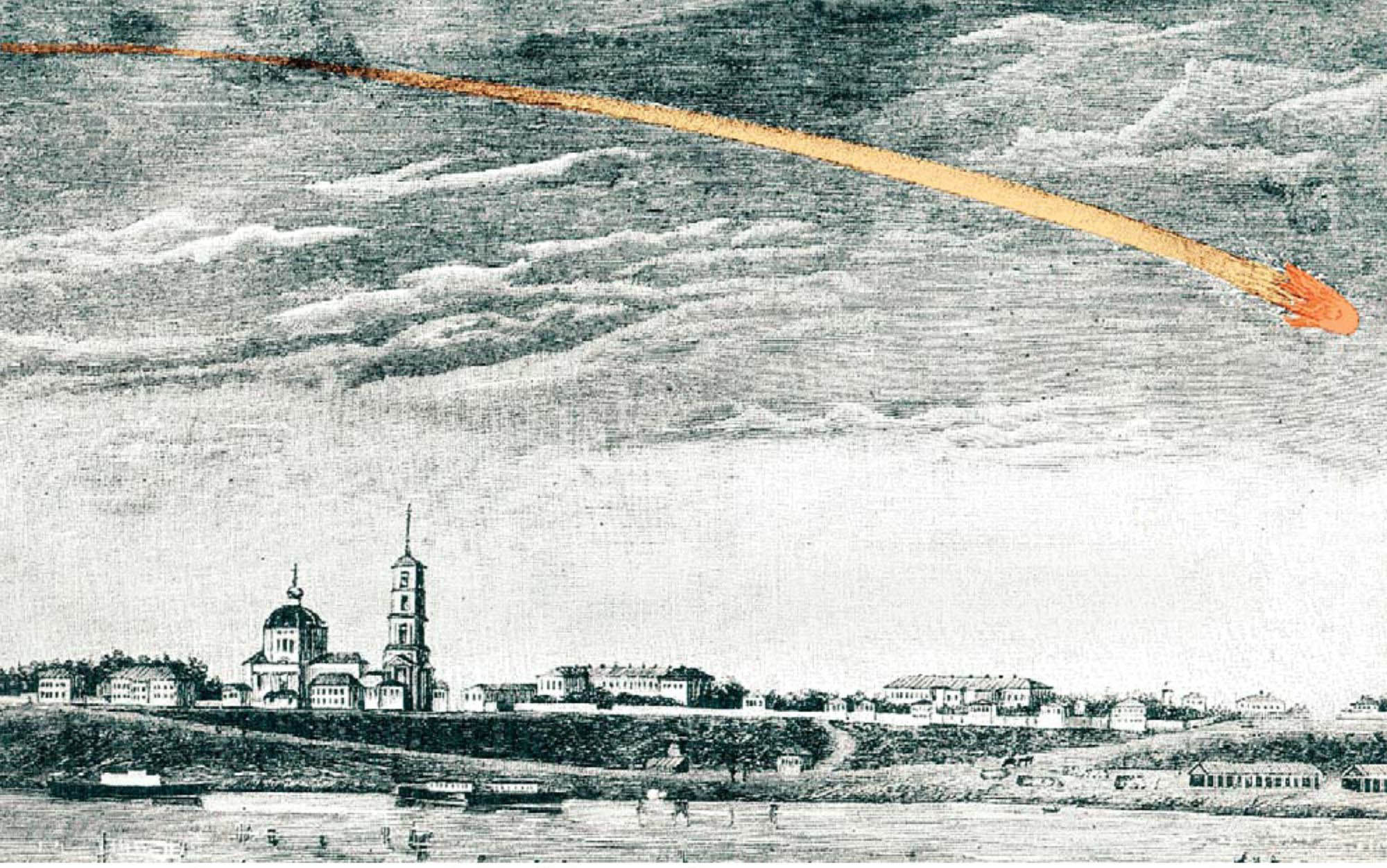
The Okhansky (or Taborsky) meteorite fell on August 30, 1887 - he entered the atmosphere over Perm and scattered hundreds of pieces, which were scattered tens of kilometers. Most of all the fragments collapsed in the area of the village of Tabors.
According to an amazing coincidence, in the same year - and before, and not after the fall of the meteorite - a new temple was built and consecrated. Local residents found this by the blessing of God, and especially the superstitious began to drink raw water from the river and declared fragments of the meteorite medical. Some residents of the village for decades believed that the dust of the meteorite was able to get rid of diseases - of course, from everyone in a row. Even sorcerers appeared, who healed with miraculous meteorite energy (in fact, they could not have fragments at the same time, it was possible to declare one or another place or object “charged”). This continued the entire twentieth century - even after the temple was blown up in Soviet times under the pretext that it was in the zone of flooding of the Votkinsk reservoir.
By the beginning of the 21st century, superstitions came to naught-and with them interest in the meteorite in the village. Fragments of a meteorite and various related documents are stored in museums and archives around the world, but in the camps themselves there have still been not only a museum - even a thematic corner with information.
I'm going here to meet Irina Ponomareva. Irina is only 28 years old. She was born in hits, studied in Perm and worked for some time a school teacher in a neighboring area, but returned to a small homeland - because she always wanted to live and work here. She became interested in a meteorite theme four years ago and immediately realized that she could build a new rural identity on her. For months, Irina sat in archives, talked with the descendants of eyewitnesses, submitted requests to different instances throughout the country, created a map of falling meteorite fragments, developed a tourist route and published a book called “Stone from the sky”. And some time ago she managed to open a museum - though, so far, only a museum of one day that worked on the day of the village.
 Irina Ponomareva photo: Ivan Kozlov
We must meet with Irina in the local House of Culture, which, frankly, is not very similar to the House of Culture and does not look at the building at all - there are no signs and identification marks on it. In the lobby of the recreation center, they meet me inhospitably and ask me to talk in a whisper. It turns out that just an important event is taking place here today: a meeting of the College of the Federal Penitentiary Service of Russia. The officers from all over the region gathered here, because in the vicinity of the Tabors there is a colony-settlement No. 39. This is the advanced colony, famous for its agriculture. While there is a meeting, we are sitting on the couch in the lobby, and Irina whispers into the recorder:
By the beginning of the 21st century, superstitions came to naught-and with them interest in the meteorite in the village“I made the museum almost by accident. Something was at home, collected some exhibits. Nobody did this before, and I decided to engage in enlightenment, so there were three sections in the museum: about our holy places, about meteorite and about the village hut. I knew that the fall of the Okhan meteorite is the most peaceful, he did not harm anyone, unlike Chelyabinsk. Or if, for example, anomalies occur in a prayer, and people disappear, then our holy places have a beneficial effect on a person. There was almost no material before me. That is, for a long time some person did this, but did not succeed, his materials were kidnapped. ”
Here the meeting of the board ends, and Irina catches in the doorway of the head of the same colony, and then the FSINOVSKY priest. Both of them receive booklets about a meteorite from her, and the priest is also a souvenir in the form of a wooden bird.
Now we can finally examine the recreation center. Irina leads me into the room, where the museum of one day was located at one time - though, now there is nothing left of the museum. In the center of the room is a table with the remains of an officer tea party, the cleaning lady collects dirty plates. I automatically photograph a stand with participants in the civil war.
“Oh, don’t take it off, it’s not mine,” Irina shouts, bearing in mind that the stand does not apply to the Museum of the Meteorite.
- Yes, how is it “don't take off”. This is a civil war, by the way. This is our story, ”the cleaning lady says viciously, sweeping crumbs from the table.
“The correspondent about the meteorite came to write,” Irina explains her
- We had a civil war, and your meteorite is a meteorite in Africa .
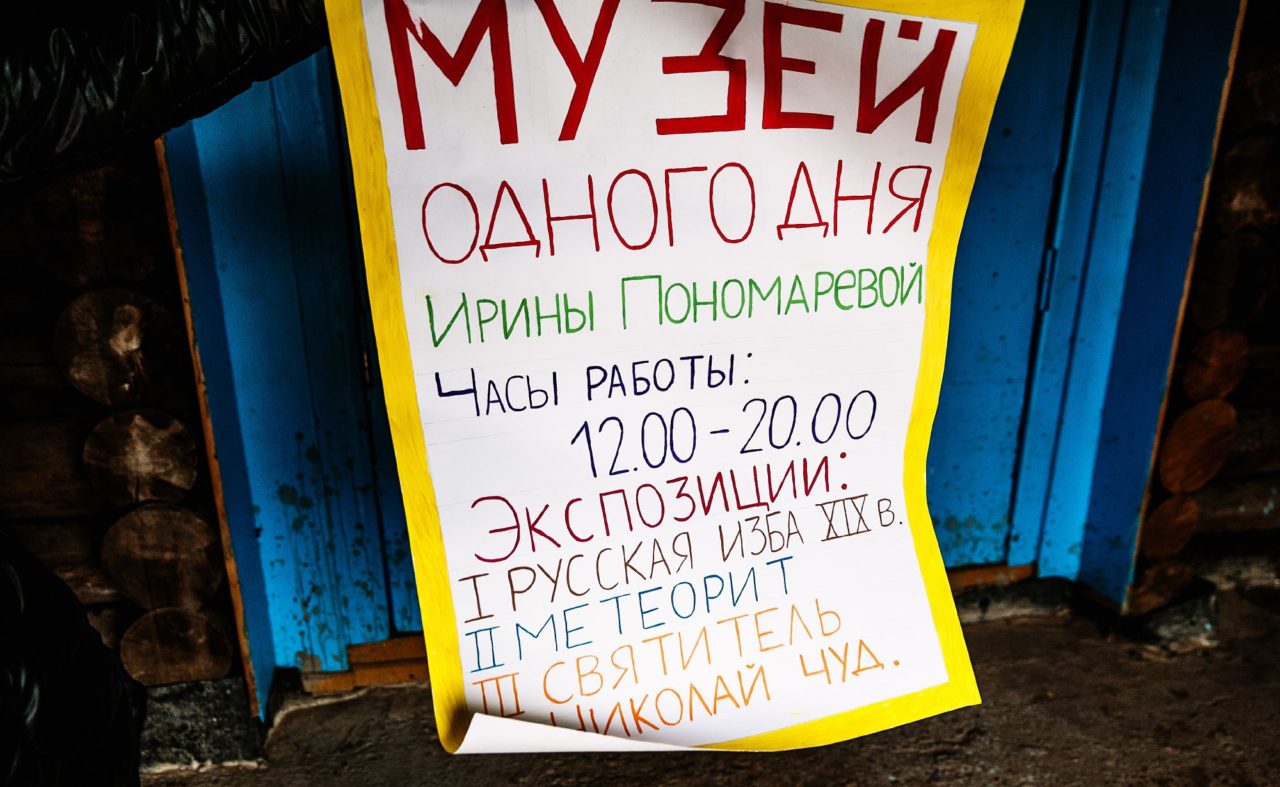 Poster Museum of one day photo: Ivan Kozlov
It turns out that the technician has long been angry with Irina. A few months ago, her grandson, who was carried away by the history of the Okhan meteorite, decided to independently go along the tourist route and got lost in the forest. The grandson was found, but the sediment remained.
Irina sympathizes with the technician, but notices that walking along the route without a guide was so -so. Recently, Irina managed to conclude an agreement with the local travel agency “Gira”, which will oversee the route from the end of November, but so far the main guide is itself.
"We had a civil war, and your meteorite is a meteorite in Africa"We go out onto the porch and observe how dozens of gloomy officers of the FSIN, several harsh women in scarlet flower diadems and some kind of mowing gypsies leave the DC. Against the background of sad October landscapes, this whole company looks slightly grotesque. Gradually, officers, women and gypsies are seated on cars and leave for another village in Aftepati. Among the latter from the recreation center is the head of the 39th colony.
“Oh,” Irina is working on, “I forgot to say to him that I am a candidate for the post of head of the settlement!”
Until this moment, I myself did not suspect this. It turns out that in the camps the election race is in full swing. True, there are only two candidates - the current head of Marina Galanova (she was among women in the diadems) and Irina. Later, Irina will introduce me to her program - this is a serious thirty -page document called “Tourism: a burden or a chance to revive the Tabor rural settlement?”
Irina has even more plans than can fit in the program. One of them is to create a permanent museum and a budget hotel in a dilapidated two -story house, which gapes with empty windows here, on the main square. Previously, there was a collective farm management in the house, but the collective farm went bankrupt, and a Chechen became the owner of the building, who protects it for something and does not allow it to be repaired, and to everyone who encroaches on these ruins, threatens to cut off his head. The previous head of the settlement wanted to sue the owner of the building, but he, according to rumors, promised to drown him in the river, and the head changed his mind.
 Participants in the meeting of the College of the Federal Penitentiary Service of Russia Photo: Ivan Kozlov
We are about to leave, but then a young guy in a hat with the emblem of military intelligence comes up to the porch.
“Kolyan,” he seems to me, and then starts a conversation with Irina. “They smoked here on the porch, but according to the law it is not supposed to.”
After a couple of minutes, Kolyan smokes himself, and objects to Irina's bewilderment:
- I'm a veteran. In war, you can, but here you can’t, or what?
In fact, Kolyan is not quite a veteran. He served in the army, and then an accident, after which he began small problems-he began to forget something, on the contrary, to think out. One way or another, Kolyan is a great guy. He became one of those who vividly responded to Irina's initiative and offered his help in the arrangement of the museum of one day. He helped not only physically, but also creatively - for example, made a dummy of the wall of the Russian stove from a cardboard for the exposure "Folk Bay".
Generally speaking, Irina managed to gather a large group of enthusiasts and assistants. “Good people in the village are full, many want to show themselves from the best side, the main thing is to be where,” she says about this. For example, the director of the House of Culture Arina Pavlovna gave a room for circles under the museum. Baba Rita Fedoseeva, who was 83 years old this fall, appeared in a museum in a national suit and taught everyone to weave carpets on the machine and crocheted. Dmitry Vinogradov made wooden souvenirs. The schedule of Larisa Shilova painted the museum for the painting “The fall of a meteorite in the village of Tabors”. Miniator artist Alena Belousova painted several flat pebbles found on the river. The museum was also helped by many others - photographers, artists, carpenters, drivers, creators of souvenirs ... None of them, of course, specially studied marketing or museum business. Attracting volunteers, Irina reasoned simply: “You know how, for example, to draw - well, draw on a given topic!”
Good people in the village are full, many want to show themselves from the best side, the main thing is that there isTrue, I found almost none of these beautiful people in the village. Someone went to the watch, someone was sick, and, for example, the artist-script became pregnant and fell on the preservation, simultaneously promising to draw several more paintings for the future museum. Baba Rita Fedoseeva was waiting for us to visit, but when she saw me, she was stuck so and moved that she could not say a word.
Holy places
Having looked at the jeeps of the FSIN officers, Irina and I buy products for tea in the store and go to the local priest - in a modest wooden temple, built on the site of the one that was blown up for the sake of the reservoir. Father Andrei Dementyev takes place in the camps for a short internship and will soon leave for the city, but for now it helps the Museum of the meteorite than he can. He became one of the first to replenish the historical exposition - handed Irina to the church book and objects of the utensils. And when the museum of one day was evicted from the House of Culture, sheltered it in the temple territory. So far, most of the exhibits are piled in the garage - in the future, Father Andrei plans to clear a couple of wooden buildings at the temple for them.
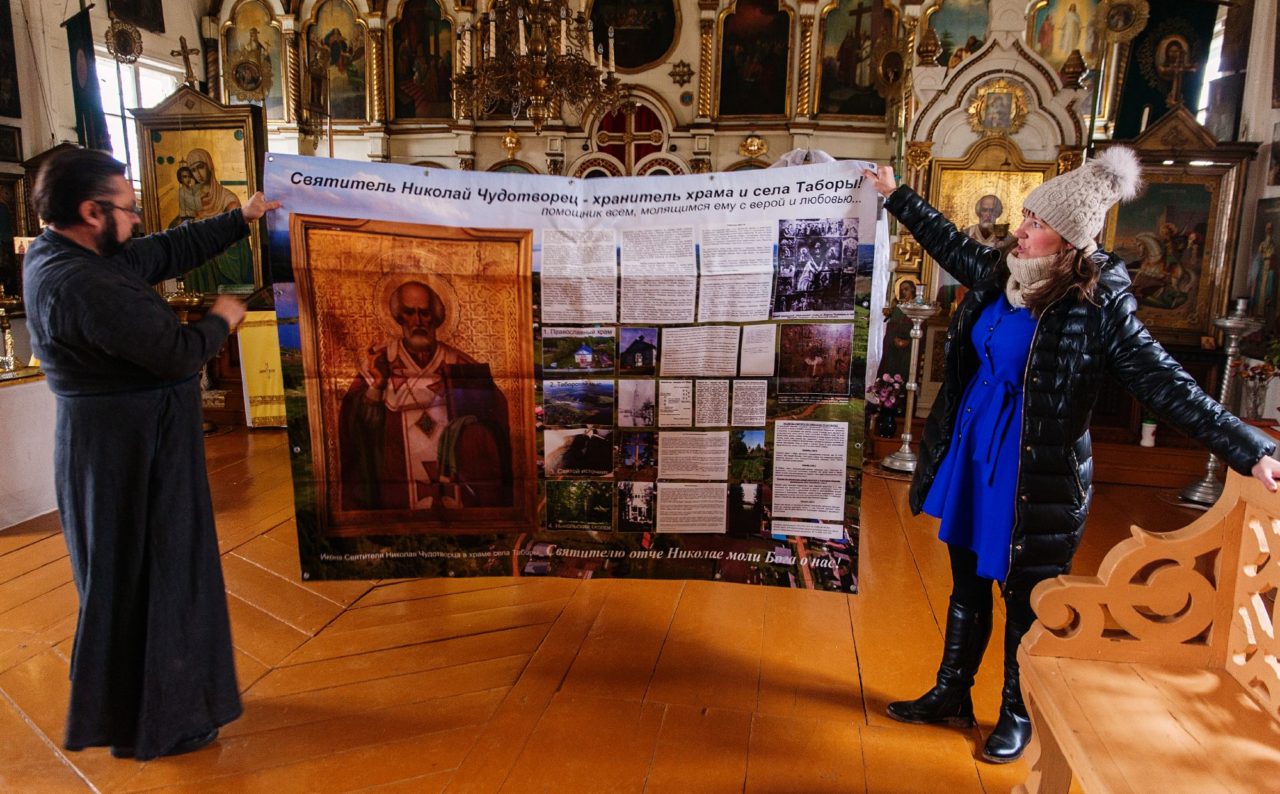 Father Andrei Dementyev and Irina Ponomareva in the temple photo: Ivan Kozlov
While the sleepy father is busy in a small kitchen, Irina conducts me a tour of the temple. Baptized in front of the icons, then kisses the image of the Virgin and Nikolai the Wonderworker, simultaneously explaining:
- Nikolai the Wonderworker is considered the keeper of the village: both the holy places are devoted to him, and the places of the fall of the meteorite are also associated with him. Ascending prayer to him, people were healed from mental illness and infertility.
I do not resist the question of what, nevertheless, was primary for her-a mute or religious theme.
“Due to the fact that we have a lot of unusual phenomena in our camps, the meteorite drop influenced the development of holy places,” says Irina, while we drink tea. “Ludges thought that the fall is an indication of the holiness of the village.” And they began to be healed from diseases.
“People attributed healing power to the meteorite, but they still pray to God when they come to one or another wonderful place,” Father Andrei picks up, “that is, a meteorite began to turn to God more likely.
- Some people are unbelievers, and in order not to scare them away, we focus on the fact that this is a route to the places of falling a meteorite. But the holy places are included there, ”Irina explains.
We drink tea for some time, Irina shares with the priest the idea of sanctify one of the surrounding sources: “Birch trees grow there, and in the spring the water takes the taste of birch juice.”
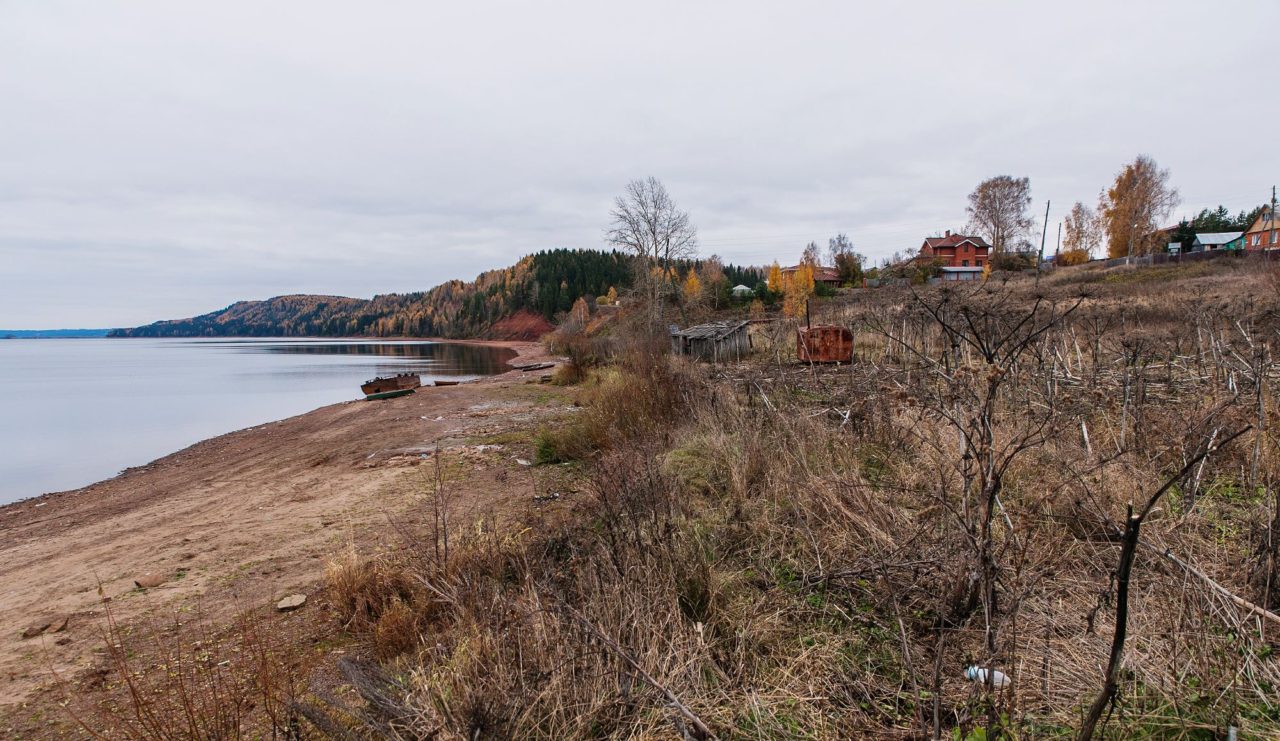 Village Tabory photo: Ivan Kozlov
- The museum can be made in the yard, partially in the open air. Find only assistants to scatter everything there. And the extension at the repair stage, until we swing, - the priest thinks, while we expect Irina, who before leaving is again applied to the images.
In the end, we hang banners and paintings in the church grounds, which at one time was decorated with a weekend Museum. Irina says that the presentation of the museum in a new place will happen in a week. To my question, when the exhibition opens for visitors, she cheerfully indicates the just hanged banners:
- Already opened, as you see!
Poisonous enemy
From the church we go down to the cape - this is the most beautiful place in the whole village. If you climb the mountain, then distant forests will resemble the head of a crocodile, and Cape - its tail. It was here that the destroyed temple once stood.
Now there is only a memorable cross and a beach, which is pretty overgrown with hogweed. I was just thinking about this when I looked out the bus window on the way to the Tabers: if you take up the transformations in the Russian outback, then there will certainly be a hillock among your enemies. Irina is also ready to accept this battle: she is in the company of volunteers already regularly holds the “Clean Coast” action here, collecting garbage and tearing off especially large bushes. But this, of course, is a drop in the sea - she needs at least a small resource to buy pesticides and defeat the hogweed finally.
If you take up the transformations in the outback, then among your enemies there will certainly be a hoggerIn the time remaining to the bus, Irina shows me the village. Perhaps his last historical attraction is the school building. An impressive brick building is built in the form of the letter “E”-supposedly, in honor of the fact that Empress Catherine once passed near these places. During the Civil War, a hospital was in the building, then again the school, and then, already in our days, some official bought it, built a cottage for himself and surpassed it with an impenetrable high fence.
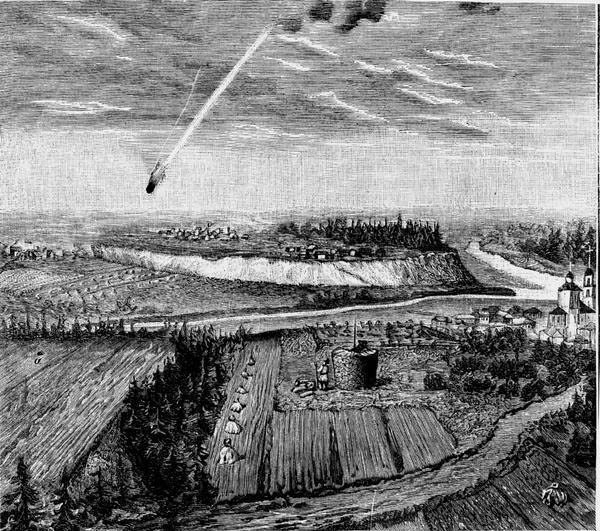 The fall of the meteorite in tablets. A-a place of falling stone in 15-20 pounds, seen by a peasant Bushuyev with bread laying
Figure: N. Zemtsova
Irina will become the head of the Taborsky rural settlement and will definitely talk to the owner of the cottage so that he removes the fence or at least spend on the lattice. She never says: “If I become” or “When I become.” She simply says: "I will become." The elections of the head of the settlement are scheduled for the eighth of November on the eighth-which means that Irina has almost two weeks to get around a hundred or two Taborsky courtyards, chat with residents and place them to their place. These bypasses are one of its competitive advantages, because the current head of the settlement, judging by the reviews of citizens, is not engaged in such things. Formally, this is not necessary - after all, not residents will choose the chapter, but 12 previously elected deputies. But Irina is sure: ordinary hijes will certainly affect them. In the case of a large city, this would have sounded, to put it mildly, naive, but in a village where 600 people live by force, this approach is not devoid of meaning. The hopes that the system is able to work correctly and fairly, and reality can be changed for the better is still alive here. Thanks to Irina, including.