
Translated material
Another putty for another election
Montenegro announced the disruption of attempts to a coup with the participation of pro -Russian forces. How the Patrushev’s visit and the Congress of Night Wolves are connected with the mysterious Balkan putsch with the Cossacks
In Serbia, on November 2, the military exercises "Slavic Brotherhood-2016" began. During the week, paratroopers from Russia, Serbia and Belarus will work out combat tactical interaction in landing, intelligence operations, and the assault on the terrorist base. 212 Russian troops, 56 Belarusians and 450 Serbs participate in the exercises.
It seems to be nothing special. You never know how military exercises have been held recently. But two circumstances give this seemingly an ordinary event by a far from an extraordinary meaning.
First. At the same time, military exercises are held in neighboring Montenegro. NATO. 680 soldiers and officers are involved in them. Interestingly, Austria, Finland, Israel, Bosnia and Herzegovin, which are not included in NATO, were sent to the Balkan country of their troops. The tasks of Montenegrin exercises are, so to speak, a more civilian nature - the elimination of the consequences of floods, other natural disasters and chemical infection of the area.
Second. NATO exercises and the “Slavic Brotherhood” are held at a time when Montenegro, like Serbia, is still very excited by recent events, which, due to the omissions of the official authorities and too contradictory information in the press have grown with numerous versions.
The failed coup is overgrown with new details
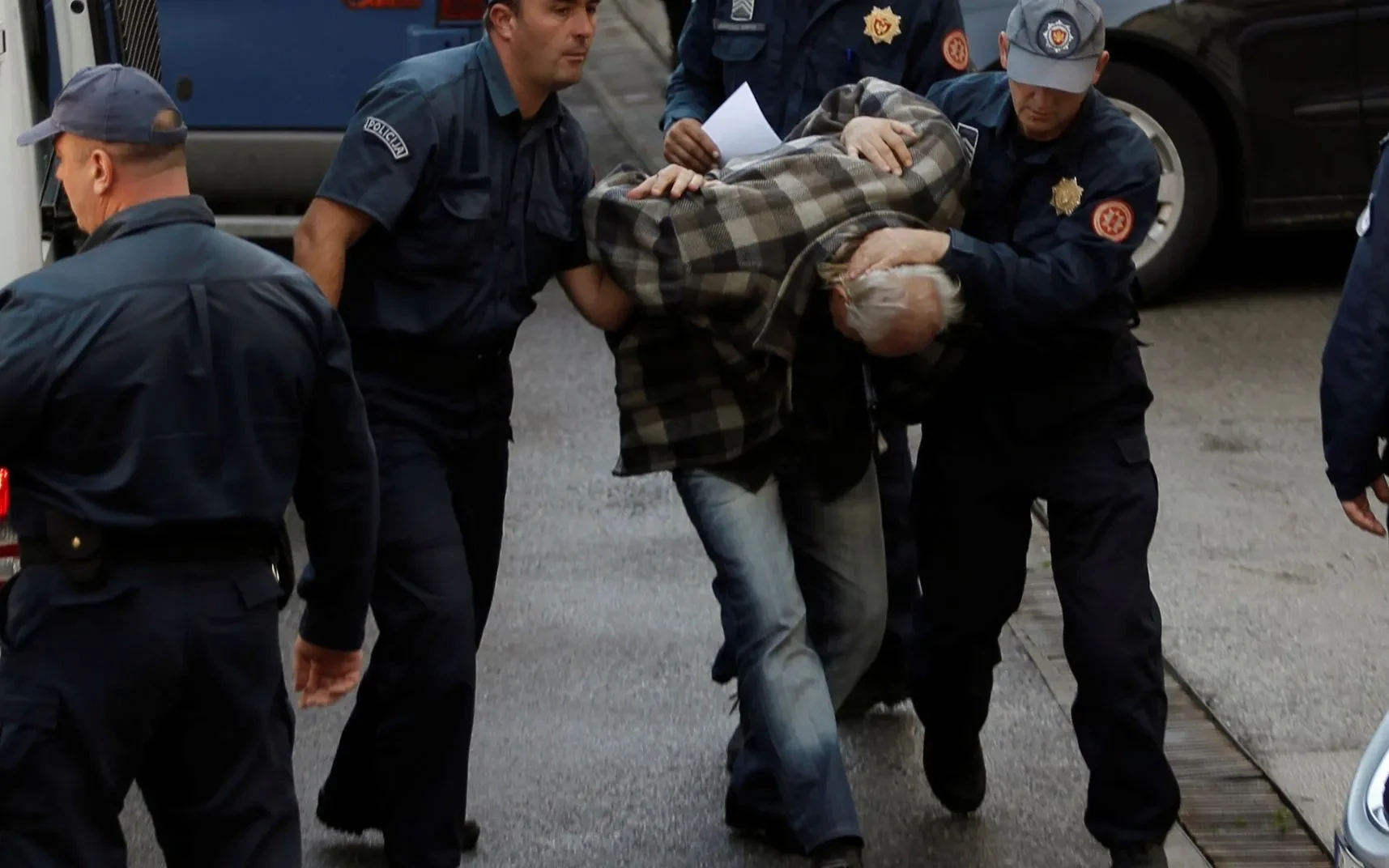
On the eve of the parliamentary elections, the Montenegro police detained 20 conspirators who allegedly intended to seize the building of the republican parliament, block the barracks of local special forces, arrange mass riots with shooting and overthrow legal power. All the failed putschists turned out to be citizens of neighboring Serbia, and the former head of the Serbian gendarmerie Bratislav Dikich, who created the pro -Russian Patriotic Front of Serbia after dismissal from the service, stood them.
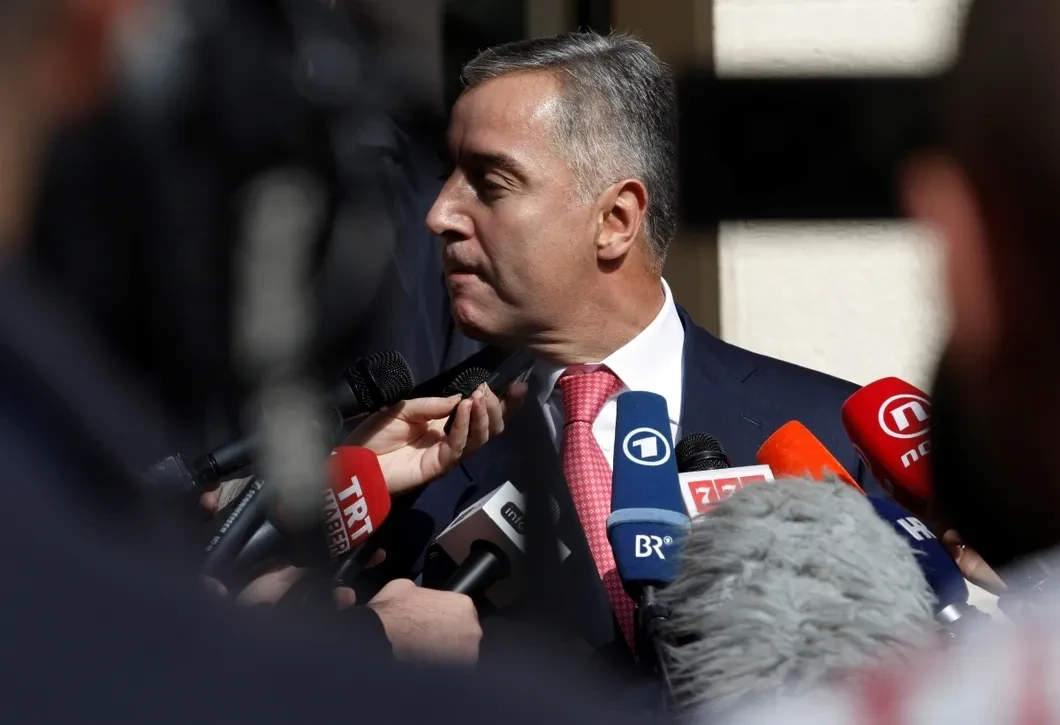
The pre-election situation in Montenegro was not in favor of the ruling Democratic Party of Socialists (DPS), led by a permanent leader and the current Prime Minister Milo Dzhukanovich. For all forecasts, the traffic police received a majority of votes, but not absolute to form a government alone. For this reason, during the election campaign, Dzhukanovich and other party functionaries focused on the fact that their main opponent - the “democratic front” - is funded from Moscow and intends to “in the interests of the Kremlin” to disrupt the entry of Montenegro into NATO.
The exposure of the conspiracy, in which, as the socialists immediately hinted, the participation of the Demcravta and the Russian Track, could become a good gift on the day of voting for Dzhukanovich and his party in order to receive additional votes of voters. This, expressing doubts about the real threat of the coup, the opposition said. In their opinion, power itself stood behind the organization of demonstrative detentions. Supporters of this idea demand not to declare the final results of the elections until good evidence is presented that the coup was really prepared.
Meanwhile, the Belgrade newspaper BLIC, citing its own informed sources, reported that the Serbian ex-gazandarm Dikich allegedly hired the Montenegrin authorities to "play a terrorist." The amount of the fee is 100 thousand euros. At the time of the detention, the retired general openly lived in one of the hotels of Podgorica, there was no weapon with him. Later, through a lawyer, the alleged head of the coup said that during the arrest, the police threw the key to the cache with weapons into his pocket.
Next, the representative of the Montenegrin prosecutor’s office took the word. In the action, according to him, five armed groups with a total number of 60 people were involved. Along with the capture of the parliament and the organization of riots, it was supposed to arrest a number of state leaders, including Dzhukanovich. All the militants could not be detained - they disappeared abroad.
This prosecutor’s statements caused another skeptical doubts - how could 60 terrorists capture the parliament building, neutralize special forces and arrest Montenegro leaders? But the unexpected support of the version of the official authorities came from the Prime Minister of Serbia Alexander Vucic. He told reporters that the country's law enforcement agencies identified a group of persons who had been following the head of the Montenegrin government for a long time, had significant financial resources and special equipment. The collected information was transmitted to the third party, which Vuchich, like the national affiliation of people who followed Dzhukanovich, referring to the law, refused to name.
Serbs know something about the "Russian trace", but are in no hurry to open all cards
Further events spun at increasing speed. The press announced the expulsion of several Russian citizens from Serbia. Nikolai Patrushev, Secretary of the Council of People's Commissars of Russia, flew to Belgrade in order to hush up the participation of Moscow in an attempt by the Montenegrin coup. The Serbian Security Service discovered near the house, where the prime minister, a car stuffed with weapons often spends its free time, and announced the preparatory attempt on Vuchich.
As for the deportation of Russians, the information was not confirmed by either the official authorities of Serbia or the Russian embassy in Belgrade. Although it was unlikely that they would have been advertised by this, if even the expulsion actually took place.
Did Patrushev come to extinguish the fire until he flared up? It is possible.
The ruling Serbian progressive party of Vucicha, of course, took the course on European integration and plans to bring the country to the European Union, but this will take years of negotiation approvals with Eurobondia. Therefore, it is quite reasonable to maintain for this period the existing political and economic ties with Russia, which do not need loud scandals. In addition, this gives a good lever of pressure on Brussels to accelerate the process of receiving in the EU.
Did Patrushev come to extinguish the fire until he flared up? It is possible. Moreover, the reason for the official visit - to discuss the working moments of preparing a document of cooperation in the field of security - is not very convincing.
Serbia remains for the Kremlin almost the only country in the Balkans, where the opportunity is still preserved, given the presence of dozens of pro -Russian parties and movements, to influence non -domestic political processes. And Vuchich’s hints of Russian intervention in the Montenegrin affairs (as local and international observers clearly appreciated them) threatened the presentation of specific facts.
The fact that the Serbian authorities have them does not cause doubts. As the political reason is clear that Belgrade did not publicly voice them now - it is better to hold a trump card for a different crisis case. After all, it was about the "Russian trace" in the neighboring Montenegro, and if it comes to the turn to Serbia itself?
What evidence can the Serbs have?
"Balkan Cossacks", the Union of Volunteers of Donbass, Serbian radical nationalists - links of one chain?
On September 11, in the Chernogorsk Kotor, the creation of the “Balkan Cossack Army” (BCV) was announced. This decision was made by 26 delegates of the “Cossack centers” from Serbia, the Republic of Serbian in Bosnia and Herzegovin, Bulgaria, Macedonia, Montenegro and Greece. Each delegate assured that at least 50 Cossacks represent. It is symptomatic that bikers from the Night Wolves club participated in the ceremony, which, apparently, turned out to be in the right place at the right time.
But this is not the main thing. Viktor Platin was elected by the Supreme Ataman of the BCV - the figure is more than interesting. The former affiliate officer fought in all famous regional conflicts of the 90s-from Transnistria and Abkhazia to Bosnia, where, by the way, he commanded the so-called Cossack battalion. Subsequently, Platin generously shared his memoirs about the “exploits” of his detachment, which, according to him, destroyed more than a dozen Bosnian Muslims.
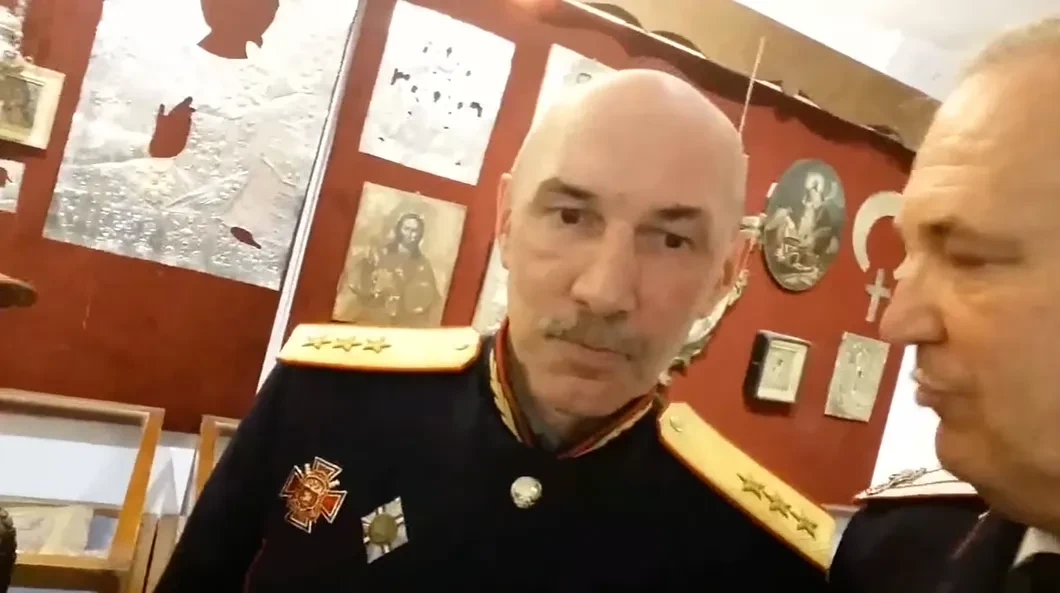
In 2013, Platin was elected first deputy chieftain of the Moscow City Cossack Society. The next year, the pipe called the Cossack colonel to the Donbass - he became the deputy commander of the border troops of the self -proclaimed LPR.
In general, the activity of Platin is multifaceted. That he, as the chairman of the Slavic Spirituality charity foundation, together with LLC Officers of Russia, organizes military-patriotic games in the suburbs for adolescents, then the ChOP subordinate to him is beaten by Moscow activists who protested against the development of the Friendship Park. Finally, Platines are the Commissioner of the Union of Volunteers of Donbass (SDD) in the Balkans.
The newly -made ataman of the “Balkan Cossacks” sent their congratulations on the wishes of success in the activities of the heads of the SDD Alexander Borodai and Andrei Pinchuk. The main direction of this activity was immediately indicated at the rally carried out after the Cossack circle, where the “Cossacks” vowed to fight against NATO and Western influence in the Balkans.
Another aspect. In eastern Ukraine, many volunteer Serbs fought on the side of the militias. Their number, according to the testimony of one of the Serbian volunteers, who served in the elite unit of the special forces of the Ministry of Internal Affairs of Serbia, could reach up to a hundred. Some, despite the criminal prosecution under the law on mercenaries, has already returned to his homeland. Of course, they far do not share the policy of the current authorities into rapprochement with the EU and NATO, believing that official Belgrade thereby betrayed national interests.
One such returner from the Donbass - Alexander Sindelich, - known as extremely radical nationalist beliefs, according to the Montenegro Prosecutor's Office, allegedly actively participated in the preparation of the coup. He continued to communicate with representatives of the self -proclaimed DPR and LPR and after returning to Serbia, recruited volunteers to the ranks of the Donbass militias. He managed to hide from Podgorian. Montenegrin law enforcement officers put Sindelich on the international wanted list.
PS
Whether the plans of the pro -Russian forces of Serbia were real to destabilize the situation in neighboring Montenegro, the investigation will show. Although it is doubtful that its results regarding the possible involvement of Russian citizens will be widely publicized.
In any case, the goal (regardless of whether it was put down on its own initiative or at someone’s instructions from the outside)-to change the vector of Montenegrin policy-broke. Moreover, Milo Dzhukanovich, who became the main stimulus for the opposition, left the prime minister, giving way to his first Marovich Dushko, who had headed the country's national security agency in the past.
Local observers consider such a castling strong, since Markovich, in their opinion, owns all confidential information both on his party colleagues and opposition leaders. He had already been able to call him “Putin from Moikovats” (a town in the north of Montenegro, from where Markovich came from), hinting that he would not hesitate to remove any enemy from his road.