
Translated material
Contact environment
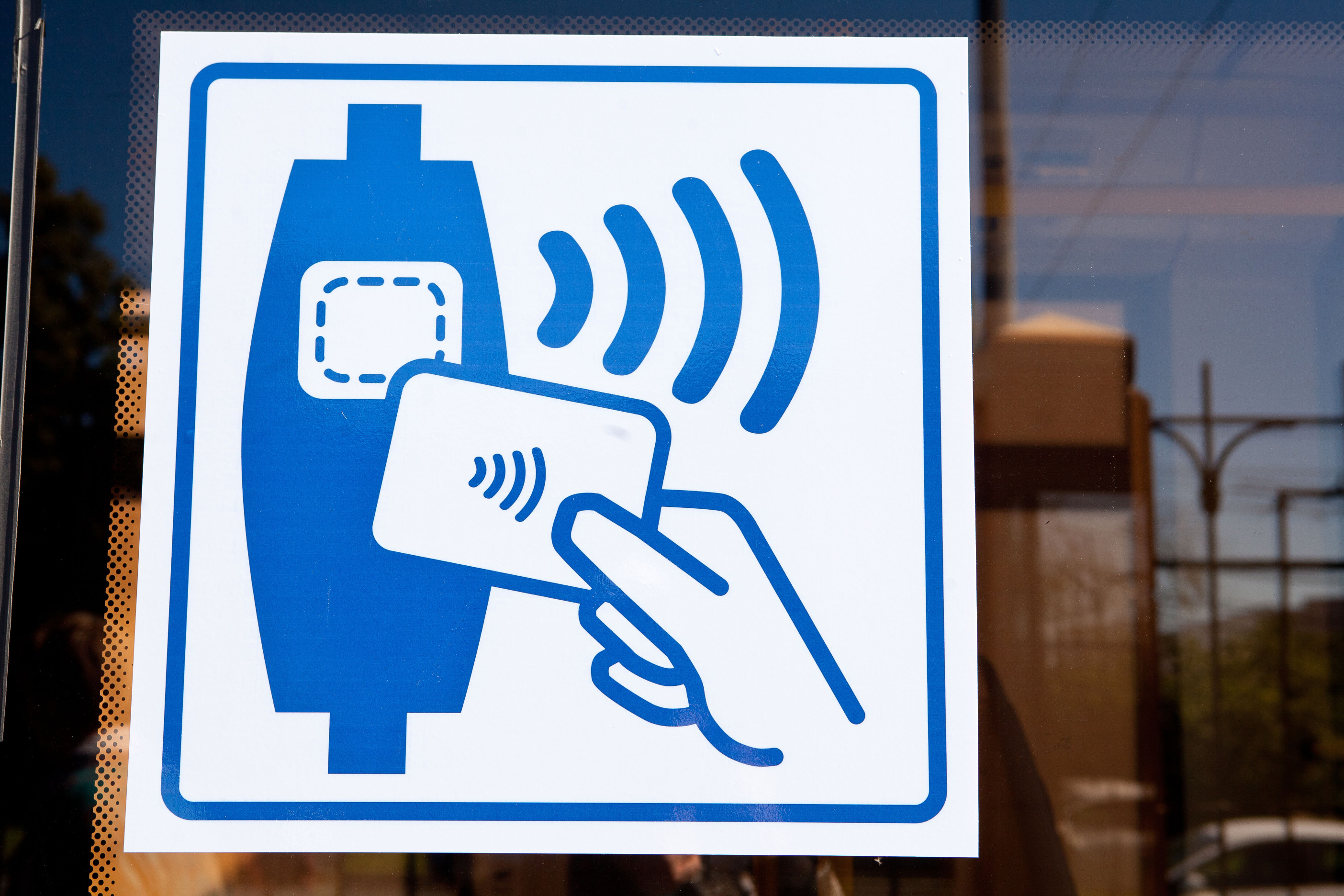
This year, smartphones will finally replace bank cards for Russians. One by one, banks announce the support of Apple Pay and Samsung Pay services, which allow you to pay for purchases by touching the phone wherever Visa and MasterCard contactless cards are accepted. The Rocketbank, which became one of the first partners of Apple in Russia, asked the mediazone to figure out how safe the contactless payments were.
Contactless payment is already here, and will remain for a long time
Several years ago, banks began to add special wireless chips to their payment cards - approximately as in tickets in the metro and office checks, only more protected. MasterCard is called PayPass, Visa has Paywave. Such cards do not have to be inserted into the cash terminal - just attach it. The PIN code also does not need to be introduced. It turns out faster than paying cash, not to mention traditional credit cards.
The wallet on the phone is the next logical step
In modern smartphones, there is usually a NFC chip. One of its functions is to imitate contactless payment cards. This gives two advantages: firstly, the phone usually get faster than a wallet with a card; Secondly, to write off money, you must first unlock it with a PIN code or, for example, a fingerprint-this is an additional layer of protection. There are such phones wherever PayWave or PayPass credit card is accepted.
Not every card can be transferred to the phone
If the card could simply be copying, it would open the widest scope for fraud. Instead, the cards are connected through the application of the payment system if there is an appropriate agreement between it and your bank. Financial information enters the phone in encrypted form via the Internet.
Each family of phones has its own payment system
Apple Pay works with iPhone phones, starting with the sixth model, as well as with the Apple Watch clock. Samsung Pay is compatible with most Samsung smartphones that have been released over the past two to three years. With the rest of the Android phones, the situation is twofold: the official Android Pay system has not yet reached us, but several banks and retail chains have released their own wallet applications that operate as prepaid cards. This is not as convenient as the binding of its usual credit card, but allows you to try out the technology while Google catch up with competitors, it is enough to have a CARARITPHTPHC on Android 4.4 or new.
Banks try to transfer everyone to contactless plastic
You will have a contactless card sooner or later. Over time, banks begin to reassign expired cards immediately with a radio chip. This happened wherever Mastercard and Visa began to actively promote technology. So it is better to deal with all the features of the system in advance in order to avoid unpleasant surprises.
Contactless payments displace cash
Studies have shown that owners of contactless cards spend on average 25% more. It’s not about the absolute increase in expenses, but about the fact that plastic is used where they used to leave cash: in a cafe, at gas stations, in transport - wherever I want to pay faster. Banks, of course, receive a commission from sellers for these operations.
Cards work only at very short distances
Contactly payments are possible only at a very small distance - usually up to four centimeters. In laboratory conditions, it was possible to raise a range of to 80 centimeters using modified transmitters, but we could not find information about their successful use in the real situation. Radio chips are all the more unsuitable for surveillance-this legend arose due to attempts by one bank to add an antenna like an “anti-Voor” to the card so that the partner stores can record the client’s entrance and output.
You can steal money from the card, but it is pointless
Four centimeters is enough to write off money in the crowd, but this will be a crime bordering on idiocy. To withdraw money, you need a cash terminal connected to a legal entity. Of course, with proper determination, you can get hold of someone else's account, quickly wash and withdraw money, but the game is not worth the candle: purchases on a contactless interface are limited to a thousand rubles, more to prepare the scam will take. It’s easier to steal a card.
Money is not the only value that the contactless card stores
Depending on the settings selected by the bank, it can inform anyone who wants their number and shelf life - to count them, there is enough ordinary phone with NFC. As a rule, for purchases on the Internet you still need the name of the owner and the CVC code, but not always . So the ideal script is to store the card in a shielded wallet or case, and get a phone with contactless payment for small purchases.
Physically the phone is safer card
In physical terms, the phone is the most protected option. It accepts signals from cash terminals only when turned on and unlocked. In the case of loss or theft, an electronic wallet can be canceled as a regular card, and you will have much more time to a call to the bank, if you use memory encryption, locking or fingerprint, and a remote dump function. There is all this in modern smartphones.
The phone is easier to hack, but only in theory
In the program plan, Apple Pay and Samsung Pay are protected at the same level as non -contact plastic cards: in compatible phones, the chips are installed from the operating system for storage of payment data. Android Pay and analogues instead of a chip use cloud services. In both cases, if the hackers manage to intercept something (and this is extremely unlikely), they will not receive useful data thanks to another layer of protection.
Tokenization makes hacking almost meaningless
In September, Visa and MasterCard launched a tokenization service in Russia - replacements of real financial data with disposable ones. Thanks to him, electronic wallets of smartphones simply do not know the number of your credit card. Instead, they store a limited supply of such tokens and periodically receive new ones from the bank. Even if the token manages to intercept, the bank will block the account as soon as it sees the re -use of the same number.
There are several simple tips to protect yourself
Get a shielded case or wallet for a contactless map. Connect it to the payment system of the smartphone and do not get a wallet for small purchases. The phone must be encrypted and blocked at least a PIN code. Do not make Jailbreak or Root (if you don’t know what it is about, then everything is in order), download the applications only from the official store and install all safety updates. From time to time, look at the account of the account and do not panic: basically these tips are needed only for your calm. Damage from fraud with contactless payment funds is extremely small. British banks, for example, report 0.02% of the total expenses; Australian - about 0.002%.
You can try contactless payment right now
Try the Rocketbank: install the application, the courier brings the card - and you are in business. The Rocket supports Apple Pay (payments with Android Smartphones on the way). He is like an ordinary bank: with foreign exchange bills, transfers, withdrawal at ATMs without commissions, extracts, cashback - but without queues and calls. All functions and round -the -clock support are available from a mobile application - and no service fee.