
Translated material
Export democracy
The confrontation of Hillary Clinton and Donald Trump was discussed in Russian media and social networks almost more active than the Duma elections in September. All because the election race in America reminds the Russians the hottest in Russian history of the 1996 campaign, when Yeltsin and Zyuganov fought for the presidential chair, and it came to the second round. Clinton and Trump have the same thing - two candidates who are going to the nostril in the nostril, galloping ratings, constant scandals, information leaks and mutual accusations. Today, Samizdat “Batenka, you transformer” tells the story of how three American political strategists lost their work in their homeland, came to Russia and led Boris Yeltsin to win the presidential election.
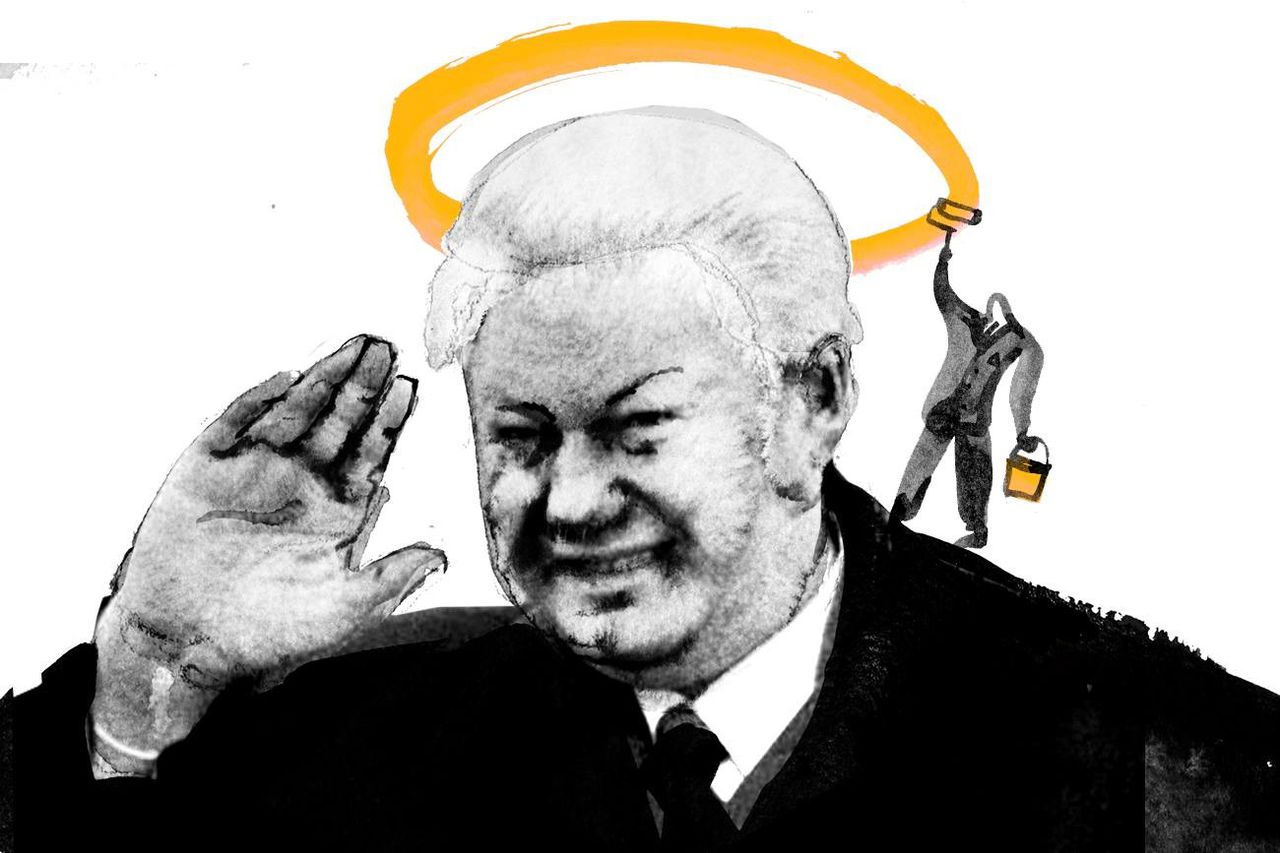
The biggest secret
On February’s seventh, on February’s seventh, when the clock in the office of the Deputy Prime Minister of the Russian Federation Oleg Soskovets was shown exactly 15:00, a nice dark-haired man in a suit entered him. Having greeted, he sat in front of the official’s desktop, over whom a portrait of the current president of Russia Boris Yeltsin hung. The head of state looked into a power and at the same time with a sad look into the distance, probably thinking about the difficult life of the young country controlled by him.
For almost an hour, the official and the guest was discussed by the future elections of the US President and the possibility of re -election to this post by Bill Clinton, the then head of state. An attempt to understand the intricacies of American politics, as always, did not lead to anything. The stranger took out the folder and handed it to the nipple. Feeling to the content, the official asked:
- What are our chances?
“You know, if we were in the USA, we would advise a candidate with such a rating to do something else,” the guest answered.
On the table near the Deputy Prime Minister lay a calendar, in which all the days remaining until the sixteenth of June were emphasized-the dates of the president of Russia.
“We have very little time,” said the head of the election headquarters who decided to run for the second term of Yeltsin, Soskovets, pointing to the calendar. - You are accepted. I will inform the president that we have Americans. If a month before the end of the election campaign you will be one hundred percent sure that we will lose, warn us, and the elections will be canceled.
The state of affairs in the starting election race was very deplorable for Yeltsin. His rating was six percent.
And judging by the polls, the leading candidate from the Communist Party Gennady Zyuganov was a serious threat not only for Yeltsin, but for the entire “young Russian democracy”. The war in Chechnya, failure economic reforms, mass poverty, rampant corruption and banditry overshadowed the faith of citizens into a bright capitalist tomorrow and the president, who promised that tomorrow it would be just that.
The mysterious man in the suit was called Richard Dreser. The co -owner of the American Consulting Company Dresner & Wickers arrived in Moscow for negotiations on the possible participation of the current president of Russia in the election campaign. Also, the proposal was received by two of his other colleagues from the USA - the information analyst Joe Shumaite and George Gorton, an experienced political consultant, who became famous for his participation in the Watergate scandal and the presidential campaign in Panama, as well as an extravagant desire for spiritual development - once he lived with a Mexican shaman for a month.
February February, Joe Schumyit, sat surrounded by a huge number of boxes, where he added tons of graphs and reports. Alone, he finished the memorial service for the failed campaign headquarters of Pete Wilson, the current governor of California, who decided to become a candidate from the Republican Party in the presidential election. Wilson's departure from the election race meant that Shoyite, like his colleague George Gorton, became the most successful political consultant of America, who was left without work during the main elections in the country.
There was a call. Noisy is reluctant to break away from documents and boxes to pick up the phone. Fred Lowell called, a lawyer from San Francisco, known for his ties at the top of the Republican Party. He represented the interests of Felix Brianin, who emigrated in the seventies of the USSR an American businessman, to whom the unnamed Russian entrepreneur (suggested that it was Boris Berezovsky or Anatoly Chubais) to “find some Americans” for consultations about the election campaign Boris Yeltsin. Lowell knew that after Wilson’s departure from the presidential race, Joe Shumayite and George Gorton had long worked with the Governor of California, and may agree to this adventure. George and Joe first did not want to go to Russia, but contacted Richard Dressner’s failed colleague, and a week later he was in Moscow.
“You are our main secret,” the businessman Brianin Western consultants warned. - If the Communists learn about your existence, they will declare us with American puppets. We are at great risk.
To ensure secrecy, the contract was concluded between the International Industrial Bancorp.C. Of San Francisco ”, Brininin, and Dresner & Wickers, a retinner consulting company.
Throughout the election race, American consultants had to be and work in Russia. In return, they were supposed to be a fee of $ 250,000 for each, as well as “unlimited expenses” for the election campaign.
- Our fee was ridiculous. But we understood all the historical importance of our mission and therefore agreed to work almost for nothing, ”Dresner recalled. He and the noise instantly agreed to accept the proposal. Gorton was on vacation at Bali and sent the fax to the Dresner: “I'm in the game !!!!!”
Dirty tricks
Arriving in Moscow, Gordon and Shumite joined the Dresner, and on March 1, 1996, a team of American consultants began their work. They were settled in the "President-Hotel", where the election headquarters of Boris Yeltsin was located. The team of American political strategists was supposed to work in an atmosphere of strict secrecy and the hotel without the need not to leave. They were also recommended not to meet with other staff of the headquarters and keep in mind that the phones could be listened to. The Americans successfully hid the true reason for their appearance in Russia, introducing themselves to the contacts with the uninitiated "managers of the company producing flat TVs", which studied the possibility of entering the Russian market. According to Shoyite, this legend lasted surprisingly long, because in working visas it was written that they are employees of the Presidential Administration.
When Gorton, Dreznere and Shoyite began to work, Oleg Soskovets had already left the post of head of the Yeltsin’s election headquarters, and his daughter Tatyana Dyachenko became the chief of the campaign of the current president.
“Tanya is the only person who can convey all the information to me,” Yeltsin justified his decision in the book “Presidential Marathon” . “They will tell her what they don’t say in my eyes.” And she is an honest person, without bureaucratic complexes, will not hide anything.
- I am included in all processes. I am everywhere, ”Dyachenko commented on her appointment.
The election headquarters was held by four floors of the President-Hotel. At the eleventh, in number 1119 there was Dyachenko’s office, in 1120 there was an office of American consultants, equipped with the forces of their assistants - Brianin Alan and a young specialist in PR and the illegitimate son of Gorton, Stephen Moore. Three political strategists also divided two secretaries, translator and general fax.
- We came to Moscow with our methods of studying public opinion and organizing negative advertising, with the ability to work on the image and behavior of a candidate who would return him the sympathy of the masses. They simply did not know much of the organization of the election struggle in Russia, ”Gorton recalled.
At the first meeting of the Americans with Tatyana Dyachenko, according to Gorton, she immediately admitted: “I do not understand anything in this business. I don't know what to ask. " Tatyana seemed to him a young shy woman who was frightened by "dirty American tricks."
“But it's dishonest!” - Lorton recalled her reaction to the proposal to use the so -called “teams of Pravda” against Zyuganov - a pre -prepared mass that appears at the events of the enemy candidate, shouts compromising slogans and generates the negative in relation to him.
“Tatyana, it is better to use dirty American tricks than bullets and guns used here before,” the consultant answered.
For all the time in Russia, political technologists from the United States have never met Yeltsin. They sent their ideas and recommendations in the form of notes.
- The translation was our main problem. All days we tried to explain that we want to convey to Yeltsin, ”Dresner recalled.
According to the consultants, one of the obstacles that they encountered while working at the president’s election headquarters was a low level of sociological research. The Yeltsin team believed that there are enough surveys published in the newspapers to determine the strategy.
-The operators of the focus groups adored allegorical questions and asked the following literally: "If Yeltsin was a tree, what kind of tree would it be?" - said Dreser. - We needed to know what specific steps the current president should be taken in order to enlist the support of voters, but for this critical goal, the existing research was completely unsuitable.
The results of the first surveys conducted by consultants from the United States showed that the attitude of Russians to Yeltsin was extremely negative.
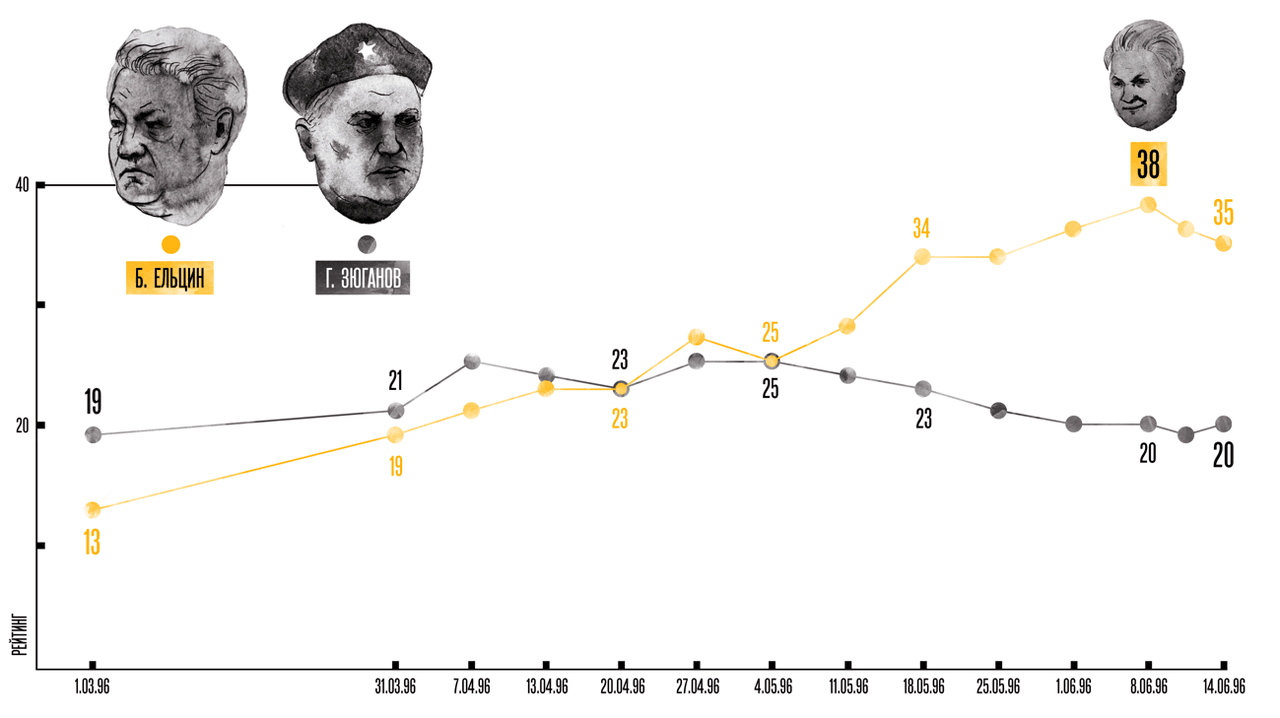
Sixty percent of the electorate considered the president to be corrupt, more than sixty -five accused him of the collapse of the economy.
“Voters do not approve of Yeltsin’s work, do not think that the situation will change for the better, and prefer the Communists,” consultants reported in one of the first official notes. - There is only one very simple victory strategy: the first is to become the only alternative to the Communists; The second is to convince people that the Communists should be stopped at all costs.
According to American political technologists, the idea to build an election campaign at the confrontation of the “red threat” met resistance at the headquarters - Dyachenko said that at a time when communism is being revived in Europe, and in Russia sympathy for Stalin is growing, this is a big mistake.
The so -called “image of the king” became a serious problem that excited the Americans from the very beginning of their work in the Yeltsin team. According to Gorton, the advisers responsible for the image of the president considered it necessary to portray the head of state with a strong, formidable and severe monarch. The consultants were confident in the erroneousness of this path. In their opinion, Yeltsin had to appear before the citizens in the image of the “father of the nation” - a strict, but good and caring leader. In order to correct the image, the Americans invited Yeltsin to act more often in election rollers and smile, as well as actively meet with the Russians.
“Tatyana immediately told us that Yeltsin was afraid to be supervised,” Gorton recalled.
This prompted consultants to offer the use of the so -called “support groups” - a mass of mass and creative groups that arrive at the place of event with the participation of a candidate a couple of hours before his appearance and create a friendly atmosphere.American Dad
In early April, Yeltsin was preparing to make a speech to voters. In nine points, the American team formulated the main ideas of his election program. The president had to appear before citizens an active and positive leader who sincerely care about his country. On the advice of consultants, Yeltsin had to smile a lot and meet in fifteen minutes. Yeltsin spoke for an hour and looked too harsh.
According to the Americans, to prove their case, they gathered a focus group of forty people and invited Dyachenko and several other people from the headquarters as observers. Consultants from the United States used modern “perception analyzers” to obtain data-devices by which participants in the focus group report their reaction to the subject of research, and the results are recorded in the form of graphs. The subjects watched Yeltsin's performance. The result was shocked by the presidential assistants-whenever members of the focus group saw the harsh, hostile face of Tsar Boris, graphs flew down at a crazy speed. The same result was when Yeltsin promised to improve people's lives.
“The analyzer showed that Yeltsin should avoid empty promises,” Schuyite summed up. - The country simply did not believe him.
- Science won again that day. We showed that we were right from the very beginning, ”Dreser recalled.
Since then, the influence of the American team, according to its members, has increased, and the confrontation of the Communists has become the basis of the election campaign. The consultants later decided to adjust the direction. With the help of additional studies with the involvement of respondents from the deep province, the Americans, together with the Russian sociologist Alexei Levinson, realized that the most fear of Russian voters was a civil war.
“Many people did not like the president, but they liked the war even less,” Shudyit recalled.Yeltsin did not take a serious participation in his own election campaign, and in order to activate the president, the Americans had to resort to third -party assistance. For a long time, Dreser was the business partner of Dick Morris-adviser to US President Bill Clinton. In the eighties, both worked together at his election headquarters when he fought for the post of governor Arkansas. After the Americans concluded contracts to participate in the Eltsin election campaign, Dresner called Morris and offered to supply information about the presidential race in Russia to the White House. The adviser talked with Clinton, and he agreed. As Morris recalled in his memoirs “Behind the Oval Office” (“behind the scenes of the Oval cabinet”), this information played an important role in preparing the visit of the US president to Moscow. The head of the White House asked his adviser to find out what he could support Yeltsin. Dresner conducted a survey and came to the conclusion: Clinton should say that the war in Chechnya is the internal affair of Russia, to recognize Yeltsin as one of the most influential world leaders and praise the economic reforms carried out by him. The US President followed this advice.
As a gratitude for the service, the American consultants, who collaborated with Boris Nikolayevich, asked Clinton to persuade Yeltsin to participate more vigorously in his own election campaign. It is still unknown whether this conversation took place, but soon the Russian president plunged headlong into the elections.
The main component of the election campaign was the “vote or lose” segment. One of its creators - Sergey Lisovsky - was inspired by the idea of the MTV channel, which made the Choose or Lose campaign for Clinton in 1992, which attracted youth skeptically and indifferently and indifferently to the election. The American channel refused to directly help Yeltsin. Having stated that they do not want to participate in a deliberately losing campaign, MTV representatives handed over to Lisovsky three cassettes with entries of programs and events under the brand “Choose or Lose” . The main element of the “vote or lose” segment was a large -scale tour of the country popular with the young audience of artists, led by Yeltsin himself. It was within the framework of this trip to the show in Rostov that Boris Nikolaevich danced his epoch -making dance to the song of Evgeny Osin. “The American consultants, who were invited by Chubais, were, of course, to the category of overseas princes,” recalled the legendary member of the retinue of the Russian president Alexander Korzhakov in his memoirs . - After the next meeting at the headquarters, Tanya immediately ran to them to discuss fresh information. The recommendations of American experts Yeltsin, for example, spoke to voters in Rostov. The point, of course, is not that he spoke, but in that. According to the script, Boris Nikolaevich had to demonstrate the public a young spirit and dance something for reliability. He felt disgusting that day. Already at the airport it looked deadly tired and was paler than usual. But he came to the concert. Before going to the stage, the daughter conscientiously faded the Papa President:
- Come on, daddy, you should ...
Dad made a brief speech and asked Zhenya Osin's musical ensemble:
-Play something.
The incendiary melody "Yalta, where the guitars do not sleep at night, began to play. Boris Nikolaevich briskly twitched, trying to portray something like a neck. Naina Iosifovna nearby also began to stomp to the beat. The chef never knew how to dance, but at that moment no one from the president’s closest encirclement and dreamed of artistic delights. We prayed that the candidate would not fall dead on this stage, in front of the affected Rostov public. The people whistled, screamed, some spectators significantly twisted their finger at the temple. Но Таня приняла такую реакцию за высшее выражение восторга».
This is a Story about Control
«Это было смехотворно — контролировать два крупнейших телевизионных канала страны и никак не влиять на их политику в своих интересах», — вспоминал Дреснер.
В одной из служебных записок американцы дипломатично рекомендовали объяснять перед мероприятиями с участием Ельцина представителям государственных СМИ, как именно освещать визит президента.
— Запускание откровенной «дезы» никого не смущало. Шла гражданская война в информационном пространстве. Избирателю внушали: коммунисты хотят что-то отнять лично у тебя: квартиру, участок, 500 долларов, зашитые в чулке, — рассказывал Глеб Павловский, занимавшийся в штабе Ельцина «контрпропагандистской работой в региональных СМИ». Тогдашний президент НТВ и один из членов предвыборного штаба Ельцина Игорь Малашенко считал иначе:
— Перекос был, конечно. Интересно, если вам скажут, что при человеке по фамилии Петров вы будете жить дальше, а при кандидате Сидорове вы жить своей жизнью не будете, что вы станете делать? Тут очень трудно сохранить объективность. Перекос был, но вы поднимите статистику, записи информационных программ и посмотрите, сколько в эфире торчал Зюганов. Вот это меня действительно раздражает: в России никто даже не потрудился эту статистику сохранить.
Однако Европейский институт средств массовой информации (EIM) провёл исследование, по результатам которого выяснилось, что перед первым туром около 53% эфирного времени были посвящены Ельцину, и освещение его работы было в основном позитивным, в то время как Зюганову — его главному конкуренту — уделялось лишь 18% эфира и, как правило, в негативном свете . По расчётам профессора Сары Оатс, на подконтрольном государству ОРТ в программе «Время», равно как и в программе «Сегодня» независимого НТВ, объём освещения жизни Ельцина суммарно был больше 50% и почти на 20% превосходил частоту упоминаний его главного конкурента Зюганова.
Для наполнения проельцинских митингов американцы предложили в добровольно-принудительном порядке использовать государственных служащих. Чтобы создать более позитивный образ президента, они придумали PR-кампанию с привлечением популярной у россиян первой леди Наины Ельциной.
Через некоторое время в штабе произошёл раскол.
Так называемая «Партия войны» во главе с вице-премьером Олегом Сосковцом, главой ФСБ Михаилом Барсуковым и начальником президентской охраны Александром Коржаковым, серым кардиналом при дворе Ельцина, активно лоббировала отмену выборов. Пятого мая Коржаков дал интервью «The Observer», в котором заявил:
— Многие влиятельные люди являются сторонниками отмены предстоящих выборов, и я принадлежу к их числу, потому что нам нужна стабильность.
Позже в своей книге он рассказывал, что предупреждал коммуниста Зоркальцева:
— Смотрите, ребята, не шутите, мы власть не отдадим… Вы поняли, что у нас намерения серьёзные, когда Думу захватили семнадцатого числа. (Речь идёт об отмене Госдумой постановления Верховного Совета РСФСР «О денонсации Договора об образовании СССР» и о последовавшем за этим конфликте с президентом — примечание автора) Так что… давайте по-хорошему договариваться. Может, портфели поделим какие-то».
Долгое время американцы избегали темы потенциальной отмены выборов, которую ещё во время первой встречи с Дреснером предлагал Сосковец. Гортон отправил руководству записку, в которой выразил уверенность в победе, несмотря на низкий рейтинг Ельцина. Вскоре президент публично осудил Коржакова и обещал, что выборы состоятся в любом случае.
Вскоре компания, делавшая для американских консультантов социологические исследования, отказалась предоставлять результаты последних опросов. До Гортона дошли слухи, что всю их команду могут убить. Его настигла паника. С помощью сына и помощника Стивена Мура консультант свалил вещи и технику к дверям номера, чтобы злоумышленники не смогли добраться до него. Политтехнологам сменили машину и охрану. В случае чего Дреснер и Гортон договорились встретиться в Парке Горького. Последний даже позвонил родным и всем своим бывшим жёнам и рассказал, где находится и чем занимается.
Репортёру «Time» Майклу Крамеру стало известно, что группа американских консультантов находится в Москве и сотрудничает с предвыборным штабом Ельцина. Он выследил политтехнологов, и команде пришлось заключить с журналистом сделку. Они под покровом ночи провели репортёра в своё логово, дали доступ к некоторым документам и позволили сделать о себе большой материал, но взяли с Крамера обещание не публиковать текст до конца президентской гонки, только если с ними не произойдёт чего-нибудь страшного.
Дни выборов
Шестнадцатого июня 1996 года в номере 1120 «Президент-Отеля» стоял ужасный шум. Пытаясь как-то снять напряжение в день выборов, американцы включили телевизор, настроили максимальную громкость и смотрели футбол. На экране сборная Германии спокойно и деловито раскатывала по полю россиян в одном из матчей Чемпионата Европы. Комментатор РТР (сегодня это «Россия-1» — примечание автора) Олег Жолобов не менее трёх раз в течение матча переключался с футбольных баталий на политические. Он настойчиво рекомендовал болельщикам, ещё не посетившим избирательный участок, сразу после матча отправиться туда и сделать свой выбор. Матч закончился со счётом 3:0.
Сидевший с ельцинскими политтехнологами Брайнин предположил, что теперь болельщики напьются, и это отрицательно скажется на избирательной активности в западных регионах страны, где оставалось ещё два часа до окончания голосования. Команда была всерьёз обеспокоена потенциально низкой явкой, которая резко повышала бы шансы Зюганова. Сторонники коммунистов очень активно и организованно участвовали в голосовании, в то время серьёзный процент электората Ельцина, состоявший преимущественно из молодых людей, был довольно пассивен.
Шумейт — единственный из членов команды, кто оставался спокойным. Он полностью доверял своим расчётам, согласно которым Зюганов при любых обстоятельствах не сможет набрать больше 35%. Шумейт попрощался и отправился со своей женой Джойс на «Травиату» в Большой театр.
CNN представили в своём эфире первые результаты экзитполов. Корреспондент сообщил:
— Людям не нравится Ельцин, но ещё меньше им нравится перспектива войны.
- Yes! Стратегия сработала! Мы напугали их до смерти! — закричал Дреснер с другой стороны экрана. — К чёрту безопасность! Я хочу увидеть это своими глазами! — продолжал орать он на весь отель.
Инициатива Дреснера встретила поддержку со стороны коллег, и американцы отправились в здание Центризбиркома. Там они сели в заднем конце зала с лэптопами, статистикой и графиками, ожидая итогов народного волеизъявления.
Окончательный результат первого тура: 35% в пользу Ельцина, 32% — за Зюганова. Поскольку никто из кандидатов не смог набрать абсолютное большинство голосов, назначался второй тур.
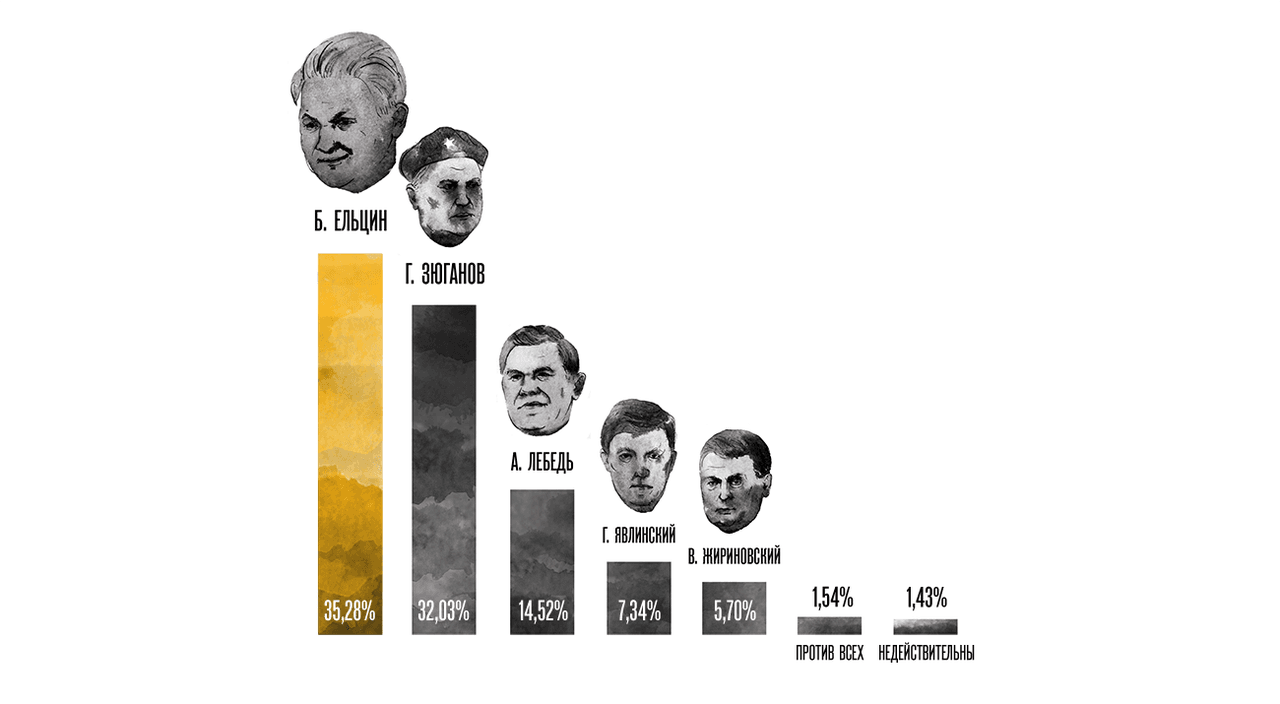
Гортон приступил к разработке отчёта, объясняющего такие результаты. Он отметил, что победить Ельцину помешали сохраняющееся враждебное отношение со стороны населения, смягчение антикоммунистической риторики в последние десять дней кампании, недостойное поведение кандидата на концертах и излишняя публично декларируемая уверенность президента в собственной победе.
Гортон предложил третье июля для проведения второго тура выборов, и эта дата в итоге была утверждена.
— Люди не уедут на дачи посреди недели — это увеличит явку, а если сделать этот день выходным, то посещаемость участков, возможно, повысится ещё больше, — объяснял он своё решение.
Дреснер оперативно разработал опросы для двадцати фокус-групп, чтобы скорректировать направление предвыборной кампании. Американцы советовали удвоить интенсивность антикоммунистической пропаганды и давать в СМИ фейковые результаты опросов, согласно которым Ельцин и его конкурент Зюганов должны были идти ноздря в ноздрю. По их мнению, это могло серьёзно увеличить напряжение в обществе перед вторым туром, создать ощущение, что голос каждого избирателя важен, и способствовать повышению явки.
Двое сотрудников предвыборного штаба Ельцина, Аркадий Евстафьев и Сергей Лисовский, были задержаны на выходе из Дома Правительства на Краснопресненской набережной. В ходе досмотра у них обнаружилась коробка из-под бумаги для ксерокса, в которой лежали 538 000 долларов. По одной из версий, арест был инициирован «Партией войны». Утром оба участника криминальной драмы были освобождены, а члены «Партии войны» Сосковец, Коржаков и Барсуков уволены.
— Увольнение Коржакова, Барсуков и Сосковца не было следствием только этого скандала, — вспоминал Ельцин. — Длительное противостояние здоровых сил и тех, кто шёл на провокации, чтобы захватить власть в предвыборном штабе, наконец перешло в открытый конфликт. И я разрешил его.
Устранение «Партии войны» избавило американских консультантов от прессинга и устранило угрозу отмены голосования.
Спустя неделю у Ельцина случился инфаркт, штаб скрыл это от общественности.
Президент появился на экране только во время встречи с бывшим соперником Александром Лебедем, занявшим в первом туре третье место.
— Из обычной гостиной, куда теперь перенесли мою кровать, устроили что-то вроде рабочего кабинета, — писал Ельцин в мемуарах. — Оператор (наш, кремлёвский) долго мудрил, чтобы ничего лишнего в кадре не было, особенно рояля, который по традиции всегда тут стоял, и, само собой, кровати (как всегда в таких случаях, готовилась протокольная съёмка). Медицинскую аппаратуру чем-то накрыли. Наина умоляла об одном: «Боря! Только не вставай! Сиди в кресле! Тебе нельзя вставать!». Но я не выдержал и усилием воли заставил себя встать, здороваясь с гостем. Лебедь был очень доволен встречей. Ему сказали, что я простудился, он лишних вопросов не задавал.
Лебедь призвал своих избирателей поддержать Ельцина во втором туре выборов. Есть мнение, что это событие стало ключевым во всей президентской кампании Ельцина, так как ему удалось перехватить голоса патриотически настроенных сторонников Лебедя раньше Зюганова.
В конце предвыборной гонки антикоммунистическую пропаганду усилили, и перед выборами большая часть информационного поля страны представляла собой рассказы о репрессиях, ужасах советского режима и страшных последствиях избрания на пост президента Зюганова.
Второй тур выборов стартовал, как и было запланировано, в самом восточном часовом поясе России третьего июля 1996 года в 8:00 по местному времени. Утренние часы на избирательных участках — время пенсионеров. Они собираются перед кабинками для обсуждения личностей кандидатов и обычно выносят коллективное решение. В 1996 году такие мини-советы голосовали за Зюганова. Для того чтобы удержать людей преклонного возраста в утренние часы дома, ельцинский штаб использовал телевидение — зрителям показали несколько серий обожаемого пожилыми женщинами сериала «Секрет тропиканки».
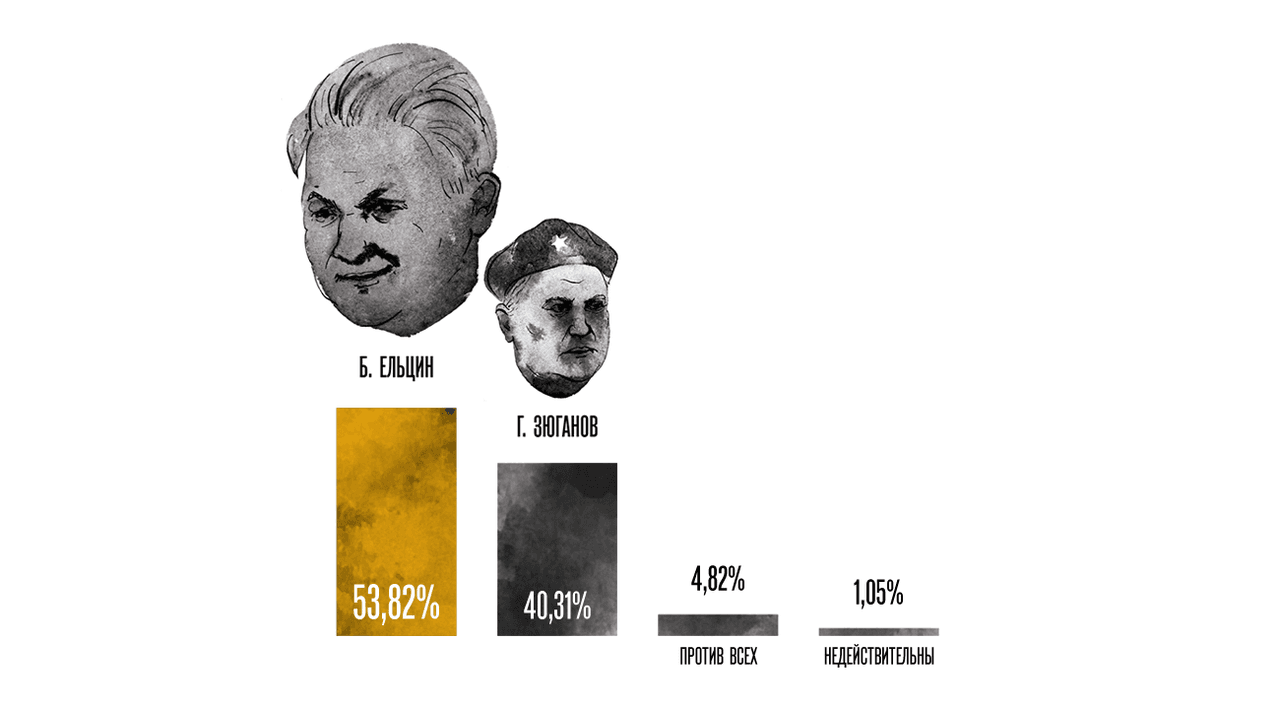
Ельцин выиграл выборы. Набрав во втором туре 53% голосов против 40% у Зюганова, действующий президент сохранил свои полномочия и отправился на второй срок. Необычайные приключения американцев в Москве подходили к концу. Счастливый Гортон весело пустился плясать вприсядку на корпоративе, посвящённом победе Ельцина.
After the ball
Американские консультанты вернулись на Родину, и журнал «Time» выпустил материал Майкла Крамера «Yanks to the Rescue», в котором со слов самих героев была рассказана история их участия в предвыборной кампании Ельцина.
Позже некоторые отечественные работники предвыборного штаба отрицали вклад импортных специалистов в победу. — Я помню только один случай, когда к
нам попала их продукция. Это было накануне первого тура. Мы задумали листовку последнего дня. Решили, что либо она должна быть гениальной, либо её вообще не надо. Гениальной не получилась, и мы отказались от затеи, — рассказывал об американцах один из консультантов Ельцина Георгий Сатаров. — Дело было так: утром приходим в штаб, а там лежит образец с резолюцией «В печать!». Мы почитали — полная ерунда. Пошли к Чубайсу, он сказал: «Уничтожить!». Вот и вся их работа. Это районный уровень, точнее уровень выборов председателя колхоза.
— Я не нанимала этих людей, но я знала их, — говорила глава предвыборного штаба и дочь Ельцина Татьяна Дьяченко. — Они выполняли определенную работу. Ничего из сделанного ими не было судьбоносным в планировании или разработке стратегии.
Однако некоторые другие российские консультанты Ельцина на тех выборах высказывали альтернативное мнение.
— Сегодня некоторые в России снисходительно смеются над американцами, — говорит Глеб Павловский в интервью «The Los Angeles Times». - This is unfair. Они, возможно, не в полной мере владели вопросами внутренней политики, но точно знали, что нужно делать для поднятия жалкого рейтинга.
В ответ на обвинения Дреснер заявил :
— Я считаю наш в клад в победу в избирательной кампании 1996 года очень весомым, мы провели в России шесть месяцев, работали напряжённо и продуктивно. Понимаете, русских смущает сам факт привлечения западных экспертов, и они делают всё, чтобы принизить нашу роль.
Тройка американских консультантов была не единственной поддержкой Ельцина с Запада во время предвыборной кампании 1996 года. В разработке и реализации идеи «Голосуй или проиграешь» участвовал ещё один специалист из США — Майкл Капуто. После окончания выборов вместе с группой Дреснера, Гортона и Шумейта другие политические консультанты также заявляли о своём участии в победной предвыборной кампании Ельцина. США субсидировали российское правительство займами на 14 000 000 000 долларов. До этого МВФ оказал России финансовую поддержку, но с условием, что в случае победы коммунистов на выборах транши будут прекращены.
После возвращения на Родину у Гортона был обнаружен церебральный паралич. По одной из его версий, болезнь — результат неудачного покушения во время работы в России. По словам политтехнолога, он с сыном пришёл посмотреть на строившийся тогда в Москве памятник Петру I работы Церетели. Незнакомец толкнул консультанта и, пробурчав что-то под нос на русском языке, удалился. Гортон прошёл не больше семисот метров и был вынужден сесть из-за сильной боли — в пальцах кололо, губы дрожали. Через некоторое время в США ему поставили страшный диагноз, он высказал предположение, что болезнь может быть следствием воздействия нейропаралитических ядов. Несмотря на состояние здоровья, специалист продолжает консультировать предвыборные кампании.
Спустя семь лет после победы Ельцина Гортон, Дрезнер и Шумейт снова работали вместе и помогали Арнольду Шварценеггеру стать губернатором Калифорнии.
В 2004 году канал «Showtime» снял фильм «Spinning Boris» (в российской версии — «Проект Ельцин»), основанный на материале Майкла Крамера в «Time». Главные роли исполнили звезда «Парка Юрского периода» Джефф Голдблюм, Лив Шрайбер и Энтони Лапалья.
Шумейт скончался в 2010 году во время подготовки результатов исследований для Карли Фиорины, сотрудничавшей с ним кандидатки на пост сенатора от штата Калифорния. Дреснер долгое время возглавлял принадлежащую ему консалтинговую компанию «Dresner&Wickers».
— Мы были приглашены, чтобы победить, и у нас получилось, — говорил Гортон. — Русские — гордые люди и говорят, что больше не нуждаются в подобных нам, потому что поняли, как нужно действовать. Я знаю только то, что рядом с каждым парнем, который думает, что он справится сам, всегда будет другой, который знает, что тот этого сделать не может.
Даже спустя десять лет после победы Шварценеггера на губернаторских выборах Гортон продолжал щеголять в куртке с вышитой надписью «Джордж, спасибо за вашу помощь, — Арнольд».
— Этот бизнес — как секс, — сказал он тогда. — Ты всегда захочешь сделать это ещё раз.
***
Инаугурация переизбранного на пост Президента Российской Федерации Бориса Ельцина прошла 9 августа 1996 года в Государственном Кремлёвском дворце. Измученный проблемами с сердцем и тяжелейшей предвыборной гонкой, глава государства встал к микрофону. Едва выговаривая слова и делая паузу после каждой фразы, Ельцин произнёс клятву. Она состояла из тридцати трёх слов, шесть из которых — союзы «и». Второй президентский срок новоизбранного главы государства завершился раньше положенного. 31 декабря 1999 года Ельцин подал в отставку.