
Translated material
In the 50th Shtokhausen was a German
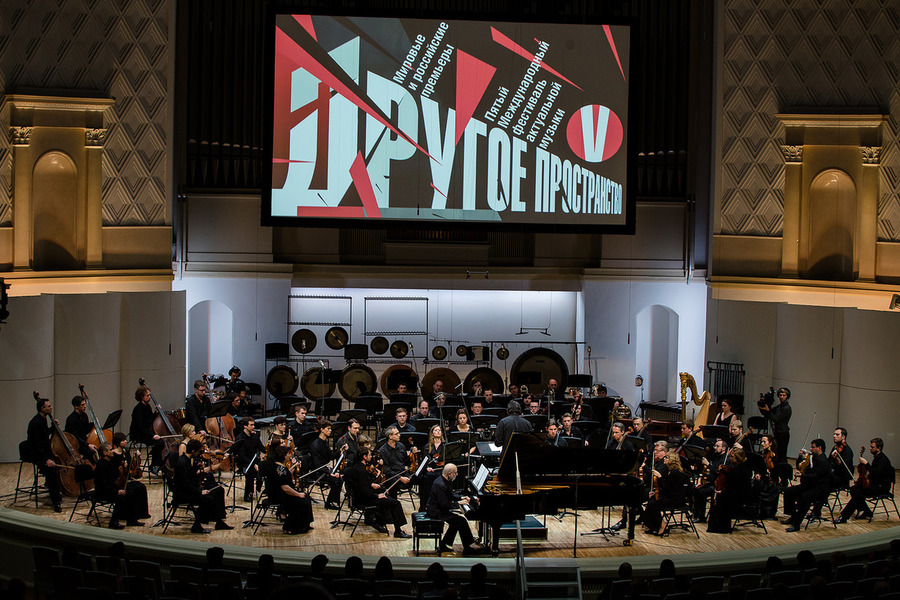
Concert opening. The musicologist Rauf Farkhadov and the conductor-festival of the festival Vladimir Yurovsky vying explain the “Ritual of the memory of Bruno Maderena” (1975) Pierre Bouleza. They say that this music is made of seven fragmented tones, which nevertheless create a kind of fixed ritual melody. GASO, divided into eight groups, is planted on stage and side balconies. In general, there is something to listen to, in addition to purely speculative avant -garde. Almost a full concert hall named after Tchaikovsky listens carefully. After the colossus of avant-garde music of the twentieth century, the endlessly harmonious Vladimir Martynov would have to become an easy walk, but the audience cautiously ran from him. This is really different: where else will Martynov be unbearable than Boulez?
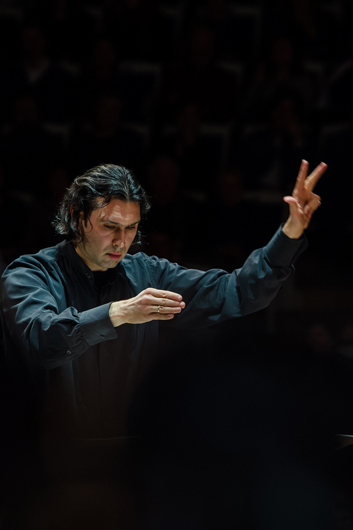
It's not about Martynov-composer (anti-composer?). His “dancing with the deceased friend” (2004), included in the program of the first day, was not very lucky with execution: the pianist Alexei Lyubimov did not enter the trance of stretching minor chords, and Yurovsky’s orchestra only entered and did not help the masking music. Nevertheless, this ambiguous interpretation fatly emphasized the extreme aesthetic gaps of the festival. For example, on the first day, the manifesto of the inhumanity of the divine time also sounded - the second symphony of Galina Ustolskaya (1979). And already the next erudite Lyubimov (in a chamber concert he played great) laughed with the inventor John Catege in Suite for the children's piano (1948). The Soviet-Russian composer Utstilskaya and American Cage is not opposed by chance: the clash of conditional European and conditional American became the leitmotif of the fifth “space”.
 © press service of the Moscow Philharmonic
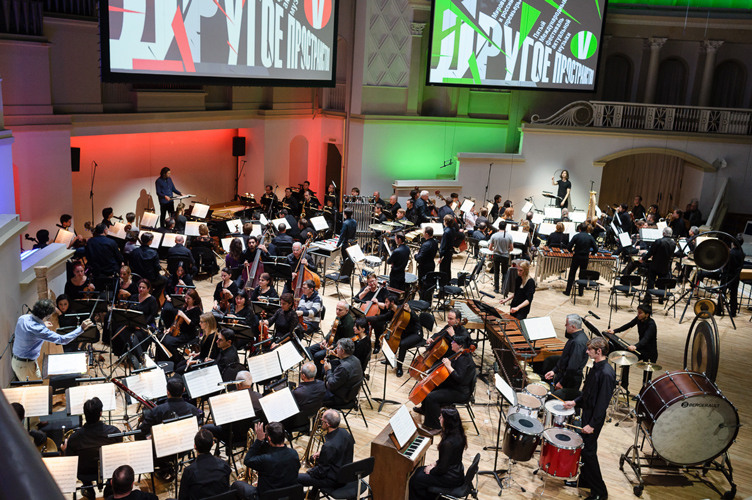
The European composers got the longest - from five in the evening to midnight - the penultimate day of the festival. The Europeans have traumatic relations with the classics: either they try to overcome it, or they mourn in an untimely death, or try to resurrect. But the listener is interested. In “OPUS Prenatum” (2013), Martynov’s fantasies about the rethinking of the Opus concept turned into a bright instrumental emboss organized according to the canons of symphonic drama (Tatyana Grindenko Trans Academy of Old Music came out). And the dashing BEDRIP “Metal Index” (2003) Fausto Romitelly-with a ringing electric guitar, elastic techno, academic vocals and three-channel videos to the addition-voiced the “New Music Studio” under the control of Igor Dronov.
 © press service of the Moscow Philharmonic
However, the most solid thoughts about the classics happened that evening at a symphonic, multi -oriented concert. For the Russian premiere of the Group (1957), the Karlhainz Shtokhausen needed three ensembles at once (they were made up of the GASO named after Svetlanov and the Azerbaijani State Symphony Orchestra named after Uzeyr Gadzhybekov) and three conductors (Vladimir Yurovsky stood in the depths of the organ, his back to the body, Fuad Ibrahimov - by the left of the left, Filippa Chizhevsky - on the right), who could hardly fit on the stage. Shtokhausen painfully fought with the German tradition, but he never overcame the German in himself. In the “Group”, he re -constructs the orchestra’s mechanism: the team of 109 musicians, divided into three independent blocks, anticipated multi -channel acoustic systems and argued with the late -romantic orchestra hierarchy, but minted structural thinking has not gone away. Yurovsky and the company performed this well: subtle sound work in stereo -flashes of the winds, a crushing seething bapto in climaxes. True, many acoustic effects of “groups” were lost due to the fact that the musicians shared one scene (and, according to Shtokhausen, three orchezen should surround the listeners and be at a significant distance from each other). Yurovsky tried to plant them, from the visual part of Tchaikovsky’s hall during the rehearsals they even twisted and carried out chairs, but the musicians did not stubbornly fit there.
 © press service of the Moscow Philharmonic
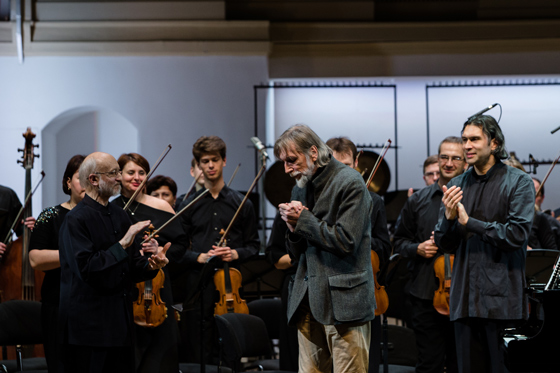
But the second historical Russian premiere was a success without any reservation: the Baku orchestra with Maestro Ibragimov and eight votes from Questa Musica performed the symphony (1969) Luciano Berio. The Italian composer fit in it dozens of musical quotes and allusions, seasoned with the texts of Levi-Stross and Beckett. The musicians felt very well in this dense postmodern jelly. And with the intertextual hysteria of the third of the five parts of the symphony, where Debussy, Stravinsky, Brahms and other great, the musicians completely managed to playfully played on the Maleovsk scherzo.
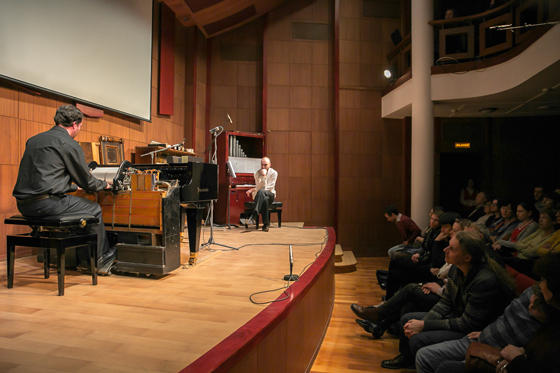 © press service of the Moscow Philharmonic
In the final evening of “space”, American premieres gave. Overseas composers did not particularly concern the stylistic disasters of the twentieth century. Steve Reich in Tehillim (1981) first got out of the instrumental abstraction into spiritual abstraction: he adapts the texts of four biblical psalms for proprietary pulsating motor skills, which, in turn, ceases to be an end in itself and becomes an instrument. It turned out minimalism with a humane mood and a dramatic system. The Moscow ensemble of modern music, the quartet of vocalists of the N'CAGED ensemble and Conduer Fedor Lednev fought a little with the acoustics of the KZC - the vocal polyphony of the first part glued, and the clap and drums came to the fore - but this did not particularly prevent the sparkling music of Raych.
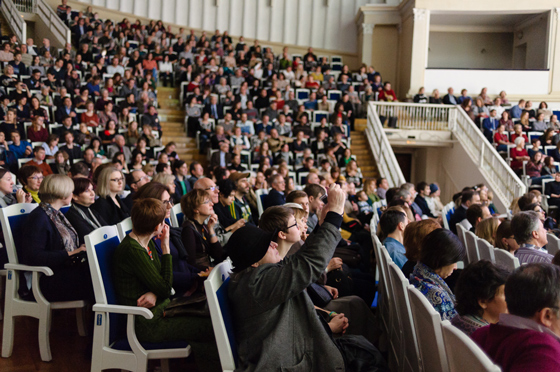 © press service of the Moscow Philharmonic
The point was set by the post -minimalist John Kulidge Adams. While his European colleagues reflect whether excellent music is possible today, Adams in each opera gives a dozen vocal melodies through a dozen. The Christmas oratorio “El Niño” (“Baby Christ”) is no exception: there was where to turn around the air trio of counteratrades (Daniel Bubek, Brian Cammings and Stephen Ricards sing “El-Nigno” with the Parisian premiere itself in 2000), strawberry Michelle de Yang, transparent soprano, transparent soprano Rosemary Joshua and Reliable Bas Maxim Mikhailov. In the orchestra, it is also interesting: the composer added a romantic intensity to Baroque, the Spanish guitar, unexplored minimalism, sound -sounding techniques, and at the same time deftly dodged Kitchch and deliberate eclecticism. Yurovsky with apparent pleasure conducted Adams: closer to the end, when the chapel of the named after Yurlov and the Estonian national male choir sang about King Herod, he was so dispersed that the Pupiter Joshua was inadvertently dropped.
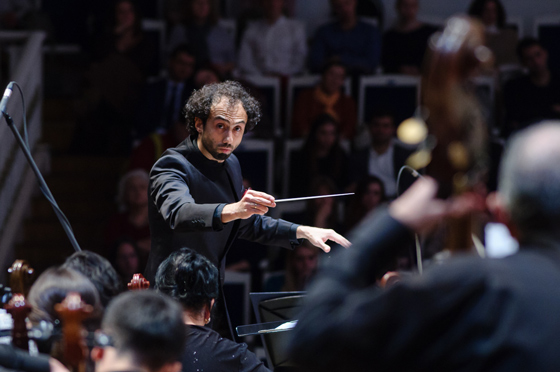 © press service of the Moscow Philharmonic
Both Shtokhausen and Adams were met with a full house. In this light, the only essay ordered by the festival (we do not consider the orchestral version of “ VOX ” Oleg Piberdin) looks very modest: played at the Phantoms concert “Fantom” Vladimir Nikolaev turned out to be only a compact collection of pretty baptism. After success with a whole pack of uncomfortable avant -garde artists, it is obvious that the Tandem of the Yurovsky - Svetlanovsky orchestra on the shoulder of any cunning score. The “other space” has already grown to such impressive programmatic and music scales, which can compete with other Western festivals. Only large world premieres are missing.