
Translated material
Theater as a practice of courage
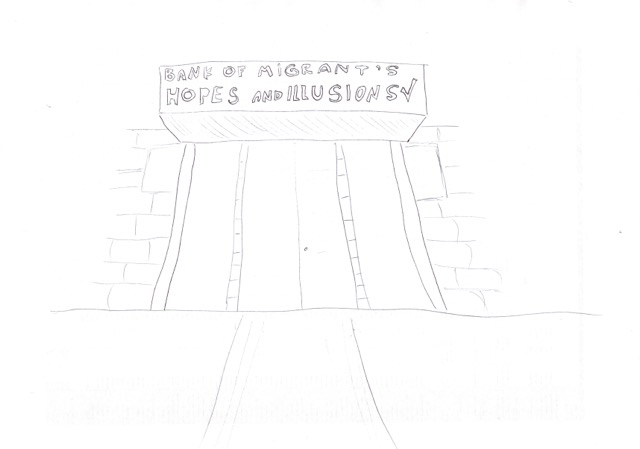
At the end of October 2013, in Vienna, I witnessed a remarkable event. Passing a bicycle past the building of the Academy of Arts, I heard loud music and saw it with a pseudo-real pediment in smoke, lit by bright red and green flashes. Perhaps this building has never looked so spectacular. The bronze centaurs flanking the entrance came to life and stood on the hind legs, the Cannels of the columns pulsed, the DJs played, the black -cursed young man of extraordinary beauty tried to set fire to himself - the refugees came to look for asylum at the Vienna Academy of Arts.
A year has been over her entrance, since the protests of the group of applicants for refugee status, united under the name Refuge Protest Camp in Vienna , hung a huge banner with the slogan “Refugees are wellcome geree!” Having lived in the winter in the tent camp on the square, later in the church of the same name, then in the monastery and now the remaining without a roof over their heads, the refugees took the gesture of students and sympathetic teachers literally and did not come for the symbolic, but for real support. The Academy - the place where they teach the technologies of representation - suddenly turned into its site. Feeling in front of the cameras and a large audience of sympathetic and passers -by, refugees raised in voices made passionate speeches from the steps of the building. Misans to envy Kugel and Jewish. The role of a native of the “third world” heroically struggling for the official status in Europe has become in demand by the media.
 © Alex David
Theatricality disappeared when the cameras turned off and it was necessary to solve urgent issues: where to get sleeping and blankets, where to wash, where and what to cook, how to prevent deportations? These questions, inevitably rising again a day and often and remains unanswered, brought and despair many activists of protest migrant movements in many cities of Europe. The survival issues that attempts have stumbled about to create a political structure have left almost nothing from many groups except self -replacement.
It was at this stage that I found activists from Lampeza in Hamburg. Its members, mainly immigrants from different countries of Central and West Africa, worked in Libya as labor migrants at the time of NATO bombing. The war and the murder that began on the basis of racism forced them to go along the Mediterranean Sea to Italy. Having lived for some time on the island of Lampeduz, after the closure of the humanitarian camp, people were on the street without a livelihood and work and went in search of good luck in Hamburg. It was there, trying to achieve a collective solution to their issue, they united. Two years ago, a 350-400 people numbering, this group by the fall of 2015 did not collect more than 10-15 participants during the planning. I suggested that several activists participate in a play called “Translation” . It should be noted that the requirement of an adequate translation was one of the main requirements of many such movements. Indeed, in the course of numerous interviews to obtain refugee status, which are designed to establish the reliability and weight of the reasons for assigning status, mandatory official translators are often insufficiently competent or change from one interview to another. One small detail, translated in different ways, can predict the fate of a person, leading to a refusal and deportation. Thus, the issue of translation often literally becomes a matter of life and death.
 © Alex David
Another practical side of this problem is found at meetings of multinational and multi -language groups. The choice of one or two main languages of the discussion always excludes part of the participants who do not own them, therefore, meetings are often accompanied by several parallel translations, which lengthens and complicates communication.
In the play, we stage the utopian situation of the collective interview of the Lamepeduza in Hamburg group for refugee status. How to tell the story of each of the participants who crossed the sugar or/and the Mediterranean Sea, who saw the death of fellow travelers who did not know whether he will survive/ah/a, and at the same time transfer the experience of collective political subjectivity and the crisis of the organization? All newspaper headlines and television programs in Europe are full of heartbreaking documentary stories of wanderings and misadventures from the first and third person. But the issue of “translated” experience of deprivation, mortal danger, experienced shocks for representatives of a society living in relative abundance and safety remains open. The emotional immunity of the European consumer of news to such stories already allows us to flip out or pass them past the ears without special sentiments, as the usual noise background during morning coffee. For the refugee, the documentary history, on the one hand, has become, on the one hand, a tactical mask of self -replacement, on the other, told by a “right” way to a European official, a means that opens the path to legalization. Is it possible to overcome or reflect the theatricality of life and politics with the help of theater and fiction?
 © Alex David
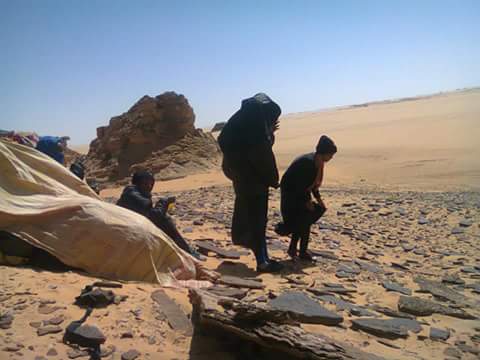
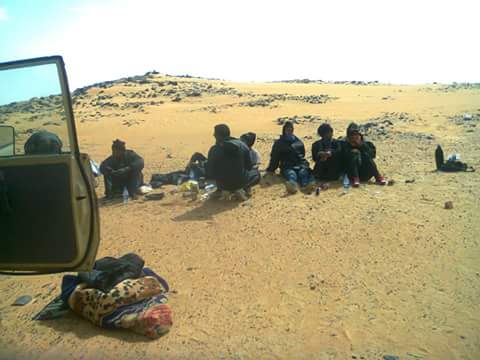
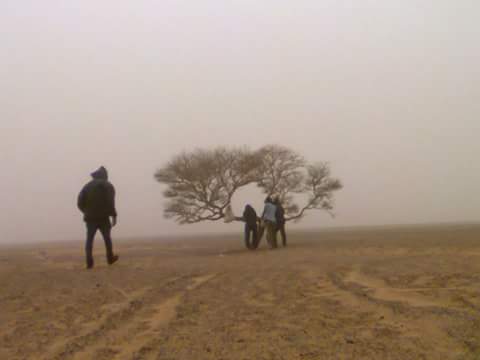
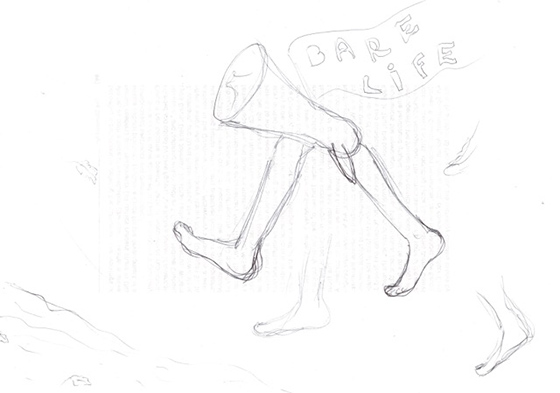
I invited the participants to take the text of the story “Jan” Andrei Platonov as the basis of their narrative. As it turned out, many stories of the story of the lost, restless people wandering around the Turkmen desert could be illustrated by photographs from refugees mobile phones. The fundamental difference between these real wandering in the desert at the beginning of the 21st century and Platonov’s plot is that instead of Chagataev, leading people to the collective happiness of socialism, groups crossing sugar, the traffics who are living on migrants are led by migrants. At the same time, the experience of the political struggle gained in Europe, certain disappointments along with the need to continue it, the Agamben question about the politicization of naked life, which sounds more than half a century earlier in Platonov’s text, made Chagataev’s figure to close participants.
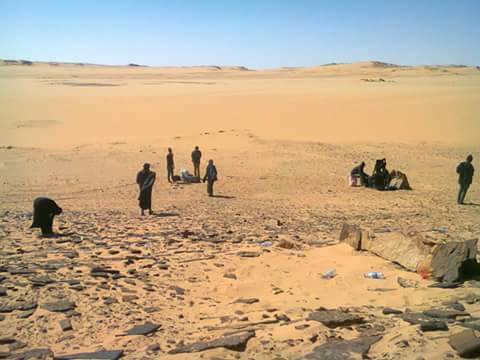 © Alex David
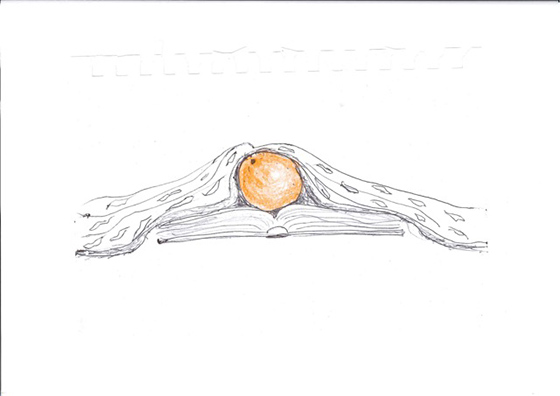
Each of them pronounces the text either in his own or in a well -known language. For some, this language is the language of schooling and at the same time the language of the colonialist - English, French or Arabic. Platonov was not translated into most African languages and dialects. Reading fragments of one text in different languages, we are trying to put them in a certain hypothetical semblance of a universal language before the fall of the Babylonian tower or listen to each other so as to suddenly achieve deep mutual understanding contrary to language differences.
In the play, not only different languages are mixed, but also their different registers and styles. A refugee from the capital Damascus speaks the language of Mandelstam and Brodsky. In the bureaucratic syllable of the official, surreal notes begin to sound, caused by either insanity or professional insanity. Our translator - an opera singer - shifts our narrative into the language of the classic and baroque European opera, performing the Aria of Handel, Mozart, Wagner and Schubert's songs.
Thus, the composition of the spectators of the performance is also quite motley: lovers of opera art are side by side with political activists, other refugees and sympathetic.
 © Olga Zhitlina
Most of the people with whom I work are not professional actors, I ask them to play themselves in their own social role in the utopian scenario. For example, in the 2011 Conspiracy performance, a group of labor migrants and creative workers changes clothes on stage, depicting a secret community, the purpose of which is to mix visual codes and make it difficult to recognize visitors of the police and neo -Nazis. Within the framework of the performance, it is important for me to create a situation of interaction between representatives of different social groups, whose contacts in everyday life are difficult or develop through completely different models.
Another important point is the destruction of a beautiful story that has just been created before the eyes of the audience and the clogging of the imagination of its fragments. At the end of the performance “Conspiracy” I go on stage and pay with the participants, exposing the staging character of everything that happened.
 © Olga Zhitlina
At the end of the play “Translation”, one of the participants suddenly gets up from the stage and goes to read the prayer, the rest after violent indignations and bewilderment also find their reasons to leave the “interview” and from the stage. The situation of unity is artificially designed. This destruction is important to me as something like a bridge to reality. At the dawn of the emergence of the Happenings genre and Vito Akkonchi, he wrote about the reluctance and the impossibility of calling these actions Performance (in English this word designated, first of all, the theatrical performance), since what the artists did was not separated from life by either the scene or the performance of roles; This was not a representation of life, but its continuation, part of it; The participants were not actors, but by themselves. I try to preserve this aspect, bringing an element of collective and individual imagination into it. I want the participants in my performances to be the very tuning man, so that the game becomes probing and designing oneself and society in a utopian dimension. This may be the therapeutic moment of the Jewish “Theater for Himself”, and the collective training of political imagination. Labor migrants, hipsters or political activists play themselves that, in a sense, have gone beyond their own limits, but the exposure of staging suggests that they return back to their everyday life, to their unresolved problems, to the place in the society that they occupied, but maybe with some new experience and a sense of themselves.
Two main questions that remain open to me relate to aesthetics and pragmatists. Firstly, does the theater or art-password enriches this authenticity of experience and interpretation that unprofessional actors bring? Is it possible to get through the flat mass-media theatricality to theatricality, which helps to find under the mask its face or many other masks that form it? And secondly, do the artistic and theatrical practices that involve marginal groups, sewage and neutralization of political energy, ultimately, are ultimately becoming extremely in demand?
 © Olga Zhitlina
In the book “What Sarcosi Name”, Alain Badya makes a difference between the concepts of heroism and courage in this way: “So, I define courage as a virtue that reveals itself in a firm determination to keep the impossible. It is not only about to meet the impossible, to experiment with him. This is just heroism, a heroic moment. Heroism is always easier than courage. Heroism is when you face to face impossible. Heroism is always associated with a pose - often exalted, since it is always such a moment when you turn to the impossible, that is, the proper face of the real, and find yourself face to face. Courage is different from heroism, since this is a virtue, not a moment and not a pose. <...> Courage is not a moment, not a point, not a point, it is holding the point. Courage requires exactly the fact that you are holding on a temporary duration, which differs from the duration imposed by the law of the world. Time is matter, raw materials of courage. ” My hypothesis is that art and theatrical practice help not only and not so much to build an image of itself for newspaper photography or a television interview, but also to “hold item”, launching deeper and reflective processes of building itself and maintaining group communications.
 © Olga Zhitlina
In his way, the artist/director stumbles on the designed oriented economy of contemporary art, which involves disposable events, products, and not consistent long -term work. And it seems that the courage of the artist today should manifest itself just in overcoming this, holding "in a time duration, which differs from the duration imposed by the law of the world."
© Carl-John Hoffmann