
Translated material
"Faturated Bosch in the XXI century"
Film about a boarding school for people with mental disorders: Artdokfest
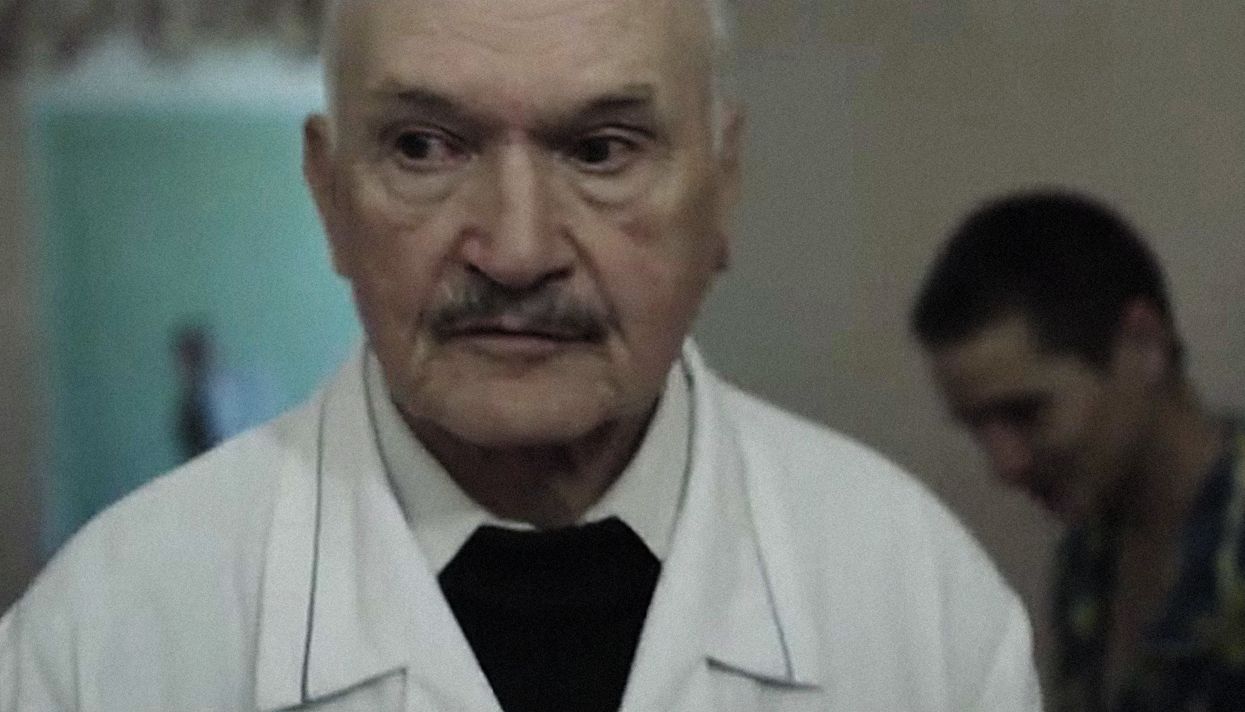
In Moscow, St. Petersburg and Yekaterinburg, in December 2016, the Artdokfest documentary festival will be held. Twice a week, the President of the festival Vitaly Mansky tells at Medusa about all films participating in the competition. In this material, the director represents the painting “Icon” by the Wojciech of Kaspersky (Poland, 2016).
In 2006, the film of an unknown Polish young author of Wojciech Kaspersky, who was shot in Russia, thundered. The film was called "Semen" and talked about one family from Altai - he received a "laurel branch" as the best documentary picture of the year. The girl, intra -family relationships, the name of the picture - all this created an image that actually goes beyond the framework of family history. The author actively and very confidently continued his work all these years, but did not return to the Russian space, and after 10 years the painting “Icon” appeared - completely shot in a certain boarding school for mentally ill.
First of all, the film of Kaspersky is a very high cinematic and artistic level. This picture invites us to penetrate the space in which we have never been - but here it appears before us not in a journalistic reversal, but rather a certain biblical history of people outside the mind, outside society, outside modern life. However, you can learn quite a lot about life from the film, just at a different level - for example, about the financing of Russian healthcare, about respect for the person, about the rights of man as a whole.
It is difficult for us to understand the mechanisms of the functioning of this hospital. It seems that there seems to be two boarding schools - male and female, or, possibly, two isolated buildings of one clinic. We see how patients try to break the wall inside this enclave, break through the boundaries and enter into communication - albeit quite primitive, gender.
The very texture of this space forgotten by God-walls, corridors, beds, clothes, dishes-everything speaks of some other world. And the words “God's forgotten place”, of course, become the key to understanding this picture. It is no coincidence that he calls her “icon”, as once also no coincidence called a film about the Russian family from the hinterland of “seeds”.
I recently saw at the festival in Leipzig a poster “Icon”, where one of the main characters - a mentally ill woman - is depicted a saint, with a halo on her head. The poster also helps to unravel this multi -portrait artistic image.
The picture is very accurately both visually and aesthetically sending us to Bosch's canvases - this is the revived Bosch in the 21st century. It is addressed to a person who is not indifferent. Artdokfest has always turned to a person who feels, who feels, in need of a serious analysis of his own life and the life of the world around him. And Kaspersky’s picture is no exception, this is a large event in cinema. It is no coincidence that its world premiere will take place at the festival in Amsterdam, and the Russian one at Artdoxfest.
PS about other films from the competitive program "Artdocfest" can be found here .