
Translated material
A man without a gun
The new drama of Mel Gibson “for reasons of conscience” could be called a military if it had not been declaratively pacifist
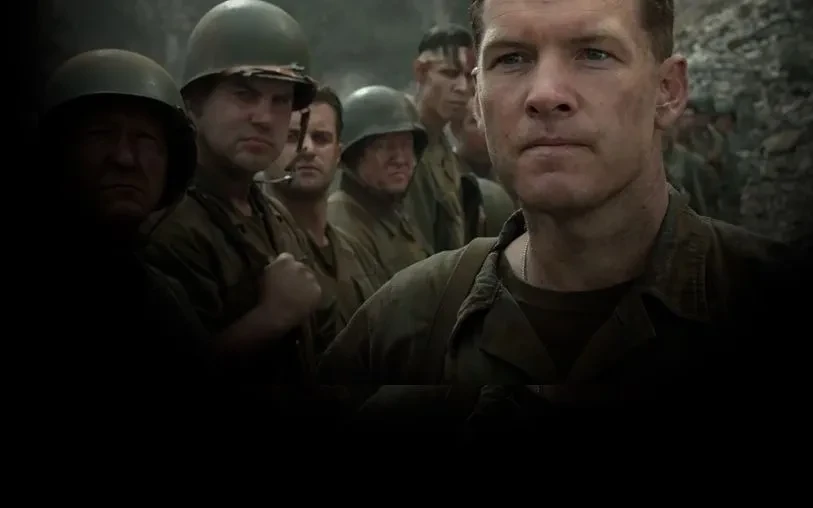
After a couple of scandals and homophobic replicas, Gibson turned out to be a person Non Grat in Hollywood. Even acting after 2006 was overlapping. Moreover, the 60-year-old uncle-terribe, called by the parents of the Catholics-Tradealists in honor of St. Mel, still does not particularly revere Jews, gays, fights with stem cells and other heresy. In Europe, the implacable Mel is still loved, and his new film “For Considerations of Conscience” was adopted at the Venetian festival with applause.
The plot of the picture is so amazed that he has only one excuse: everything that is told in the film is true.
This is the real story of the first formal refuser in the United States, Adventist Seventh Day of Desmond Doss (Andrew Garfield-“Spider-Man”-played his best role here). Young men who have a volunteer to the front, but for religious reasons of refusing to wear weapons.
At first, you see a struty eccentric with a stupid smile. Excessively naive, romantic. Which rushes to save the Nemotopa crushed by the car. To dizziness falls in love with a pretty nurse. And when this romantic and Patriot finds out from old Hollywood films finds out about Japan’s attack on Pearl Harbor, he immediately records as a volunteer. However, like a real Catholic, Doss wants not to kill, but to protect. And, as a truly religious, neither a span will retreat from the principles. When all fellow soldiers, all military authorities will gather strength, forcing Desmond to pick up a gun, he will not retreat. This is very in the spirit of the cinema of Gibson, the author of the “passions of Christ”, whose main idea is that faith is stronger than collective opinions, cruel punishments, military tribunals, humiliation, and violence. DOSS will not reach out to violence. He is not a slope - he himself went to the front at the call of conscience. But he will not pass the firing course, does not touch the gun. And even in the outlook Peckla will not transmit the main commandment - “Do not kill!”.
The first part of the film is flexible, concentrated on the life of the town of Lynchberg, on the life of the Desmond family (his father, carpenter, did not recover from the psychological trauma of the First World War), is designed to contrast with a huge climax: the battle for Okinawa. The battle, nicknamed the historians "Steel Typhoon" for the intensity of the artillery steering. 100,000 killed Japanese soldiers, 12 thousand allies and 38 thousand wounded.
For Gibson, this almost 40-minute part is a solemn and terrible oratorio of war. The director of the Apocalypse does not spare either the colors or the viewer. You wanted spectacular heroics - get it! The bodies gnawed by the war, torn, gutted remains, corpses twisted inside out. Perhaps, there was no such convincing in its entertainment of the nightmare on the screen on the screen. The main directorial technique in the image of an expressive massacre is the sudden transformation of a person into meat. Groups of people - upholstered. Burning fire from flamethrowers instantly cooks smoking meat from the fighters. It seems that the screen itself exudes this unbearable smell of burning and decay. And the fat rats scurry between the corpses, without fearing the living still crumbling from pain.
And in this hell, in Dange's hugs of flame and boiling blood, a person is not worn by a heroic addition. Without weapons. His "courageous heart" is covered by the little Bible. He crawls and bandages. The morphine is injected. Drash to a saving sheer wall with a sea cargo network of half -living soldiers. He lowers them on a rope. Their own and the Japanese.
Gibson not only admires the indispensable strength of the spirit and the persistence of his hero. He draws a thin red line in understanding the duty of Doss and the Japanese. After the defeat, the Japanese officer performs Sappuku, the solemn ritual of neglect of death, after which his soldiers are decapitated by an officer who restored his honor. DOSS also neglects death. Again and again he returns to the “steel rain”, to the line of fire of snipers, looking for still living soldiers left to die. He has black from soot, his face flooded with someone else's blood.
“Purely holy” - the viewer will skeptically decide. And it will be discouraged by the documentary recognition of the real Doss, who saved 75 soldiers: “Then I prayed to God only for one thing. Save at least one more! "
And although the film is saturated with proprietary, at times excessive Gibsonian pathetics and naturalism, the director revels in not a demonstration of nightmare scenes and terrible wounds. First of all, he delighted with the miracle of Stoicism of one in a swearing field - a warrior of the world. This is the timeliness of the picture. And the point is not in the Oscars, which, obviously, shine the director who returned with the shield as the director and his actor, who reincarnated into a modest national hero. And in the important topic that Gibson raised. When crazy, not from this world, they must declare an unwillingness to kill. When his friends are ready to deal with him. His compatriots. So the time has come. It is quite an actual plot, especially at the time of militant rhetoric and new wars, from which only rare loners are able to keep the world.
PS
Medbrat Desmond Thomas Dossa was awarded the highest military award - Honor medals. “I would exchange this medal,” said President Truman, “to his presidential post.” He said and hastily engaged in his presidential duties: he initiated the bombing of Hiroshima and Nagasaki, formulated a doctrine that proclaimed the beginning of the Cold War.