
Translated material
Dialogue on Broadway

Alexander Genis: On the air, there is a dialogue on Broadway, which we and the musicologist and cultural historian Solomon Volkov are leading in the Broadway Studio Radio Liberty.
Solomon, what is they talking about Broadway when they are not talking about elections?
Solomon Volkov: At Broadway, they lively discuss a very important anniversary for New York: 150 years of the New York Philharmonic.
Alexander Genis: New York Philharmonic - the oldest, most respected and most well -deserved, probably a musical organization in America. She constantly enters the large five orchestras of America, right?
Solomon Volkov: Yes, she enters the big five. I am a big patriot of New York, I lived in New York for 40 years count. It’s also funny, I meet young men and women who, suppose, 30 years old, I say: you know, I settled in New York 10 years before your birth, so I am more a New Yorker than you. This is, of course, that I do not like to go outside, I am a resident of my apartment, so I can’t say that I studied New York as you know New York and many other places in America. Nevertheless, I am a patriot of New York, but I am not a patriot of the New York Philharmonic Orchestra. I believe that the Chicago orchestra is better, and the Boston orchestra is probably better than the Philadelphia orchestra. Only Clevelandsky can be worse from this famous group of leading American orchestras.
The reason for this is largely in the particularly bad nature of New York orchestrandants. This is a team, famous for its unpredictability and uncontrollability. They resist everyone and any conductors, they love conductors only when they already leave them. With New York Philharmonic, with New York orchestraants, conductors need to fight, which they do with more or less success.
Alexander Genis: 31 conductor was in the history of the New York Philharmonic. What period, you think, was gold in her history?
Solomon Volkov: The most, of course, the famous period in the life of the New York Philharmonic-the years when the orchestra was headed by none other than Arturo Tuscanini, whom many can be one of the two greatest conductors of the twentieth century. One is Tuscanini, the other is Furtwengler. Of course, as in such cases relies, everyone is divided, someone for Tuscanini, someone for Furtwengler. I am just in this dispute of Tuscanini with Furtwengler, I take the side of Furtwengler. Why Furtwengler never turned out to be the head of any American orchestra - a separate story.
Tuscanini raised the orchestra of the New York Philharmonic to an unattainable height. He headed the orchestra from 1928 to 1936. Of course, we should not forget that from 1909 to 1911 the orchestra of the New York Philharmonic was headed by Gustav Maler, who could be considered the greatest conductor of all time and peoples. These years are legendary in the history of the New York Philharmonic. But I want to remind you of one conductor, he headed the orchestra of the New York Philharmonic from 1906 to 1909, it is not often remembered, and for us, people living in the field of Russian culture, it should have been interesting.
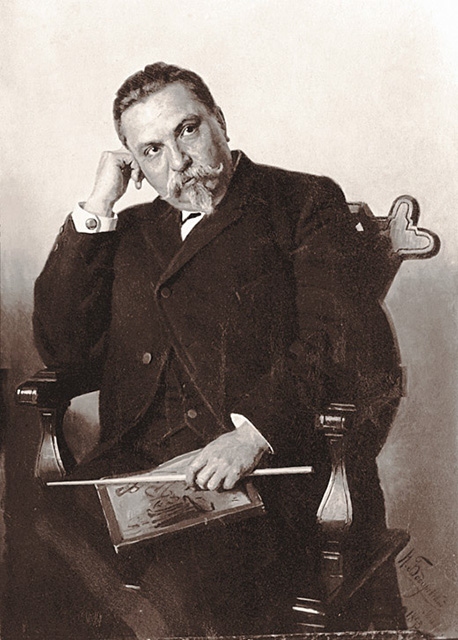
His name was Vasily Ilyich Safonov. He was an extremely remarkable figure in his own way, they did not like to remember very much about him in Soviet times, I will now explain why. Safonov was one of the largest and most important figures of domestic musical history. He was invited to the Moscow Conservatory to teach first the piano none other than Tchaikovsky, Safonov accepted this invitation and very quickly became the leading figure of the Moscow Conservatory, leading a piano teacher. Then he became no less large, perhaps, a conductor. At the same time, he possessed a terrible, preservation character. In his views, he was a convinced monarchist and conservative, but conservatives and monarchists are also different. Safonov was a man who defended his monarchist conservative beliefs in an extremely aggressive way, which undermined his authority very much. He did everything for the Moscow Conservatory: he turned the Moscow Conservatory into the institution that won leading positions in pre -revolutionary Russia. He built the famous large hall of the conservatory, the organ installed there, made an incredibly a lot. But in 1905, when student unrest began, he very sharply opposed these unrest, and was forced to resign under the pressure of liberal professors and opposition students. Then he began to travel as a conductor, ended up in New York. He conducted, by the way, the best orchestras of the world, and the Viennese orchestra, and the Berlin orchestra, headed the New York orchestra. Here he still headed the New York Conservatory in these years. He later returned to Russia and settled in Kislovodsk after the revolution.
And then the lining turned out. Firstly, of course, the monarchist. At the end of the 19th century, Safonova, in my opinion, was 1882, made from college assessors, which he was at that moment, immediately in the actual state advisers, the case is unprecedented, that is, he became a full general from a college assessor, received the right to wear trousers with stripes. By the way, I have never used this right. How to explain such an incredible, unprecedented, never repeated official leap in an extremely hierarchical pre -revolutionary Russia? It is impossible to explain this. Obviously, all his social merits were recognized, and maybe his stubborn monarchism.
The fact that he was a tsarist general served him very bad service under the Soviet regime. And even the worst circumstance was that his daughter Anna became the lover of Admiral Kolchak. When the Reds came to Kislovodsk, where the Safonov family lived, they mocked it as soon as they could. He and his whole family more than once or twice were taken to a quasi -agricultural - as if put to the wall and released after that. During such another theatrical execution, his heart could not stand it, he died. Already under the Soviet regime, if they remembered, then only the most bad word, they recalled as a tyrant, but he was certainly an outstanding figure. Unfortunately, the memory of him is not very supported in New York.
Alexander Genis: 150 years is a long time, especially for America. The history of the New York Philharmonic is very interesting. For example, a repertoire, which at the very beginning of the history of the Philharmonic was closely connected with Beethoven. The very first work, the very first opus - was the fifth symphony of Beethoven, which was played just 150 years ago. When Lincoln was killed, the New York Philharmonic played the ninth symphony of Beethoven. This was probably the first time, when, due to national mourning, the last part - Oda Joy - did not sound, because of mourning it was canceled. Tell me how the repertoire of the New York Philharmonic is being built now, how unusual it is, what is special in it?
Solomon Volkov: I sat down and in connection with this date I considered how many leaders of the New York Philharmonic I listened alive at concerts. There were six of them. I no longer found the pores when Leonard Bernstein was the head of the Philharmonic Orchestra, but I listened to others - starting with Pierre Bouleza, who led from 1971 to 1977, then there were Zubin meta, Kurt Mazur, Lorin Maazel, the current leader about whom we know that he has been leaving, Alan Gilbert.
In front of my eyes, accordingly, the picture of the repertoire changed, in accordance with the addictions of the conductor. My attitude to the orchestra and to his place in the musical life of New York changed both. Without a doubt, Bernstein is the most significant figure. But during the life of Bernstine, when he led Philharmonic, to expand the newspaper a day after the concert was a test. Because then the main critic in New York Times, Harold Scheanberg, reproached him from time to time. Already retroactively, they now recognize that the years of Bernstein could be the golden age of the new era of the New York Philharmonic. However, I do not remember the conductor whom New York criticism, as they say, would press close to heart, scolded everyone, scolded Bouleza, scolded meta, Mazura, and Maazel. For some reason, more favorable to all the other New York criticism reacted to Alan Gilbert.
Alexander Genis: He is his own, his mother plays in the orchestra.
Solomon Volkov: But he is the most uninteresting, the most insignificant figure from this series. For me, the most hateful, so to speak, conductor of the listed by me, was, of course, Zubin met. I, I think, ruined the orchestra right in front of the audience to such an extent that one wonderful New York musical critic of that era officially announced that he was stopping going to concerts of the New York Philharmonic, while there is no one to listen to such a disgrace.
Meta, meanwhile, is very popular all over the world, has been heading an orchestra in Israel for many years, is its lifelong conductor, has its fans. He probably has his own virtues that I do not catch. Those concerts of meta in which I visited me always impressed extreme sloppiness, and this is that I really do not like both in life and in execution. And vice versa, I recognize the outstanding qualities of Bernstein as a conductor, but Pierre Bulez was my beloved conductor from this six and precisely because of his incredible accuracy, this is even more than accuracy ...
Alexander Genis: ... jewelry accuracy.
Solomon Volkov: This each note is verified. Which is very important, because Bernstein was a propagandist of new music. When you went to the performance of a new work or just an avant-garde work of Bernstayn, you knew that this was not a fake, in the sense that all in place, all the notes written by the composer will be played as the composer remains only to wish. While Alan Gilbert, who is also known for performing a lot of new repertoire, you never know this from him. Orchestrandants are malicious people, they adore if a new avant -garde work consists of the sum of random sounds, to deliberately add their random sounds, knowing that no one would grab their hand. Especially the joy gives them that the conductor does not understand this, and the public does not understand anything in this sense.
Alexander Genis: You portray orchestrandants a sort of second -year -old herd.
Solomon Volkov: They are largely such, probably, in many ways. But, of course, there are exceptions, I do not want a custody, I have friends, friends of the orchestra, very worthy and neat, talented people. But as a team ... Once, Yuri Petrovich Lyubimov told me remarkably about the actors-this is also a team, he said: actors are like small children, they play for five minutes and they are a bit. It was a wonderful phrase that I remembered and often quote, it can be completely attributed to orchestral musicians. We now already know that the new conductor will be Jap Van, critics have already sharpened feathers.
Alexander Genis: What are your expectations?
Solomon Volkov: What I heard about Van Zveden speaks of him precisely as a very accurate and neat conductor, and God forbid. As for Alan Gilbert, I will sigh with relief when he leaves his place. He played a lot of new music, but it was not always possible to understand whether the author’s sloppiness is or it is a sloppy performance. In any case, he carried out a lot, among other things, and the premiere of the symphony of Winthon Marsalis, the famous jazz musician, the third symphony. I want to offer an excerpt from it to our listeners. Alan Gilbert, Winton Marsalis, Simphon, conducts.
(Music)
Alexander Genis: Book regiment. Solomon, what are the novelties on your book shelf?
Solomon Volkov: The second volume of the two -volume articles of the most famous American musical critic Virgil Thomson just came out. I went out in a publication called Library of America, I don’t even know how to translate it, because the American Library would be the American Library.
Alexander Genis: This “library”, where what is collected by the classic in any genre is collected, it can be poems and prose, but there may be reviews, as it was, for example, with film critics. That is, it is a gold reserve of American literature.
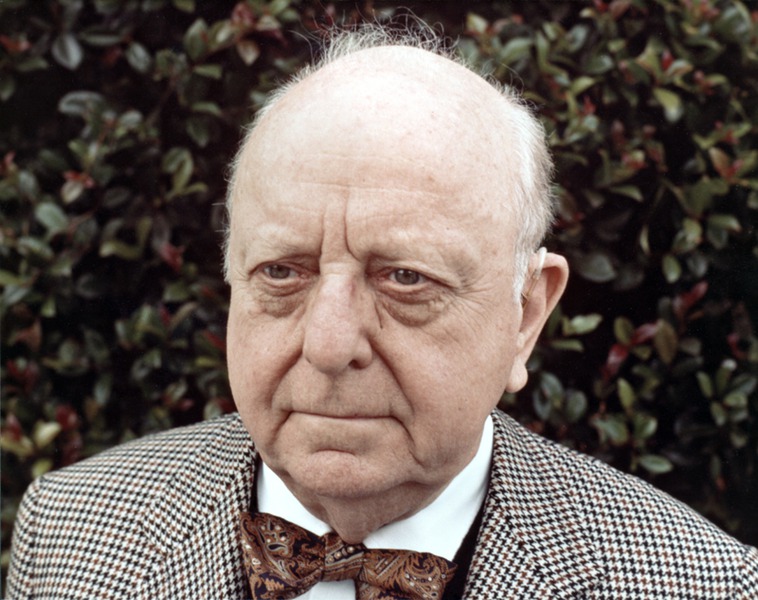
Solomon Volkov: In this case, it is a gold reserve of American literature on music, if you like. In the first volume there were reviews, in the second - his autobiography and a book about American music, as well as more detailed articles. Separately, all these things are on my book shelf, I greatly appreciate the talent of Virgil Thomson, with whom I was lucky to meet and talk. He was born in 1896 and died in 1989. Of course, he is a brilliant stylist, his prose is wonderful. But several acidic reviews appeared on this publication, in particular, the New York Times responded very carefully. Claims to Thomson are not so much as a stylist, his brilliance in this area is recognized as all as an ethical order.
Thomson was a curious figure, of course, he first of all considered himself a composer. He loved to say: three are created by three - a composer, performer and critic. He just combined the whole trinity in his face, he was a performer, a composer, and a critic. These are precisely the claims of modern critics of Tomson, who believe that he used his position of influential criticism, and Thomson was published in the very respected newspaper New York Herald Tribun (it does not exist anymore from 1940 to 1954), and used his position to promote his own works, completely not embarrassed. His reviews destroying, very sarcastic, caustic, memorable, were afraid and tried to appease him.
In today's moral climate, they look at such things disapprovingly. Harold Schenberg, who was the leading critic of Times for many years, did not specifically maintain friendly relations with composers in order to be able to write about them objectively.
Alexander Genis: A very correct idea. Actually, I believe that writers are best friends with artists, musicians are best friends with architects. We must choose friends from another industry.
Solomon Volkov: fair. Thomson, who at the moment is more appreciated as criticism of musical, and precisely as a stylist. It seems to me that this is a very important difference. As a critic he was mistaken, he was mistaken in an incredible way, he incorrectly evaluated large composers. For example, he could not stand Sibelius and compared him to the ground. The same with Shostakovich. When the premiere of Shostakovich sounded, then the Sixon’s review was as follows: “If this composer continues to write music in the same way, then he will be completely disqualified as a serious author.” Can you imagine?
Alexander Genis: No, I can’t imagine how a professional can write this.
Solomon Volkov: By the way, when we met and talked with Thomson, we must pay tribute to him, he, knowing that I published in the West Shostakovich's memoirs, recorded by me, already attacked Shostakovich, carefully circumvented this topic. Moreover, even during the life of Thomson, the volume of his chosen articles came out, he stands from me, and this statement about Shostakovich was seized from him, there was no this article there.
Alexander Genis: Criticism is, of course, a very dangerous matter. If the critic lives long enough, then remembering what was at the beginning of his creative activity is far from always simple. I judge by myself, because the first book that Petei Weil and I wrote the first - “Modern Russian Prose” - was published in 1982, that is, no 35 years passed. But you know, all the authors that we praised there, and we did not scold anyone, still remained my loved ones, including writers who left the Oykumen of Russian literature over time. For example, Zinoviev, who is hardly an idol today. Then we liked him, and I still think that “gaping heights” is a very worthy book. But in principle, for critic, time is a terrible test, because years pass and you all think: guessed or not, understood or did not understand a new phenomenon. This, in my opinion, is extremely important.
Solomon Volkov: What you say is extremely interesting. In this regard, I want to quote the judgment of Thomson about what is the talent of criticism, in which it manifests itself. The first and most importantly is to quickly find a compact phrase that clearly, quickly and compactly characterizes the described phenomenon.
Alexander Genis: What is now called “brand”.
Solomon Volkov: According to Tomson, the second talent is the ability to judge fearlessly. And the third is just a very important point, which you touched on, Thomson said that a good critic should not always be right, not at all, he may have the right to make mistakes, but he should have a sharp mind and common sense. Being unmistakable is not the duty of criticism.
Alexander Genis: Also true. The fact is that when something completely new appears, it is very difficult to admit in this new something big. Disadvantages are much easier to notice than greatness. I always remember Belinsky here. He said that someday it would still come when writers such as Lermontov or Gogol will still be able to stand on a par with a true genius-phenimor merchant. It sounds funny if you read it now.
Соломон Волков: Вы знаете, относительно Белинского для меня вопрос был навсегда решен, когда он при жизни Пушкина написал, что Пушкин умер. Представляете, при живом Пушкине написать, что он умер.
Александр Генис: Потому что действительно трудно, принять новое. , Очень, конечно, точное замечание Томсона насчет емкой фразы. Такая фраза не просто заменяет статью или книгу, она вписывает культурную фигуру в литературную традицию, причем изменить этого уже нельзя. Я вам приведу примергениального определения, которое раз и навсегда изменило отношение к Пушкину: «Веселое имя Пушкин».
Соломон Волков: Блоковская фраза.
Александр Генис: Блок раз и навсегда вколотил эту фразу в наше сознание. И теперь мы не представляем себе мрачного, печального Пушкина, ипохондрика — а это все про него тоже можно сказать, «веселое имя Пушкин» осталось с нами навсегда.
Соломон Волков: Потом замечательная фраза Аполлона Григорьева о том, что Пушкин — это наше всё, которая тоже является самым расхожим определением Пушкина.
Александр Генис: Не совсем. Эта фраза дает оценку Пушкину, а «веселое имя Пушкин» предлагает ключ к Пушкину, что гораздо важнее.
Критика нужна для того, чтобы мы могли переварить то или иное культурное явление. Как у Томсона было с этим, кто были его героями?
Соломон Волков: Его героем, и это как раз это ставится ему сейчас в вину, был он сам в качестве композитора. Потому что в своей автобиографии, как и в книге по истории американской музыки, буквально про каждого своего современника он пишет: Кейдж услышал у меня то-то и то-то и позаимствовал, такой-то композитор услышал у меня то-то и то-то и позаимствовал. То есть все пути ведут от Томсона и к Томсону. В его автоописании он является центральной фигурой современной американской музыки.
Александр Генис: Все мы - эгоцентрики, но надо стесняться. А что вы скажете о музыке Томсона сегодня?
Соломон Волков: Его музыку сейчас играют гораздо меньше, чем при жизни Томсона, по понятным причинам, но тем не менее, ее не забывают. Тут я как раз не склонен злорадствовать и говорить, что он был ничтожный композитор только потому, что когда он был влиятельным критиком, его играли, а теперь он якобы заслуженно забыт. Нет, это очень приятная, мелодичная часто, не переусложненная по-авангардистски. Он работал на самом деле, хотя он не любил в этом признаваться, всегда доказывал, что музыка и политика — вещи несовместные, он был немного сноб, но одновременно вместе со своим снобизмом в музыке он был по-настоящему демократом. При этом он написал оперу на сюжет Гертруды Стайн.
Александр Генис: Круче авангарда не бывает - ведь Стайн пыталась внести кубизм в прозу.
Соломон Волков: И тем не менее, это всегда доступная, мелодичная, простая, ясная музыка. Как образец я хочу показать его прелюд для симфонического оркестра.
(Music)
P.S. Когда эта передача была уже готова, пришла грустная новость: умер любимый певец “Американского часа” Леонард Коэн.Так получилось, что совсем недавно, всего две недели назад, мы подробно обсудили его творчество.
Пока к этому добавить нечего, кроме глубокой скорби.
(Песня Коэна)