
Translated material
Children's Ombudsman announced the readiness of the Russian Federation to resume dialogue with the United States in the field of protection of children's rights
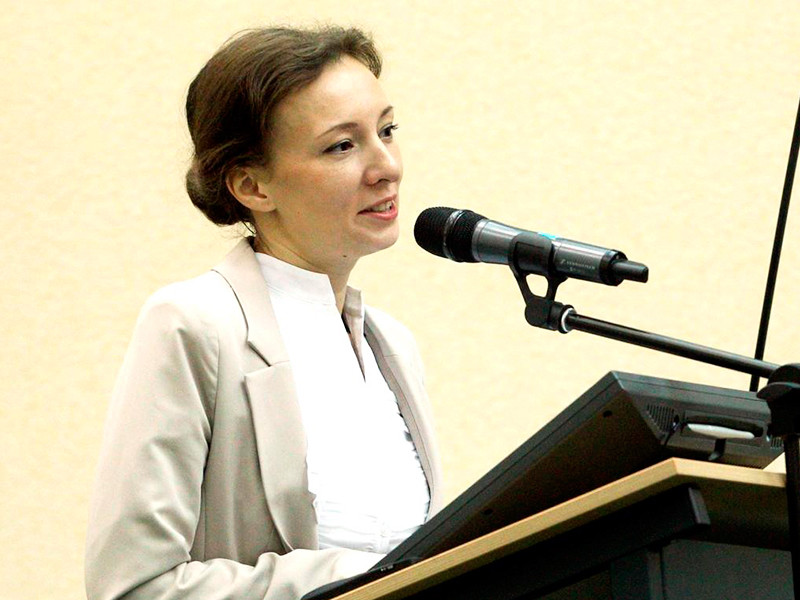
Russia is ready to resume a dialogue interrupted several years ago with the United States in the field of protection of children's rights. This was reported to reporters on Tuesday, November 15, the Commissioner for the Rights of the Child under the President of the Russian Federation Anna Kuznetsova.
“At least there is such readiness, we talked about this with the specialists of the Ministry of Foreign Affairs, we expect when the new administration will be ready to meet and work in this direction,” said the Ombudsman, the words of which are quoted by TASS, said at a meeting of the Presidential Coordination Council in the interests of the National Strategy of Children. “There is certainly a tendency to resume dialogue, and it can end with various constructive solutions,” Kuznetsova added.
At the same time, the children's Ombudsman did not answer the question of whether in the future the cancellation of the ban on the adoption of Russian children by Americans was possible in the future.
As you know, since 2013, the law "on measures of influence on persons involved in violations of the fundamental rights and freedoms of a person, rights and freedoms of citizens of the Russian Federation has been in force in Russia." In the press, this law is known as the "Law of Dima Yakovlev" - by the name of a boy adopted by the Americans in Russia and who died in the United States due to the criminal negligence of the adoptive father, who left a half -year -old child in a car locked in thirty -degree heat.
The law in the Russian Federation was adopted as a symmetrical answer to the "Act of Magnitsky", which in the United States shortly before that sanctions were imposed on persons responsible, in the opinion of Washington, for violation of human rights and the principle of the rule of law in Russia. The law was named by the name of the lawyer Sergei Magnitsky, who died in the Moscow pre -trial detention center.
The “Law of Dima Yakovlev” was criticized not only by representatives of the public, who indicated that Russian orphans with serious diseases are losing the only chance of a worthy life, but also high -ranking officials, in particular the Minister of Finance Anton Siluanov, former Minister of Education Dmitry Livanov, Russian Foreign Minister Sergei Lavrov, Chairman of the Council of Human Rights of the Russian Federation Mikhail Fedotov, ex-commissioner for human rights Vladimir Lukin.
Anna Kuznetsova raised the question of the "Law of Dima Yakovlev" immediately after the appointment to the post of children's Ombudsman in early September. She stated that she was not going to change the current legislation, but intends to work on the following stages of development in this direction. Kuznetsova expressed the opinion that the restrictions introduced by law should be accompanied by support measures to stimulate the adoption of children with disabilities and children with characteristics from orphanages in Russia. The Commissioner for the Rights of the Child emphasized that we are talking about lobbying "not changes, but the next stages of development."
In December 2015, during a traditional large press conference, the President of the Russian Federation Vladimir Putin asked the possibility of mitigating the ban on adopting children with disabilities in the Russian Federation. In response, the head of state stated that, according to statistics, as a percentage of foreigners who want to adopt children with disabilities in the Russian Federation, is much less than those who are asking for healthy children. For this reason, Putin urged not to rush to review the decisions previously made.
In the United States, on November 8, presidential elections were held, at which Donald Trump, candidate from the Republican Party. Some experts believe that Trump as a new US leader may begin to establish relations with the Russian Federation in all directions, others doubt that something will change with the advent of a billionaire in Washington’s foreign policy in relation to Moscow.