
Translated material
SIM card with a collector
When buying a phone number, you can get other people's problems in addition
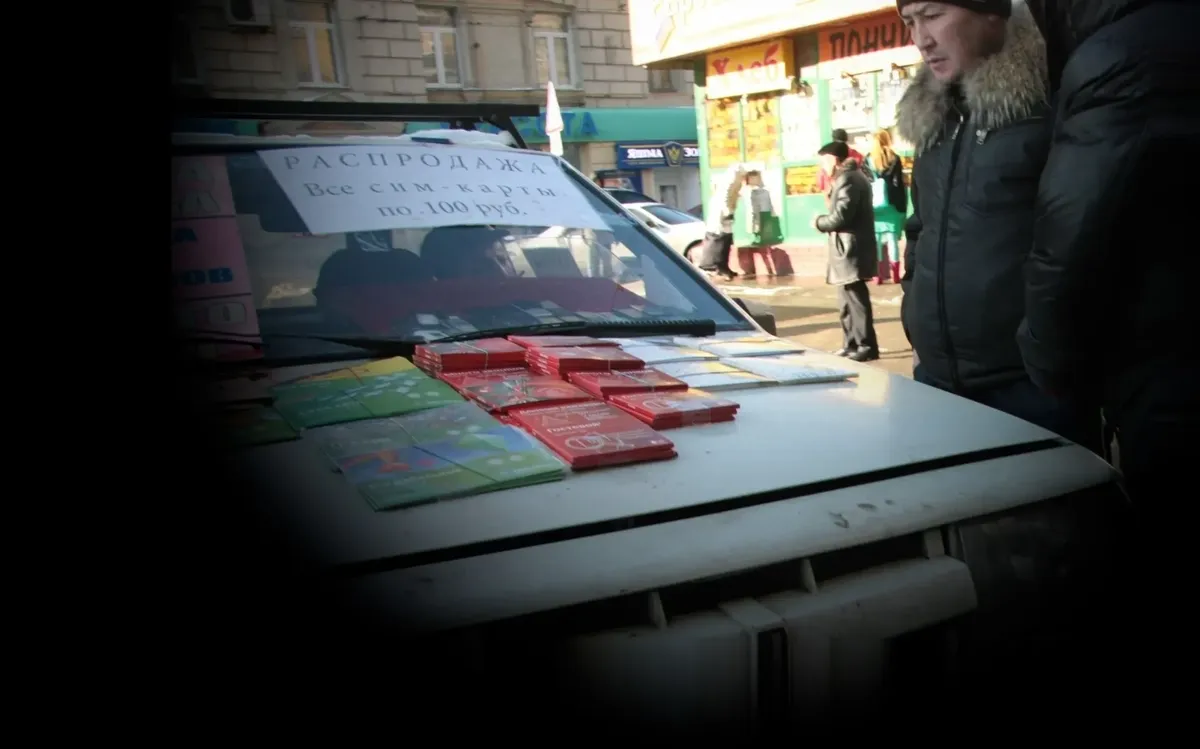
Russian mobile operators resell mobile numbers from one customers to another. Some subscribers, before the termination of the contract, manage to tie an unpleasant “inheritance” to their number - a spoiled credit history.
According to the project “Russia without debts”, every seventh mobile number in Russia is in the telephone base of the bank or collector agency, since it previously belonged to the debtor. People are used to observing special precautions when buying used goods, but almost no one suspects the risks associated with the design of the SIM card. Should a mobile operator who has not warned the client about the past owners of the room, be responsible for possible consequences? Is it realistic to purchase a guaranteed “clean” number? The New Gazeta tried to figure out conflict situations arising around these issues.
Savings for the sake of the consumer
Respecting with mobile operators SIM cards with former numbers today is no exception, but quite ordinary practice. The “Room Fund”, distributed between Roskomnadzor operators, is very limited. “In order to satisfy demand, operators put into commercial circulation subscriber numbers that have been released as a result of termination of contracts for the provision of cellular services,” explains Dmitry Solodovnikov press secretary Dmitry Solodovnikov. According to the law, this is a completely acceptable practice.
All large Russian operators resort to re -use of numbers. This is necessary to reduce costs, because the license plate goes to the companies in heavenly. The operator pays a state fee for each purchased number, as well as for its service in the billing system. “Repeated allocation of freed numbers is also saving for customers. In Russia, mobile prices are one of the lowest in the world, ”says Julia Dorukhina, head of the Megafon press service.
The scheme for all operators is one, only the deadlines differ. For example, in Megafon, if the subscriber does not use communication services for more than 90 days, and the balance of his personal account reached zero, the number can be transferred to another client. “If within two weeks after blocking the number the subscriber does not express the desire to return his number, then he may enter the re -“ sale, ”Dorukhina explains.
According to the Rules of the Beeline, after the termination of the contract, the number is transferred to a special reserve, where it can be from 2 to 6 months. It is assumed that during this time it will be completely “cleared” of the previous owner. If any calls are not received for a certain time, then it stands out for another subscriber. Tele2 has a minimum period that takes place between the latest use of the number of its resales, is one year, in MTS - from six months.
Operators emphasize that the financial motive for the sale of used numbers is not the only one. “Dead Souls” do not allow to obtain correct information about “living” subscribers that really use the services of mobile communications, and this does not give the operator the opportunity to adjust their product and distorts the general socio-economic data, the statistics for which are provided by telecom operators, ”the Beeline press service explained.
It is possible to purposefully buy a completely new number even with a great desire: the employees of the salons do not have access to billing information and, accordingly, cannot say whether a specific phone number belonged to another subscriber, explained to “New” in Tele2. “I turned to the office of [the operator] with a request to replace the SIM card with another with a free number, to which they answered that they had all the numbers-free and used-in the same list, and they cannot sort them,” the user of one of the legal portals describes her personal experience. Most people never think about this problem: the use of a used number does not bring them any inconvenience. But less lucky subscribers sometimes fall into rather unpleasant situations.
Loans "Dead Souls"
Some of these cases are relatively harmless: for example, the purchased number may turn out to be tied to an unknown person’s account on the social network or on another online site, which is why the new subscriber will not be able to register there (“The user with such a number already exists”) or will receive unnecessary notifications. However, sometimes episodes from the biography of former subscribers pop up under much more unpredictable circumstances. So, one of the employees of Novaya Gazeta was called to law enforcement agencies: it turned out that the last owner of the number rented an apartment to the person suspected of committing a serious crime.
But the most common problem is to buy together with the SIM card of someone's unsuccessful credit history. The object of "telephone attacks", when up to a dozen calls and SMS messages from a collector agency come to the number every day, children or overly impressionable people can become. On one of the Runet forums there is a story of a woman who, on the basis of the pressure of collectors who are looking for a completely different person, had a nervous breakdown - for the treatment, the services of a doctor and expensive medicines were needed, all the costs of which she had to carry on her own.
The first step in such a situation is to try to independently block undesirable challenges by making a number in the “black list”. But collectors usually neutralize this possibility: the license plate of such companies can reach several hundred numbers, which makes manual blocking extremely difficult. Therefore, experts advise calling the collectors and trying to explain the situation, and if they use threats or other unlawful methods - immediately write a complaint to the prosecutor's office.
“Here the actions are clear: contact the structure that is collected, is a lender, a collector service, bailiffs,” says Viktor Klimov, head of the ONF project “For the rights of borrowers”. - And then - clarify and show. This is not always simple, the procedure requires certain efforts. But, as a rule, the problem is solved. ” One of the resources that can help in this matter is the professional association of collector agencies Napka. According to the statistics of the association, more than 40% of complaints are just due to the fact that collectors are not involved in the duty of people.
In the best case, the problem will be able to solve by phone or by sending the company a copy of the registration form of the subscriber, which can be provided by telecom operators. At worst - the request will be ignored and continued to call. “It seems that the collectors are unprofitable to call random people if they really want to return their money,” Klimov argues. “But in fact, it turns out that it is easier for them to put a number on auto -calling than to understand.” This is partly due to the fact that citizens who avoid collectors often resort to a variety of methods. ”
Trading a bad reputation
Experts believe that the scale of the problem is not so great as to additionally regulate the activities of mobile operators, forcing them to sell only unique numbers or take special certificates from subscribers. “It is not worth blaming operators, because they have purchased licenseen towers, and they use them,” says Oleg Shaburov, head of the Softline information security department. “In fact, the percentage of such“ ugly ”situations is minimal, and to refuse to use all the already used numbers already used is definitely not a way out.” It is best to change the phone number, choosing options with “fresh” prefixes, says Shaburov. Big Four operators told Novaya Gazeta that in problem situations they were ready to meet subscribers towards and replace for free.
However, injured customers rightly indicate that operators do not provide the proper quality of their product, selling numbers with a “bad reputation”, and the consumer is forced to bear all responsibility for this.
The lawyer of the Consumer Rights Protection Oleg Frolov believes that there are some gaps in terms of legislation that do not allow people to defend their interests. “You can make a complaint to the operator who did not submit the necessary information about the product. And the presence of previous owners is significant information. When buying a number, the client should be aware of the possible consequences, since they can adversely affect it. ” There are practically no appeals to the court on this subject: everything that the plaintiff can count on is compensation for moral damage of a couple of thousand rubles.
The head of the ONF project “For the rights of borrowers” Viktor Klimov says that the problem of collectors' calls to third parties is much wider than the topic of the used telephone numbers. “This happens due to the unsuccessful purchase of a used car or apartment, when collectors begin to look for the property of the debtor, or when registering a loan, when a person is indicated as a friend of the former colleagues.” It is pointless to adopt new laws on this score, the expert believes. Despite the existing regulatory framework, people still fall under hard pressure, and law enforcement agencies are extremely sluggishly engaged in such cases.