
Translated material
Govorukhin advocated the intervention of the state in the creative process
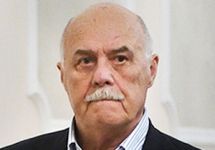
Over the past 15 years of the twentieth century, the level of morality in Russian society has fallen strongly, and in creativity certain restrictions are needed. This was stated by the chairman of the State Duma Committee on Culture Film Director Stanislav Govorukhin in an interview with Russia 24.
In Russia, "there is not even a hint" for censorship, said Govorukhin. According to him, "all the limiters were removed" because of the declaration of state non-interference in the creative process. “It does not interfere, and this is also very bad,” the director complained.
“There is no state in which moral censorship would not exist. As a rule, this society, church and other institutions. But we don’t have this. We have the only constitution in the world where it is written that all censorship is prohibited,” Govorukhin noted. He stated that he was a supporter of censorship. “I believe that moral restrictions are the essence of freedom in society,” the deputy said.
When asked who should determine where the moral trait is, which the Creator cannot cross, Govorukhin replied: “This is the whole and a snag. If we knew who would decide, I would try to say that it is necessary to introduce some moral restrictions, since a person is defenseless before the pressure of vulgarity and nasty things that are pouring from the screens of cinemas or stage stage.”
Govorukhin emphasized that all situations cannot be foreseen in laws. “For example, not the word mat was spoken, but the man on the forefront unfastened the fly and urinated. You won’t write this in the law. We need some kind of internal framework,” the deputy said.
On October 24, speaking at the 7th Congress of the Union of Theater Workers of Russia, the head of the Satyricon theater Konstantin Raikin called "an ugly encroachment on the freedom of creativity" Closing a number of performances and exhibitions. The artist announced the repeated "raids for art." He expressed concern in that the authorities neutrally behave in relation to "groups of allegedly offended people who close the performances, close exhibitions, brazenly behave very much."
“The ban on censorship - I don’t know how someone treats this, but I think that this is the greatest event of a centuries -old significance in our life, in the artistic, spiritual life of our country,” Raikin said. “And what is happening now? I now see how the hands of someone are clearly scratching - it is to change and return it back not only during the time of stagnation, but in more old times - in Stalin's times.”
The next day, the press secretary of the Russian President Dmitry Peskov said that censorship in the field of art is unacceptable, but the authorities have the right to influence what is being created for public funds . "As such, censorship is unacceptable. This topic was discussed at the president’s meetings with representatives of the theater, cinema community. Censorship is unacceptable, but at the same time it is necessary to clearly differentiate those productions, those works that are placed or withdrawn for state money, and those that are removed with the involvement of any other sources of financing," Peskov said.
According to the press secretary, if the state allocates funds, then it has the right to denote the topic. "Naturally, if the state gives money for some kind of production, the state has the right to indicate a particular topic, the state orders a work of art on a particular topic within the framework of those programs that are in the implementation." Peskov noted. - Again this is not censorship, it is not necessary to confuse this with the order of the state. "
“As for the works, I repeat once again that are born without the participation of state money, the main thing here is not to violate some basic provisions of the current legislation. This refers to the fight against extremism, provoking the growth on religious and other soil. The main criterion is compliance with the current legislation. Of course, the censorship here is in no way acceptable,” the spokesman added.
Raikin's statements caused a loud reaction in society. The head of Chechnya Ramzan Kadyrov and the leader of the "Night Wolves" Alexander Zaldostanov (surgeon) made a harsh criticism of the artist.