
Translated material
Strasbourg calls you
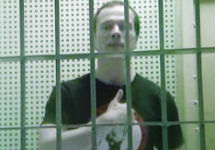
The European Court of Human Rights Comminized the complaint of political prisoners Ildar Dadin to torture in the colony. This was reported on the page of the Public Verdict Foundation.
The ECHR posed questions to Russia: whether the right to ban torture was violated (Article 3 of the European Convention on Human Rights) from September 1 to November 18; Whether Dadin was an object of cruel and improper treatment during this period; Whether Dadin had access to the effective means of legal protection. The answer in the Strasbourg court is expected until December 16.
The ECHR draws attention to the contradiction: the document dated November 2 says that the representatives of the FSIN recorded Dadin's injuries. But in another document it is stated that on the same day Dadin was examined by the doctors, and "they did not find any injuries." The court raises a separate question, what was a specific reason for the origin of Dadin's injuries.
The ECHR states that the urgent measures prescribed by him were not executed by Russia and therefore remain in force. The court ordered the independent medical examination of Dadin, and doctors should not have any connection with the FSIN system. In addition, the representative of the political prisoner Nikolai Zboroshenko was supposed to get unhindered access to him. Both of these conditions were not met. The lawyer was not allowed into the colony, the examination was done by the doctors of the FSIN system. In this regard, the Strasbourg court raises another question: whether Article 34 of the Convention was violated, namely, the right of Dadin to file a complaint in the ECHR.
The ECHR also demanded that Russia provide all the medical documentation on the health of Dadin for the period from September 1 to the present.
On November 1, a letter from Dadin was published to his wife Anastasia Zotova, who was recorded from his words by lawyer Alexei Lipzer on October 31. In a letter, Politzek talked about the torture that he was subjected to in the Karelian IK-7 . The Public Verdict Foundation turned to the ECHR next day.
The ECHR applied urgent (interim) measures to the application for torture in the colony. In addition, the ECHR on his own initiative assigned a complaint priority . By November 17, Russia was supposed to provide forensic documents to the Strasbourg Court.