
Translated material
Erdogan did not exclude the entry of Turkey into the SCO
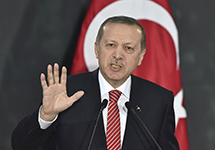
Turkish President Recep Tayyip Erdogan did not rule out his country's entry into the Shanghai organization of cooperation. It is reported by Hürriyet Daily News. Such an opportunity, Erdogan explained, is one of the alternatives to membership in the European Union.
“Turkey should first of all relax on the subject of joining the EU and not to hide on this topic,” the president said. “Someone can condemn me, but I set out my opinion. For example, I will say: why not Turkey to join the Shanghai five? (Erdogan uses the former name of the SCO, altered after joining the organization of Uzbekistan. - Ed.)" "
The possibility of joining the SCO, Erdogan said, was already discussed by him with Vladimir Putin and President of Kazakhstan Nursultan Nazarbayev.
In addition to Uzbekistan, the Turkish leader noted, India and Pakistan are also joined by the SCO. “Iran intends to join,” Erdogan continued. “Mr. Putin said:“ We are evaluating the situation. ”Membership in the Shanghai five will untie Turkey's hands (as for her application for membership in the EU. - Ed.).”
As noted by Hürriyet Daily News, the Turkish president has already announced the plans to join the SCO. However, the publication continues, such a step would have buried an application for the country's membership in the European Union.
Erdogan, meanwhile, emphasized: "The EU has been postponing our application for 53 years. What is it at all?"
Earlier, the Turkish leader repeatedly cited this argument , stating that the European Union unjustified the consideration of the application.
Erdogan once again called on Brussels by the end of this year to decide on the application of Turkey, and also expressed the idea of holding a referendum on the country's membership in the EU.
Shanghai five was formed in 1996 by Russia, China, Kazakhstan, Kyrgyzstan and Tajikistan. After entering in 2001, Uzbekistan received the current name - SCO. India and Pakistan will become members of the organization since 2017.
SCO members coordinate their activities both in politics and economics, and in the military sector.