
Translated material
Fabr Gate
In St. Petersburg, animal defenders urge the Hermitage to close the exhibition of the world famous artist
Both the museum and the artist are not used to the sharp reaction of the public. The “Orthodox Cossacks” have already complained about the Hermitage to the prosecutor's office-because of the exhibition of the Capen brothers. Until now, homemade videos are wandering over the network, which reports that the director of the museum Mikhail Piotrovsky “shit in a cultural place”. The Belgian Jan Fabr is also familiar with aggression in relation to himself: the artist appointed in April 2016 by the head of the Festival of Arts in Athens, the believers soon attacked, as a result of which he had to leave this post.
However, the current scandal in St. Petersburg has a significant difference from others like it: the country's main museum, inaccessible to attacks by the guardians of morality, entered into a meaningful dialogue with those who accuse him of propaganda of violence.
Cultural dialogue
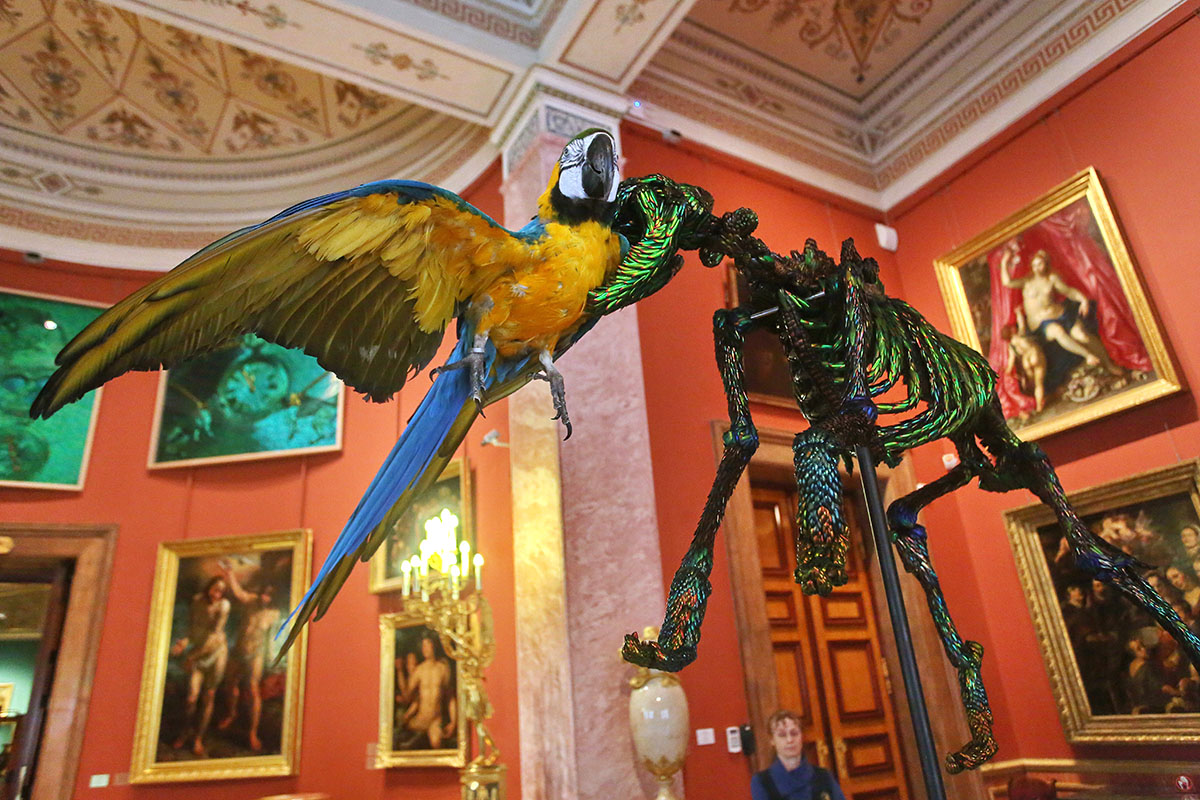
The exposition of the work of Fabra is the largest project of the Hermitage in the field of contemporary art since the time of "Manifesto". It occupies not only the halls of the General Staff allocated for contemporary art, where the unprepared audience does not look: work appeared in the garden of the Winter Palace, and in the exposition of the Dutch and Flemish painting of the new Hermitage.
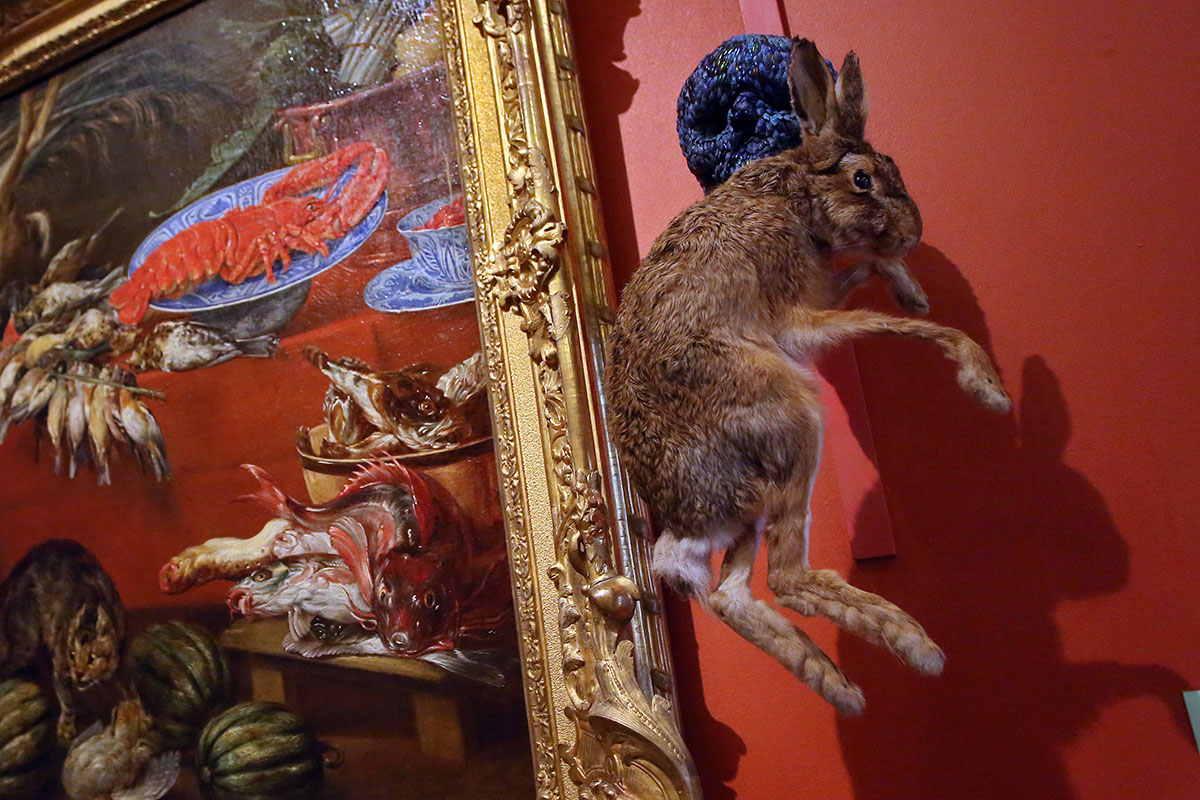
The exhibition under the ironic name “Knight of despair is a beauty warrior” (NT has already written about it, see No. 34 of October 17, 2016 ) was created with a calculation of dialogue with the Hermitage Exposition. Fabr wittyly embeds its inventive, technical graphic works and objects into the context of classical art. The summary of the “Knight ...” reflects the film that is shown at the headquarters: the artist in knightly armor walks through the halls of the museum, applying to the exhibits, as to holy relics. The dashing colorful drawings of the Fabra on the topic of the carnival are adjacent to the “Fair with the theater performance” of Bruegel. Huge marble slabs invaded the portraits of Van Dyck, on which profiles entitled “my queens” are filigree. Hendrik Goltsius, the hooligan of the 16th century, composed the company Fabrovsky picturesque canvases created from the wings of germ beetles. Finally, the Sneuders hall with a trellis hanging carcass, dead fish and other worships were complemented by compositions from stuffed rabbits and birds. They became the detonator of the scandal.
Almost three weeks after the opening of the “Knight ...”, users' statuses with a hashtag #shameful -warRmmitage appeared on social networks. The indignant public calls the artist a flayer. As one of the campaign inspirers said NT, deputy Vitaly Milonov: “Such an exhibition cannot be placed in a society that claims to be humanity. The animals were injured, gave their lives and, as a result, became the corpses suspended on chains in the concern of aesthetic citizens. Let us then show all the horror of abortion, exposing the barbed bodies of babies. This is madness! Jan Fabr is a third-rate, stagnant European experimenter artist, I don’t know for what rugs he penetrated our state Hermitage, maybe seduced someone. ”
Another assessment of what was happening was given by Olga Sviblova, art critic, curator, creator and director of the Moscow House of Photography/Multimedia Art Museum: “Jan Fabr is a great contemporary artist. He was exhibited in all the largest museums in the world, and the fact that he is exhibited in the Hermitage is the honor of Jan Fabra, but also the honor of the Hermitage. The largest museums, treasures of history and art should lead people to relevance and modernity. Jan Fabr does not provoke for the sake of provocation, he has a wonderful career, he does not need it: any artistic gesture is always meaningful. Yes, sometimes he changes the logic and stereotypes of our perception. For this, there is art. If this is shocking someone, then we must not be afraid, but turn to the guide. ”
In defense of animals
The museum is almost immediately - on the second day of the flash mob - set out in detail his position on the official website. For each accusation they reacted with a detailed explanation of what the artist wanted to say ”and why it was precisely the same for this and not other means. “Today, a person’s attitude to animals is consumer,” the Hermitage website says. - <...> Focusing cats and dogs in old art, the Fabr shows that in all their qualities they are like people, and therefore their love and joy, their illness and death meanly supplants from our consciousness. Presenting the stuffed animals, the Fabr, along with zoo guards around the world, opens against consumer attitude to them. <...> He turns the bodies of animals shot down by cars from the waste from the waste of consumer society - into a reproach of human cruelty. "
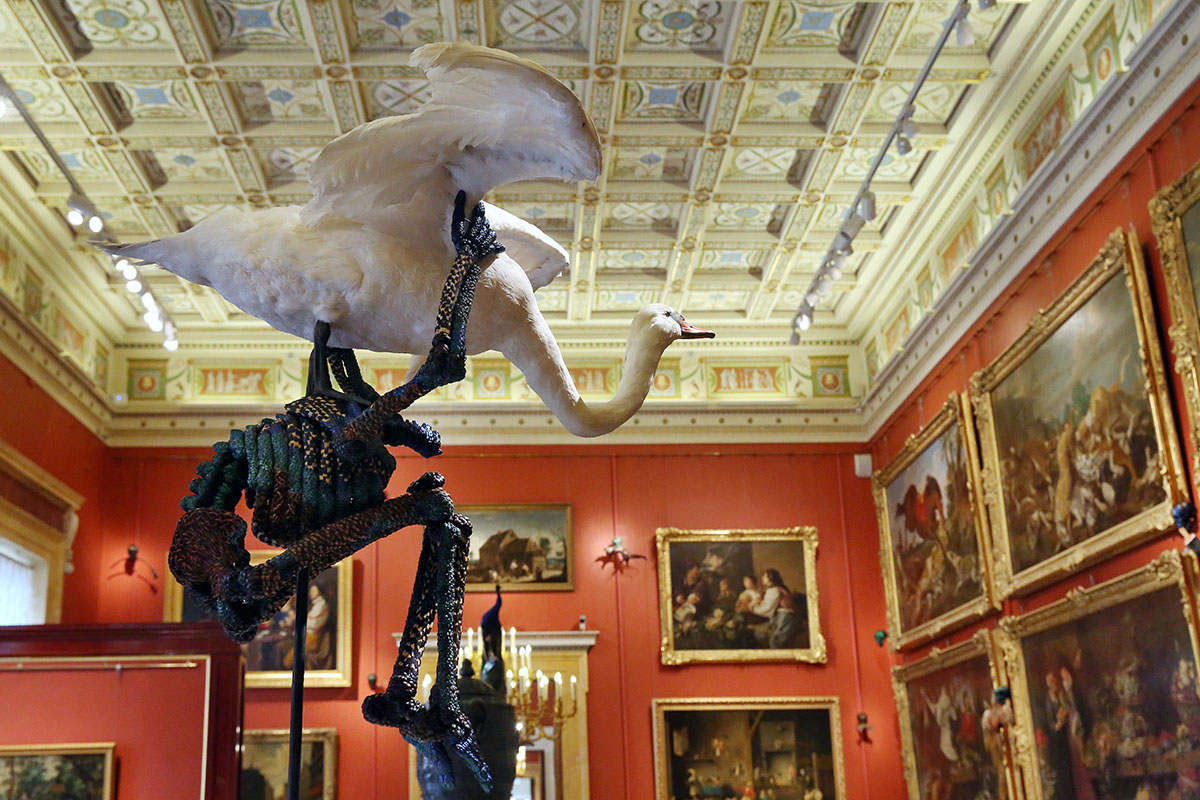
In addition to the official commentary, the museum answered the public claims with its own flash mob - #cosfabra. First, the Hermitage itself, and then ordinary users of social networks, began to post photos of cats with comments in defense of the exhibition. There were very witty performances - the artist Ivan Poyshch, for example, illustrated his statement “Sunfabra” by a photograph of Lenin’s body in the Mausoleum: if you think about it, in essence it is also a scarecrow and an example of cruelty.
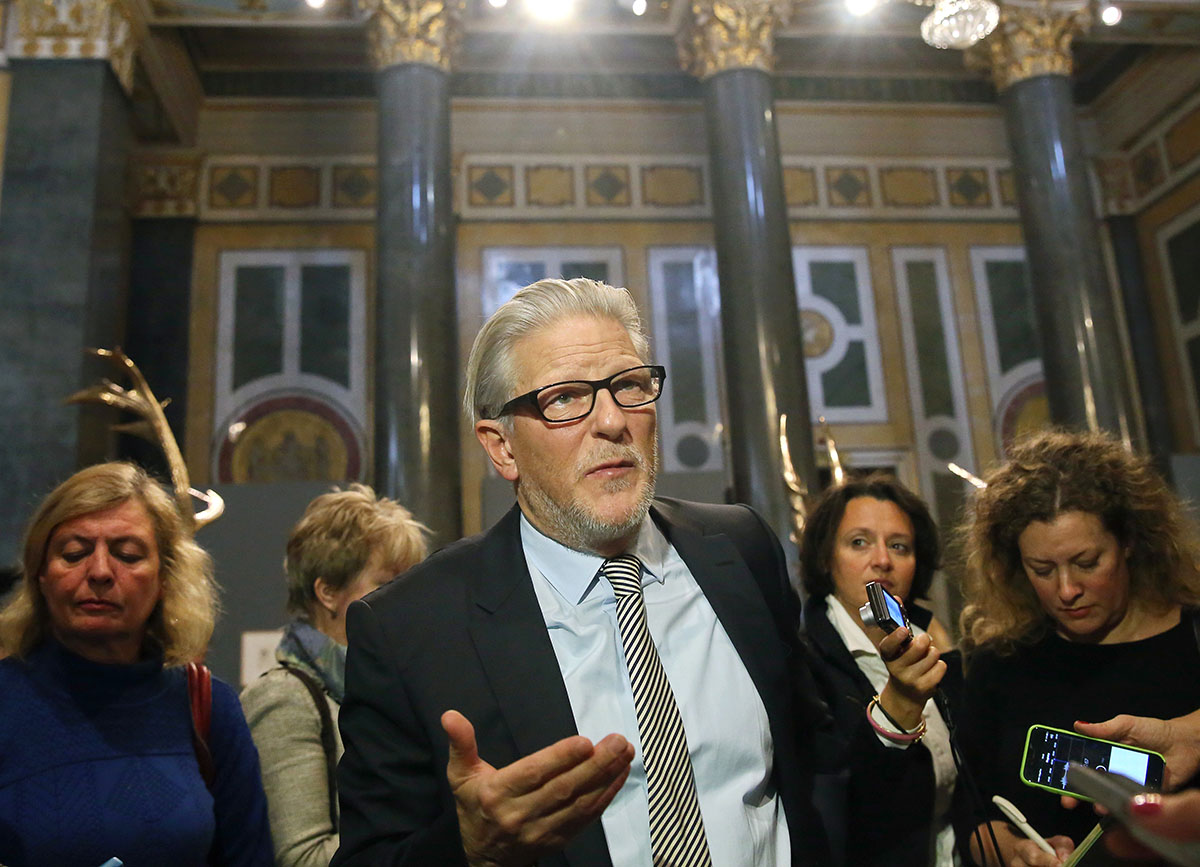
Finally, the Hermitage answered “essentially complaints” and deed: he invited the zoo defenders to the exhibition. The latter examined the exposition and noticed that the museum really fights with them for animal rights and protests against cruelty.
Art and people
This scandal is far from the first scandal for the Hermitage, it obviously resonates with the pogrom of the exhibition of Vadim Sidur in the arena and the closure of the exhibition of photos of Joka Rodges in the center of the Lyumier brothers. True, in this case, protesters perfectly understand that they will not be able to close the “knight” or arrange a pogrom in the main museum of the country: agreements with the artist and professional ethics for an Hermitage are more important than petitions, flash mobs and prosecutors. That is why the museum can afford not to cover the exposition in half a year, but to enter with dissatisfied with a calm and balanced dialogue that allows you to understand what is the reason for the conflict of “art and people” here and now.
“I believe that since this is the State Museum, please follow the opinion of the state, that is, the people who, according to the Constitution, are the only source of power in our country,” Vitaly Milonov insists. - I think that if you ask citizens of St. Petersburg, whether they like this perversion, 99% will say that they do not like it. Therefore, if Jan Fabr wants to expose the corpses of animals, let him put it in his country house. And it is not a fact that he will not be involved in the propaganda of cruelty to animals ... Instead of bringing normal artists, we collect some trash from the garbage dump, drug addicts and perverts who put their sore hallucinations in the state Hermitage. ”
This position is extremely characteristic of the current cultural situation, striving to result in a pogrom. A lot said that the attack on the works of Sidur could lead to the end of any exhibition relations of Russian museums with foreign ones. Is it possible to take risks by giving a collection of museums of the Vatican to Pushkin’s Rafael or sending a collection of museums of the Vatican, if any madman can pour the exhibit of urine, expressing, for example, his disagreement with the dogmas of the Catholic Church?
Milonov: “If you ask the citizens of St. Petersburg, whether they like this perversion, 99% will say that you do not like it”
The Hermitage many times clearly formulated his policy regarding the audience discontent with exhibitions. Those who do not like shocking, those who believe that the museum is not a place for a bold statement are wrong. Mikhail Piotrovsky repeats the obvious truth as the mantra: what is exhibited in the museum is not necessary. This is art, simply because it hangs (stands, lies, projects) in the Hermitage halls. The exhibition of Olympia, brought from the Orsa Museum, has just ended in the same main headquarters. The picture of Manet was presented in the context of a violent reaction, which she once caused among the indignant spectators of the Parisian salon, and the tradition of shocking in painting in general. The Hermitage stubbornly educates its audience, preferring to methodically accustom it to art, explain and formulate, and not go on the occasion of flash mobs, rallies and petitions.
The situation obliges
Among other things, the story with Fabr Gate demonstrated the naive confidence of the audience that the exhibition is a voluntarist step of the curator. Their misunderstanding of the fact that the exhibition is the result of a long, painstaking work, that the exhibits were brought and exhibited in compliance with the legislation and countless rules. Simple truth - what is hanging in the Hermitage, it is art - has ceased to be obvious, and this indicates a deep crisis of trust in institutions and, wider, the very concept of cultural authority.
Now a lot is said that modern society is undergoing a crisis of the Institute of Opinions. For example, the media on the issue of censorship put the opinion of the head of the theater and the Orthodox activist on one bar: everyone who can replicate his opinion using press conferences or Twitter is an authority. How to survive in this crisis is an open question, every viewer, official or the head of the museum independently searches for an answer.
“It's normal that people are not ready for a new language, for a new problem, for new concepts. But without all this, we do not need art. Because art and science are innovation, ”Olga Sviblova notes. - Fortunately, today groups of citizens do not allow themselves to give advice to astrophysicists, because the school level of knowledge does not allow them to understand new scientific concepts. Where does this boorish attitude come from, that people who do not work professionally be judged by culture? If Mikhail Piotrovsky is an absolute authority in our country and all over the world that brought the Hermitage to a new level - and the curator of the exhibition Dmitry Ozerkov ( the factory of contemporary art of the Hermitage. - NT) decided that it was suitable for the Hermitage, then it should be. ”
Hermitage: “Presenting the stuffed animals, the Fabre, along with zoo guards around the world, opens against consumer attitude to them”
And the Hermitage gave the answer to which it was possible to count on: Noblesse Oblige - the situation obliges. Neither a blogger nor a reviewer can affect the exhibition, for example, to reduce its term. Come and see. Carefully read the annotations to work. Put the catalog. Return if you misunderstood. Ask questions. Walk on the exposition with the mediator. Google, after all. The museum should not and cannot offer you a larger museum - except for a playful response flash mob.
Photo: Svetlana Kholyavchuk/Interpress/TASS