
Translated material
The instrument of propaganda
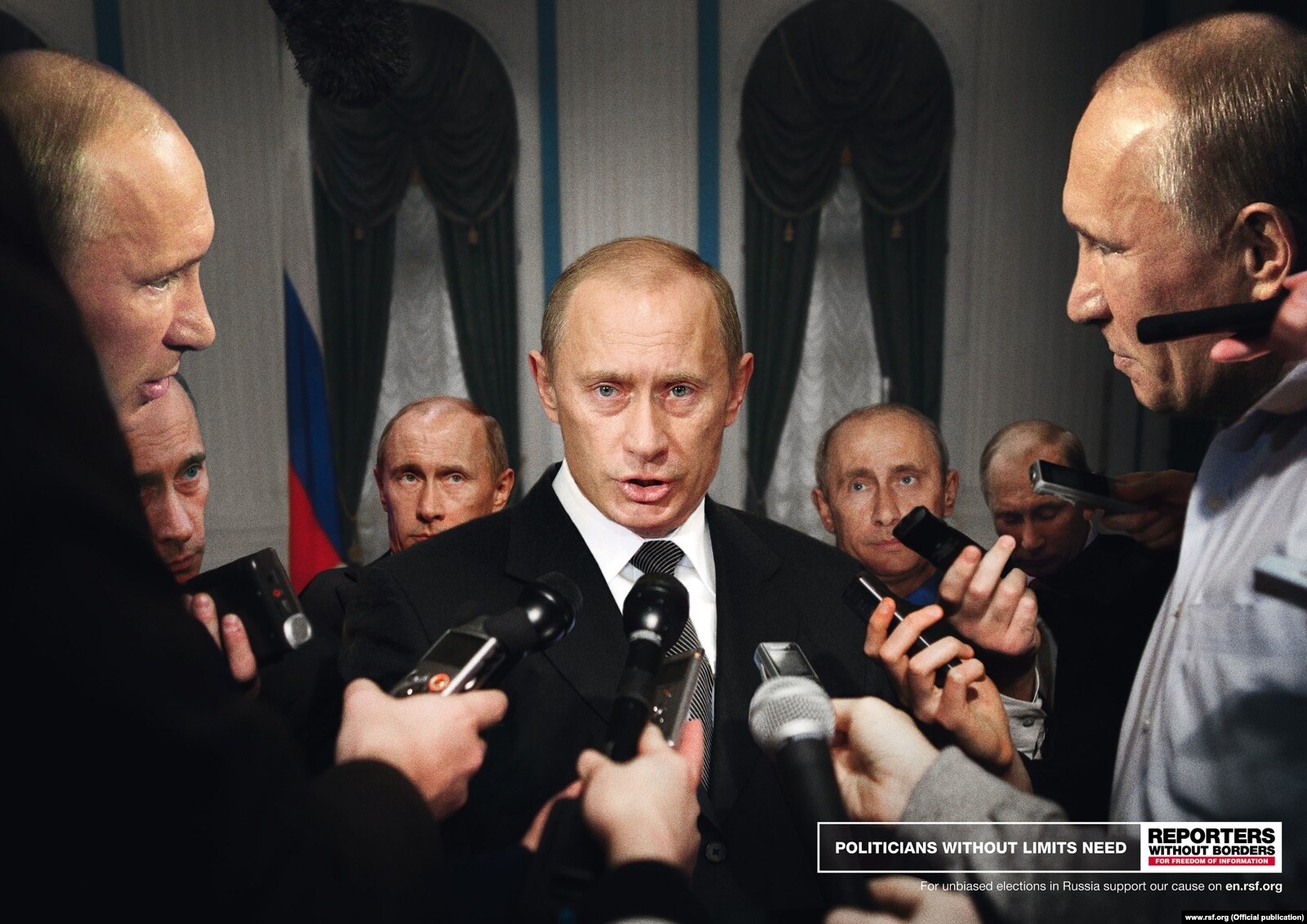
The European Parliament resolution on countering propaganda against the EU, including from Russia, caused an extremely violent reaction in Moscow.
President Vladimir Putin spoke about the “degradation of ideas about democracy in Western society” and congratulated journalists who “prompted representatives of the European body to make such decisions,” with “productive and talented work”.
Video with Putin immediately published on Twitter by the editor -in -chief of RT Margarita Simonyan.
Putin congratulated the RT and Sputnik journalists on the effective work https://t.co/zzkaigscg pic.twitter.com/zxxx5ex9i1l
- RT in Russian (@rt_russian) november 23, 2016
The Russian Ministry of Foreign Affairs was called the resolution "information crime" and did not exclude that "they will have to answer mirror," RIA Novosti reports . “You commit a crime because you do not give people the opportunity to analyze and think, based on alternative sources of information,” the agency quoted by the representatives of the Ministry of Foreign Affairs of Maria Zakharova, as well as the opinion of a member of the State Duma Committee on International Affairs Sergei Zheleznyak, who called the resolution of “Russophobic wildness”.
The deputy of the European Parliament Anna Fotyga, who introduced the resolution in Strasbourg, will learn about Putin’s reaction only during a conversation with Radio Liberty correspondent: "To be honest, there was simply no time." Hearing in the retelling of Putin’s words, Fotyg said: “The report indicated that Russia Today and maybe a lesser extent Sputnik achieved significant success in the conduct of propaganda in the European Union and EU members, and this is natural that, speaking of this, Mr. Putin supported the tools used by the Kremlin.”
Here are fragments of the resolution that caused such discontent of Moscow:
- The EU, the countries included in it and their citizens are under growing and systematic pressure, faced with misinformation campaigns ... The purpose of which is to undermine the very concept of objective information and ethical journalism, presenting any information as a preferential or a tool of politics. The targets of these campaigns are also democratic values and interests ...
- Freedom of the press, access to information and freedom of expression - the support of the democratic system, in which the transparency of financing the information funds is very important ... At the same time, it is necessary to evaluate how to act with respect to the media involved in the strategy of intentional discretion, especially among the "new media", in social networks and digital spheres;
- The information war is a historical phenomenon, as old as the war itself; The information war against the West was extensive used by the Soviet Union during the Cold War and has now become an integral part of the modern hybrid war ... The purpose of which is to destabilize the political, economic and social situation in the country, which has been attacked without a formal declaration of war, and this applies not only to the EU partners, but the EU itself, its institutions, which are part of the Union of States and their citizens ...
- After the annexation of Crimea by Russia and the hybrid war in the Donbass conducted by Russia, the Kremlin activated confrontation with the EU, and strengthened the propaganda war. Russia plays an active role in the European media environment to create political support in European society to its actions and undermine the consistency of European foreign policy ...
- The Russian government aggressively uses a wide range of funds - such as expert centers and special funds (for example, Russian World), special agencies (Rossotrudnichestvo), multi -axal television channels (for example, RT), pseudo -mono -agencies and multimedia services (for example, Sputnik), international public and religious organizations (wanting to imagine themselves to be the only defender traditional Christian values), Internet trolls-to challenge democratic values, divide Europe ... Russia invests the necessary funds in its instruments of disinformation and propaganda ... The Kremlin finances political parties and other organizations within the EU ...
- The Kremlin’s information strategy is combined with the policy of strengthening bilateral relations with individual EU states in order to weaken the coordination of the EU actions ...
- Russia supports in the EU forces opposing European integration, in particular, extreme right -wing parties, populist forces and movements that deny the values of liberal democracies ...
- a significant share of the Kremlin’s hostile propaganda is aimed at representing some European countries as belonging to the “traditional sphere of Russia's influence”, thus undermining their sovereignty and deeply rooted European identity, which was previously undermined by communist regimes ... One of the key strategies is to create an alternative narrative, often based on manipulative interpretations of historical events ... falsification of history is one of the main ones - one of the main ones is one of the main strategies ...
Anna Fotyga, commenting on the goals of the resolution, says that she streamlines the information about the propaganda aimed against the EU, in the "diagnostic", as it expressed part of the report. The authors of the resolution are called upon by EU members to vigilance in relation to the "information operations" of Russia in European territory and to expand the efforts to counteract it, including financially.
A significant part of the report, in addition to Russia, has the danger of propaganda from the part of the Islamic State group (prohibited in Russia). This caused extreme discontent in Moscow: "The resolution contains a number of baseless accusations, including compares the activities of such media as Sputnik, with the activities of the ISIS terrorist group," writes RIA Novosti.
The report itself has a “special opinion” of deputy Havier Couiso, who considers it irresponsible to “put the states like Russia to one level with ISIS, speaks of the negative role of the EU in the current conflicts in the southeastern surroundings of the European Union and propaganda from the United States, and requires Russia to recognize the key partner of the EU, the global role of Russia in matters of security, requires European to remove it from European matters sanctions, separate the EU from NATO and so on.
Anna Fotyga, commenting on this, says that the European Parliament is a democratic institution where there is always the opportunity to include such a “special opinion” in the report. Speaking about the presence in the resolution of both Russia and the Islamic State, Fotyga emphasized that no comparisons are carried out in the document (between Russia and IG), these issues are clearly divided: "Unfortunately, we encountered these two challenges at the same time. This is the only reason they were in the same report. We must deal with them at the same time."