
Translated material
Renegade | Colta.ru
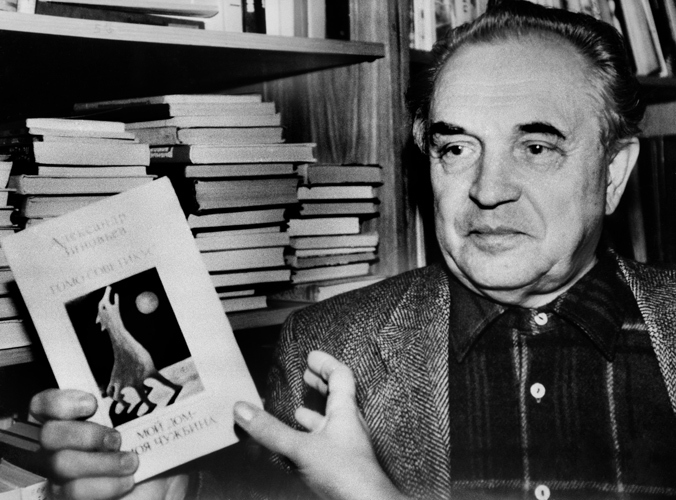
"The essence of man is such a combination of human relations that a person is able to withstand."
Alexander Zinoviev
Moscow State University, 1st Paul. 1950s.
“We are lazy and unsociable” - the fidelity of this judgment is confirmed by the fact that the first biography of Alexander Zinoviev appeared only ten years after his death - and no one does not know when the next one appears. After all, no matter how the Zinoviev is the scale of his personality, and the influence on the most diverse areas of intellectual life, which was exerted, and simply the long and diverse life that he has lived - plots ideal for the biographer.
It may seem strange to complain about the failure of biographies at once, but not in the case of Zinoviev: it is too large to accommodate any biographical book, the biographer is forced to either write dotted line, or notes that it remains behind the brackets - giving the reader that this is not an oversight or non -remission, but the inability to overtake immense.
The Soviet twentieth century was not so much weaned to keep diaries and write memoirs - how many a voice broke: the numerous memories of Zinoviev have a mixture of solemn speeches, panobratic recalls or stories of enthusiastic fans in the style of “One meeting with Turgenev”. The caustic, grotesque and evil language of Zinoviev’s prose is also a way to break out of silence, his personal (like his paintings and drawings) a way to speak where ordinary, i.e. The usual, preceding language is erased - there is no air for him so that you can catch your breath, come to your senses and speak. A way to break the usual speech - which was erased to automatism, which does not hurt not only the reader, but also the author himself, who sets not only the words, but also what they can say: Zinoviev studied - and coped with this brilliantly - to say so that even old words and thoughts came to life - i.e. It became possible to hear from under the dead shells: he pulled them out of the usual environment, converted them into a bike, anecdote, aphorism, put them into the character’s mouth-tasua remarks so that the same, repeated by different masks, revealed its content, its function, ”the Soviet language, bringing the stamp to grotesque and revealing the social content of it and revealing the social content speech.
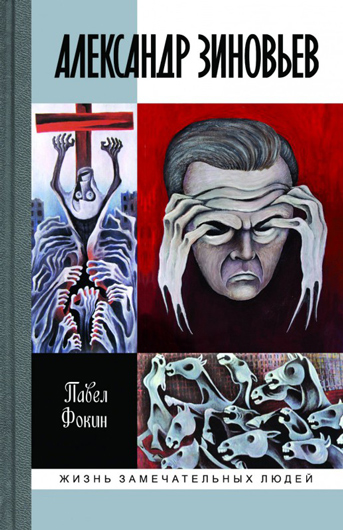 © Young Guard
In this book there are many and unfinished - still too close, old disputes, raspings, meanness and resentment are either still alive in the person of their participants, or their descendants and heirs are alive. The face of the “evil” here-or the Faculty of Philosophy of the Moscow State University has long gone into the past, now connecting itself in the genealogy built not with those who have analyzed personal affairs, but with those who were disassembled, or “authorities”, “power”, “authorities” are not people, but functions and institutions.
However, in the conscious naivety elected by the author, there is its own old -fashioned charm - this is a narrative that takes almost entirely the assessment and views of the hero, changing in them, as they changed over time: Zinoviev here is not impeccable, then, in any case, it is unambiguously positive, its shortcomings - ordinary, human, the fuss of everyday life - they add more affordable, more accessible, accessible, accessible, accessible, accessible admitting not only admiration, but also sympathy.
The book has very few social context - only the first decades of Zinoviev’s life are immersed on Wednesday: in the life of the village, relatives, countries, in the events taking place around him or with him at the university or at the Institute of Philosophy - friends, acquaintances, wives, mistresses - they are mentioned, but dashed, they do not only have their own voice, the right in their opinion, but even Zinoviev’s eyes are practically closed to them. The “sovereign state of Zinoviev” turns out to be much more autotarchy than even in autobiographical (and almost all of its artistic and sociological prose by autobiographical sketches) the hero’s texts: they have other, significant environment in which he is formed and with which he interacts, against which he is fighting or from which he wants to escape and build up protection, except for his wives and daughters, besides his wife and daughters, besides his wife and daughters. There is practically no one, even V. Maksimov, one of the most significant people for Zinoviev in exile, appears briefly, first of all, having already died, in a quoted, really strong, memorial word Zinoviev.
The book is simultaneously redundant and insufficient. It is excessive, for example, by regular reports in the main text: which newspapers published reviews of Zinoviev’s new book, on which television channel a conversation with him came out, how much he gave presentations, etc. - Lists that resemble either a report or a resume, with constant reminders, who was still present at a particular solemn evening, which of the greats sat at the same table with him.
And here is insufficiency: for example, it is said about the high marks that European intellectuals gave Zinoviev, but the reviews of the latter themselves are given in the volume of one or two phrases-a choice that is quite suitable for the back cover of the book, so that it is better sold, but completely insufficient to show why, why and in which context it was praised, how unanimously or, vice versa, finding completely different features and excitements, it is found. which aroused approval or interest. These voices are designed to convince - by external authority - in the high significance of Zinoviev, and the author of the right that his hero did not receive his own praise from comparable (adjusted to the scale - from world to national) in Russia - he calls if he does not believe his eyes, then to believe the very Western authorities, which are so fond of referring. But, alas, the situation is equally dysfunctional: after all, they call to believe the proper names, and not what they said.
Zinoviev in the optics of Fokin appears in two angles: firstly, as a strong personality, a person, interesting regardless of his views-a way to live, act, defend himself; Secondly, as a writer, that is, since the 1970s, when Zinoviev is already fifty-an age when for most life has long been rolling according to the usual channel. The writer Zinoviev became largely contrary to himself - still going to emigration, he expects to give lectures by logic and even tries to do it in Munich and Oxford - he is met with respect, but this is not at all what he needs. He strove for glory - with the frankness inherent in him, stating it openly; It was important for him to teach and be a leader, causing amazement, reverence, even enmity, but strong feelings - he did not find anything like this in scientific terms. They treated him respectfully, but primarily as an opponent of Soviet power, a critic of the regime, an exile; Again to start a scientific career and conquer the situation in academic circles - now not as a “Soviet philosopher”, but as one of his, acting according to general rules, a colleague, a competitor - he was hard and unprotected to him. At the same time, his words and reasoning about the Union, on the contrary, aroused universal interest, here he found so valuable attention for him - he already had a publisher, who was devoted to him, had an audience, they were ready to pay for his books - not very much, but enough to exist. And he became a professional writer. In the draft version of the answers to the questions of the newspaper Liberation in 1985, Zinoviev said:
“I write because I have to do it. For more than fifty years, I have successfully evaded it. But the circumstances eventually developed so that I could not stand it and wrote the first novels, thereby clearing my consciousness from the load of thoughts and images that have accumulated in it over the past life. When I was thrown from Russia to the West, literary activity was the only way to earn a living and keep my family. And it seems that this literary curse will pursue me until the end of my life. Perhaps literary work brings joy to someone. It brings me mainly suffering. Perhaps someone writes in order to teach humanity to teach the mind. I do not want to teach anyone, because I consider this a matter of absolutely hopeless. I write, obeying the forced laws of life, the process of scripture, the development of thoughts and plastic images ”(pp. 688–689).
Over time, this changed and at least Zinoviev continued to write and publish stubbornly and when the publication of books brought losses instead of income.
Having entered a direct conflict with the Soviet government, having issued “gaping heights” in the West, having left the west by the radical critic of the Soviet system - from the very beginning he was fundamentally different from both Western critics and Soviet dissidents, insisting that “real communism”, and no other story knows, is a normal state of society. He criticized and convicted, but at the same time showed that, in his opinion, he makes this society strong, where, in which, among whom he finds his support. G.P. Shchedrovitsky recalled the first years of their acquaintance:
“He hated practical socialism - the way he appeared for him. He hated him in the past, he hated him in the present. And since we both believed that socialism is an inevitable form to which the whole world is coming to-and the world of developing countries, which at that time had just begun to be called developing, and the capitalist world, from our point of view, inevitably and forced to go there, is this socialism that we had here and which Zinoviev had the opportunity to observe in all its twists, he projected to the future. Therefore, Zinoviev hated the future even more, which he did not see alternatives. And for him everything practically concentrated on the question: how will he be able to live in such a world? ” (p. 149).
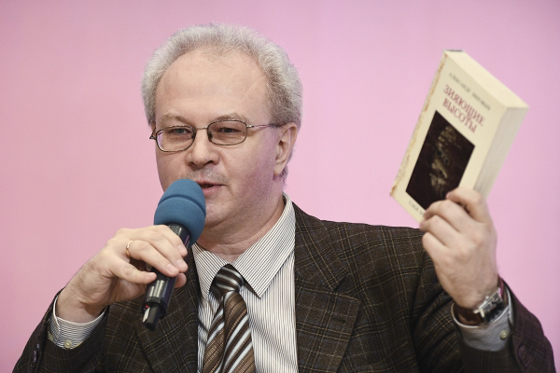 © Ramil Sitdikov / RIA Novosti author of the book “Alexander Zinoviev: Prometheus rejected” Pavel Fokin at her presentation
He managed to find a place in this order-and to exist until the mid-1970s, when he chose another option: it turned out that it was not necessary to live until his death, there was a way out outside. But, being outside the “real communism”, Zinoviev experienced what many Russian intellectuals experienced before him - he discovered that he was closer to his country, which he thought, being in it and panting. Until the last months of the Soviet Union, the confident that “real communism” will stand - he took the crash of the country as a personal tragedy - and at the same time did not doubt his past rightness. Now he came to the conclusion that communism was not defeated by Europe - not the world that he knew from books and in which he then lived, in whose weakness he was convinced and many times reproached and vinyl to the inability to resist communism. They turned out to be incapable of - in the sense that the “West”, a new reality, and “Westernism” as a form of handling a world inside and outside there is a more perfect, strong system, on a par with real communism. If you like, then “communism” won - in his highest, more perfect form.
Explaining in 1999 in an interview with “Le Monde” (number of June 30) his motives to return to Russia, Zinoviev claimed: “The decisive motive for my return is not that I am going to my country, but that I am leaving the West that became my enemy. <...> Returning to Russia, I remain faithful to the principles of Western Europe "(p. 659) - the principles that, in his opinion, were devoted to Europe.
The Soviet government caused him not so much indignation as disgust-and what else could she cause a peasant guy from the Chukhlomsky district of the Kostroma province, who saw the collectivization with their own eyes, who lived in Moscow in the 1930s with her father and brother in the room in the basement, which nearly got into the meat grinder of the “organs” and found salvation, as much as he had gone to the army in the 1940s, in a year, in a year, in a year in 1940s, in a year in 1940. Before the Great War, who fought, who studied at the philosopher at the end of the 40s and fully explored all the specifics of the dish called “Soviet philosophy” in order to escape into logic.
But the Soviet government was now represented in his eyes by the not future future of all mankind - but a way to survive in the world for his country: its defeat was the defeat of Russia - in the new system, new realities for it have no perspective: its townsfolk was seduced by the images of the “West”, but the only place that is allocated to it is only among the countries that ensure this Western well -being. In his last text, dictated a week before his death, Zinoviev wrote:
“The fact that there is still somehow is the wreckage, the remnants, on which, like in a conflagration, they live, adapt to new, post-fire conditions that survived the fire of fire.
But to live together does not mean to live a certain whole people organized for great achievements in the future. Such a people no longer exist ”(p. 720).
From the Soviet reality, he distanced him until the opportunity to rebel - and rebelled when an individual riot received relative chances of success: Zinoviev was a strong, sensible peasant son, death could be a feat or inevitability, but should not have been stupidity. What was frightened by his advancing reality is a much more flexible, unobtrusive control system: to remain and remain a loneliness, to raise a rebellion against it is the more difficult that it is no longer a wall, not an ideological obsessive tambourine, but an all -pervasive and transparent, like air, environment, common sense here, because opponents do not argue and do not deny you of possession common sense. To ask questions to whom, for example, democracy is beneficial - and whether it is always beneficial to specific peoples, what is the price and who really belong to those freedoms that are declared good - no one can forbid, but they have no chance of being heard as soon as they go beyond the limits of academic discussion: everything can be discussed, but only that corresponds to the interests of the system. It blocks the possibility of any alternatives, without entering into a clash with them - but plunging into the swamp of others a hundred fake alternatives, drowning out the common choir of voices, so contemplating each other, but uniform in the only meaningful one - to strengthen the existing order from different angles, equally disposal of human weaknesses and vices, like human virtues.
Zinoviev does not offer a way out - as before he did not believe in the possibility of “self -reforming” of the Soviet system and turned out to be right - there is no way out within this logic, but it can be beyond: hence the late call to personal action, rebellion - the action of loneliness, renegade, which itself establishes the rules. It is impossible to look for the “points of unification” within the system, but a spontaneous action can become the very foundation of a new reality. In the end, he relied on the very “principles of Western Europe” - on a person, his ability to be a person, to distance himself in relation to the social, to reflect, and not only react to the world around him. Actually, the whole wonderful book of Fokin: about how to store the distance, about how to keep the distance.
P.E. Fokin. Alexander Zinoviev: Prometheus rejected. - M.: Young Guard, 2016. 749 p. (Series "Life of wonderful people").