
Translated material
Great marginal
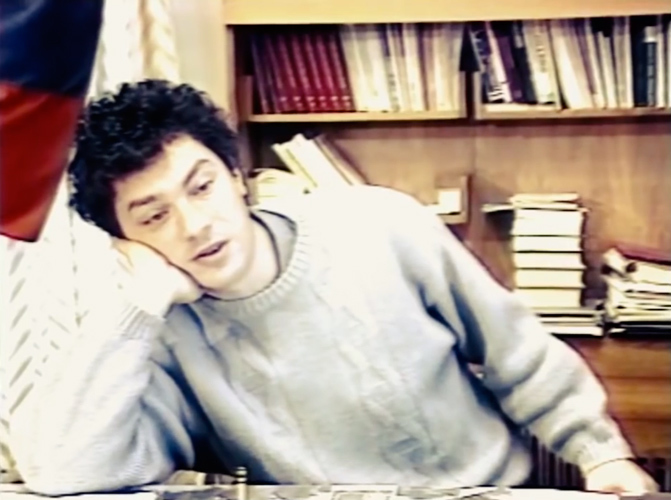
In the announcement of Medusa it was written that this is a film about the subjunctive history and how Nemtsov did not become a successor instead of Putin. This is an exaggeration: there are no games in an alternative story in a “too free man”, this is, perhaps even an excessive linear movie, without any tricks and special effects consistently retelling the political biography of Boris Nemtsov from the election of the People’s Deputy of the RSFSR to the last broadcast on Echo on February 27, 2015, and the only historical fork, which is clearly the plot of the plot. Sums over - this is not succession, but the 1996 election. Moreover, there is a feeling that this has nothing to do with the plan of Fishman and Krichevskaya and stumbles not so much the plot of the film as the post -Soviet Russian history itself.
The most frank hero of the film Mikhail Friedman, recalling the birth of the Semibankershchina when signing the forgotten now, but it seemed to the sensational appeal to “get out of the impasse” then (Friedman also does not remember what was written there; in the text written, Sergei Kurginyan and signed by all the oligarchs then were about the fact that Yeltsin and Zyuganov were that Yeltsin and Zyuganov They must agree on joint work without waiting for the election), he says that he timidly tried to tell his oligarch colleagues that Zyuganova’s victory is probably bad for them, but it will not stop the historical process for Russia in general, and Russia will receive an invaluable experience of a peaceful change in power.
Documentary cinema about politics from the past era, about which it is clear what titanium it is, only after the era has gone irrevocably.
The war for Svyazinvest, which actually cost Nemtsov a government career, also begins with the 1996 election - Boris Berezovsky in an interview with the beginning of the zero says that it was, perhaps, it was wrong to give the company to him and Gusinsky, but not to give it a violation of an agreement, which, according to Berezovsky, consisted in the fact that people who went to the highest risks during the presidential election should have had an advantage in the privatization of large state assets.
 © TVindie Film Production
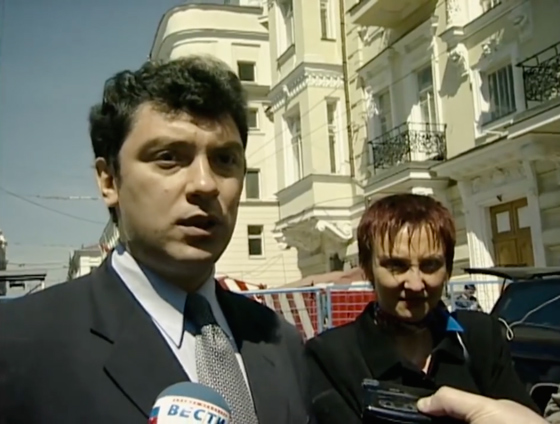
Nemtsov in the 1996 campaign - of course, the second -plan figure, but this is the background for which it is customary to give cinematic prizes: the Nizhny Novgorod governor, confident that Zyuganov will become the president, offers Yeltsin, while there is time, to correct the Constitution so as to limit the presidential superputs fixed in it as much as possible, and accepting Zyuganov on the eve of the second round at his place In the Nizhny Novgorod Kremlin, he tells him in person that you, Gennady Andreevich, may be a good person, but your main problem is that on your side in politics today there are only losers and envious people, so we, the Nizhny Novgorod reformist team, will not vote for you.
In 1996, one could still be sure that this rule - only losers can be the opposition in Russia - was related to specific historical conditions, when the Communists who were deprived of power wanted to, in the past, wanted to return the country to the past. Now it is clear that this is a systemic property of Russian politics, and such its architecture was created in the nineties. In the versatility of this rule, in the fact that it is actually not attached to any communists, years later, Nemtsov himself had to make sure.
 © TVindie Film Production
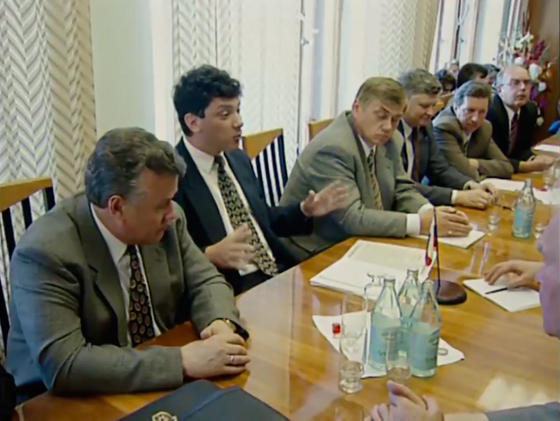
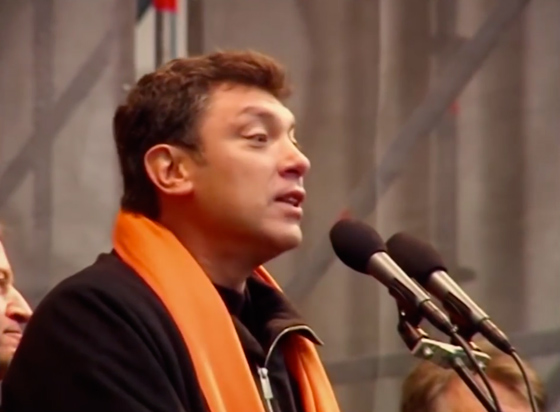
The film is divided into chapters called Nemtsov’s posts at different times-“Governor”, “Deputy Prime Minister”, “Leader of the faction”-and the chapter on 2003-2011 was calmly called “Marginal”. Putin pronounces his famous “Mistered in the nineties” with the same intonation with which in 1996 officials scared the communist revenge. And another strongest image, which was barely consciously conceived by the creators of the film, is thirty-three-year-old Ilya Yashin, the same age as the Nemtsov-Governor and a person who is likely little-fragmented from him, the same macho-shaped young brunette. But how great the difference between the capabilities given by the two peers in history is that one built capitalism from scratch in a huge area, seriously claiming to be the presidency, the other sags in any part -time dwarf party, and it is clearly not a personal difference between them: if Nemtsov are now 33, and he would hardly have to count on.
 © TVindie Film Production
Documentary cinema about a policy from the past era, about which it is clear what titanium it is, only after the era has left irrevocably, in this genre there is one unconditional masterpiece in Russia, “before the court of history” Friedrich Ermler, conceived as evidence of the historical insolvency of Vasily Shulgina against the late Khokhrushchevsky USSR and turned out to be a ridiculous and terrible anti -Soviet comedy, in Which is the only normal person - just a gray -bearded loser from the past.
Krichevskaya and Fishman got an excellent remake of Ermler. The hero of the “too free man” is the same Shulgin, who survived his time, the base point of which was not in 1997, as one might think, but in 1990, when the provincial non-partisan manes by the will of perestroika and the people turned into people's deputies of the RSFSR.
 © TVindie Film Production
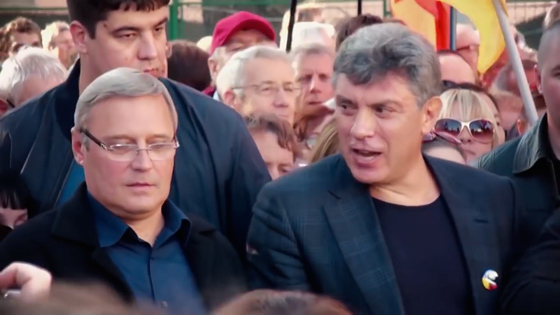
Nemtsov has a 1990 monologue repeated twice on this score - he says that the campaign of the intelligentsia to power, of course, is abnormal in nature and is associated only with the system of the system and we, the intelligentsia, will soon leave power. It is clear that no one also specifically conceived this, but the People's Deputy of the RSFSR Nemtsov, unlike most of his colleagues on that parliament, lingered in politics much longer than the rest and as the post -Soviet Russia turned into tyranny more and more superfluous in it.
 © TVindie Film Production
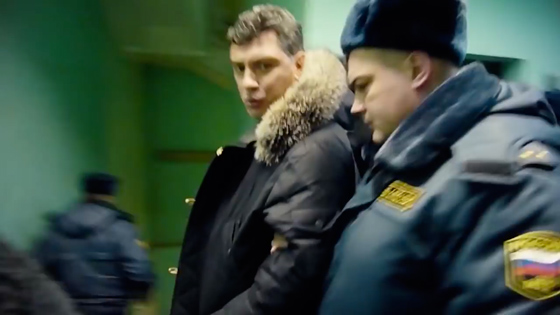
The frontal clash of a person from the “time” with “this” is most piercing, with ours - the administrative arrest of Nemtsov after a rally on the triumphal on December 31, 2010. New Year's Eve in the Kartskere without windows, two overnight stays on the concrete floor and the Tver court, in which, after these nights of Nemtsov with a sore back there is five hours standing standing, and the judge Borovkov, when the lawyer gives Nemtsov a chair, says that there are no extra chairs in the hall. As in the film "Admiral" at some point it becomes clear that the quacks will be shot, so after this chair there is no doubt that one way or another, Putin’s time will not survive. However, there is no murder in the film - and, probably, it is right that no.