
Translated material
Colta.ru
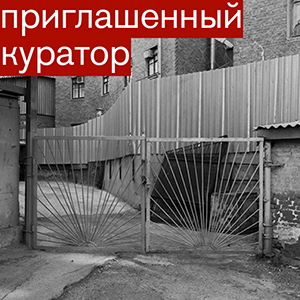
This year, Colta.ru decided to go to the experiment and invited to temporary curators over the section “Photo projects” of young and talented representatives of leading Russian photocurium. We divided the calendar year between six curators and asked them to select the most interesting samples of modern Russian photography for publication.
Invited curators
Katerina Zueva , center of photography named after Brothers Lumier
Nadezhda Sheremetova , "Femicip"
Sergey Lostev , "House of Metenkov"
Daria Tuminas , Freelance Curator, Amsterdam
Anastasia Bogomolova , The Blog This a Photobook
Svetlana Taylor , British Higher School of Design

Sixth resident: Svetlana Taylor. An independent exhibition curator, founder and head of the faculty “Photography and Videoart” at the British Higher School of Design, a specialist in the history and theory of a new photo. Explores the phenomenon of photography outside its direct documentation.
Svetlana Taylor about the book "City" by Sergey Sapozhnikov and Vladimir Levashov
Vladimir Levashov and Sergey Sapozhnikov published the book "City". Its appearance causes glee primarily because it enhances the position of modern topographic visual practices, in addition, it fits into the historical traditions of the art of photography, and at the end - represents the topic that is relevant today Both in the field of art, and in the field of socio-cultural research. The elusive beauty of the outgoing urban environment, daily dissolving in time, a cute "Oshharpon" in time, their conflict with the onset of the complete unification of the settled space is close to many authors.
It is known that in the photograph there is something that makes us appeal to memory, but because of its nature there is a close connection with the present, with the world of reality. What may not be or what has already disappeared tomorrow was documented in the projects: Peter Antonov “Trees, Cars, Figures of People, Various Types of Fences”, Alexander Gronsky “Pastoral” and (together with Ksenia Babushkina) “Schema” (“Scheme”), Yegor Zaiki “Vidance View”, Dmitry Lukyanov “ Tomorrow , Sergei Novikov “ Zato ” and “The most commonly visited hills and ravines”, Anastasia Tsader “Mtsensk”, Maxim Shera “Palimpsest” and “245 Khrushchevs”, Department of Research Arts (research art) of the Triumph Gallery. “Own land / alien territory”, organized by the same “triumph” in the arena, is an important exhibition, where the artistic problem was posed wider: the relationship of space and politics. It turns out that here we can talk about a fairly clear, pronounced phenomenon in modern photography. By all formal signs, the direction can be attributed to the variations of the “new topography”, although today the names of both “spatial history” and “social geography” ETC appear.
Despite the fact that Sergey Sapozhnikov is as if in a tendency, his work is deployed into a slightly different context. In the introductory article (or, more precisely, the curatorial text) Vladimir Levashov Sergey explains his artistic position: “The most difficult and important thing for me was to realize that the urban environment was simply beautiful and it can be removed without any excuses. This approach is very close to American photography. Thanks to her hobby and the desire to take a break from mental, project activities in me, a passion for walking around the native city in search of something interesting was born in me. At first, I did not find any interest and beauty in its usual environment, looking exclusively to architectural monuments. And only then he realized that the plot as such is not so important, the main thing is to free up, relax and have fun. Today it has already turned into a familiar way of life. I can’t and do not even have a desire to explain it. ”
It turns out that Sergey excludes the cultural, political and social problems in his works, but does not lose its theoretical and artistic reflection in relation to the essence of the photograph. He builds his “city” around the aesthetic, that he touches him and that he finds beautiful . The author offers an almost romantic walk. He is ready to share with us his own vision regime, his personal territorial discoveries. Own visual experience today is opposed to infinitely propagated images of attractions and tourist beautiful. Anyone who works with landscape photography today and does it meaningfully enough, has characteristic features: plot “poverty”, modesty, natural light, the most ordinary people, trivial plots, and an ordinary landscape. The strength of the new “new topography” is a special significance and rethinking of everyday life, individual experience, the assertion of genuine reality in its “present” form.
Historically, society regularly develops certain values, the code of its era, but only architecture can “drag” myths and ideals existing at a certain time into the plane of reality. So from a generation to generation against urbanism, urban planning, the uncontrolled chaos of the human acts, so self -building, wild, not approved by nobility, which today almost all disappeared, arose in different corners. There was an extinction of a familiar, familiar landscape, and a new neat world is gradually approved.
The idea to make a book and the exhibition came to Vladimir Levashov. He became the curator of the project. As Sergei said: "This is Levashov’s book about me." An important point in the book is when Vladimir Levashov, using the example of Sapozhnikov’s work, reveals the situation in which a modern photograph is located. “Loneliness in the crowd” - this is how the modern photo community lives. It seems to me that there is a risk that they, those who are engaged in similar or close artistic problems today, will never meet, despite the fact that they use the same topics and materials.
Vladimir Levashov: “According to Sapozhnikov, beauty is not revealed to him in the exceptional (beautiful in themselves) objects-monuments of architecture, but in an unexpected way-inside the banal human anthill. The eyes of his inhabitants themselves would not have looked at. As well as that of a “normal” photographer, whose gaze either clings to an outstanding level of ordinaryness, or collects an ordinary one to create a typological series, on the basis of which the rule is displayed and the language is formed. In any case, “normal” attention is focused on what is already processed, finished and became a formula or will eventually turn into a formula - that is, it is such attention that remains within the boundaries of log centrism. But the unexpected beauty opposite is an unfumilized accident, you can only stumble on it in the chaos of the ordinary, erased and unnoticed. ”
PS While I wrote the text yesterday, an article about the railway station in Surgut with the name “Commerce or the Treasure that we is about to lose will we lose?” ...