
Translated material
The date of the funeral of Fidel Castro is named: December 4, after nine -day mourning
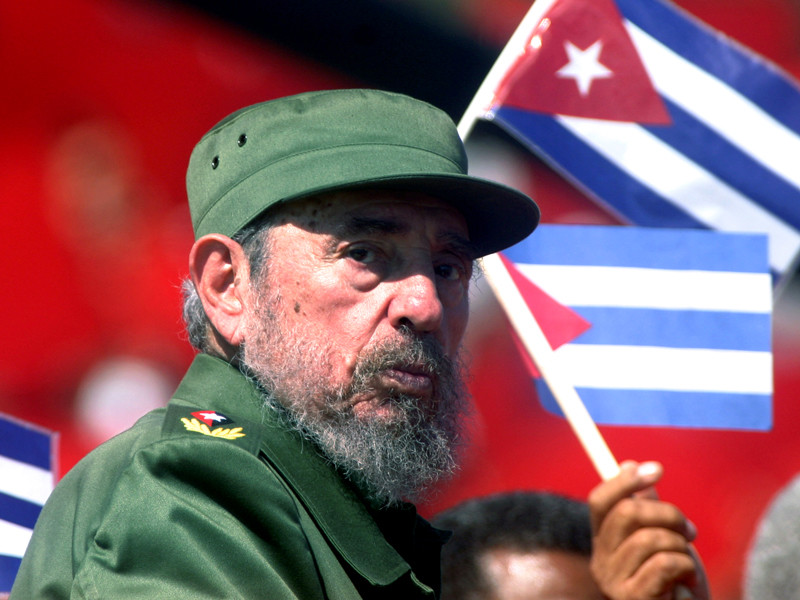
The Cuban government called the date of Fidel Castro’s funeral: the ceremony will be held on December 4 in Santiago de Cuba-the city where Castro made the first attempt to overthrow the regime of the battles' dictator, capturing the army barracks. Until the funeral, nine-day mourning has been announced in the country, the AFP agency reports on the Twitter Account with reference to the data of the Cuban government.
It is expected that already on Saturday the body of the leader of the Cuban revolution will be cremated in accordance with his last will.
Fidel Castro passed away on November 25 at the age of 90. The cause of death at the time of writing is not named.
- Putin about the "sincere friend" of Russia
- Obama "holds out the hand of friendship" Cuba
- Putin talked by phone with Raul Castro
In the Santyago de Cuba, there were army barracks of Moncada, which Fidel Castro and his comrades decided to capture during attempts to a coup in 1953. After the failure of Fidel, they arrested and condemned for 15 years, but two years later they released on an amnesty. The very next year, he organized a partisan detachment in Mexico with his associates, among whom was the legendary revolutionary Ernesto Che Guevar, landed in Cuba, starting a partisan war against Batista. On January 1, 1959, partisans occupied Havana, opening a new chapter in the history of Cuba.
In addition, Jose Marty was buried in Santiago-deck, a poet and revolutionary, inspirer and organizer of the three-year national liberation Cuban uprising against the power of Spain at the end of the 19th century.
Castro ruled the Cuba for 49 years with an iron hand, turning the island into a symbol of resistance to the United States and becoming one of the central figures of the Cold War. During his reign, the surviving many attempts Castro "spent" from the post of nine American presidents. He turned Cuba, which before him was a resort for rich Americans, into a one-party communist state with free education and medical care and gradually decrepit due to sanctions by the infrastructure of Soviet times.
In 2008, he transferred the authority to his younger brother Raul, who began careful attempts to change the policy of the island of Freedom, in particular - in relation to the United States. In December 2014, the US administration announced that the sanctions policy had failed, and President Barack Obama instructed to revise the status of Cuba as a state of terrorism sponsor.