
Translated material
Sincere recognition

The action #generous Tuesday, when different people talk about which funds they support and where they transfer money, causes an ambiguous reaction. Do I need to publicly say that you sacrifice money for charity? Priest, psychologist and actresses express their point of view
“Such matters” launched a new section in which experts and experts answer the questions of our subscribers on VKontakte . The question of this week is to publicly say that you donate money for charity
***
Tatyana Lazareva, actress, TV presenter
 Tatyana Lazareva photo: Vadim Tarakanov/TASS
 In the zero, when I was just starting to engage in charity and devoting a lot of time to the Creation Foundation, many of my familiar stars did not understand this. Most were then sure - good deeds should be done quietly so that it did not look like cheap PR.
It so happened that I was almost the first to openly declared - popular people should say that they participate in charity. They, as newcomers, are obliged to pay attention to this and attract their fans to participate in social projects. I repeatedly repeated: a public conversation about charity should become the norm, as in European countries. But this is a long way, and after all, this area has been developing only about fifteen years.
I think that over time, people will be easier and easier to talk about their charitable activities. I see this now - among the stars the trend has changed, now it has become fashionable and honorable to participate in charity. This has become part of the general promotion: you should be on the Internet, on the TV, should be promoted, and must also be engaged in charity. And I am sure: the fact that among the stars charity has become fashionable is cool. It is clear that it often looks unnatural, people are not yet used to a normal vocabulary, they can accidentally offend some stupid turns, such as the phrase “sick children”. But the fashion will subside, a feeling of some awkwardness will leave, and the very idea that it is right to do good deeds and talk about them. We strive for this.
Irina Gorbacheva, actress
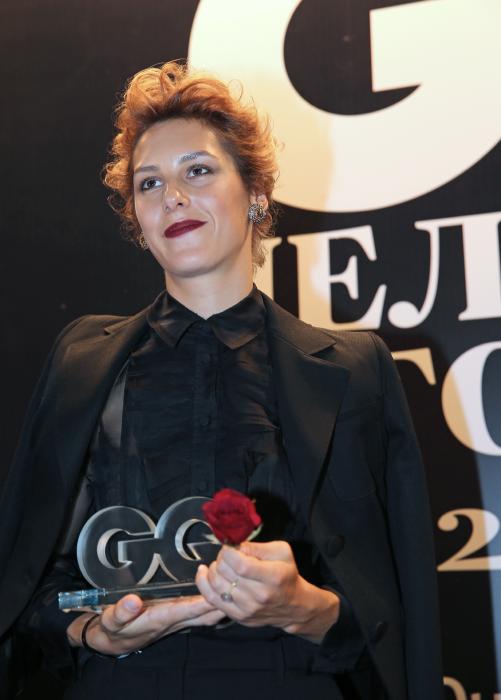 Irina Gorbacheva photo: Dmitry Serebryakov/TASS
It seems to me that people are embarrassed to talk about good deeds, because we do not have a stable tradition of charity. For many, this area is generally unknown. If you help disinterestedly, then your loved ones. Or spontaneously, in some rare extreme situations-I saw a fee and sacrificed. There is no systematicity, it is unusual to be a philanthropist, so many are embarrassed to talk about it, especially since our mentality really has this thought: did a good deed - do not tell anyone about it, otherwise you seem to be proud.
A year ago, I myself, like the rest, rarely and affection helped someone.
And only with popularity did the understanding of responsibility come - if you are known, you must do good deeds and talk about them in order to infect others with this light. I think all famous people should pay attention to this. It is not necessary to even report that you help yourself, you just need to show: there is such an option, but you can help like this. I do this, and you can do that. If that good deeds are a natural part of life will calmly talk-it will disappear that you, they say, do not sacrifice, but you are complaining of some pennies from the leopard shoulder.
In general, the problem here is probably even deeper. When media people talk about charity - this is only a removal of side effects. Social responsibility will come with general spiritual education - it is necessary for years to instill in society the values of compassion, susceptibility, involvement, desire to help. When people begin to empathize, it will already be easier for them to help and talk about it freely.
Archpriest Alexei Uminsky
 Archpriest Alexei Uminsky photo: Valeamicus/Commons.wikimedia.org
If this is public service, organization, fund and the like, then, speaking of their charity, these people attract the rest of those who want to do this. That is, when it is a charity fund or organization associated with charity, it is necessary to talk about it, otherwise such funds and organizations will not be able to exist. When a person is engaged in charity, volunteering, donations, he voluntarily chooses this path, and here another principle enters. Why are you doing this? In order to create a name for yourself and earn praise? That is, either you get a return fee for this as gratitude, or you do it because you have a deep internal need for this. Christ says that when you do a good deed with one hand, the second hand should not know anything about it. All alms and good deeds are done secret. This is primarily the question of selflessness. If a person chooses the path of charity, then he must understand that this is a sacrificial path . This generosity should be secret, this path should not be paid, it should be disinterested. If he is not like that, then he will certainly bring his own fruit, and can personally damage you. Your own character may change. You can think about yourself something that you are not, and think about yourself better than you really are, it means to become in your opinion above other people and already look at them from the perspective of pride, conceit, and this destroys the personality.
Olga Prokhorova, psychologist, procedural therapist:
 Psychologist Olga Prokhorova Photo: From Personal Archive
Why do people hide the fact that they are engaged in charity work? The first explanation that comes to mind is the reason for this is the ethical principle that exists in all religions: to do good anonymously. Presenting our generosity and showing ourselves to philanthropists, we risk falling into vanity or pride, and it is important for us to keep this heart movement in cleanliness. This line is so fragile that any publicity can be felt as a violation of the territory and the depreciation of good thought.
If for my charity I have received some social bonuses or glory, it seems to reduce the value of a mental impulse.
Well, perhaps, there may be a more prosaic reason: people can be afraid that they are thrown with requests. Despite the fact that philanthropists are already responsible, and it is not easy for them to cope with the realities of today, when there are many requests for help around.
Some internal taboos are quite natural, but this does not cancel the problem: it is important for charity for charity that this is a mass phenomenon. People - communicating vessels, kindness, mercy and active assistance can be “contagious”, and to contrast it with much more aggressive infections like xenophobia, hypocrisy, and resentment are also a noble task.