
Translated material
“The task was to create a new organ. Tail"
Director Ivan I. Tverdovsky - about "zoology", the main Russian festival drama of the year
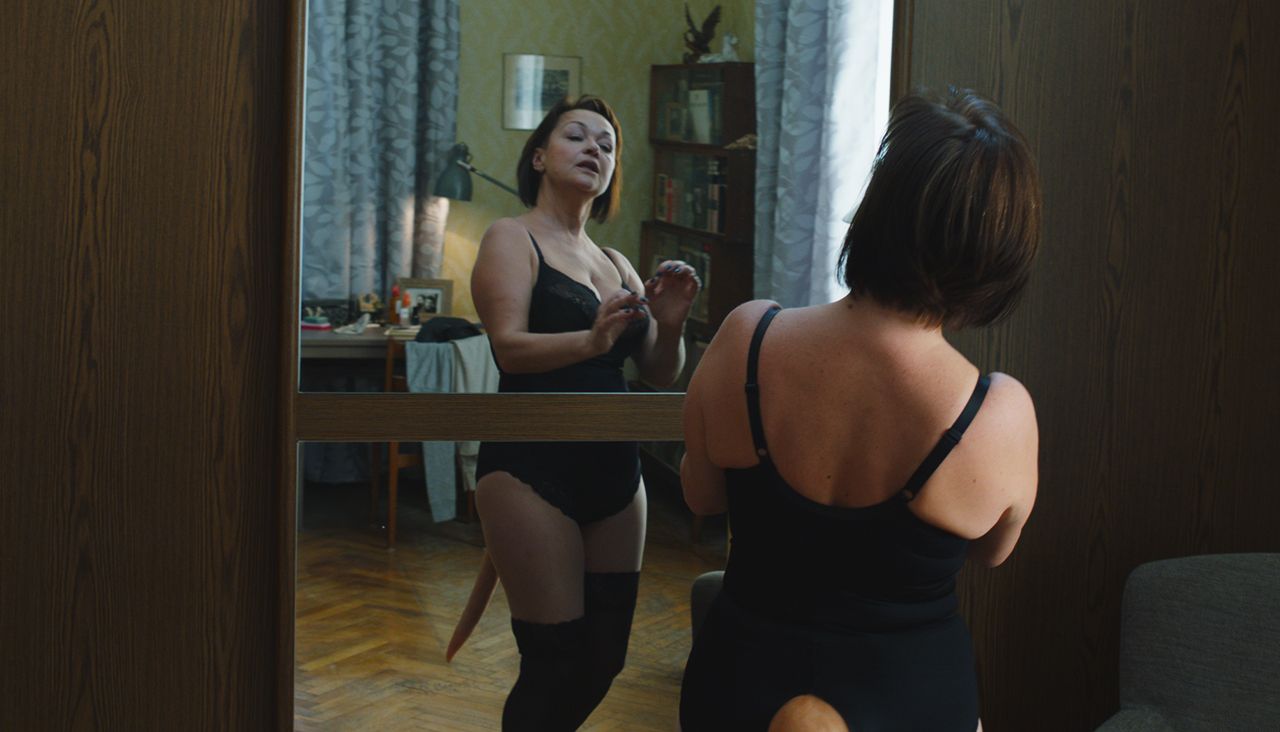
On November 24, the film “Zoology” Ivan I. Tverdovsky was released on November 24. The picture tells the story of an employee of a zoo, a single woman over 50, who suddenly grows a tail. “Zoology” became a member of many prestigious international film festivals-in San Sebastian, London, Zurich, Toronto, and the leading actress Natalya Pavlenkova was nominated for the Asia Pacific Screen Award-“Asian Oscar”. Ivan I. Tverdovsky told Medusa how he came from documentary cinema to the game, whether he considers himself a voice of generation and what he thinks of self -censorship in VGIK.
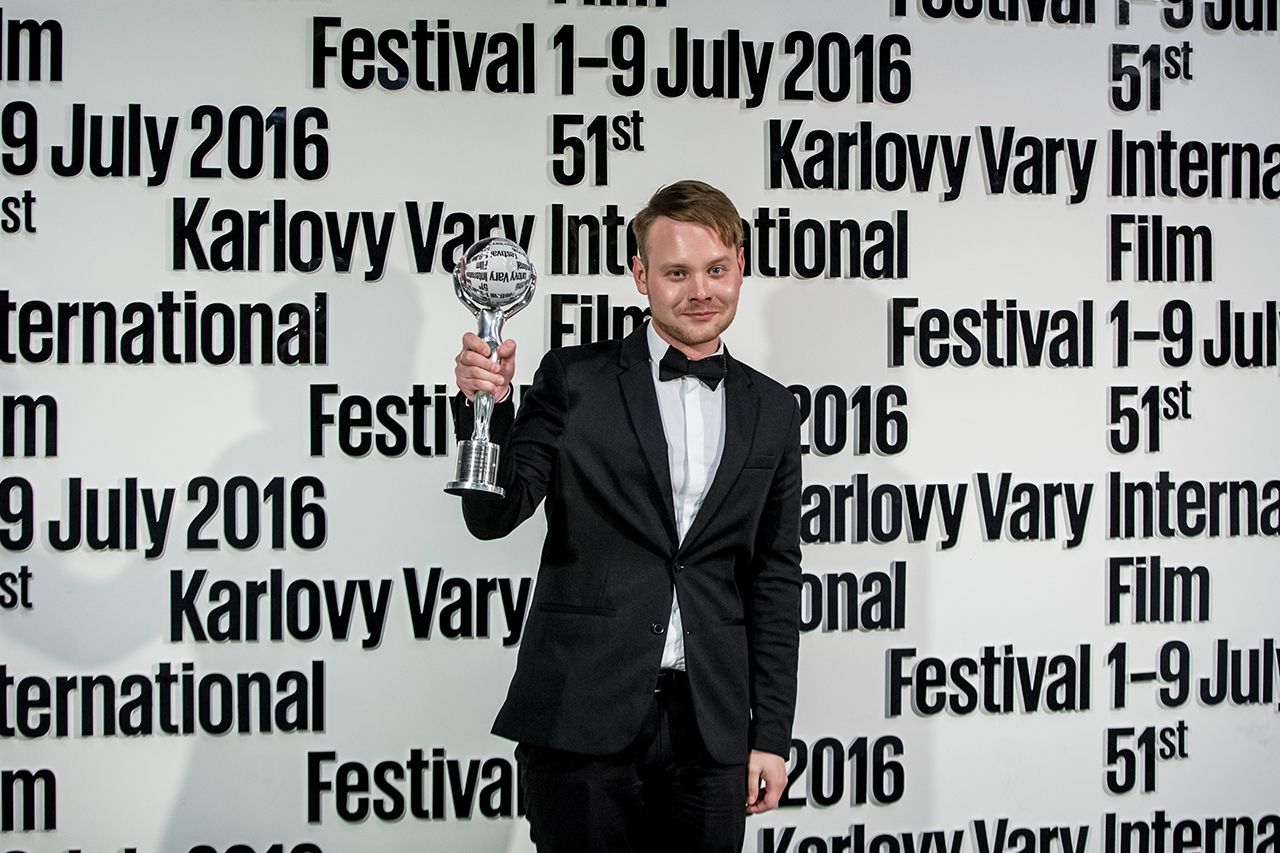
There is no thirty director Ivan I. Tverdovsky, but he had already managed to turn from newcomers into one of the main authors of Russian cinema. Up to 24 years, Tverdovsky was engaged in documentary cinema and received his first festival prizes just for non -game paintings. In 2014, his debut game work “Class class”, shot in a chopped, documentary manner, received more than 50 prizes at Russian and international festivals.
- The film “Zoology” tells the story of the employee of the zoo Natasha Medvedeva, who has a tail grows. You once said that, working on the script, you relied on their own experience. What is more important to you: telling a story or telling your story?
- When you are the author of the script and the director, that is, the creative center and the core of the whole plan, everything you do passes through you and comes from you. I do not make a movie in order to tell about myself, but because there is a story that captures me and in which I join. It becomes for me the ground for further growth.
At first glance, “zoology” is about some strangers, about someone else's environment, but at the same time about me. "Zoology" was born not only from my experience. Natasha Medvedeva-the main character of the film-still came to life thanks to actress Natalya Pavlenkova.
- After the premiere of the film on Kinotavr, Natalya said that she had been waiting for her director for almost 30 years and thanked your parents very much. And how important is the actress Natalya Pavlenkova as a director for you?
- “Zoology” is our third job. It all started with my thesis at VGIK - the mockmentaries “Snow”, in which Natalya played one of the roles. Then there was a “class of correction”, where she plays the mother of the main character and makes the ending of the whole story. At some point, Natalya Nikolaevna became a very close person to me. Many things that I had not felt before - for example, work with an artist - opened me Pavlenkova. I taught me a lot. Here is the case when human relations affect work: you are so infected by a person that you are ready to simply put the world at his feet.
- What exactly did she teach you?
- When I looked at the monitor, then, of course, I could understand whether I like what I see or not, I believe it or not. But before my acquaintance with Natalia, I lacked experience or knowledge to immediately clearly formulate the director's task to the artist. For me - a person who came from a documentary cinema who had not shot game paintings before - all this was very far away. And Pavlenkova became for me a kind of "teacher." Such a teacher who loves a student puts him five and tells him how to work. She says that she also studies with me - this is such a mutual process. For example, before our acquaintance, she was very far from cinema.
- Have you taken the principle of work without dialogue prescribed in advance from documentary cinema?
- It is important for me to work with actors just as I worked with living people. In the frame I need them themselves, and not me created, invented characters that speak my language. It is one thing when the artist is Chekhov’s text, and he assigns it, lives, and some kind of cinematic material is born from this. Another thing is when the artist takes a dialog written by Vanya Tverdovsky is a drama of different levels.
I do not consider myself a playwright, I do not consider myself a screenwriter. It is important for me that the artist connects his personal story to the role, pronounces not other people's phrases, but put himself in the content of himself. However, I cannot say that in my scenarios there is no dialogue. There is a very stringent design: a fairly detailed retelling of the dialogue that was written there before. That is, there are quite a few space for improvisation, but artists should turn on completely. At first they are usually lost, they are uncomfortable - they are used to coming to the set, and while they make a makeup, memorize the text, then go out, pronounce other people's words and receive money for it. It is very important for me to find the keys to lure them in history. The absence of dialogs is one of these keys.
- Do you usually look for a specific type for a role in your films or are adjusting the role under the actor?
- When how. But the case of “zoology”, when I wrote a script for the actress, is rather an exception. Usually when I write, I can’t imagine anyone. I leave this moment before the casting, to the samples. And when an actor falls into my hands, something begins to be born.
In the "Zoology" at the level of selection of types there was a certain task. It is well illustrated by the scene in which all the employees of the zoo are present. They all have a slightly rampant image: they are full of, clumsy, not very beautiful. At the same time, at the casting, we watched that the actors be born a certain partnership, so that the scheme I wrote was saturated with important nuances.
- How important is the degree of immersion of the actor into the role?
- I have an unsuccessful experience that taught me a lot. Once, while studying at VGIK, I took up the game, staged work. I shot it on 35 mm film - it was very expensive, I had a large film crew. But the film did not work out, and was subsequently erased from all carriers. But he became a textbook for me, how to make a movie. All the decisions that I made in the work on that film were false and wrong. There, I made the artists really connect to each other: I intervened in their personal space, it seemed to me to show love on the screen, it should arise in life. I made the actor deceive the main actress, convince her that he really loves her, and twist her relationship with her in order to remove one scene with her. But nothing happened on the screen. All we worked on - none of this was visible.
Then I was so scared that my notions and ventures were not realized that I quickly crossed out this experience and went on. Now that I have a controversial situation, I think that I would do then, and do the opposite. It works.
By the way, I never talked about it. The film was called "In the Toner" - it was long to become my course work. Twenty times I brought different installation options to my master Alexei to the teacher, for the last time he simply stopped the video abruptly and began to yell at me that it was mediocre. Then I did not plan to continue to engage in a feature, or somewhere closer to the age of forty. I was sincerely in love with documentary cinema, although my films caused quite a few disputes, because they were also partly staged: I was introduced into the reality with which I worked.
- I read that there was a moment when you were very disappointed with the failures of your films at festivals.
- My first work - the nine -minute film "Holy Groove" - took all Russian documentary cinema festivals. I received quite a few diplomas. That is, I experienced my "star disease" back in kindergarten. But then failures fell upon me: one film had to be destroyed, “Snow” with Pavlenkova also did not have a successful festival fate. By the way, a curious story is also connected with him.
Once, my friend Alex Mickeladze, the operator of Zoology, and I sat and talked about festival cinema: “Here, bitches, we received the main prize for a film about a disabled girl who sculpts clay figures. We will now also come up with our film and go to the Kinotavr. ”
My desire to please the festival selectors was so great that when I wrote the script, I directly represented their faces. I imagined how they would watch, at what point and what should happen. It was the story of a woman-teacher who is forced to supply her daughter with drugs, and she is at death and already in some agony. That is, at the level of the plan, it was an absolute conjuncture. And it seemed to us that the film would tear the whole world now, we would be called into Cannes, and the Kinotavr would certainly take us. But no. Oddly enough, festivals of documentary cinema festivals showed great attention to this film, although it was a completely staged work. And after the great success of the first two works, there was a wild failure.
-Because of whom or what did you decide to change the vector so sharply towards the feature cinema?
- I thank the [operator, director] Sergey Mokritsky. Once we met him at some kind of documentary movie festival, on which they showed my film “Pain Points”-it was just successful. Sergei came up to me and asked for a disc with the film to show his wife. [Producer] Natalya Mokritskaya looked at several of my works and called.
Mokritskaya told me about the story that I immediately wanted to refuse: I was terribly written, a monstrous scenario according to the story [writer, psychologist Ekaterina] Murashova “Class of Correction”, where each sentence could be crossed out immediately. I was not going to join this story, I just wanted to get acquainted with Mokritskaya. As a result, Natalia gave me the opportunity to completely process the material. And these are huge producing risks when you are some debutant, you give the former documentary to redo everything. It was a strange period in my life, when it was as if someone had led me from above.
- You have changed a lot since the time of the Class of Correction. I suppose that internally, but this is especially noticeable in appearance: another hairstyle, another style in clothes. What is it connected with?
- “Class of Correction” - my debut film - received 54 prizes at world and Russian festivals. This luxurious festival life turned me into the character of the film "Zoology". I was carried away not so much by directing, but by faith in some of its formal side. You are the director, and the director is German. It is not necessary to go to sports, it is not necessary to monitor how you look, you can endlessly eat at night. As a result, I turned into a big cartilage from Zoology, I started health problems, but at the same time I felt like a director. Normally ( laughs ).
When the idea appeared to shoot “zoology”, I suddenly realized that I would simply not physically take out this picture. After all, the director is a locomotive, the film crew picks up the rhythm that he sets. And if you can’t climb the mountain to look at some object, you feel bad and you have a head dizzy, then everyone else treats the process as well. You must be an example for everyone.
I took up health, went to sports again. And then I had a “30” syndrome. I am not yet 30 years old, but the crisis has already begun. I suddenly realized that I would never again be 15, nor 18, nor 21. I started to watch the Simpsons again, listen to music for teenagers, took out my old cap. And I realized that still I have not yet 50, I can have time to play the lost years.
- You could be compared with Canadian Xavier Dulan. In his works, he also addresses the topics that are not the most obvious to his age, but at the same time all situations and heroes turn out to be extremely realistic. How do you manage to talk about a woman over 50 in Zoology?
- Previously, I always said that the director should only shoot what he knows about those people who know. And my friend myself took up such a story. I just do not think that “Zoology” is a film about age. I come to him from the point of view that the main character Natasha Medvedeva is me. For me, the age of the body is a costume that does not affect human relationships at all. That is why the hero with the heroine has such strange relationships, they commit acts that are absurd quite absurd for adults. And this is no coincidence-I was most afraid that on the set they would begin to portray 50-year-old people. I don’t know anything about this at all, but I know to myself. I understand all her motivations and actions.
“Did you deliberately make her tail so disgusting?”
- He is not disgusting. It is like a genital organs. Are they disgusting or not? If you see this, then there is nothing pretty in them. And if you take the genitals of a person who is 55 years old, the elegance is clearly absent there. But the task was to create a new organ, tail. To imagine how the tails would look if we really had.
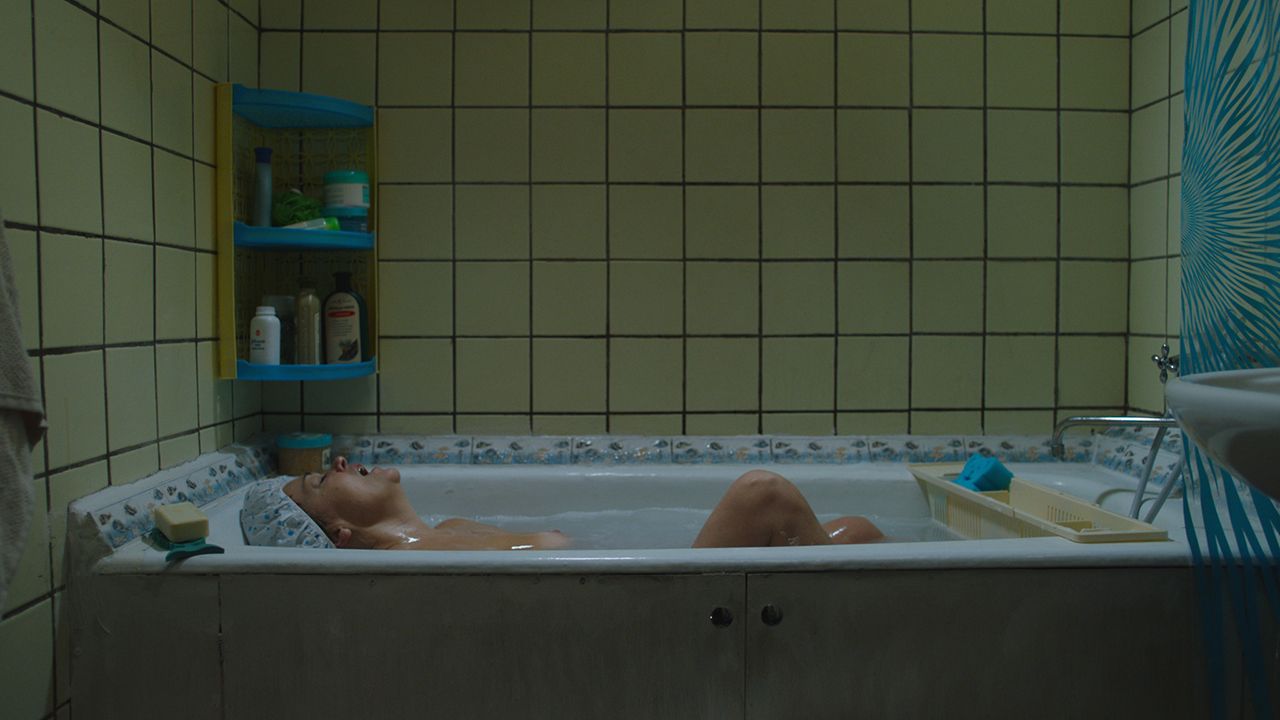
When I watch the scene in which Natasha Medvedeva takes a shower, nothing confuses me in her. Tail and tail. It would be much more strange for me if he were fluffy, hare, fox, and feline. This would have been a pathology at the level of zoophilia.
- It seems to you that this film criticism has accepted worse than the Class of Correction?
“May they forgive me, I don’t give a damn about them.” People who have never kept the camera in their lives do not know how all this is done, believe that they have the right to insult a huge work of a huge number of people with one note. Even if this is not a very successful picture, you need to at least respect someone else's work. We must be responsible for the words with which you evaluate the film. From what they will write about the film - they will like it, they will not like it - I will not turn at night, really.
- How do you understand whether the film took place or not?
- I am guided by myself, first of all. I know all the problems of this film and all my previous works, I draw conclusions, I make a certain kind of work on mistakes and set new goals that I want to realize in the future.
I think that in every work there should be the share of some correct ambitions: not in the sense of achieving glory, recognition of the festival public, but ambitions in relation to the artistic level that you want to climb. From this point of view, “zoology” is a much more adult movie than “Class Class”. But my next film will be completely different. One could follow the path of strict social criticism, but I decided to take quite unprepared characters. People who, at the level of their basic characteristics, do not cause pity among the viewer.
- Have you already started working on a new film?
- Yes, but he has no name yet. This is the story of a young guy who does not feel pain at all. Once he organizes a certain gang with his friends and colleagues, which extorts money from people. Police, ambulance and our Russian courts are involved in the gang. The film will have a little social connotation, but for me it is a completely new material, a new story, a new main character. I used to only have women the main characters. The female image constantly pursues me, but here I refuse it myself.
- Tell me, do you consider yourself a voice of generation?
- He counted until I was invited to the jury of the Vgikovsky festival this year. There they made me out in this. Today in VGIK I saw a serious self -censorship, young people suddenly began to speak in the voice and intonation of the old grandmother or old grandfather. Any bold statements-in terms of form, civil position inherent in young people-disappeared somewhere. They have a trend for a conservative approach to cinema.
- What did you expect from Vgikovskaya youth?
- I do not urge each director to make films about corruption, small salaries, bad medicine. But young people should have an active civil position.
The topics that are faced, for example, documentaryists in their work, are very sharp and uncomfortable for our power. These films will never show a single federal channel, festivals that support a movie of this kind, or no longer receive the support of the Ministry of Culture, or will not receive it. Yes, and the directors are not given to the state prize either.
But students are the only moment in life when you can get involved in this rather romantic: go to rallies, draw beautiful posters at night, make uncomfortable films. And for some reason, students of VGIK do not go, even forbid each other to go to rallies. Students very clearly read the conjuncture that has developed in Russian cinema today. They perfectly understand state policy. And instead of saying "And we do not care, we will do what we want!" For some reason, they abruptly adapt to the processes that have developed today.
- “Zoology” was supported by the Ministry of Culture, but neither censorship, nor self -censorship of the film, as I understand it, did not affect?
- The film was really supported by the Ministry of Culture, but I really doubt that they like it. I think that if the Minister [Culture Vladimir Medinsky] will look at the picture, he will hardly recommend it to his friends, he does not accept such a cinema.
Не сложись некая фестивальная судьба у фильма «Зоология», я думаю, нас бы все пинали все. Даже наши коллеги-товарищи, которые в данном случае на нашей стороне, тоже бы кидали камни. Просто фильм представляет отечественный кинематограф на самых крупных мировых киносмотрах и привозит оттуда призы.
— Для вас важно, что вы продвигаете российское кино за рубежом?
— Могу сказать, что у нас есть огромная проблема. Конечно, национальный кинематограф как индустрия должен существовать. Но если мы посмотрим на опыт других стран, то увидим, что многие из них работают в копродукции. В производстве одного фильма могут быть задействованы продюсеры из Пакистана, Великобритании, Австралии и США. Люди из разных точек света, которые верят в одну историю и ее финансируют. Мы почему-то ужасно закрыты, хотим разговаривать только о своих проблемах и не хотим взаимодействовать с другими культурами. Мы не просто не ищем этого диалога, а, наоборот, от него всячески закрываемся.
Два фильма, которые мы сделали с Натальей Мокрицкой, сняты в копродукции с европейскими продюсерами. Я вижу, насколько они заинтересованы в работе, как подключаются к процессу. Откройте двери, и все будет. У нас же все тихо сидят под одеялом, и что-то там тихо рассуждают про российское кино.
— Какие имена в современном кинематографе вы для себя выделяете?
— Я стараюсь регулярно смотреть документальные картины и почти всегда испытываю грандиозное кинематографическое потрясение. Я недавно посмотрел фильм Мадины Мустафиной: она дважды получала приз за лучший фильм на «Артдокфесте». Ее фильм «Милана» — про маленькую девочку, которая живет среди бомжей, как Маугли в джунглях, а «Еще чуток, мрази» — про трансгендеров. Это крайне интересная работа, не просто репортаж о том, что происходит, но попытка выйти на художественное осмысление этого. Я как документалист чувствую конкурентную среду в документальном кино, чувствую, что у меня дрожат колени, — в игровом такого нет. В этом смысле я совершенно спокойно сплю, просыпаюсь и иду снимать свои фильмы.
— Как вам кажется, стареет ли профессия режиссер? Нужно ли режиссеру уходить на пенсию, как футболисту или балерине?
— Когда разум покидает твою голову, из профессии нужно уходить совершенно точно. Но бывают разные случаи. Вот, например, Никита Михалков. Одно время я не воспринимал те фильмы, которые он стал снимать сегодня. Мне казалось это безвкусицей — особенно когда ты знаешь, что этот человек снял «Неоконченную пьесу для механического пианино».
Но однажды я посмотрел его интервью, в котором он рассказывал, почему сегодня снимает именно такое кино. Он говорил о потребности диалога со зрителем, о том, на какого зрителя работает, и я убедился, что мы смешали в один торговый центр и карусели, и аквапарк, и книжный магазин. Никита Михалков просто уволился из книжного магазина и пошел крутить карусели. А есть режиссеры, у которых исчезает дар. Я верю в существование таланта, который ты — как наследство — получаешь и решаешь, как им распорядиться. Можешь все пропить за два дня, а можешь сохранить для своих потомков.
— Какие фильмы сформировали вас?
— Фильмы моего отца ( документалист Иван Твердовский — прим. «Медузы» ). У нас есть семейная традиция: когда мы что-то снимаем, то приносим это сначала на семейный просмотр, устраиваем семейный ужин и обсуждаем. Для меня это самый волнительный показ. Это самая тяжелая комиссия по выпуску фильмов, наш худсовет. Я с детства любил папины фильмы и документальное кино, я его понимал с ранних лет, и оно всегда производило на меня сильное впечатление.
Sasha Sulim
Moscow