
Translated material
"There is no cash even changed in the market"
A resident of India - on the prohibition of the most popular bills in the country
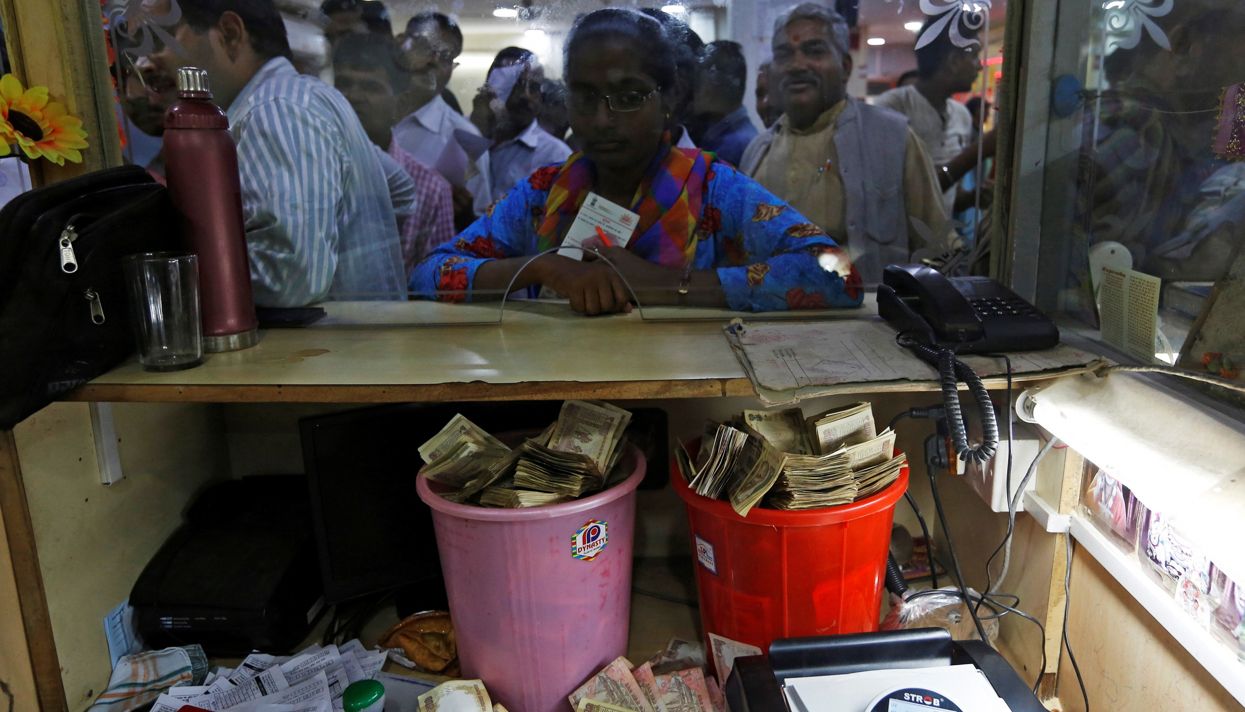
Large -scale monetary reform, during which bills of 500 (470 rubles) and 1000 (940 rubles) rupees were brought out of use, already led to dozens of victims , giant lines to ATMs and panic in the banking sector. Nevertheless, India Prime Minister Narendra Modi announced that, according to the survey, 93% of the country's residents are satisfied with the results of the reform. A resident of Delhi Anastasia Lyapicheva told about what the mood in India actually in India.
Anastasia Lyapicheva
volunteer, lives in Delhi several months a year
Until November 24, old money could still pay fines and utilities. Now they are only churches as donations.
In India, taxes paying one percent of the population by force. If you open an account with a bank, you have a tax number like our TIN. At the same time, the employer does not pay tax for you, you yourself give information about how much money you have and where you have.
Therefore, everything traditionally stores money in the cache, and now some fantastic amount of paper money is found. There are no new cash - at ATMs quickly end, and in banks they are very poorly issued; At first there was a restriction of 4000 rupees, then - 4500, now - 2000. To observe the restriction, some banks put [customers] ink spot per finger, as in elections. Yes, and twice a day you just physically can not survive.
The queues are very large, and the rules of the game each time are new. The last time I stood about three hours, and honestly, I was launched [faster] only because I was white. There used to be the queues for women, but then feminism in HDFC ( a large Indian private bank - approx. Medusa ) ended, and I stand in line with everyone.
Now the service has even appeared - rent a person in line to the bank. It is convenient for people with large checks for cashing to hire several of these, they will stand in line for 90-100 rupees per hour.
Checks here are still in use. Bank cards have, as a rule, people under 35 years old. And to write out a check, you need to make a statement - and this is in the country with the highest level of illiteracy. Grandmothers who all their lives, say, collected potatoes, of course, do not know how to write. So they are sitting and crying until someone comes to them and help to fill the form. There are not enough bank employees for everyone.
The new bills have a new size. In order for ATMs to issue new bills, they must be calibrated. There are few engineers, everyone serves no more than four ATMs per day. I was in Japur, went around three large areas, in each-six to seven ATMs, and there were no cash nowhere. Then I went to the main bazaar to the changing - money was very needed, but even they did not have a cash.
Weddings are canceled. Yes, the newlyweds are allowed to rent 250 thousand, but an ordinary Indian wedding for the middle class is five millions. 250 thousand - dead poultice.
At the same time, there are a lot of people who work only for cash. If we talk about the same weddings, these are cleaners, waiters or, for example, musicians, with whom any Indian wedding traditionally begins. Now they are sitting idle. Farmers lay the harvesting of the crop, because there is nothing to purchase seeds and fertilizers.
Sellers pay off the goods, for example, our greenhouse. When they come to him with a new bill of 2000 rupees - and he has a medium check 120 - it is easier to sell in debt than to count the surrender. Rickshaw, who takes me to work in the morning, also does it in debt.
There is a limit of up to 250 thousand rupees, in which the tax will not check the account - these are personal accumulations. Therefore, no one brings its cache in large amounts. They are distributed by brothers, sisters, their spouses and children. Friends have a part of the money generally lies with a woman who comes to wash the floor every morning. Many people buy gold and store funds in it. Those who are stored outside India began to return.
Everyone is twisted as they can. And you all think: "Why doesn't the state like me like that?" Officials are actively the prime minister lick everything that is possible. I ask the locals how they relate to demonetization. Those who are completely illiterate say they support. Who is more thandeated - that the idea is not bad, but how it is realized is just the heat.
People do not go out into the street [protest]. There is a cult of the ruler, not specific, but in general - it does not matter whether good or bad. In general, India is a strange country. The advanced modernity borders on some terrible wildness.
Evgeny Berg
Moscow